On this page
What a fireplace conversion involves
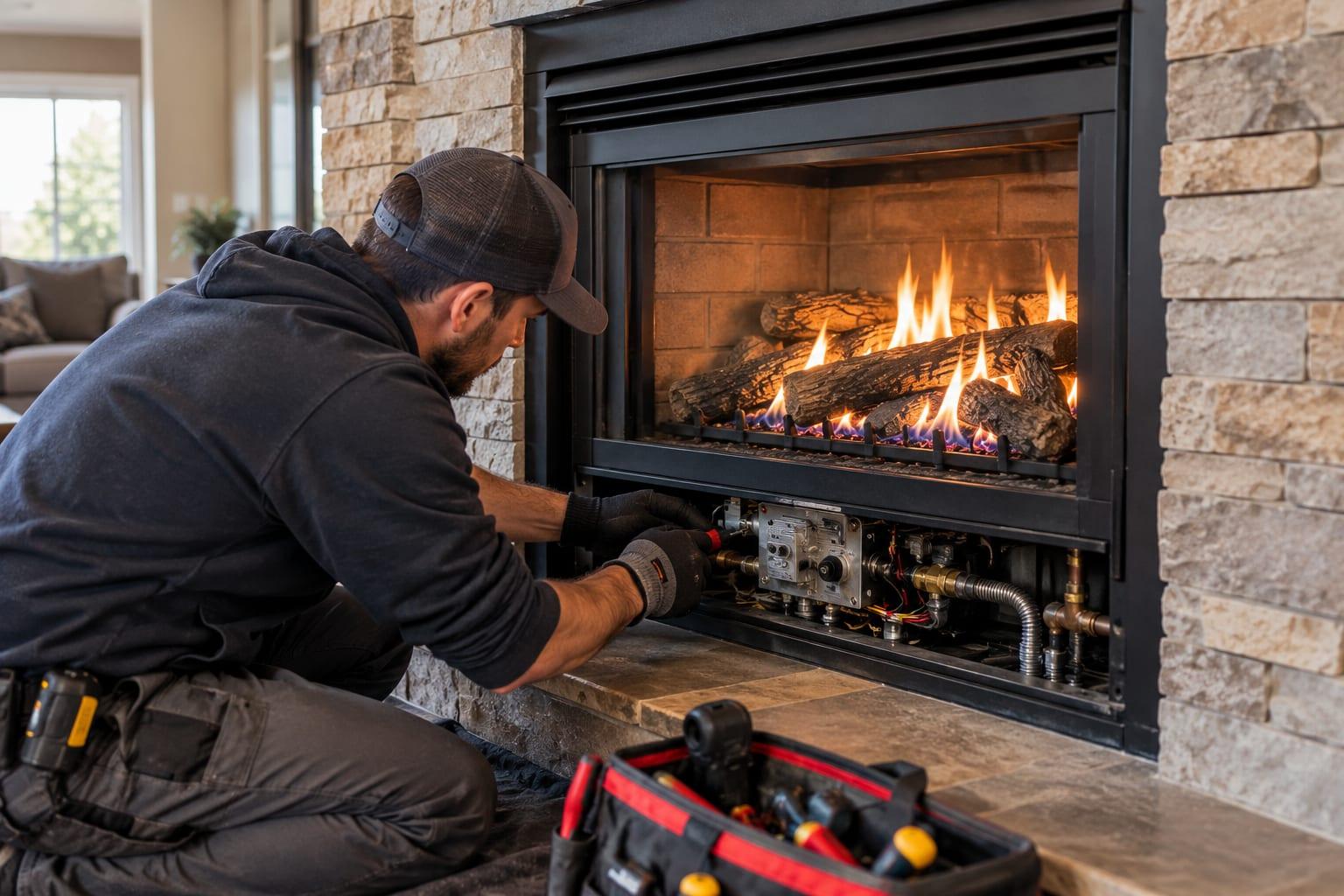
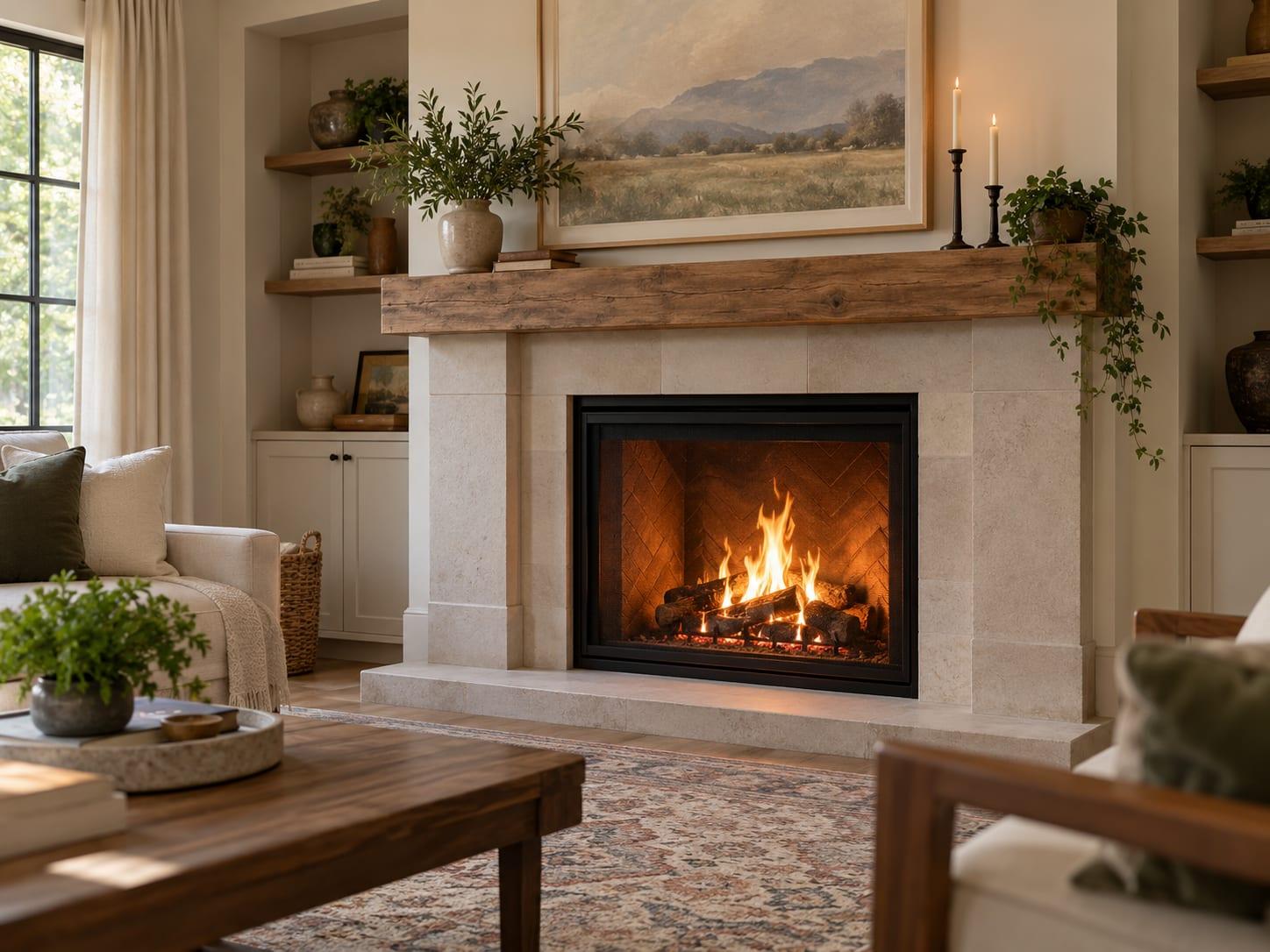
A fireplace conversion changes the fuel a fireplace burns. Most often that means turning an open wood-burning fireplace into a gas one, either with a gas log set placed in the existing firebox or with a gas insert, a sealed unit that slides into the opening and vents through the chimney. Both depend on a gas supply reaching the fireplace, venting that suits the appliance, and a firebox and chimney in good enough shape to carry it.
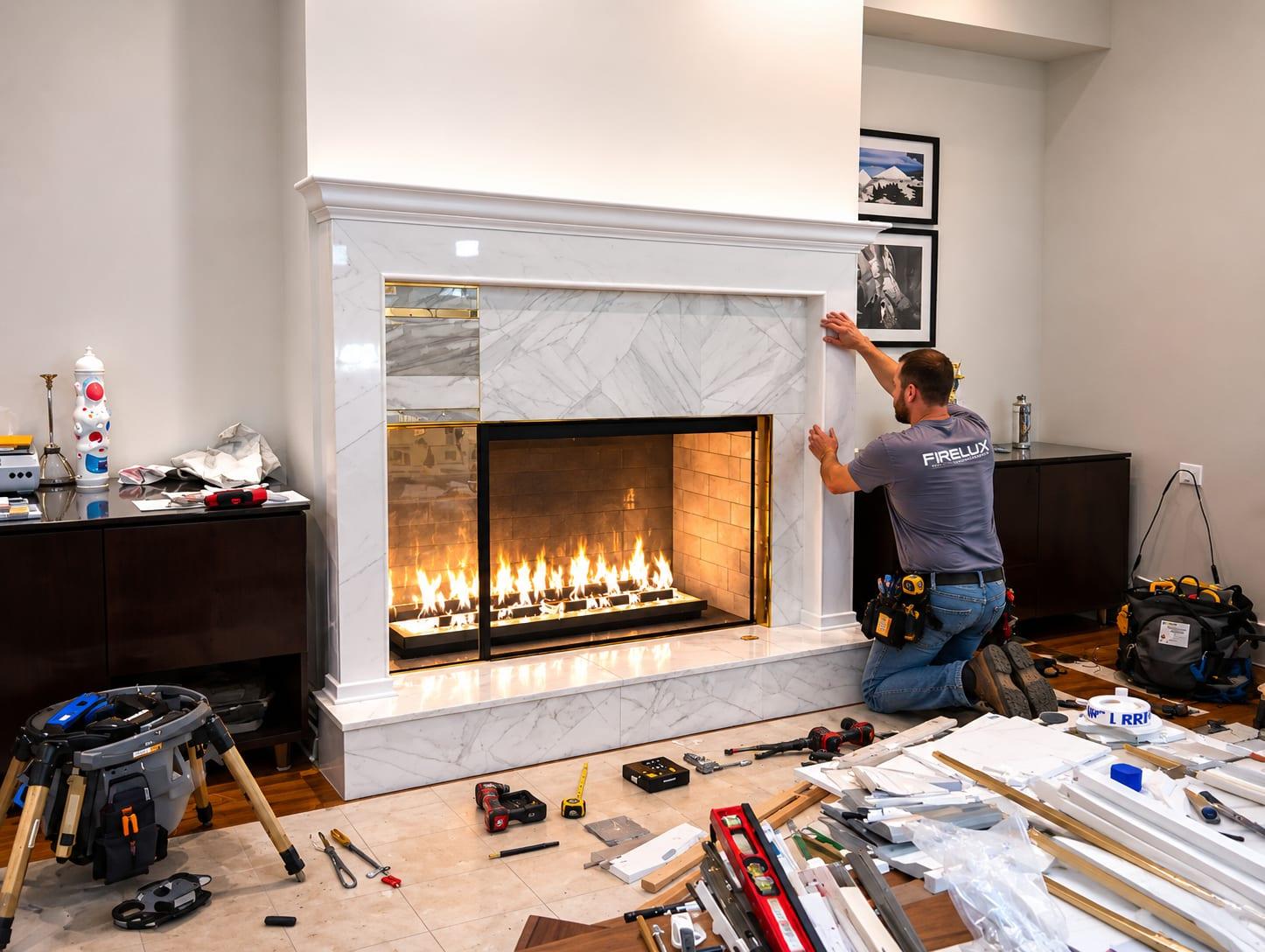
Conversion is not the same as adding a fireplace where none exists. If you want a new unit built into a wall or room, our fireplace installation service is the better fit. If you are still choosing a fuel, our guide to gas vs wood fireplace sets out the tradeoffs side by side.
Signs a conversion makes sense for your home
A conversion tends to fit when the fireplace itself is sound but the way it burns no longer suits how you live. Common reasons homeowners ask about one include:
- You rarely light the fireplace because buying, storing and carrying wood is a chore.
- Smoke drifts into the room when you start a fire, or the house smells of it afterward.
- You want heat or a flame at the push of a button, without tending a fire.
- Ash cleanup and creosote buildup are more upkeep than you want to keep doing.
- An older family member or a busy household needs a fire that is simpler to start and shut off.
- You own or manage a rental and want a fireplace that tenants can run without burning wood.
If the trouble is cracked firebrick, a damper that won't close, or a firebox that is falling apart, that damage usually needs fireplace repair before a conversion goes in, or instead of one.
Gas logs or a gas insert
| Feature | Gas log set | Gas insert |
|---|---|---|
| What it is | Ceramic logs and a burner set in the existing firebox | A sealed, self-contained unit fitted into the fireplace opening |
| Look | Keeps the open-hearth look of the original fireplace | Glass front with a surround that covers the opening |
| Heat | Mostly a visual flame; much of the heat goes up the chimney in vented setups | Built to put heat into the room |
| Venting | Vented sets use the open chimney with the damper secured open; vent-free sets have their own rules | Typically vented through a liner run up the existing chimney |
| Best for | Homeowners who mainly want ambiance | Homeowners who want the fireplace to warm the room |
What it is
- Gas log set
- Ceramic logs and a burner set in the existing firebox
- Gas insert
- A sealed, self-contained unit fitted into the fireplace opening
Look
- Gas log set
- Keeps the open-hearth look of the original fireplace
- Gas insert
- Glass front with a surround that covers the opening
Heat
- Gas log set
- Mostly a visual flame; much of the heat goes up the chimney in vented setups
- Gas insert
- Built to put heat into the room
Venting
- Gas log set
- Vented sets use the open chimney with the damper secured open; vent-free sets have their own rules
- Gas insert
- Typically vented through a liner run up the existing chimney
Best for
- Gas log set
- Homeowners who mainly want ambiance
- Gas insert
- Homeowners who want the fireplace to warm the room
Either option needs a gas line run to the firebox. We handle that gas line work as part of the conversion, along with the venting the chosen appliance calls for.
What the visit involves, step by step
How a fireplace conversion is carried out
Talk through what you want
We ask how you use the room, whether you want heat or mostly a flame, and how you want to control it, then show which approach matches.
Check the firebox and chimney
We look at the firebox, damper, smoke chamber and flue to confirm they can safely carry a gas appliance, and point out anything that needs fixing first.
Measure and plan
We measure the opening and check where gas can be brought in, so the log set or insert fits and the venting is right for that unit.
Prepare the fireplace
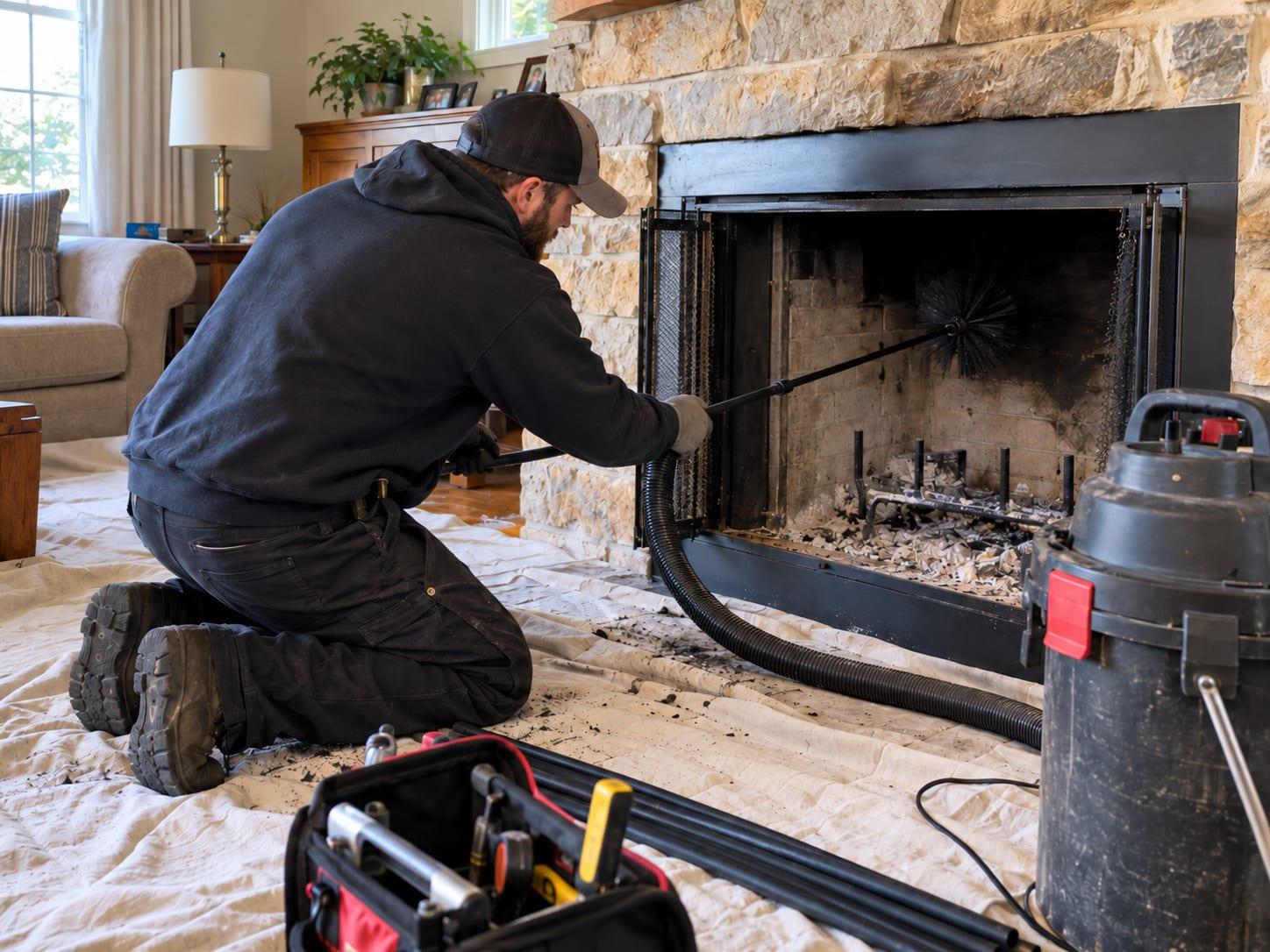
Years of soot and creosote are cleared from the firebox and flue before anything new goes in; if you only want the fireplace cleaned for now, fireplace cleaning covers that on its own.
Run the gas line and set the appliance
We bring the gas line to the fireplace, install the logs or insert, and fit any liner, damper clamp or surround the setup needs.
Test and walk you through it
We light it, check for leaks, confirm the flame and draft, and show you how to start, adjust and shut off the new fireplace.
Safety and upkeep after a conversion
Gas fireplaces are cleaner to run than wood, but they are not maintenance-free. Burners, pilot assemblies, logs and glass need periodic attention, and the chimney or liner still has to stay clear so exhaust can leave the house. A working carbon monoxide alarm near the room is a sensible addition with any fuel-burning fireplace.
If you smell gas
Don't light anything or flip switches. Leave the house, then call your gas utility from outside. Once the supply is safe, get in touch and we can check the fireplace and its gas connection.
Booking a fireplace conversion
Call or request an estimate to set up a visit. Gas fireplace and gas appliance work is offered, and commercial and property-manager work is offered as well, so landlords and managers can book conversions for the units they look after.