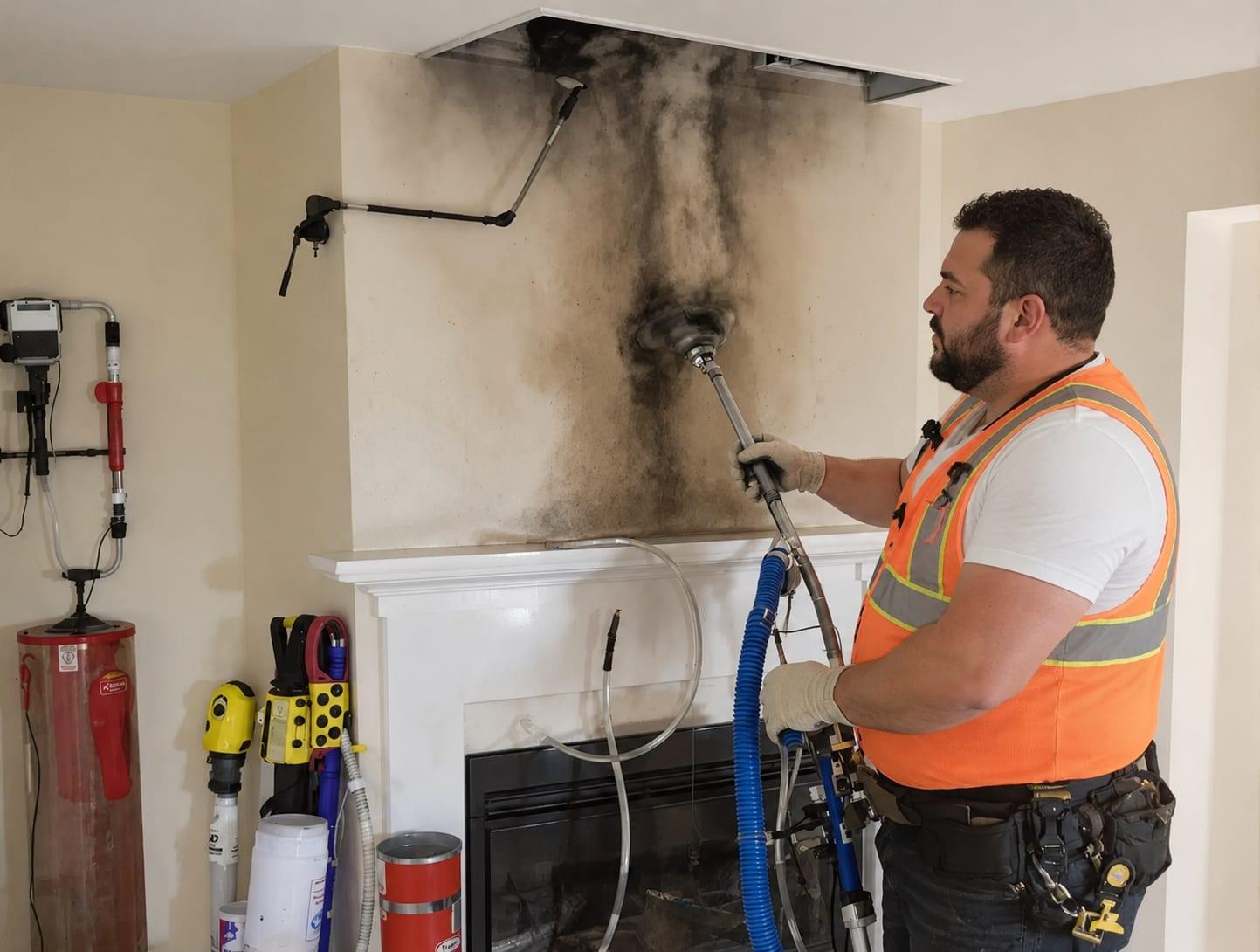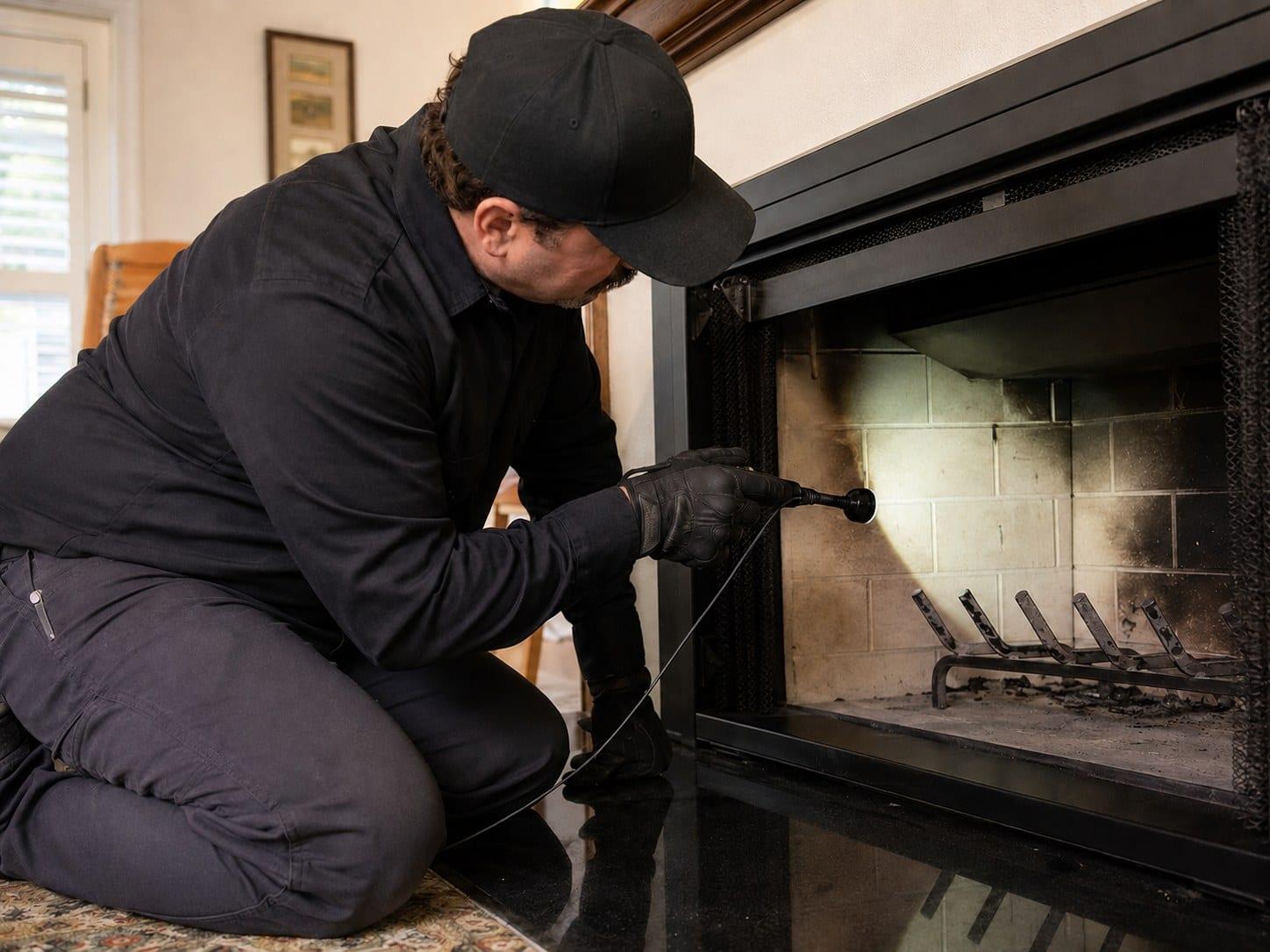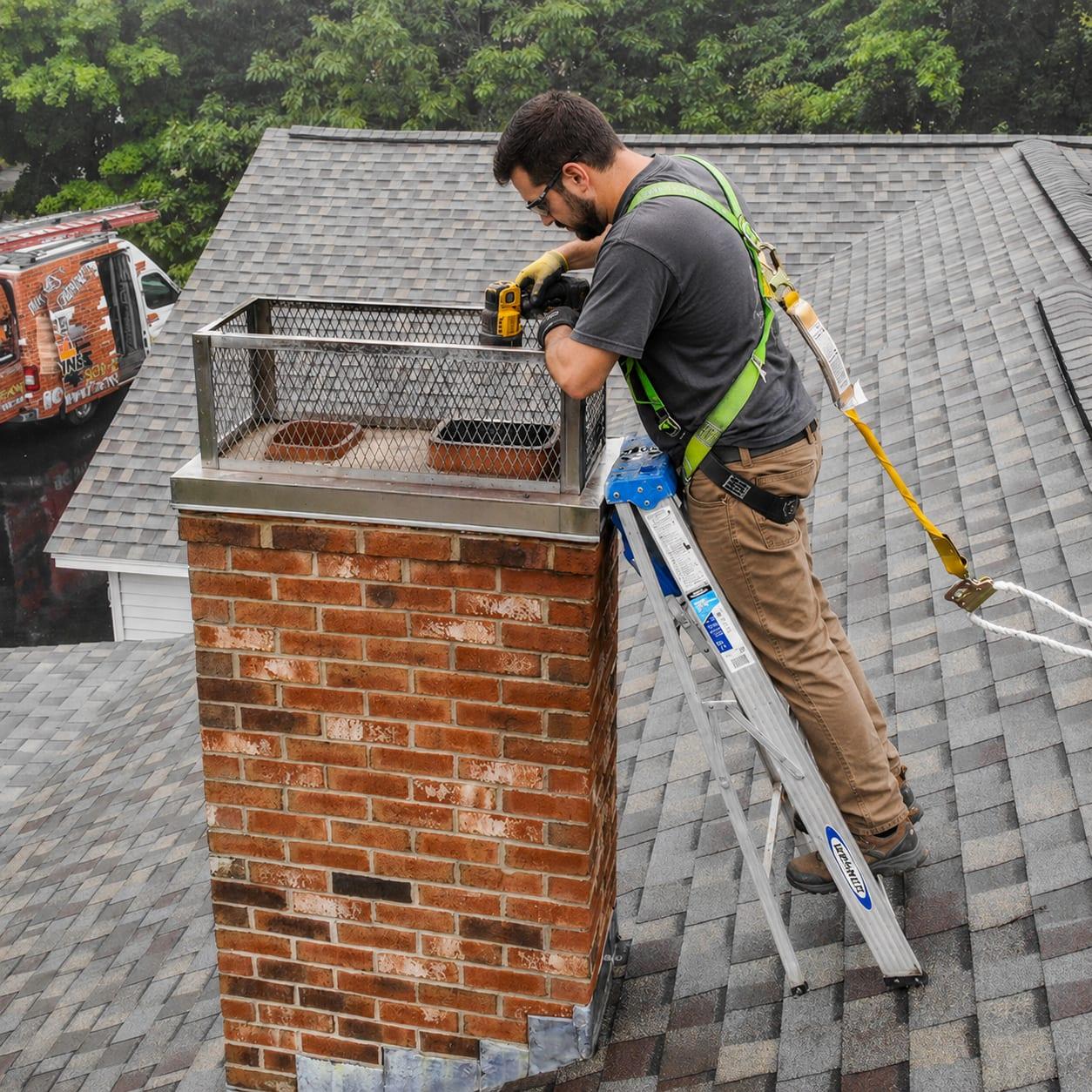
Our inspections for Johns Creek homes pay close attention to two things: how much room there is between the fireplace system and anything that can burn, and whether gas appliances vent safely. After a chimney fire, an inspection is also how the damage gets mapped before anyone starts repairs. To book, call or request an estimate.
Clearances to combustibles: what sits too close to the heat
Part of the visit looks at the space between the hot parts of the system and anything that can burn. The hot parts are the firebox, smoke chamber and flue. The things that can burn include the mantel, wood trim, flooring at the hearth and any visible framing around the chimney. On a factory-built fireplace, the comparison is against the clearances its manufacturer lists. The inspection notes darkened or scorched wood near the opening, a hearth extension that stops short, and trim that runs into the heat zone.
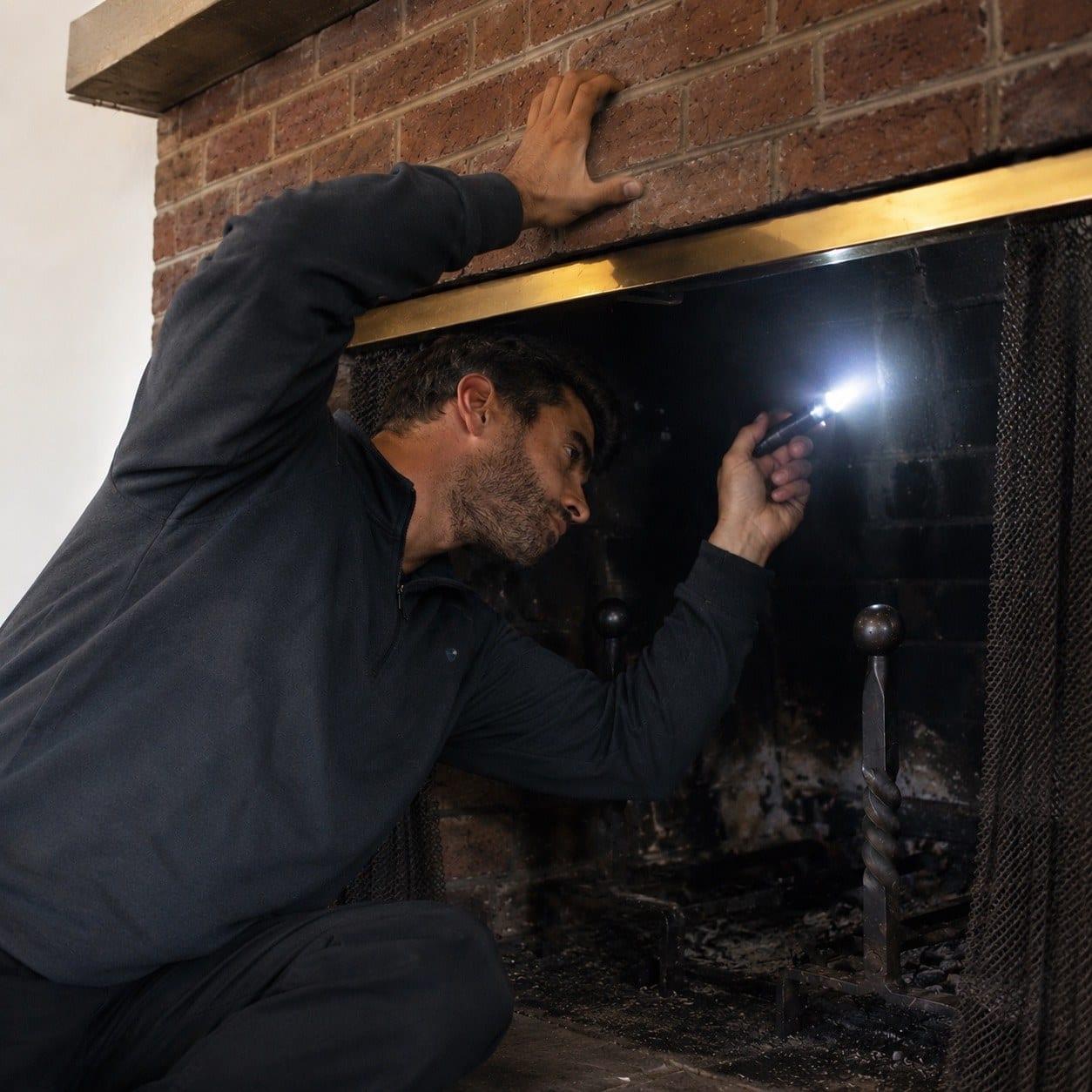
What it helps you decide: whether the fireplace can be used as it is, whether a mantel, trim or hearth needs changing first, or whether a repair has to come before the next fire.
Gas appliance venting: checking where the exhaust goes
When a gas fireplace, insert or other gas appliance vents into the chimney, the inspection follows that exhaust path. It checks four things:
- whether the flue is open and clear
- whether the flue suits the appliance connected to it
- whether the connection and any vent cap are sound
- whether there are signs that exhaust isn't leaving the house, such as soot around the opening, moisture staining or a draft that pulls the wrong way
Gas fireplace and gas appliance work is offered, so the findings can lead straight into service on the appliance itself. What it helps you decide: keep using the setup as it is, have the flue or liner addressed, or have the appliance serviced first.
What the Census figure says about homes in Johns Creek
Almost all of the housing units in Johns Creek were built in 1960 or later. That figure comes from the U.S. Census Bureau, American Community Survey 2019–2023 5-year estimates, table B25034 (Year Structure Built). A chimney is built with its house or after it, so almost every chimney in town also dates from 1960 or later. The figure says nothing about the condition of any one chimney. The inspection is what establishes that.
After a chimney fire: what an inspection can involve
A chimney fire can cause several kinds of damage:
- cracked flue tiles or a damaged liner
- puffed or glazed creosote
- loosened mortar
- damage to the cap and smoke chamber
- heat damage to nearby framing
An inspection after a fire can involve a camera run down the full flue to find damage you can't see from the top or the firebox. It also includes a close look at clearances and masonry. The result is a clear picture of what needs repair before the fireplace is used again. For background, read about what causes chimney fire risk.
When the findings point to a repair
- Firebox repair is the right job when the inspection finds cracked or missing firebrick, open mortar joints or heat damage inside the firebox.
- Fireplace draft repair fits when smoke rolls into the room or exhaust doesn't pull up the flue as it should.
- If the main finding is soot or creosote buildup, the next step is chimney sweep for homes in Johns Creek.
Nearby areas
We also inspect chimneys for homes in Duluth, Alpharetta and Norcross.
More on inspections and other local work
The full overview of our chimney inspection service covers inspection types, how a visit runs and every component checked. You can also find everything we do in Johns Creek in one place.
Booking an inspection for your Johns Creek home
Call or request an estimate to set up a visit. Commercial and property-manager work is offered, and we work on all major brands of fireplaces and stoves.
Sources (1)
The sources of the Johns Creek facts on this page.
- 1U.S. Census Bureau, American Community Survey 2019–2023 5-year estimates, table B25034 (Year Structure Built)