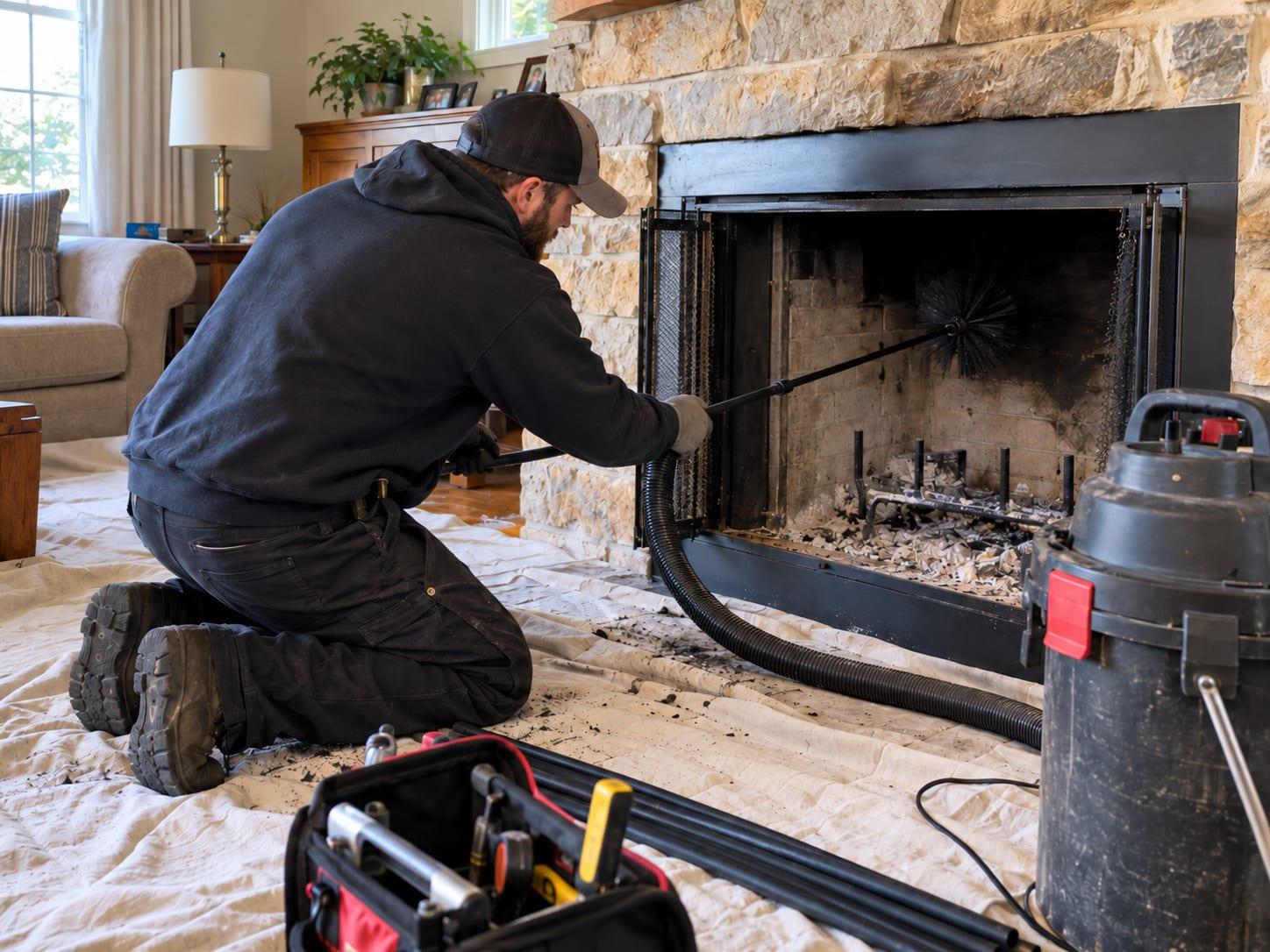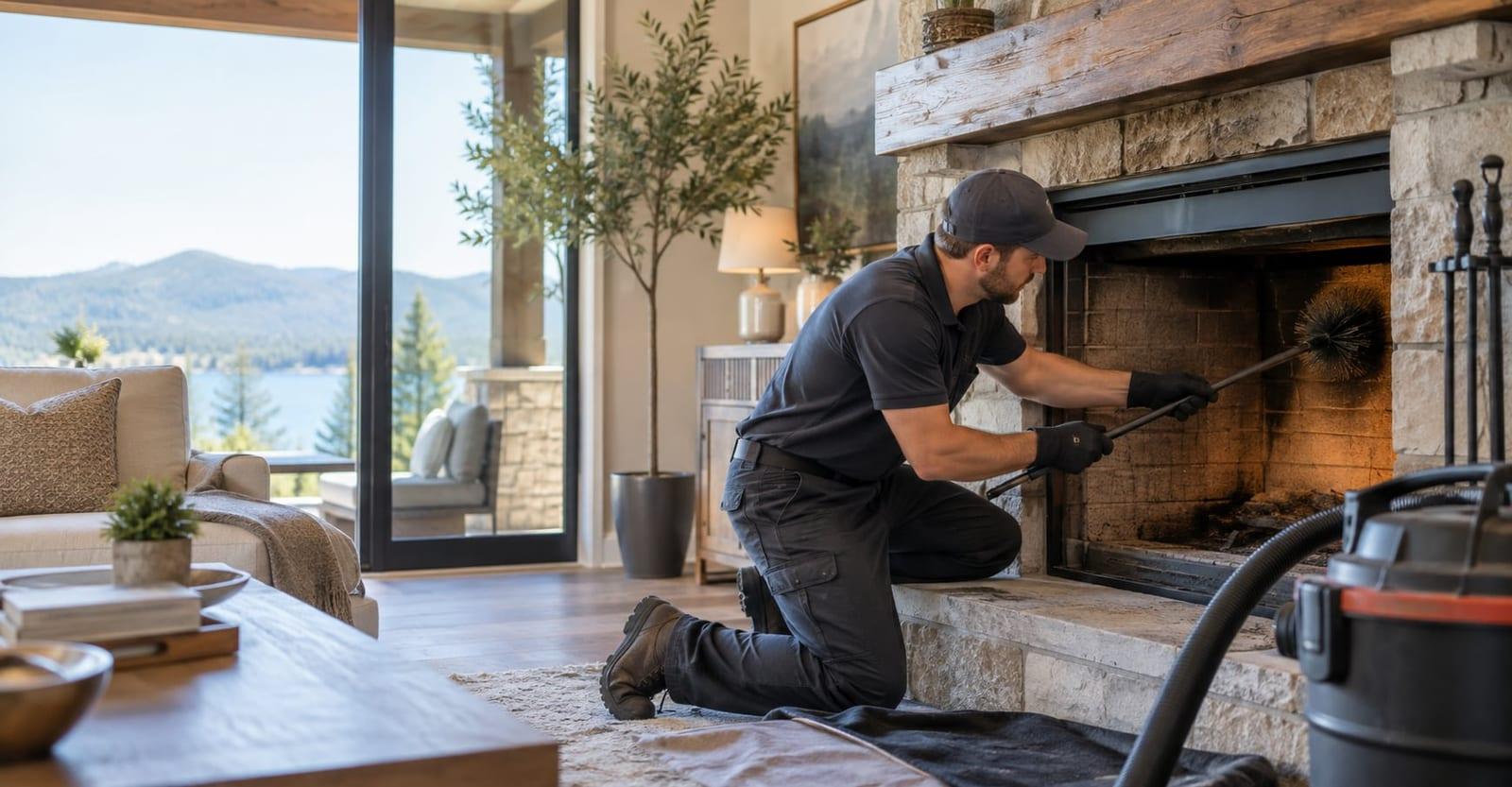
We sweep chimneys for homes in Johns Creek. Two spots get close attention: the flue walls, where creosote can harden, and the smoke chamber above the damper, where buildup is easy to miss. We also look into fireplaces that smell. To get on the schedule, call or request a visit.
When the sweep turns to creosote removal
Most flues are coated with soot and loose, flaky creosote that comes off with brushing. The job changes when the deposits are glazed, tar-like or shiny. That layer bonds to the flue and doesn't brush away, so removing it takes extra work and sometimes more than one visit.
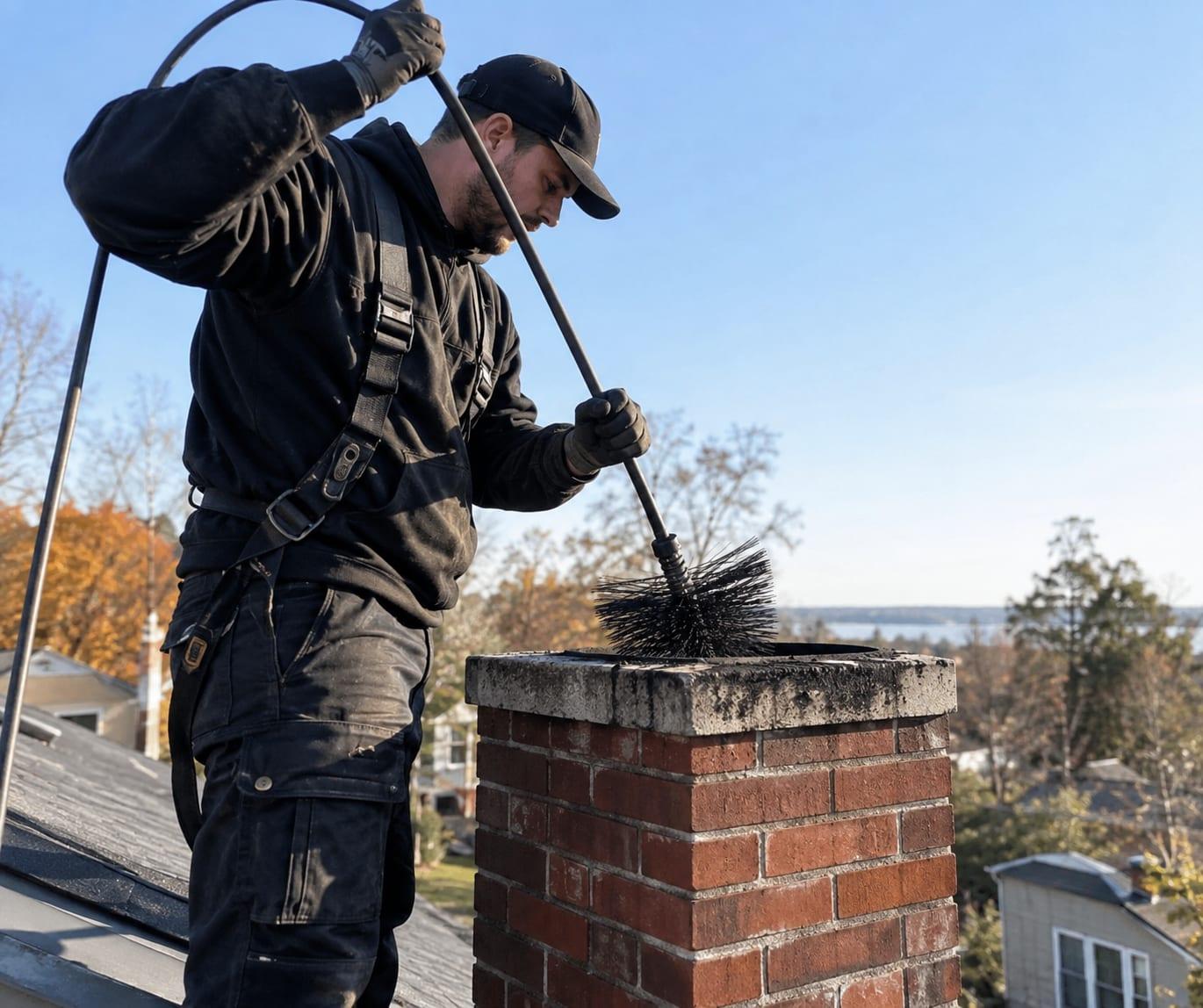
What we find in the flue helps you decide three things:
- Whether the fireplace is fine to use once it's cleaned.
- Whether your burning habits are adding to the buildup. Damp wood and smoldering, low fires are the usual culprits.
- Whether the flue needs a closer look for damage underneath the deposits.
Cleaning the smoke chamber above the damper
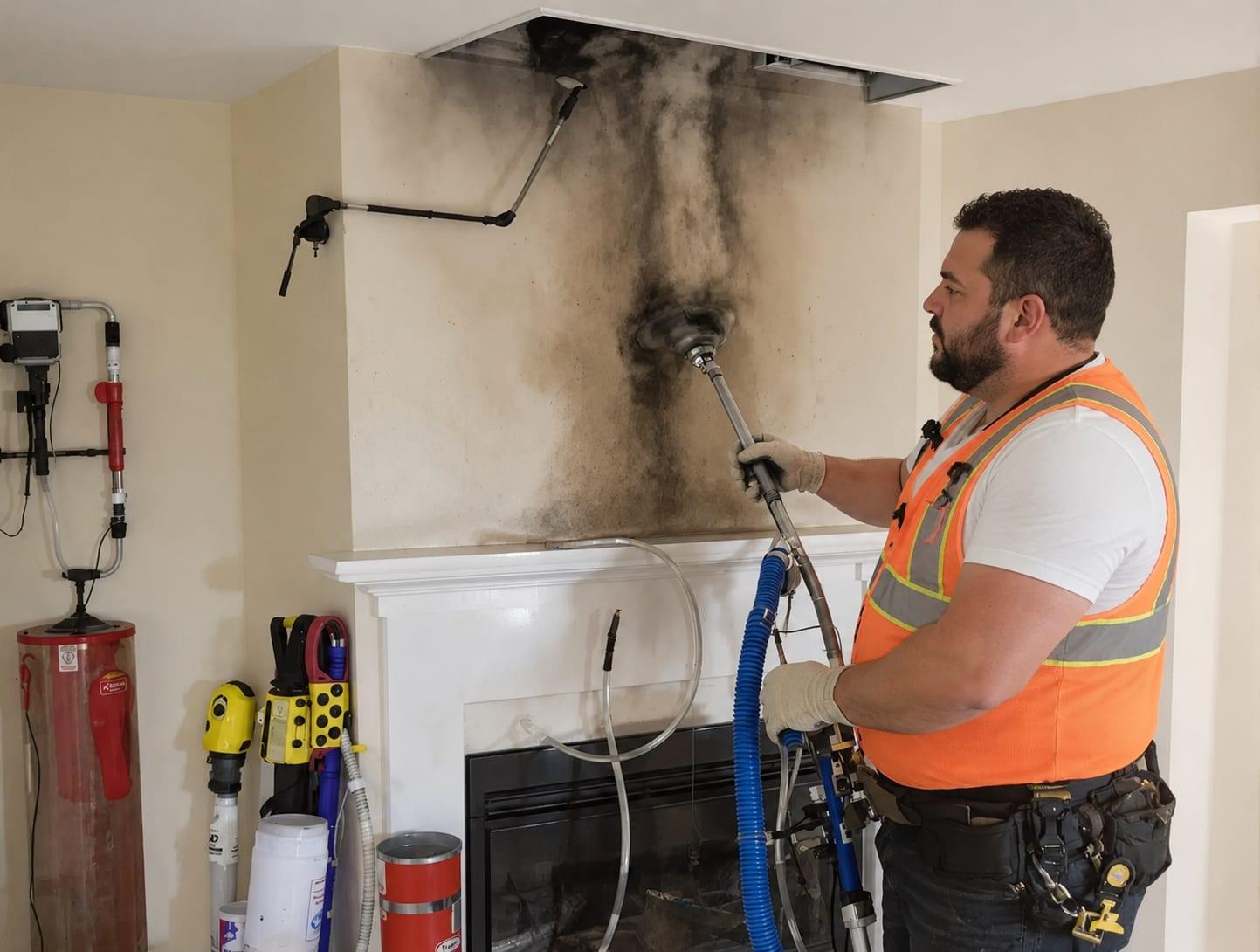
The smoke chamber is the sloped section between the damper and the flue. Its angled walls catch creosote and soot that a quick flue brushing can leave behind. We clean it from below, through the damper opening, and check the surface as we go.
Rough, stepped brickwork or cracked coating in the smoke chamber is worth knowing about. It holds deposits and can affect how the fireplace draws, so you can decide whether a repair is worth doing. If the damper itself sticks or doesn't seal, our guide to the different kinds of chimney dampers explains your options.
What the housing record tells us
Almost all of the housing units in Johns Creek were built in 1960 or later, according to the U.S. Census Bureau's American Community Survey 2019–2023 5-year estimates, table B25034 (Year Structure Built). That figure covers decades of construction and says nothing about any one chimney. So every sweep starts by confirming how your fireplace vents, because that decides which tools fit and what can be cleaned.
When the fireplace smells strongly
A sharp, smoky or musty smell coming from a fireplace often traces back to creosote deposits. The smell tends to be worse in warm, humid weather or when the house pulls air down the chimney. When odor is the reason for the visit, a sweep can involve removing those deposits from the flue and smoke chamber, clearing out leaves or nesting debris, and checking whether water is getting in and mixing with soot. If water or animals are the source, the fix is usually at the top of the chimney rather than in the cleaning.
Related work this job can lead to
- Adding a spark arrestor to the chimney top makes sense when embers escaping the flue are a concern.
- Fixing or replacing a damaged chimney cap is the right job when rain, debris or animals are getting past a cracked, rusted or missing cap.
Nearby areas and more information
We also sweep chimneys for homes in Alpharetta, Norcross and Suwanee.
For the types, process and components, read our full chimney sweep service overview. For everything else we handle locally, see our services across Johns Creek.
Booking a sweep in Johns Creek
Call or request a visit to book. Gas fireplace and gas appliance work is offered, and so is commercial and property-manager work.
Sources (1)
The sources of the Johns Creek facts on this page.
- 1U.S. Census Bureau, American Community Survey 2019–2023 5-year estimates, table B25034 (Year Structure Built)