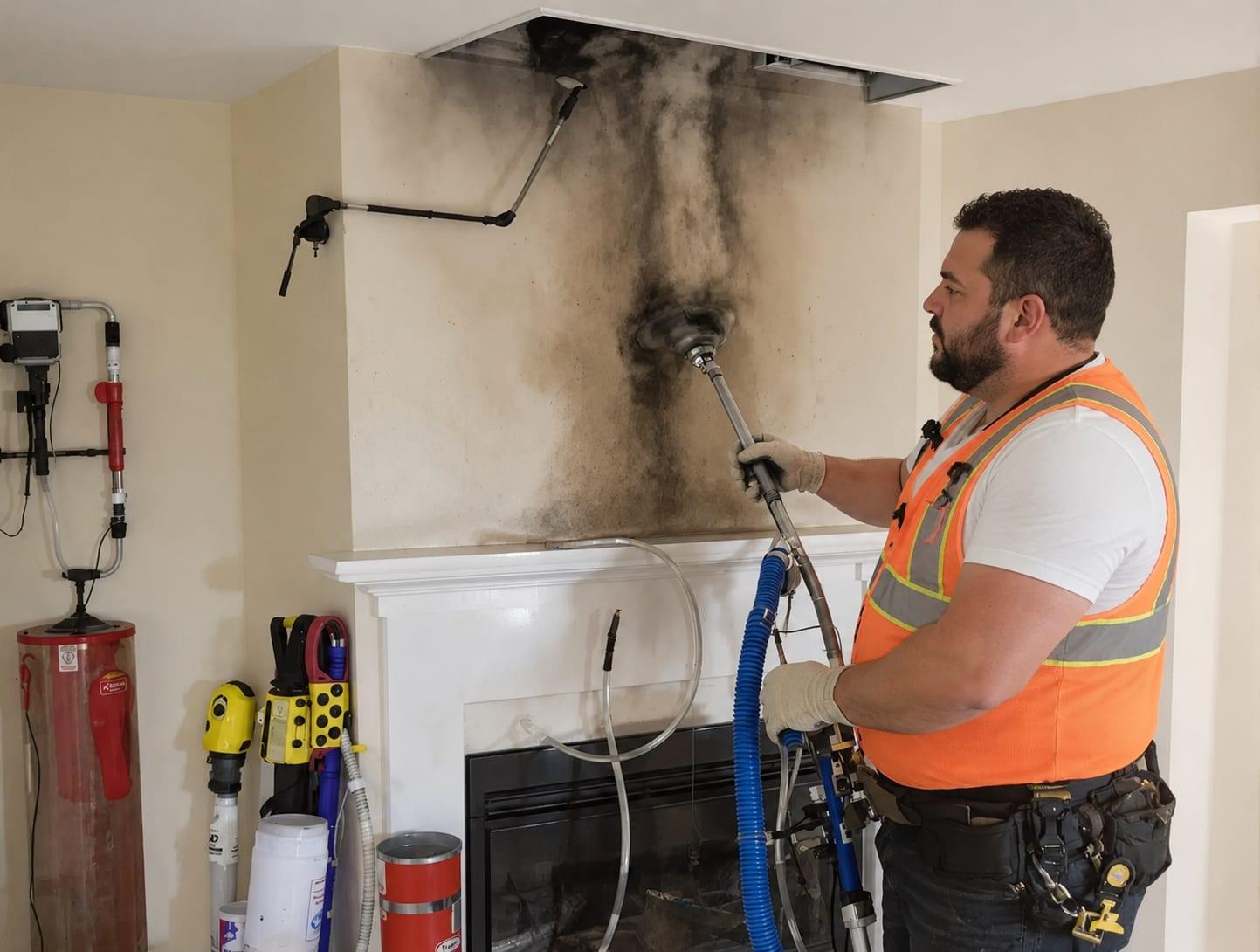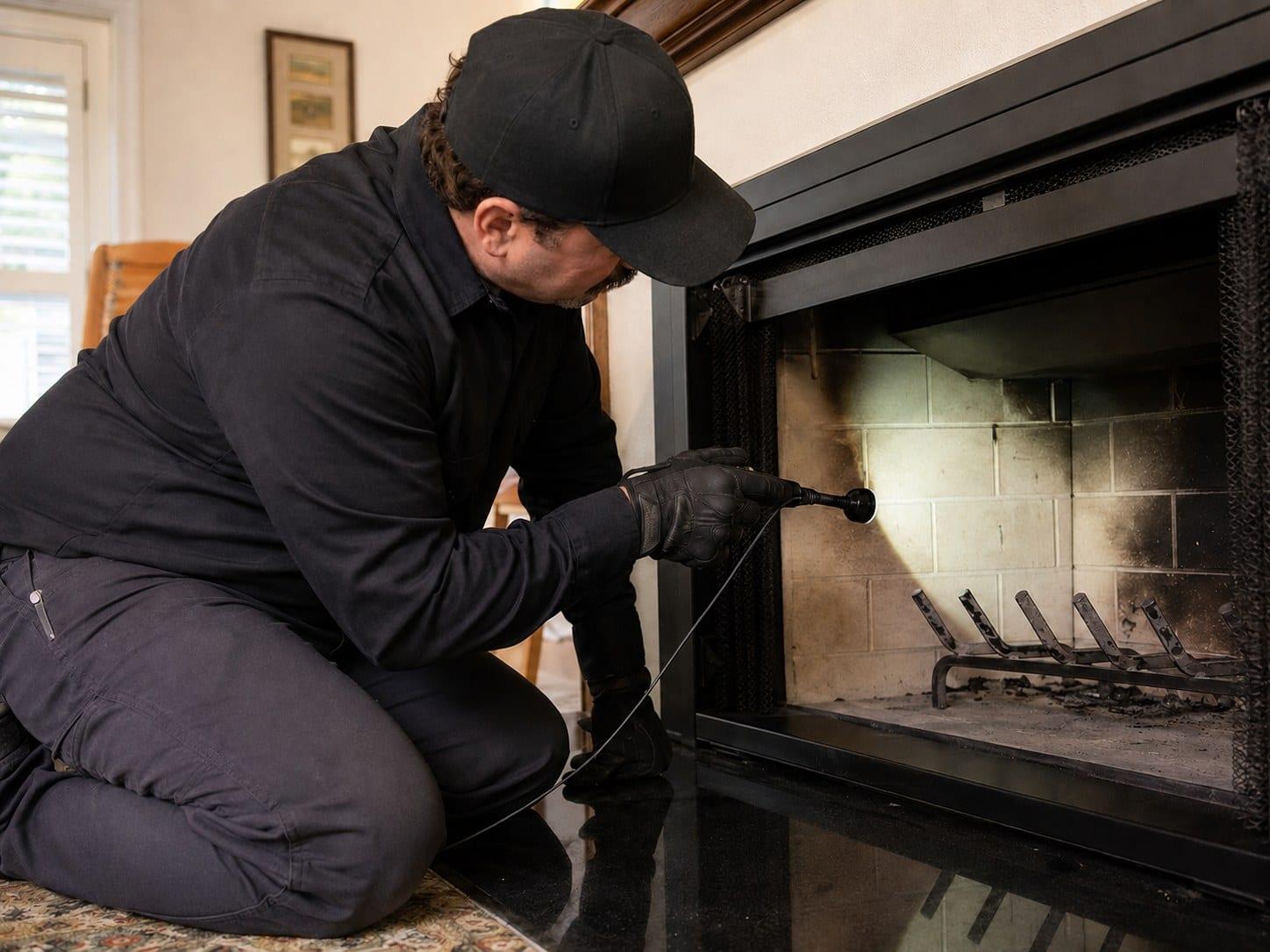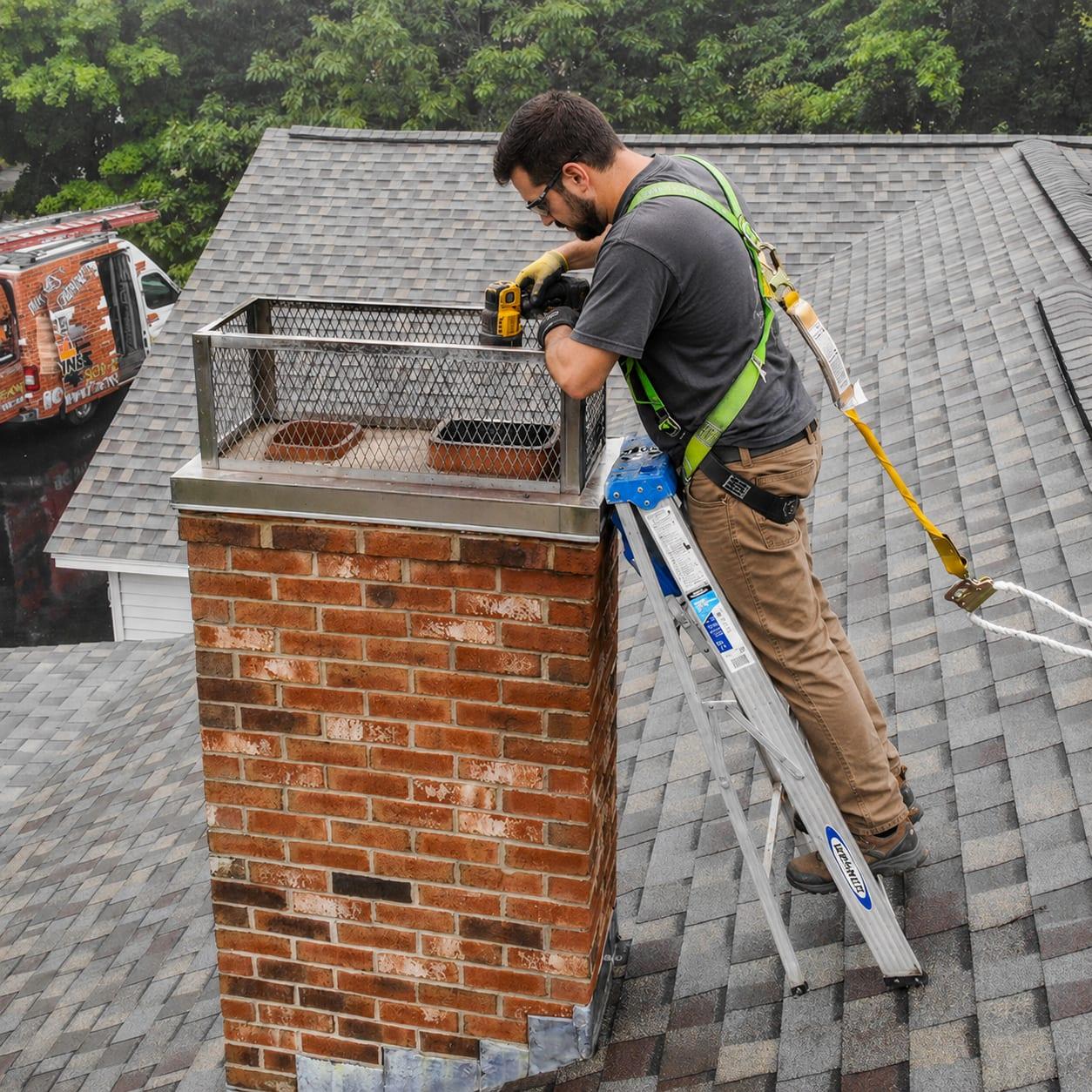
We inspect chimneys and fireplaces for homes in Marietta. On each visit we pay close attention to two spots that are easy to overlook: the smoke chamber above the damper and the venting for any gas appliance that shares the chimney. We also check chimneys after storm damage. When you're ready, call or request an estimate to set a time.
The smoke chamber above the damper
The smoke chamber is the sloped section where the firebox narrows into the flue. You can't see it from the hearth, so we look at it with a light and, when needed, a camera. We check whether the walls are smoothly parged or left as stepped brick. We also look for cracked or missing parging, heavy creosote glaze on the sloped walls, and gaps where the damper frame meets the masonry. Rough or cracked walls hold creosote and let heat reach places it shouldn't, which adds to chimney fire risk. You get a clear answer on whether a cleaning is enough or the chamber needs repair or new parging before the next fire.
Gas appliance venting in the chimney
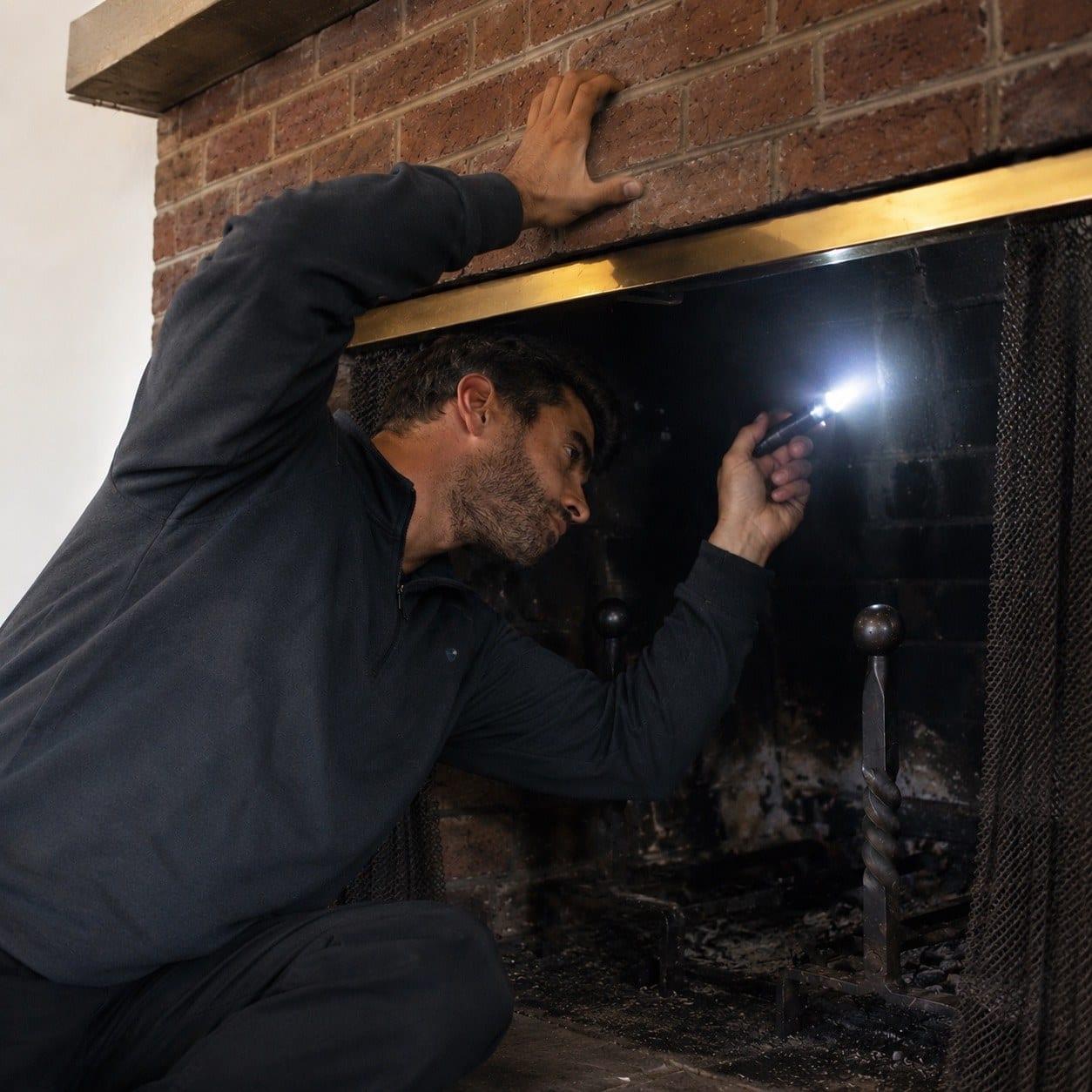
Some homes vent a gas furnace, water heater or gas fireplace through a chimney flue. When the visit turns to that venting, we check four things: the connector pipe, the point where it enters the chimney, whether the flue is lined and sized for the appliance, and whether debris, nests or fallen tile are narrowing the opening. We also look for signs that exhaust isn't leaving the way it should, such as soot or scorching near a draft hood, rust, or crumbling mortar at the base from condensation. That tells you one of three things: the venting can stay as it is, a blockage needs clearing, or the flue needs liner repair or a new liner.
Homes built before 1960 in Marietta
About 11% of the housing units in Marietta were built before 1960, according to the U.S. Census Bureau, American Community Survey 2019–2023 5-year estimates, table B25034 (Year Structure Built). If your house is one of them, its chimney may have seen decades of use and later changes, such as a gas appliance vented into a flue first built for wood fires. Tell us the year your home was built when you book, so we know to look closely at the smoke chamber and any venting that was added.
After a storm, falling limb or earthquake
If high wind, a falling limb, lightning or ground movement may have hit the chimney, the inspection can involve several checks. We look at the crown, cap and chase cover for cracks or shifting, and at the roof for leaning, loose brick or separated flashing. We can also run a camera down the flue to find cracked tiles or offset sections you can't see from the top. We note and photograph what we find so you have a record if you file an insurance claim. Until the chimney is checked, hold off on using the fireplace.
When the inspection leads to another job
- A fireplace inspection is the right job when your concern is mainly the firebox, doors, glass or gas logs rather than the chimney above them.
- If the inspection finds cracked firebrick, a failing damper or smoke chamber damage in a wood-burning unit, wood-burning fireplace repair is the next step.
Nearby areas we also cover
We also do chimney inspections for homes in Smyrna, Kennesaw and Mableton.
The full inspection overview
For the inspection types, the visit step by step and every component we check, read how chimney inspection works. Everything else we do for homes in Marietta is gathered in one place.
Booking a chimney inspection in Marietta
Call or request an estimate to set up a visit for your Marietta home. Let us know whether the chimney serves a wood fireplace, a gas appliance or both, and whether you're booking after a storm, so the visit covers what matters to you.
Sources (1)
The sources of the Marietta facts on this page.
- 1U.S. Census Bureau, American Community Survey 2019–2023 5-year estimates, table B25034 (Year Structure Built)