On this page
What wood-burning fireplace repair covers
A wood fire puts heavy demands on a fireplace. Every fire heats and cools the firebox, and that cycle loosens mortar, cracks brick and warps metal parts. Wood-burning fireplace repair restores the parts that contain the fire and move smoke up and out of the house. It is not general cosmetic work.
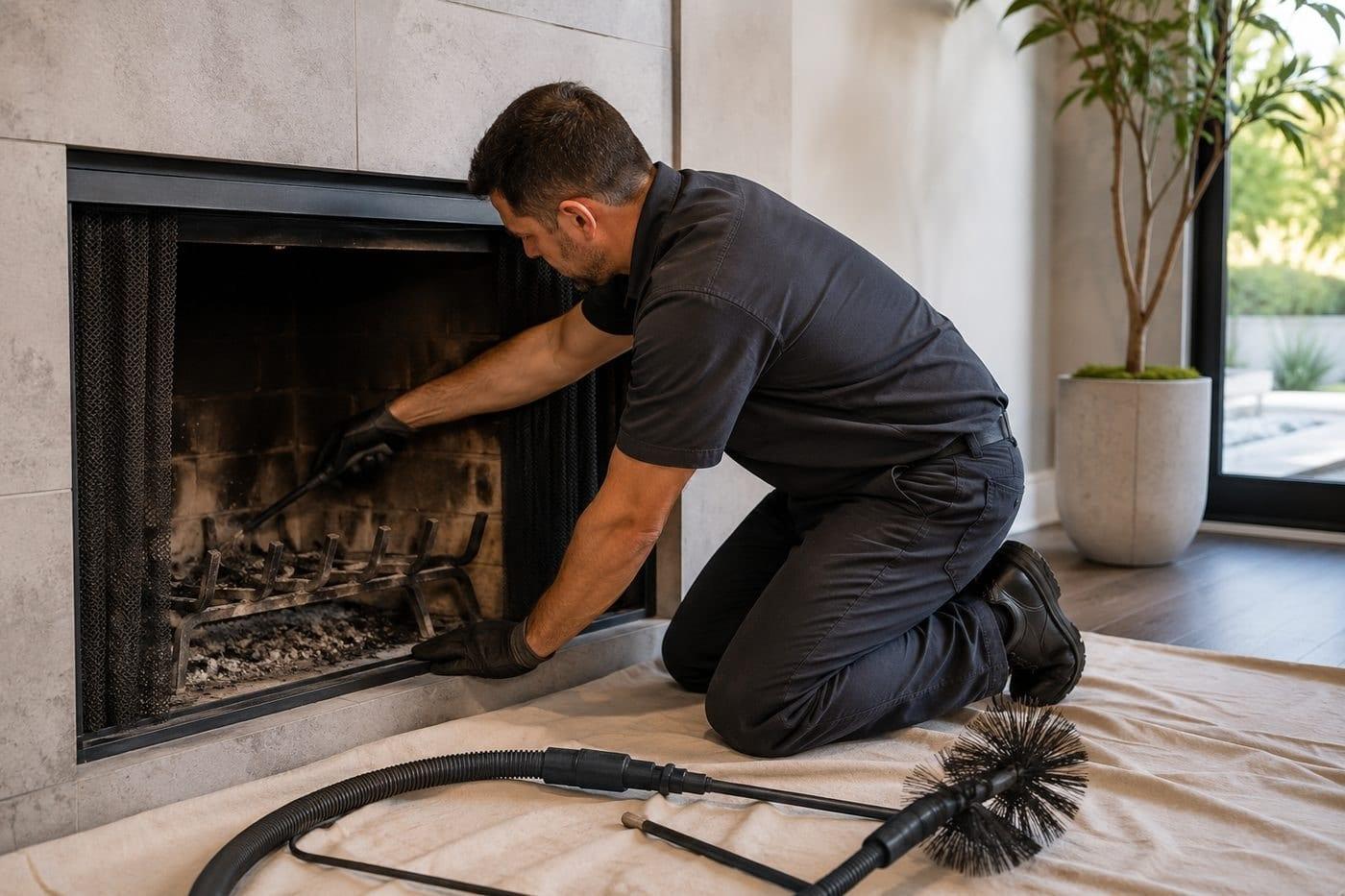
- Firebox: replacing cracked or spalled firebrick and repointing the joints between bricks.
- Refractory panels: replacing cracked panels in factory-built wood-burning fireboxes.
- Damper: fixing or replacing dampers that stick, won't seal or have rusted through.
- Smoke chamber: repairing the area above the damper so smoke flows into the flue instead of rolling back into the room.
- Draft problems: tracking down why a fire smokes, struggles to stay lit or pulls poorly.
- Doors and glass: repairing glass doors, hinges and frames on the fireplace opening.
For gas units, other fireplace types or problems beyond the firebox, our broader fireplace repair service covers the rest.
Signs your wood fireplace needs repair
What homeowners notice, and what we check
01Cracked, loose or crumbling firebrick
- What you may notice
- Visible cracks in the back or side walls, brick faces flaking off, or bits of brick in the ash.
- How it’s confirmed
- We inspect each wall of the firebox and tap suspect bricks to find the ones that have lost their bond.
02Gaps in the mortar joints
- What you may notice
- Joints that look sunken or hollow, or mortar that crumbles when brushed.
- How it’s confirmed
- We probe the joints to see how deep the deterioration goes before deciding between repointing and rebuilding the firebrick.
03Smoke coming into the room
- What you may notice
- Smoke rolls out of the opening at the start of a fire or while it burns, or the room smells smoky afterward.
- How it’s confirmed
- We check the damper, smoke chamber and flue for obstructions, damage or a poor shape that disrupts draft.
04A damper that sticks or won't seal
- What you may notice
- The handle is hard to move, the plate won't open fully, or you feel cold air coming down when the fireplace isn't in use.
- How it’s confirmed
- We work the damper through its full range and look for rust, warping or broken parts.
05Damaged doors or glass
- What you may notice
- Cracked glass, doors that won't close, or loose frames around the opening.
- How it’s confirmed
- We check the glass, hinges, latches and frame mounting.
What the repair visit looks like, step by step
From first look to a working fireplace
Talk through the symptoms
Tell us what you've noticed and when. A fireplace that smokes only on windy days points somewhere different than one that smokes every time.
Inspect the fireplace
We examine the firebox, firebrick and joints, the damper and the smoke chamber. If the trouble may be higher up, a camera inspection of the flue shows what can't be seen from the hearth.
Explain what we found
You hear what is damaged, what is only worn, and which repairs matter most for safe use, so you can decide how to proceed.
Make the repair
We replace brick or panels, repoint joints, fix or replace the damper, repair the smoke chamber or doors, depending on what the inspection found.
Check the result
We confirm the damper operates and the repaired areas are sound, and tell you anything to know before lighting the next fire.
Materials that hold up to a wood fire
Masonry fireboxes are lined with firebrick set in refractory mortar. Both are made to withstand direct flame in a way that ordinary brick and mortar are not. Using regular materials in a firebox leads to fast failure, so repairs match the materials to the heat they face. Factory-built wood-burning fireplaces use refractory panels instead of brick, and replacement panels need to fit that specific unit.
If you are weighing whether to keep burning wood at all, our guide to gas vs wood fireplace options lays out the trade-offs. When the existing unit is beyond sensible repair, fireplace installation is the other path.
Safety and upkeep between repairs
Hold off on fires until it's checked
Stop using a wood fireplace with gaps in the firebox, missing mortar or smoke coming into the room until it has been looked at. Gaps in the firebox can let heat reach materials behind it that are not meant to get hot.
Regular cleaning keeps ash and creosote from building up and makes damage easier to spot early. Routine fireplace cleaning pairs naturally with repair work. If your home also has a freestanding stove, wood stove cleaning keeps that appliance in good shape too.
Booking a wood fireplace repair
Get in touch and describe what you're seeing with the fireplace.
Gas fireplace and gas appliance work is offered as well, so a home with both types can be handled together.