On this page
What wood fireplace installation involves
Wood fireplace installation means building or fitting a fireplace that burns firewood, along with the chimney or flue that carries smoke out of the house. The fireplace and its venting are one system. A firebox that is too large for its flue will smoke into the room. A chimney that is too short or badly placed won't draw well. Every opening needs a noncombustible hearth in front of it to catch sparks and rolling embers.
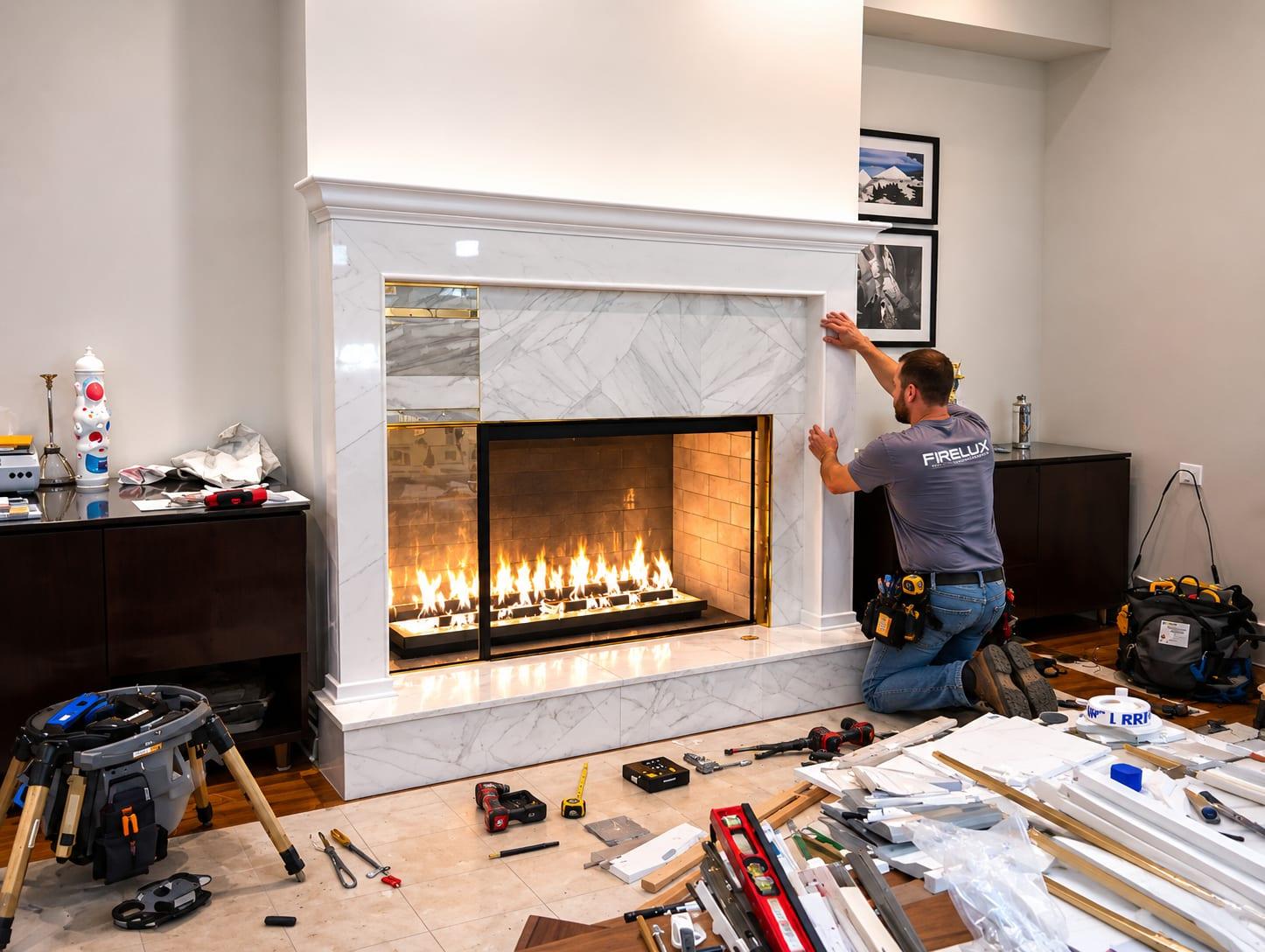
Most new wood fireplaces fall into one of two types:
| Feature | Masonry fireplace | Factory-built (prefab) fireplace |
|---|---|---|
| How it's built | Firebox, smoke chamber and chimney built on site from brick, block and firebrick | A manufactured firebox unit framed into the wall, vented through the chimney system made for it |
| Weight and support | Very heavy, so it needs solid structural support beneath it | Much lighter, and usually sits on the floor framing |
| Chimney | Masonry chimney with a flue liner | Metal chimney pipe and parts that must match the unit's listing |
| Construction involved | Major building work, often during new construction or an addition | Less structural work, so it is often the practical choice for an existing home |
| Rules that govern it | Masonry construction standards and required clearances | The manufacturer's installation instructions and listed clearances |
How it's built
- Masonry fireplace
- Firebox, smoke chamber and chimney built on site from brick, block and firebrick
- Factory-built (prefab) fireplace
- A manufactured firebox unit framed into the wall, vented through the chimney system made for it
Weight and support
- Masonry fireplace
- Very heavy, so it needs solid structural support beneath it
- Factory-built (prefab) fireplace
- Much lighter, and usually sits on the floor framing
Chimney
- Masonry fireplace
- Masonry chimney with a flue liner
- Factory-built (prefab) fireplace
- Metal chimney pipe and parts that must match the unit's listing
Construction involved
- Masonry fireplace
- Major building work, often during new construction or an addition
- Factory-built (prefab) fireplace
- Less structural work, so it is often the practical choice for an existing home
Rules that govern it
- Masonry fireplace
- Masonry construction standards and required clearances
- Factory-built (prefab) fireplace
- The manufacturer's installation instructions and listed clearances
If you want the look of a fire without burning wood, a wood fireplace may not be the right project. Our decorative fireplace installation and multi-color fireplace installation work covers flame-effect options. For a wider look at every fuel type we fit, start with our fireplace installation service.
Signs a new wood fireplace is the right project
- Your home has no fireplace and you want a working wood fire in a living area, a den or a new addition.
- An old wood-burning fireplace has a cracked or crumbling firebox, a failed smoke chamber or a damaged chimney, and fixing it has stopped making sense.
- A worn-out factory-built unit has warped panels or rusted parts, or its chimney components no longer match its listing.
- You're remodeling or adding on, and the walls and floor are already open for new work.
- Your current fireplace is decorative or gas-only, and you want to burn real wood.
Not every tired fireplace needs replacing. Cracked firebrick, a sticking damper or a poor draft can often be fixed, and our wood-burning fireplace repair visit is where that question usually gets answered first. If you mainly want heat rather than an open fire, read up on fireplace insert vs freestanding wood stove before you decide.
What the installation visit involves, step by step
From first look to first fire
Look at the space
We check the room where you want the fireplace, the floor and framing beneath it, and the route a chimney can take through or alongside the house.
Choose the type and size
Based on the room and the structure, we talk through masonry versus factory-built and pick a firebox size that suits the space and the chimney height available.
Plan clearances, hearth and chimney
We lay out the distances to combustible materials, the size of the hearth extension, and the chimney height and termination, including a cap at the top.
Build or set the fireplace
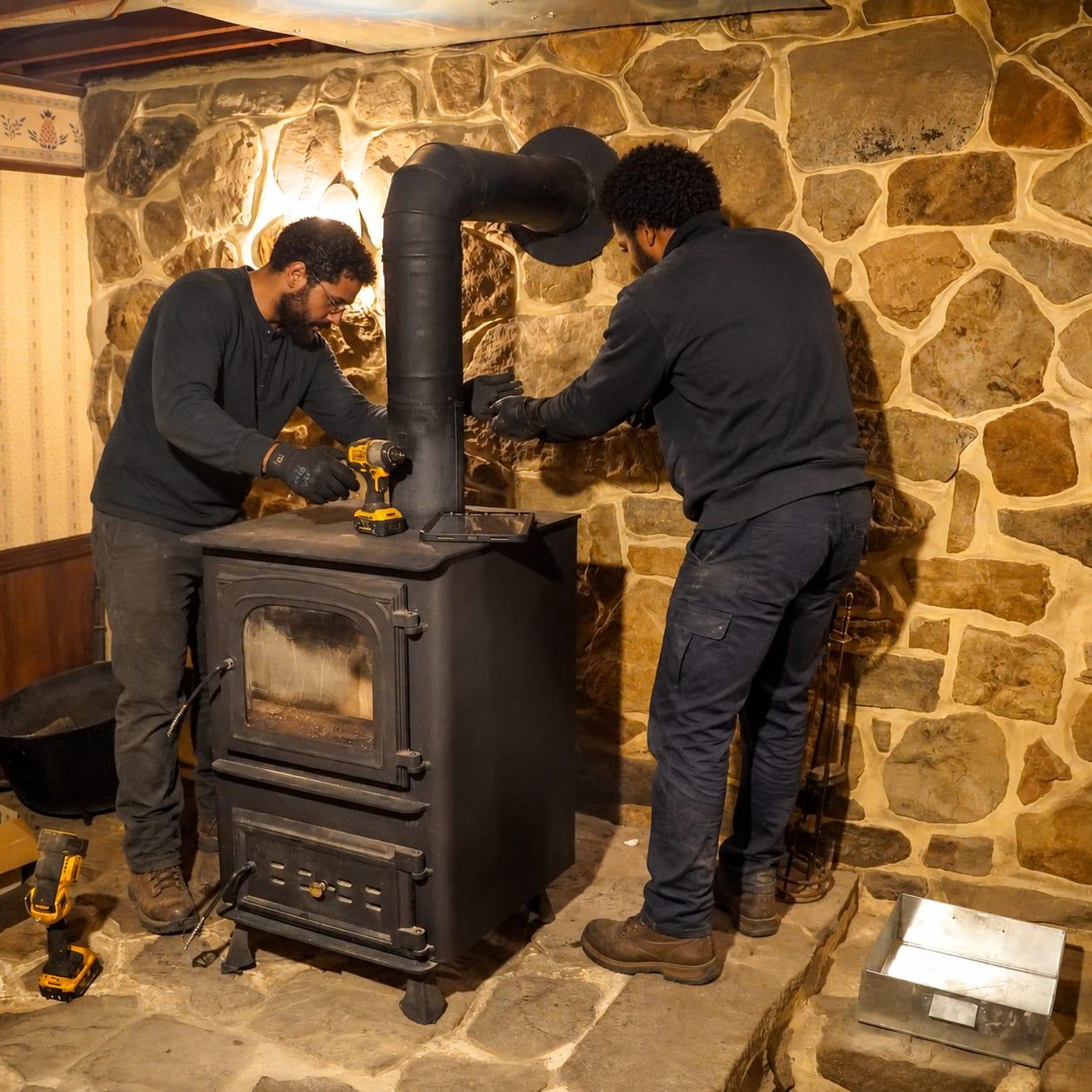
For masonry, that means building the firebox, smoke chamber and chimney. For factory-built, it means framing the opening, setting the unit and assembling its matching chimney system.
Finish the hearth and surround
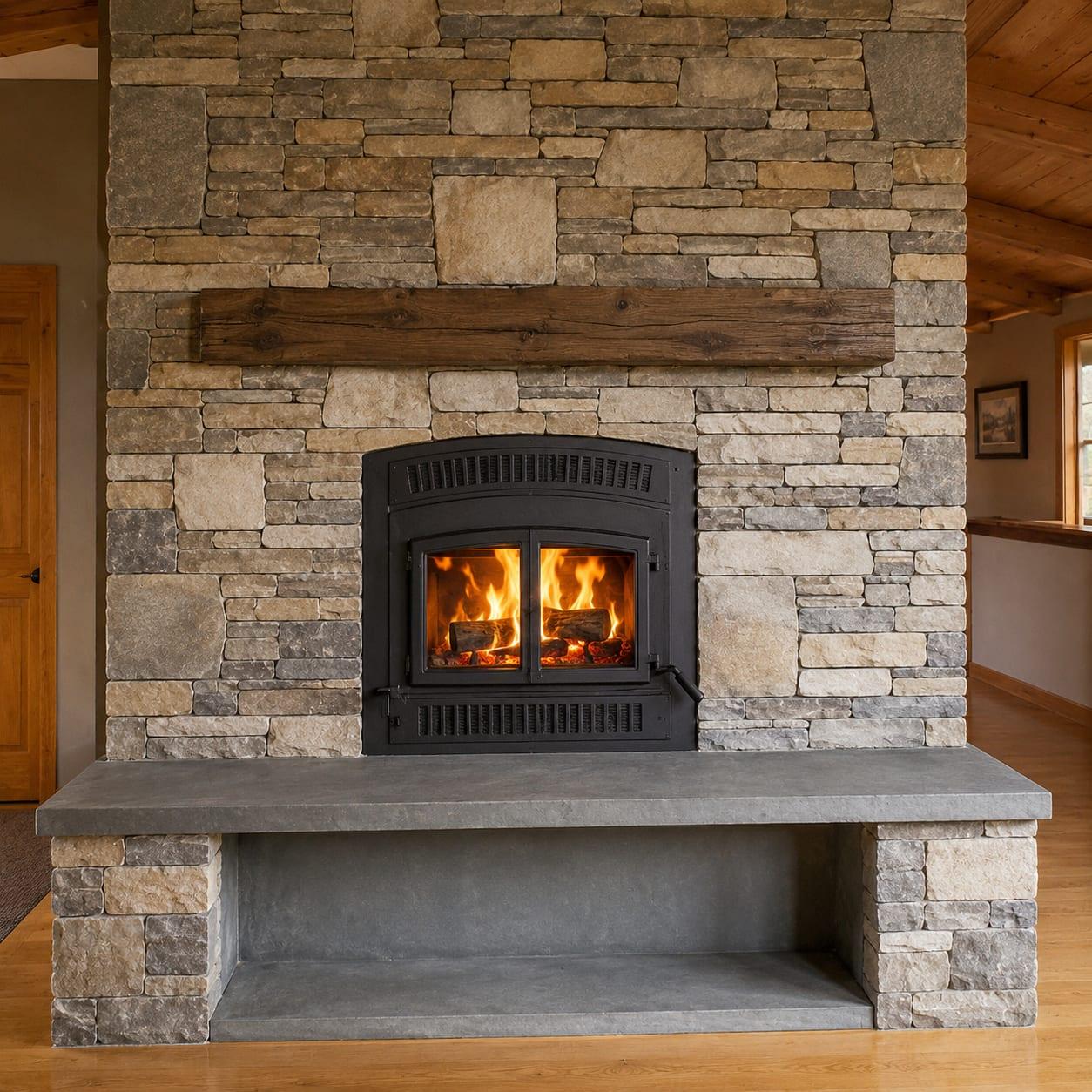
The noncombustible hearth and the facing around the opening go in, with trim and mantel placed at safe distances from the firebox.
Check and walk through operation
We confirm the damper and draft work as they should, then show you how to open the damper, build a fire and close the fireplace down afterward. Only try this once the flue has been checked clear of blockages and creosote; if smoke comes into the room, stop adding fuel and don't relight.
Burning safely in a new wood fireplace
Good habits from the first season
- Burn dry, seasoned firewood. Wet wood smokes more and builds creosote faster inside the flue.
- Never burn painted or treated lumber, cardboard boxes or household trash.
- Keep the hearth clear, and use a screen or doors to hold sparks in. Check your fireplace's manual first: some glass doors must stay fully open while a fire burns.
- Make sure working smoke and carbon monoxide alarms are installed in the home.
- Have the fireplace and chimney swept and inspected once a year, more often if you burn heavily.
Matching parts matter on factory-built units
A factory-built fireplace is designed to be used with the specific chimney parts listed for it. Mixing in pipe, caps or offsets from another system can change the clearances the unit depends on, so replacement parts should always match the listing.
How to book wood fireplace installation
Call or request an estimate, and tell us where you'd like the fireplace and whether the home has an existing chimney. We work on all major brands of fireplaces. We also handle commercial and property-manager work, along with gas fireplace and gas appliance jobs. If you're still choosing a fuel, our guide to electric vs gas fireplace options lays out the trade-offs next to wood.