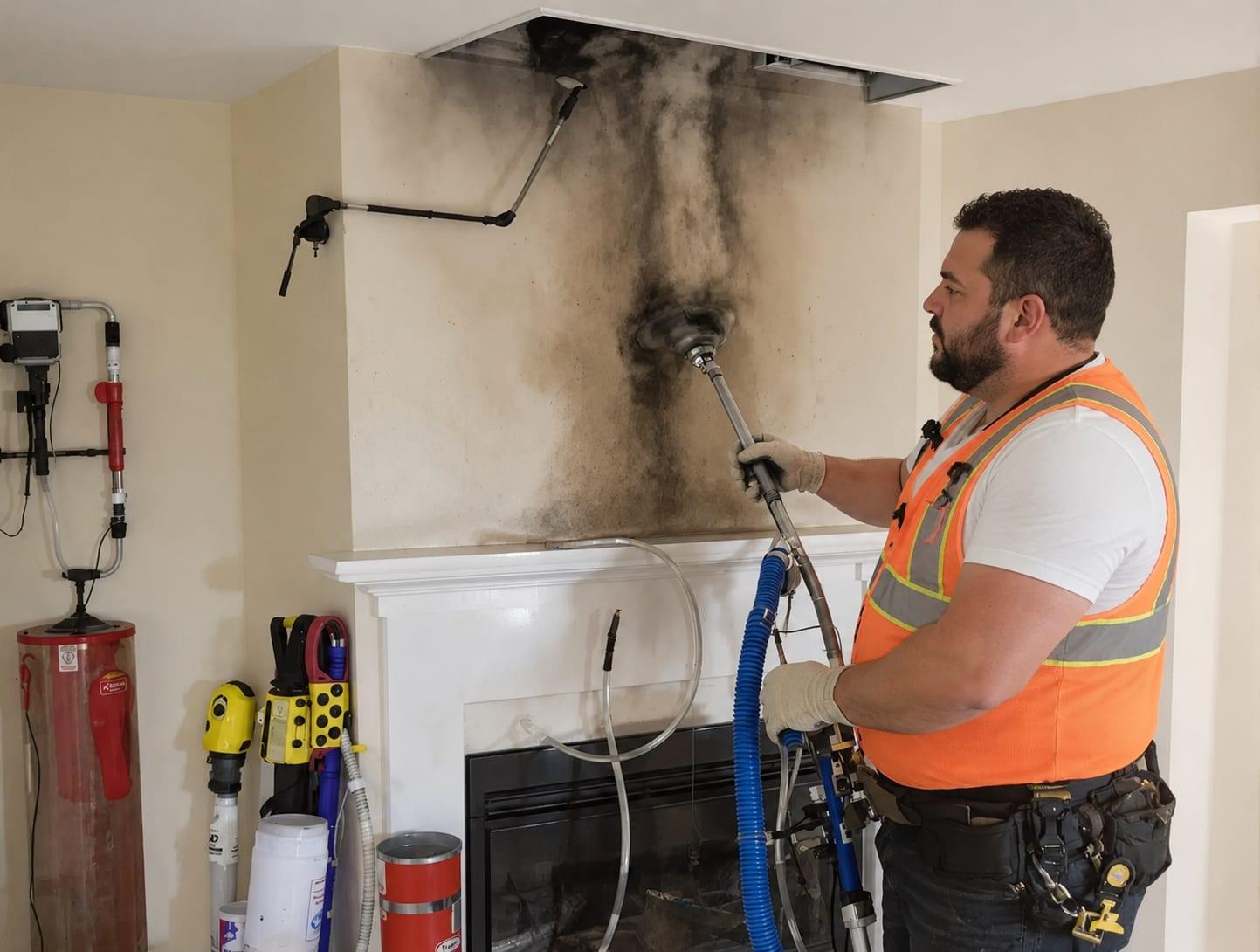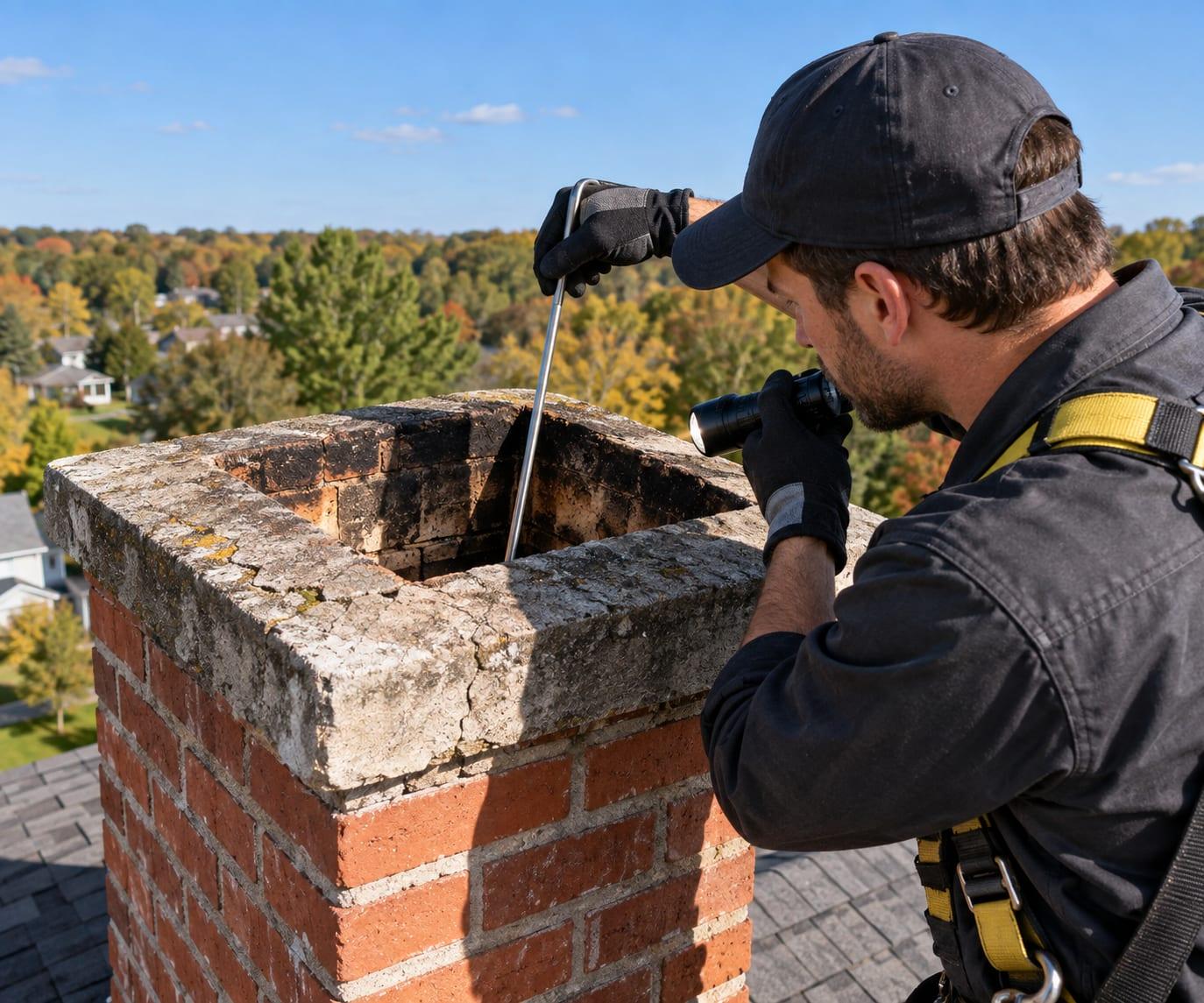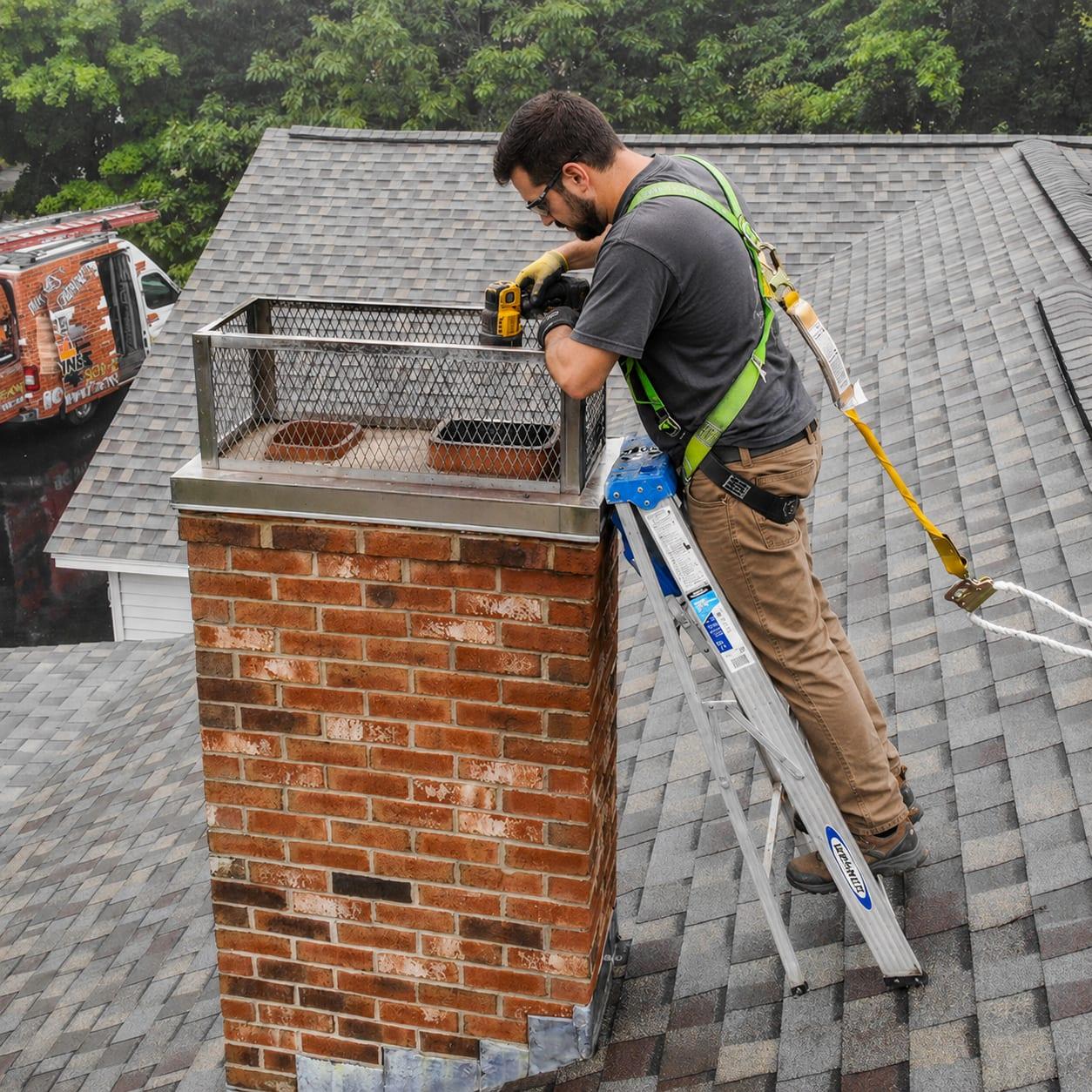
A technician carries out chimney inspection in Sandy Springs on masonry and prefab chimneys. This page covers three things: the roof flashing, the clearances between the chimney and the wood around it, and checks after storm damage. To book a visit, call or request an estimate. We tell you what we found and which job, if any, comes next.
When the inspection turns to the roof flashing
Flashing is the metal that seals the joint where the chimney comes through the roof. On the roof, we check whether the step and counter flashing still sit tight against the brick or chase. We look for lifted edges, rust, gaps in the sealant and patches that cover a gap without closing it. Inside, we look for water stains on the ceiling or in the attic next to the chimney, since flashing leaks often show up there first.
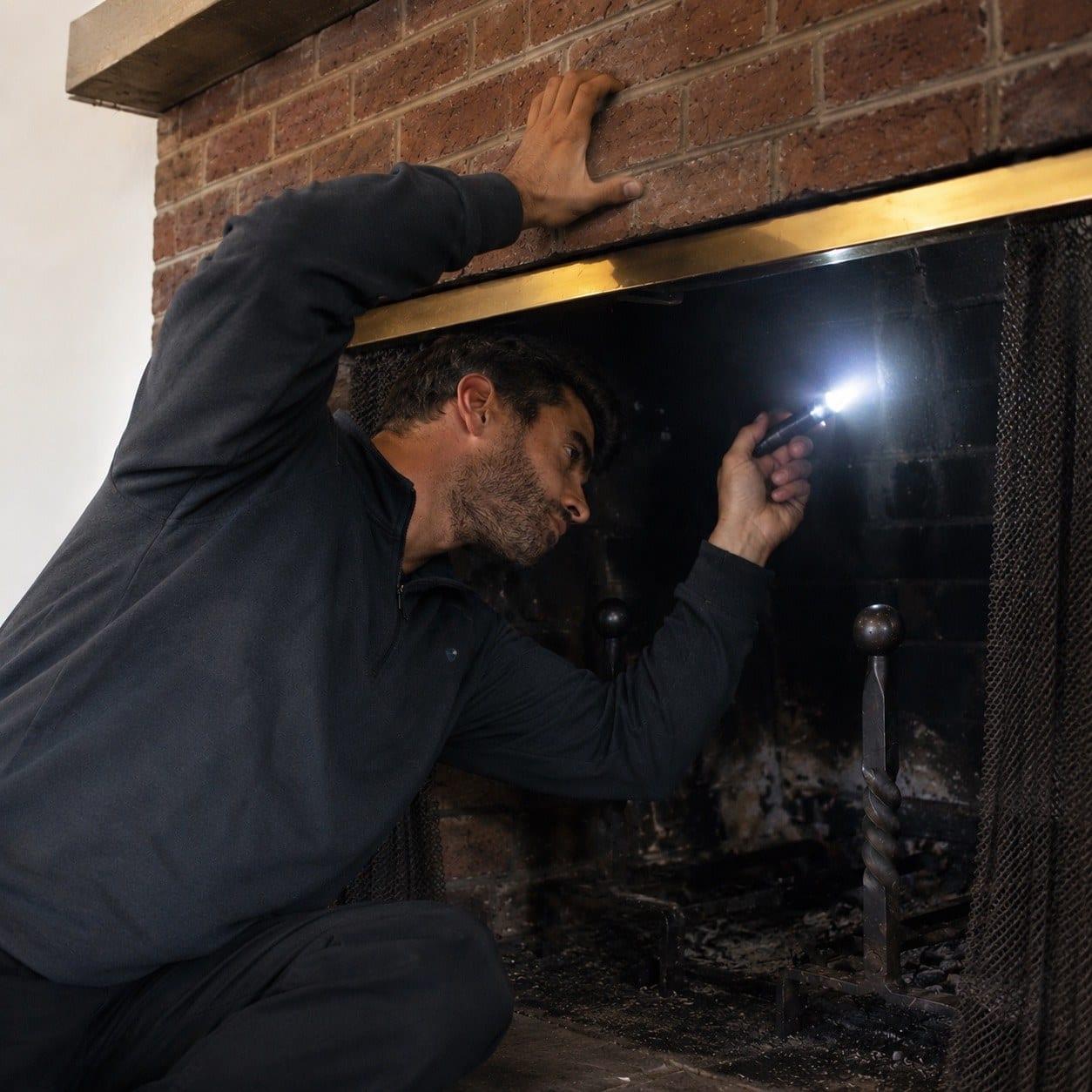
This part of the visit helps you choose between a few options. The flashing may only need resealing, or it may need replacing. Sometimes the water is coming in somewhere else, such as the crown or the masonry, and patching the flashing would leave the leak in place.
Checking clearances to combustibles
Clearance means the space kept between the hot parts of a fireplace and anything that can burn: framing, the mantel, trim, flooring and insulation. Where we can reach the chimney, including the attic, we check whether wood or insulation is touching or crowding it. On a prefab chimney, we look for the air space the system needs inside the chase. We also check how close the mantel and trim sit to the fireplace opening.
The findings help you decide whether the fireplace is fine to use as it is, or whether a mantel, trim or framing should be changed first. They also help if you are planning fireplace installation for homes in Sandy Springs and want to know what the existing space allows.
What the housing data bears on
About 6% of the housing units in Sandy Springs were built before 1960, according to the U.S. Census Bureau, American Community Survey 2019–2023 5-year estimates, table B25034 (Year Structure Built). If your home is one of these, the chimney's flashing, framing gaps and earlier repairs may come from a different era than the rest of the house. Tell us the year your home was built when you book, so the inspection can take it into account.
After a storm or an earthquake
High wind, a fallen limb or ground movement can damage a chimney in ways that are hard to see from the yard. An inspection after an event like this can include several checks:
- Looking for a leaning stack, cracked crown or loose bricks
- Checking whether the cap or the chase cover has shifted or come off
- Checking for flashing that has torn loose from the roof
- Running a camera inspection to look for cracks inside the flue
Until the chimney has been checked, it is safest not to light a fire.
Work an inspection can lead to
- Prefab chimney & chase repair is the right job when the inspection finds damage to a factory-built chimney's framing, siding or flue system.
- Chase cover replacement fits when the metal top of a prefab chase is rusted, dented or letting water into the chase.
Nearby areas
We also offer chimney inspection in Dunwoody, Brookhaven and Roswell.
The service page explains how chimney inspection works, including its types, process and components. Our Sandy Springs page lists everything else we do in the area.
Booking an inspection
Call or request an estimate to set up your visit. We also take on commercial and property-manager work, as well as gas fireplace and gas appliance work.
Sources (1)
The sources of the Sandy Springs facts on this page.
- 1U.S. Census Bureau, American Community Survey 2019–2023 5-year estimates, table B25034 (Year Structure Built)