On this page
What a real estate chimney inspection covers
A real estate chimney inspection is a full look at the chimney and fireplace system, timed around a home sale. It covers the parts you can see from the room and the roof, the flue interior on camera, and the accessible parts of the chimney in the attic, basement or crawl space. The goal is simple: before the sale closes, find any damage, blockage or venting problem that would make the fireplace unsafe or expensive to put right.
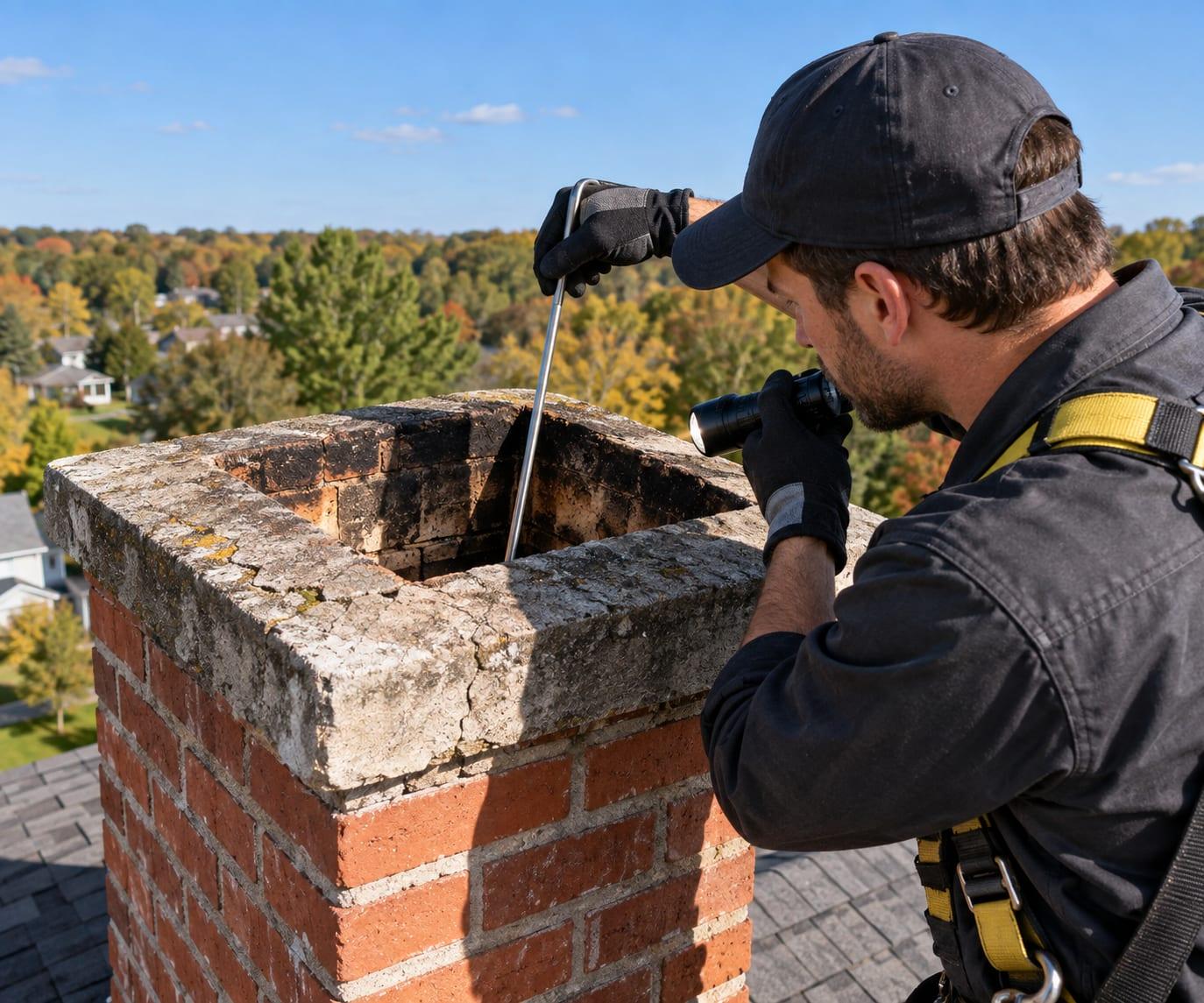
It goes further than a general home inspection. Most home inspectors shine a flashlight up the throat and look at the crown from the ground or the roof edge. Cracked flue tiles, gaps in the liner, heavy creosote higher up and nest debris usually can't be seen that way. For routine yearly checks that aren't tied to a sale, our standard chimney inspection service is the usual fit.
When a level 2 inspection applies
The CSIA standard of practice sets out inspection levels. A Level 2 inspection includes a video scan of the flue. That standard recommends a Level 2 inspection at a property sale or transfer, after a chimney fire, and after a weather or seismic event. This is an industry recommendation, not a code or legal requirement. Buyers often ask for one because the camera is the only practical way to see the full length of the flue.
If you want to know how Level 1, 2 and 3 differ and what triggers each, read chimney inspection levels explained.
Signs your home needs a real estate chimney inspection
Book one if any of these apply
- You are under contract on a home with a fireplace, wood stove or gas logs.
- You are listing a home and want to know about chimney problems before a buyer's inspector finds them.
- The home inspection report notes chimney cracks, staining, missing parts or a recommendation for further evaluation by a chimney specialist.
- The seller can't say when the chimney was last swept or inspected.
- The fireplace hasn't been used in years, or the house has been vacant.
- There are signs of a past chimney fire: puffy or flaky creosote, warped damper parts or cracked tiles.
- A storm has hit the home since it was last inspected.
If the concern is mainly wind, hail, lightning or fallen limbs rather than the sale itself, how storm damage chimney inspection works covers that visit in more detail.
What the visit involves, step by step
How the inspection runs
Exterior and roof check
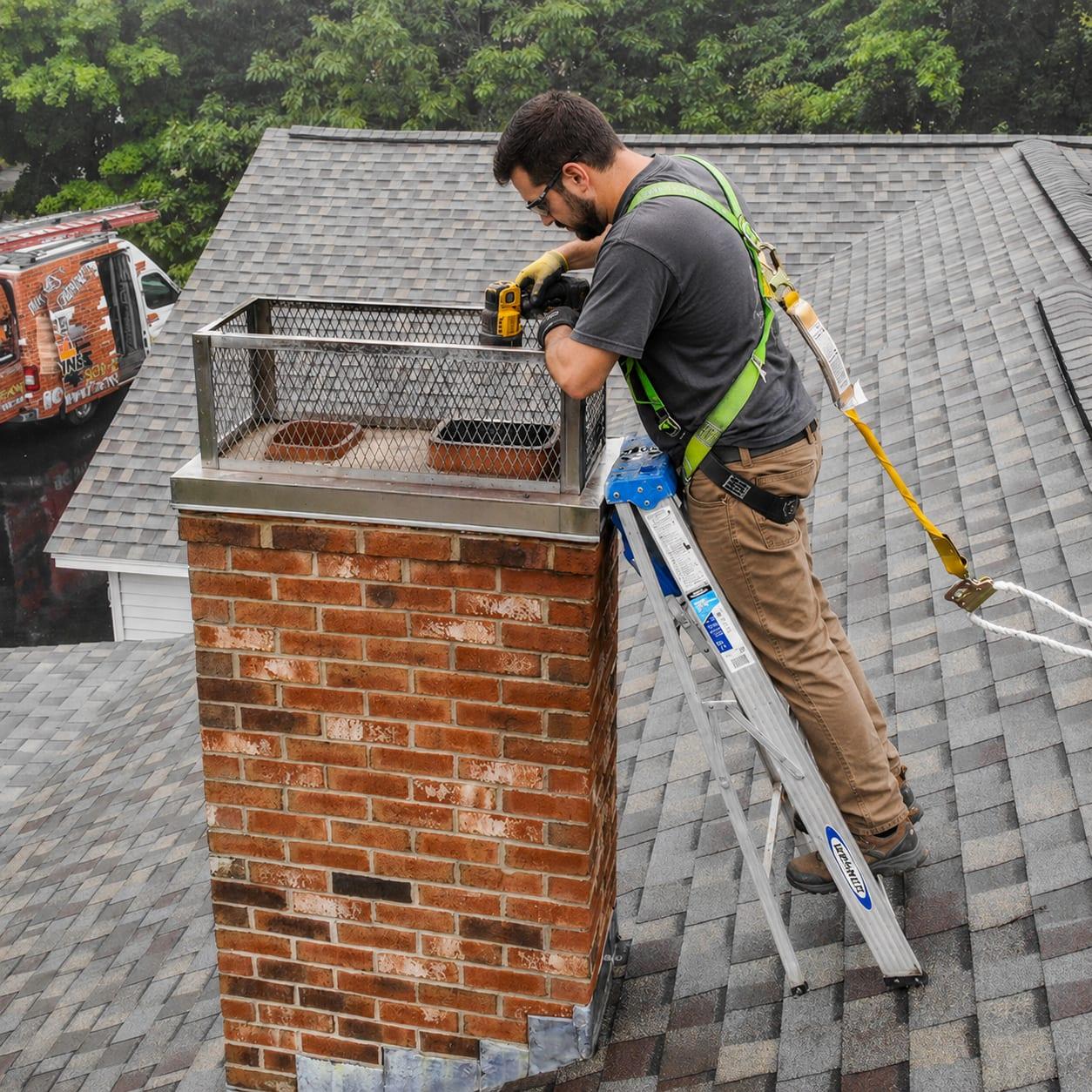
We look at the crown, cap, flashing, mortar joints and brick or siding on the chimney, and at how the chimney meets the roof.
Firebox and hearth
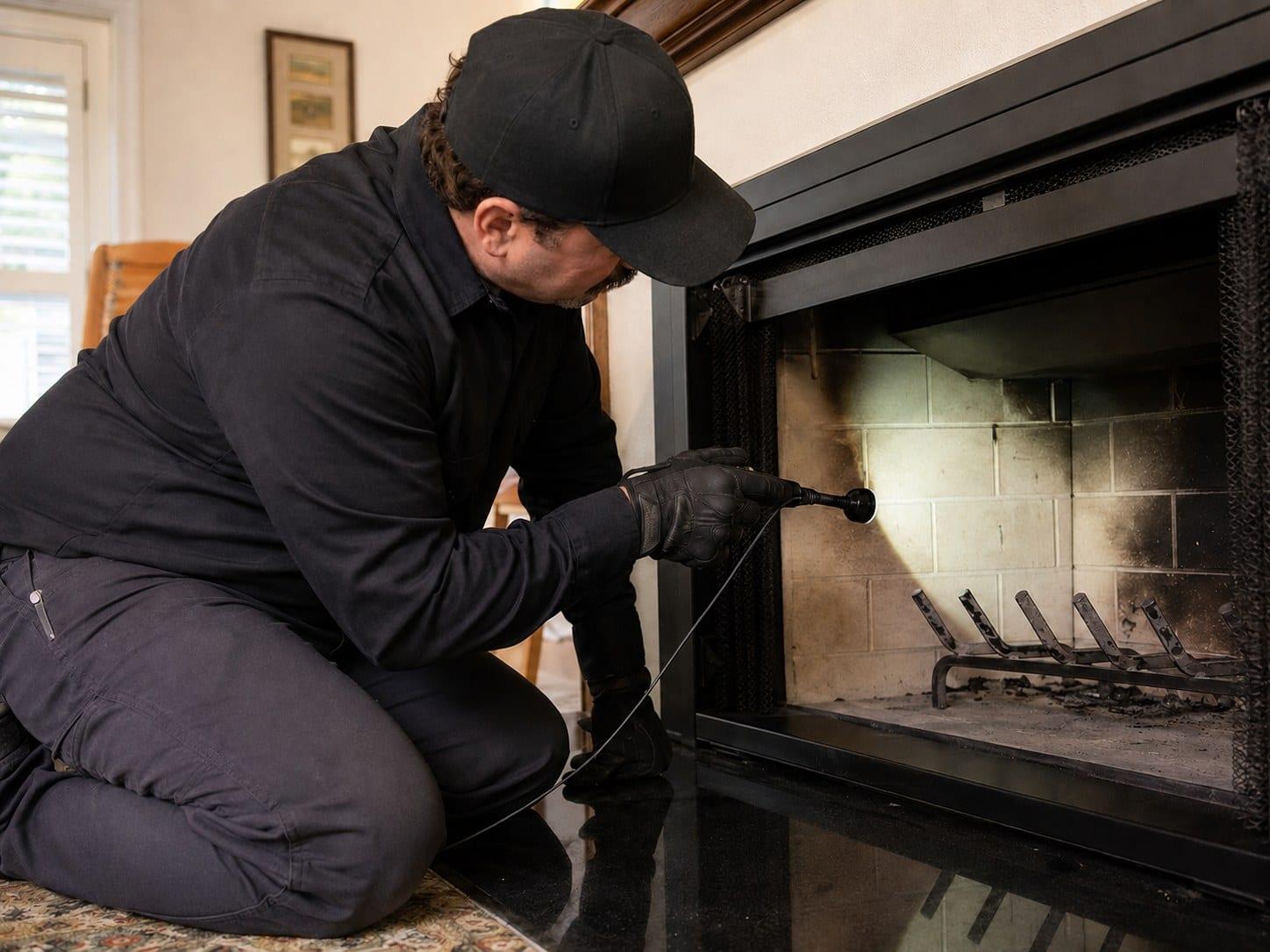
We check the firebox walls, refractory panels or brick, the hearth and the clearance to nearby woodwork and trim.
Damper and smoke chamber
We test that the damper opens, closes and seals, and look at the smoke chamber above it for cracks and buildup.
Video scan of the flue
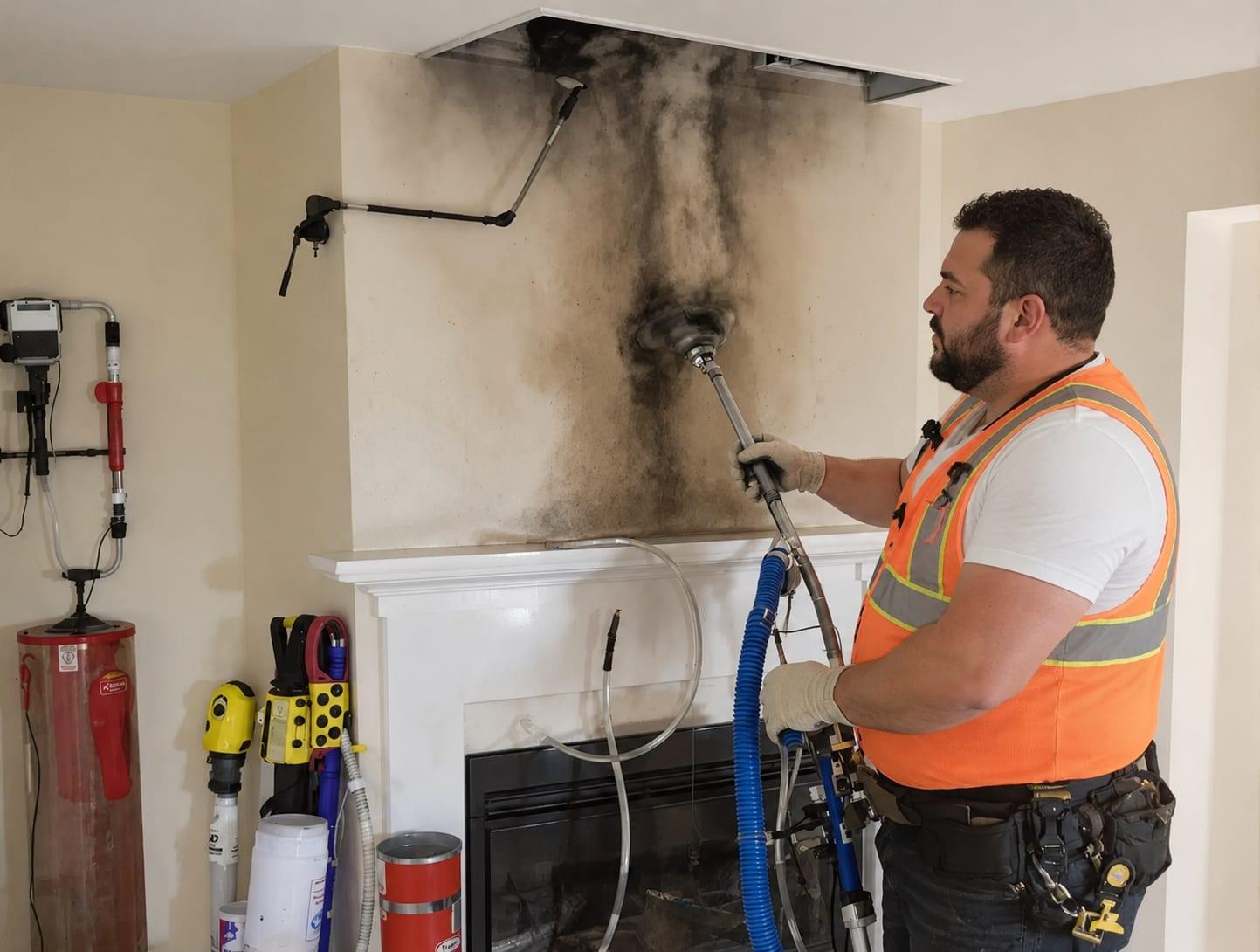
A camera travels the length of the flue to show the liner, joints, creosote levels and any blockage.
Accessible areas
Where the chimney passes through the attic, basement or crawl space, we check for heat damage, water staining and gaps.
Findings
We walk you through what we found and show you the camera footage, so you can take it back to your agent or the other party.
Parts of the system we look at
- Masonry and crown: cracked crowns and open mortar joints let water into the structure.
- Flashing: the seal where the chimney meets the roof is a common source of leaks.
- Flue liner: cracked or missing tiles, or a damaged metal liner, can let heat and gases reach the framing.
- Damper: rusted or stuck dampers waste heat or block smoke. See types of chimney dampers for the differences between throat and top-sealing designs.
- Firebox and refractory panels: gaps and spalling here allow heat to reach the wall behind.
- Prefab units and chases: factory-built fireboxes, metal flues and chase covers are checked for rust, separation and missing parts.
- Gas logs and gas appliances: venting, log placement and visible connections are checked on gas setups.
If the sale also involves questions about the fireplace itself, such as doors, glass or an insert, our fireplace inspection focuses on those parts.
Safety and maintenance context
Hold off on that first fire
In a home you've just bought, it's wise not to light a fire until the chimney has been inspected. Only try this once the flue has been checked clear of blockages and creosote; if smoke comes into the room, stop adding fuel and don't relight. Hidden creosote, a cracked liner or an old nest can turn a first fire into a chimney fire or push smoke back into the room.
Gas fireplaces need the same attention. A blocked or damaged vent can send combustion gases, including carbon monoxide, back into the house. Working carbon monoxide alarms on each level are a sensible precaution in any home with fuel-burning appliances.
After the sale, the chimney becomes routine upkeep. A yearly inspection and sweeping as needed keep small problems, like a loose cap or a hairline crown crack, from turning into water damage.
Booking your real estate chimney inspection
Sale contracts run on deadlines, so get in touch as soon as you know the chimney needs a look. Commercial and property-manager work is offered, so agents and managers handling several properties can schedule with us too. Call or request an estimate to set up the visit.