On this page
What a storm damage chimney inspection covers
A storm damage chimney inspection looks at your chimney with one question in mind: did this storm change anything? We work from the top down. Outside, we check the cap and crown, the masonry or chase, and the flashing where the chimney meets the roof. Inside, we look at the flue, the damper, the smoke chamber and the firebox for debris, cracks or water that came in from above.
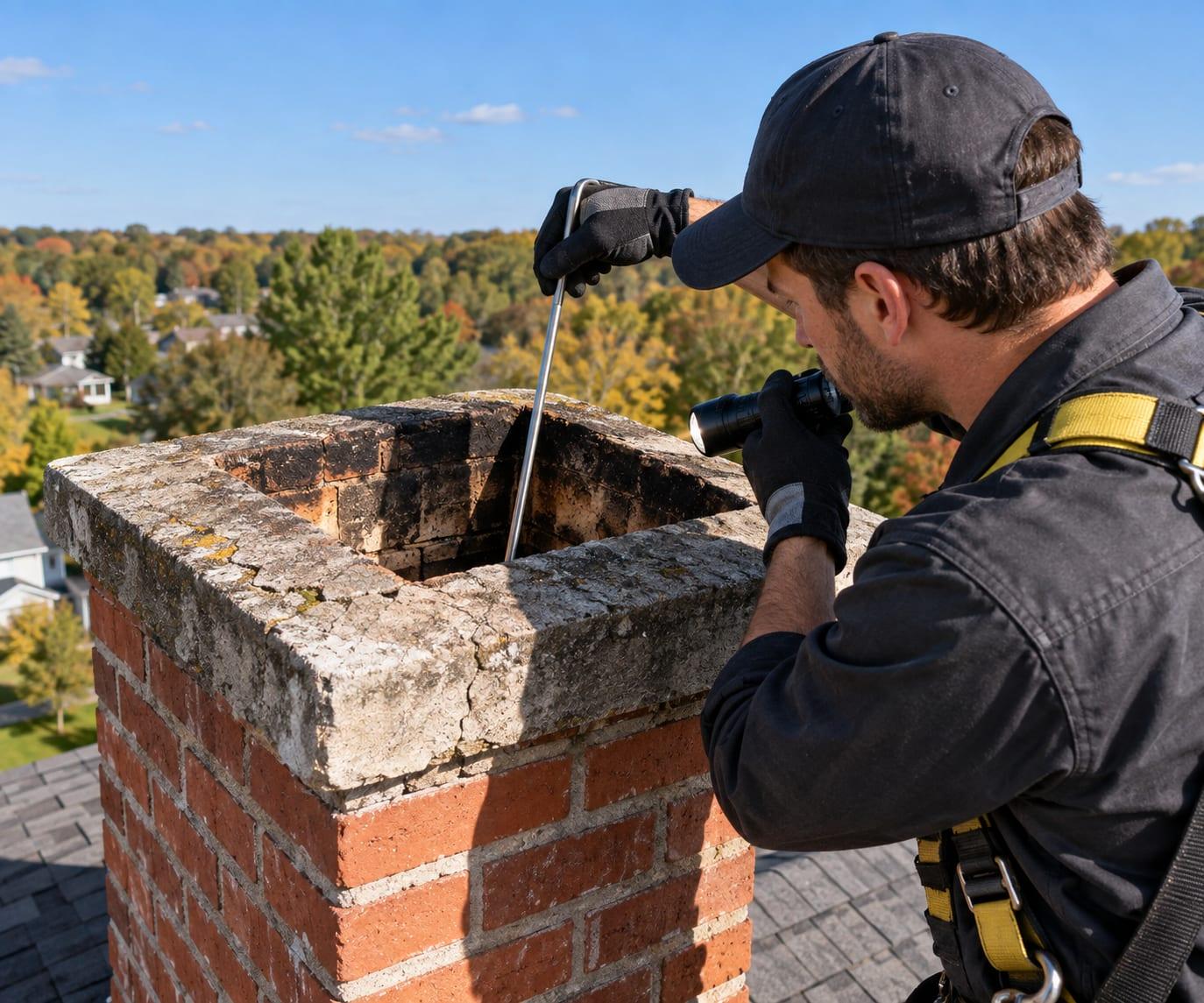
It is narrower than a routine annual check. A general chimney inspection service reviews the whole system's condition and maintenance. A storm inspection looks for new damage and new blockages.
Signs your chimney may need a check after a storm
Some storm damage is obvious. Much of it isn't. Call for an inspection if you notice any of these:
Reasons to book an inspection
- A tree or large limb hit the roof near the chimney, or landed on it
- The chimney cap is missing, bent or sitting crooked
- Bricks, mortar pieces or metal trim turned up in the yard or gutters
- The chimney looks like it leans, or a crack appeared that wasn't there before
- New water stains on the ceiling or wall beside the fireplace, or water in the firebox
- Shingles or flashing around the chimney base are lifted or torn
- Lightning struck the house or something close to it
- Smoke backs up, or the fireplace smells different than it did before the storm
- Leaves, twigs or debris have fallen into the firebox
Hold off on using the fireplace
If you suspect storm damage, don't light a fire or run a gas fireplace until the chimney has been checked. A cracked flue or a blocked opening can send smoke, heat or carbon monoxide into the house instead of out of it.
What happens during the visit
How a storm inspection usually goes
Talk through what happened
Tell us what you saw during and after the storm: falling limbs, a missing cap, a leak, a strike nearby. That tells us where to look first.
Exterior and roof-level check
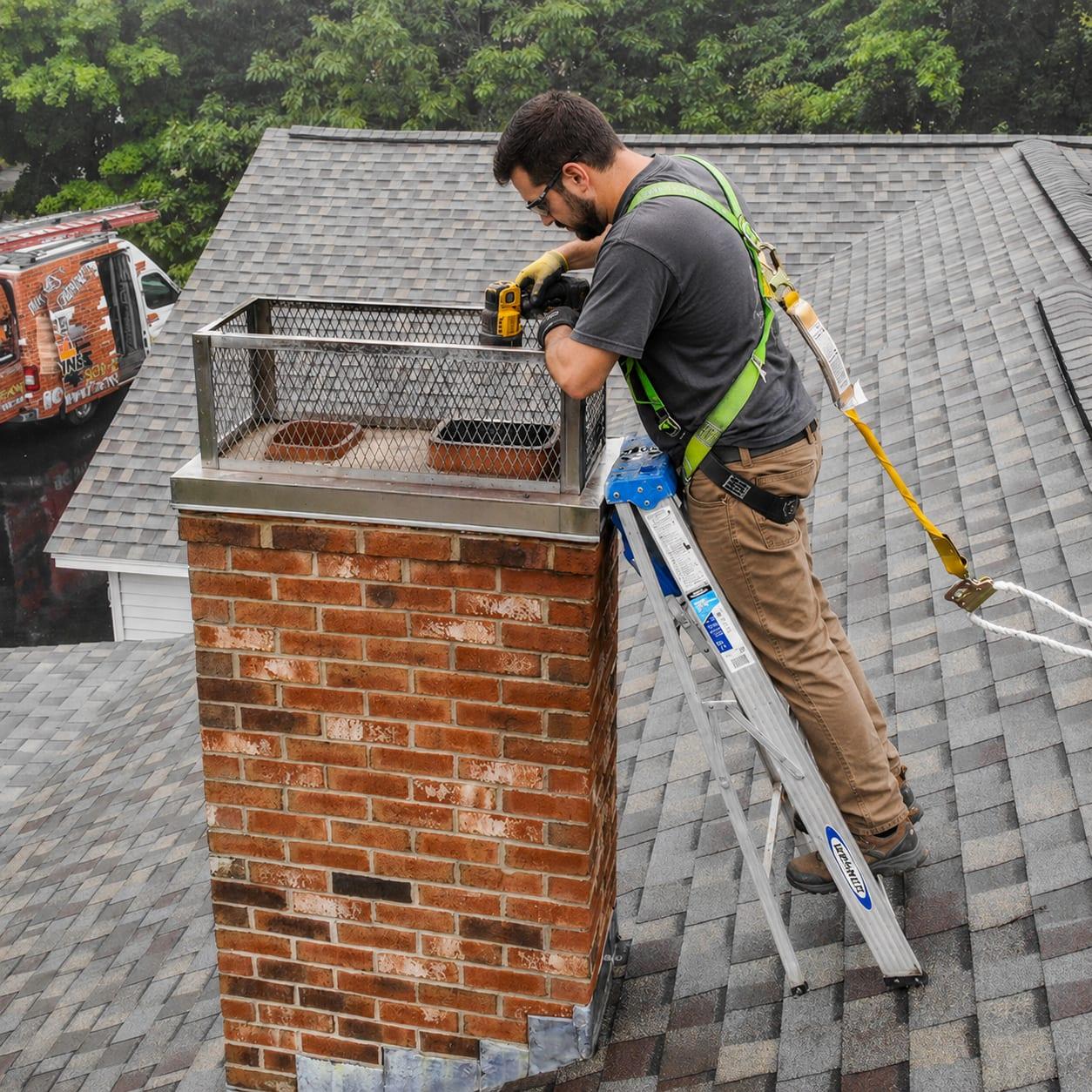
We inspect the cap, crown, masonry or chase cover, and flashing for cracks, displacement, missing pieces and gaps where water can get in.
Interior check of the fireplace and damper
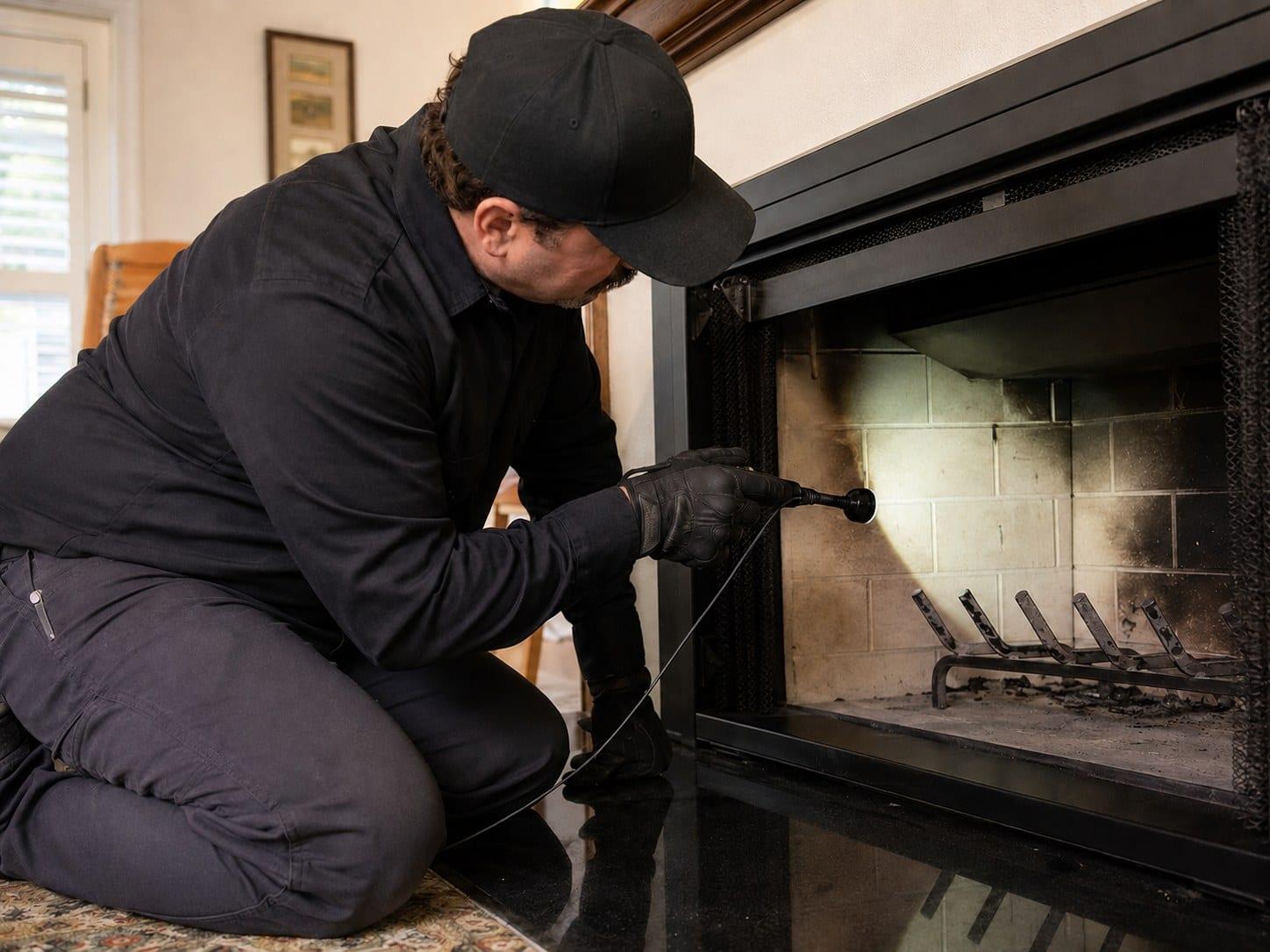
We look in the firebox and smoke chamber for debris, water and fallen material, and we test whether the damper opens and seals properly.
Look inside the flue
We check the flue for blockages and for cracks or shifted sections. A camera can show liner damage that isn't visible from either end.
Walk you through the findings
We explain what we found, show you the damage, and tell you whether the chimney is safe to use and which repairs it needs, if any.
Parts of the chimney storms affect most
| Part | What storms can do | Why it matters |
|---|---|---|
| Cap | Blown off, bent or crushed by limbs | Without a working cap, rain, debris and animals can get into the flue |
| Crown | Cracked by impact or hail | Water gets into the masonry below and damages it over time |
| Flashing | Lifted or torn by wind | One of the most common sources of leaks around a chimney |
| Masonry or chase | Loose bricks, cracked mortar, dented metal chase | Weakens the structure and lets water in |
| Flue liner | Cracked or shifted by impact or lightning | Heat and combustion gases can escape into the walls or the house |
| Damper | Jammed by debris, rusted by incoming water | Affects draft and whether the fireplace seals when it's not in use |
If the damper is damaged and you're deciding what to replace it with, our guide to types of chimney dampers covers the options. Gas fireplace and gas appliance work is offered, so we can check gas units vented through the chimney during the same visit.
Safety and upkeep after a storm
Stay off the roof. Wet shingles, loose bricks and a damaged chimney are a dangerous combination, and binoculars from the ground show most of what a homeowner needs to see. If bricks fell, keep people and pets away from the area under the chimney until it has been checked.
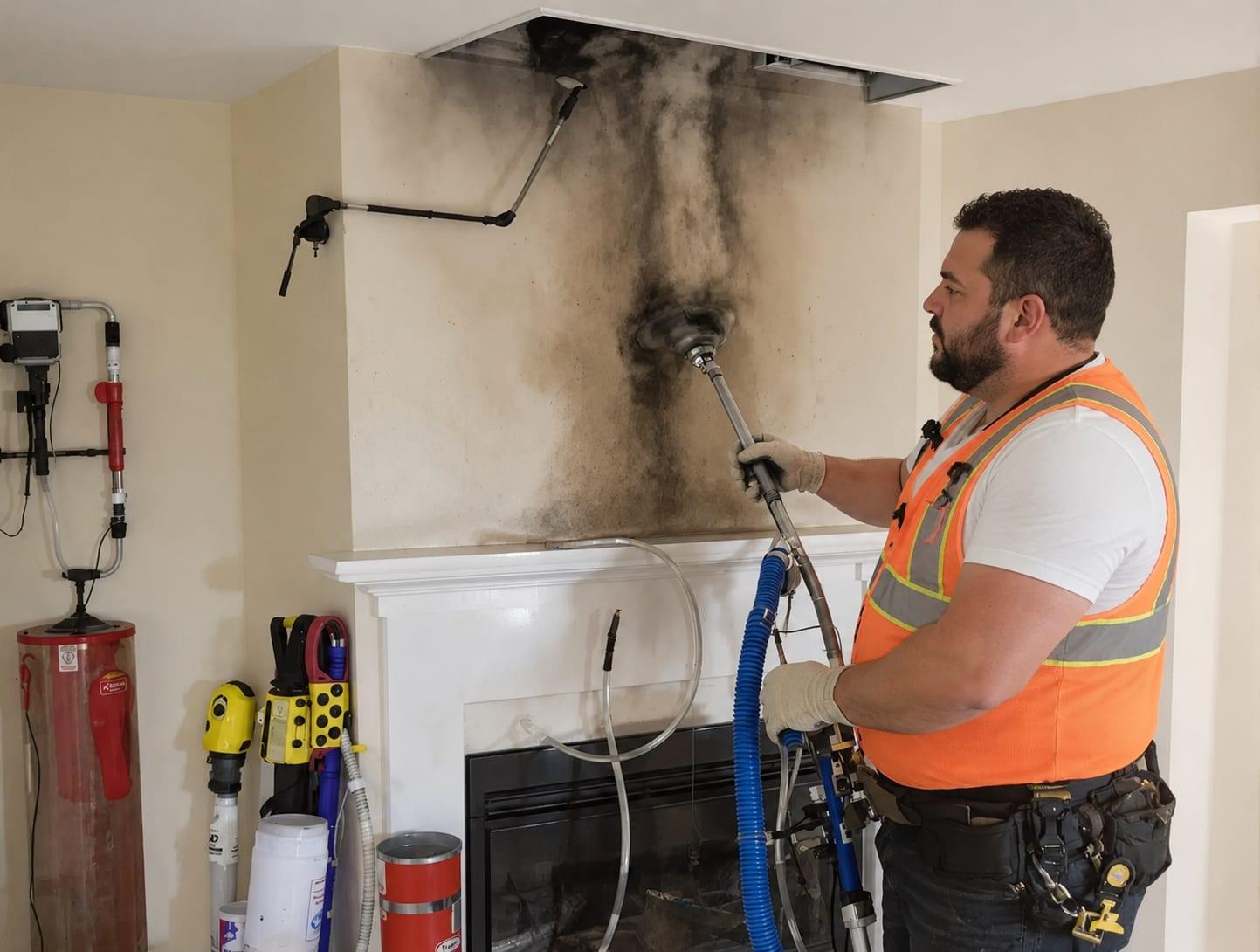
Take photos of any visible damage and debris for your own records before cleaning up. If the inspection turns up debris, nesting material or heavy buildup in the flue, a chimney sweep clears it so the chimney can draft properly again. If you're buying or selling a home after a storm, a real estate chimney inspection documents the chimney's condition for the sale.
Booking a storm damage chimney inspection
Get in touch and tell us what happened during the storm. Commercial and property-manager work is offered, so you can schedule checks for several buildings after the same storm.