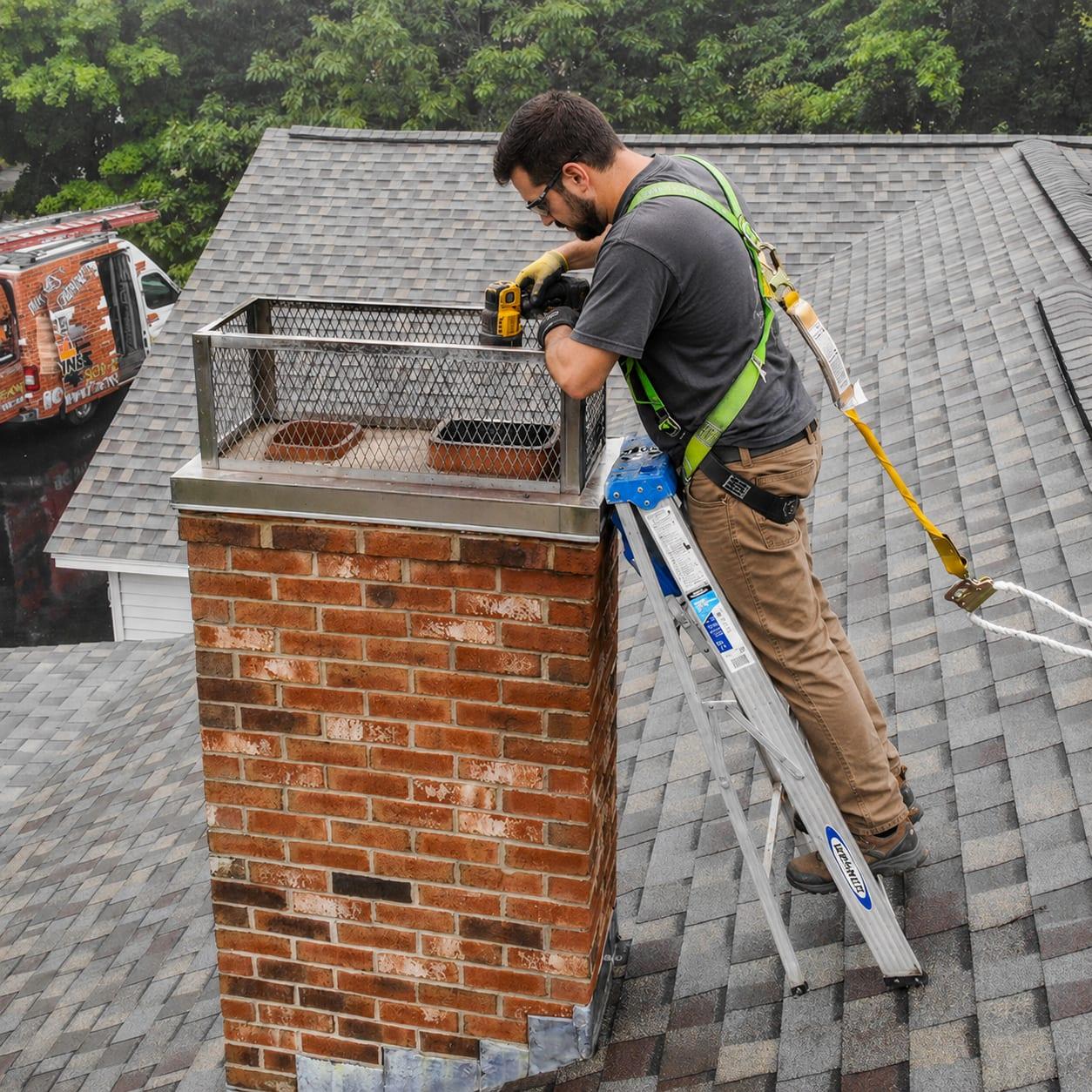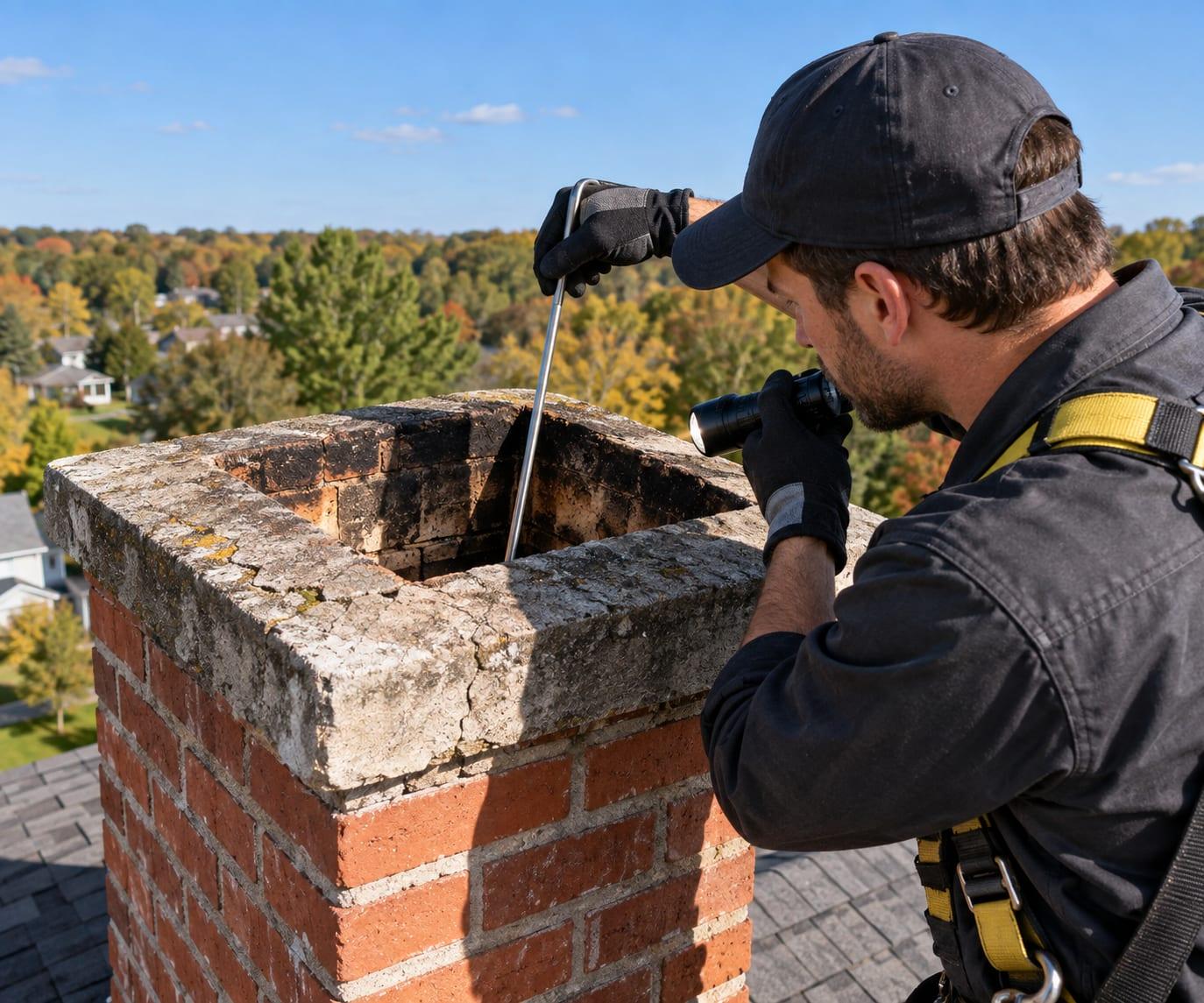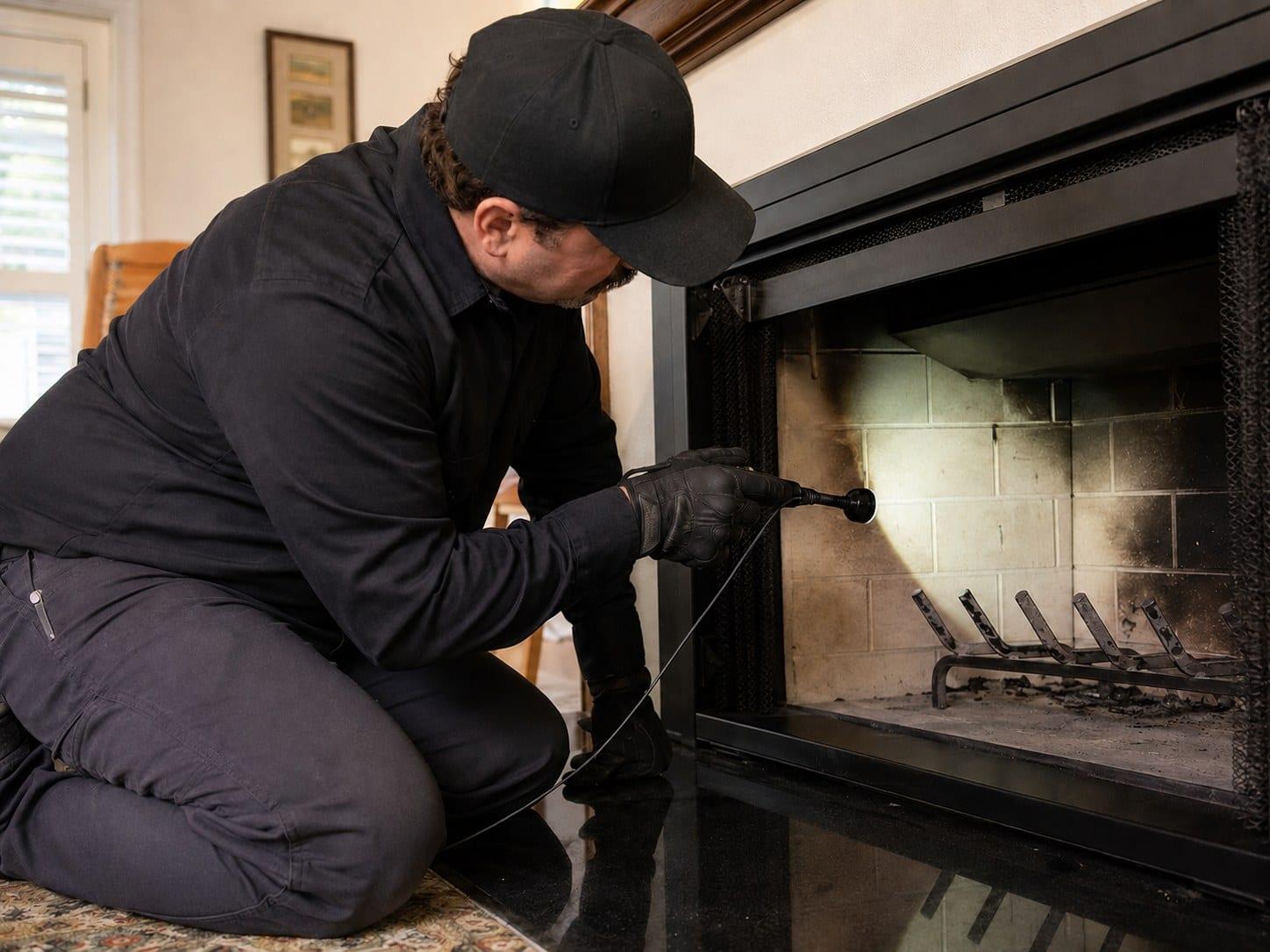
When a storm leaves your chimney looking different
The storm has passed, and something about the chimney is off. There may be brick pieces in the gutter, a cap sitting crooked, a fresh water stain on the ceiling near the fireplace, or nothing you can see but a loud strike you heard nearby. A chimney sits at the highest, most exposed point of most homes. It takes the full force of wind, hail, flying debris and lightning, and damage that starts small can let water and heat get where they shouldn't.
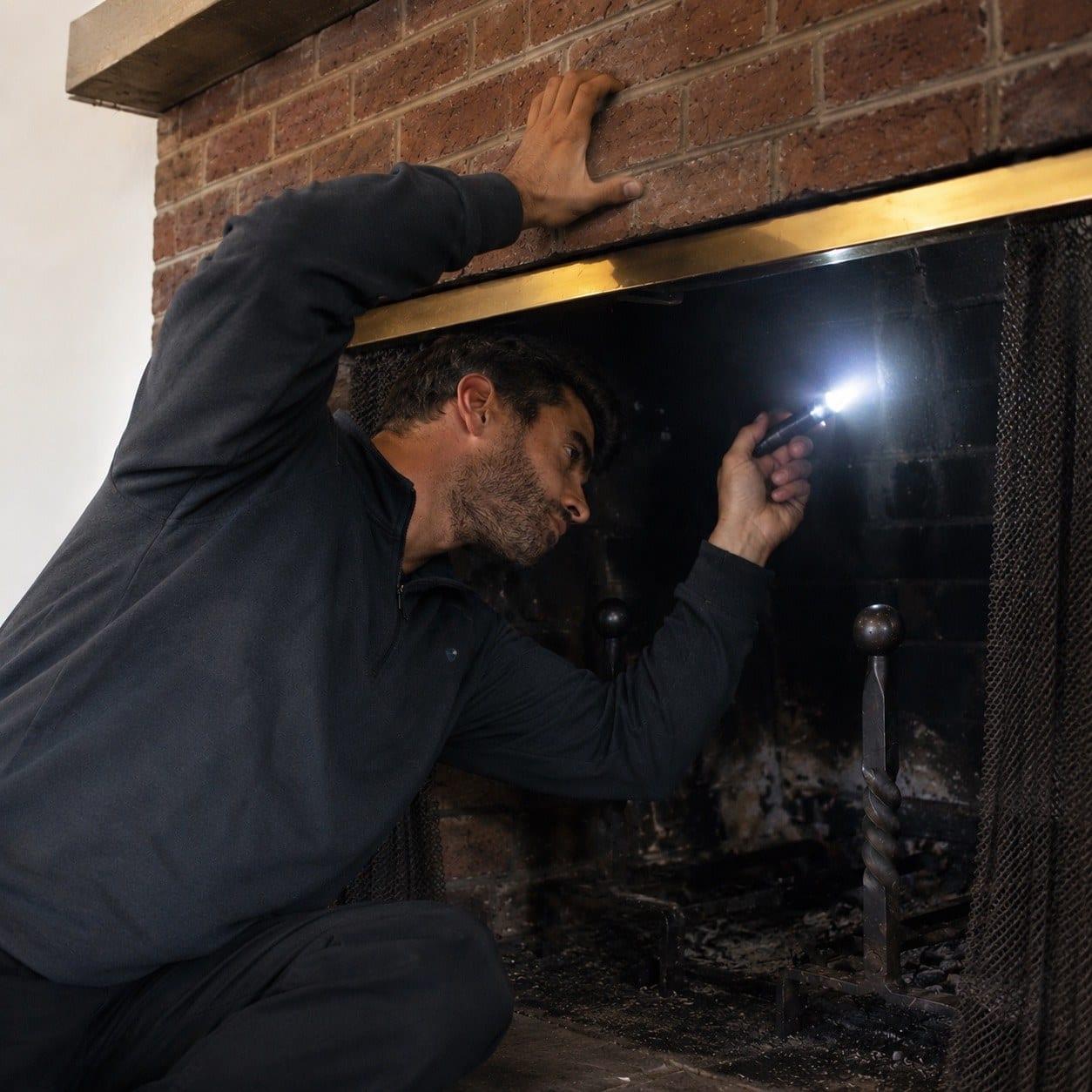
The main risk is damage you can't see from the ground. A cracked flue liner or a loosened crown can look normal from the yard and still make the fireplace unsafe to use.
Common signs of chimney storm damage
Look for these from the ground or inside the house
- Brick, mortar or crown fragments on the roof, in gutters or on the ground near the chimney
- A chimney cap or chase cover that is bent, shifted or missing
- Flashing that is lifted, torn or pulled away where the chimney meets the roof
- New water stains, damp spots or peeling paint on walls or ceilings near the chimney
- Water, debris or bits of tile and masonry inside the firebox
- A chimney that now looks tilted or has a gap opening up against the house, which is a sign of a leaning chimney
- Scorch marks, cracked bricks or a burnt smell after a nearby lightning strike
- A damper that sticks or won't close after the storm
- Smoke backing into the room the next time you try to use the fireplace
What might have caused it
Storm damage usually comes from one or more of the causes below. These are possibilities only. An inspection confirms what actually happened and how far it goes.
Possible causes and how they're checked
01High wind
- What you may notice
- Cap, chase cover or flashing bent, lifted or gone; loose bricks near the top of the stack
- How it’s confirmed
- A close look at the top of the chimney, the cap, the chase cover and every flashing seam
02Hail or flying debris
- What you may notice
- Chipped or cracked crown, spalled brick faces, dents in a metal chase cover or cap
- How it’s confirmed
- The crown and masonry surfaces are checked for cracks and broken edges that let water in
03Lightning strike
- What you may notice
- Displaced or blown-out bricks, scorch marks, debris in the firebox, sometimes no outside sign at all
- How it’s confirmed
- Exterior masonry is checked and the flue is examined from the inside, where liner cracks hide
04Fallen tree or limb
- What you may notice
- Visible impact damage, a shifted or leaning stack, cracks running down the chimney
- How it’s confirmed
- The structure is checked for movement and separation from the house, along with the liner inside
05Wind-driven rain getting past weak spots
- What you may notice
- Leaks or stains that show up only after heavy rain with wind
- How it’s confirmed
- Flashing, crown, cap and masonry joints are traced for the point where water enters
How urgent is it, and when to stop using the fireplace
Stop using the fireplace or stove until it's checked
Don't light a fire or run a gas fireplace if you see any sign of storm damage, or if lightning struck the house or chimney. A cracked liner can let heat and flames reach the wood framing around the chimney, which adds to the chimney fire risk. It can also let smoke or gases leak into the home. If you smell gas, leave the house and call your gas utility or 911 from outside.
Loose bricks or a leaning stack are urgent for a separate reason, because they can fall. Keep people and pets away from the area below the chimney. A missing cap or a minor leak is less dangerous in the moment, but water keeps working into masonry and framing with every rain, so it's worth scheduling soon rather than waiting.
Emergency calls are accepted, and 24-hour service runs Sunday–Friday.
What not to do
- Don't climb onto the roof to check the chimney yourself, especially when it's wet or debris is loose.
- Don't light a test fire to see whether the chimney still draws.
- Don't seal cracks with caulk or patch compound before the damage has been checked, because it can trap water and hide the real problem.
- Don't pull on loose bricks or a dangling cap from a ladder.
What normally fixes it
From the storm to a safe chimney
Inspection first
A storm damage chimney inspection looks at the outside of the chimney and the flue inside it, so you know what was damaged and what wasn't.
Making it safe
Loose masonry, a dislodged cap or open gaps that let rain in are dealt with first, so the damage doesn't spread.
Repairing what's damaged
The repair matches what the inspection found. That might be a small fix at the top of the chimney or work inside the flue.
Depending on what the inspection finds, repairs may include chimney flashing repair, chimney crown repair, chimney masonry repair or tuckpointing, chimney cap replacement, chase cover replacement, chimney leak repair, chimney liner repair or replacement, chimney waterproofing, and in serious cases a chimney rebuild. For a general picture of what a regular check covers, here is how chimney inspection works.
Related services
If you're buying or selling a home after a storm, a real estate chimney inspection can document the chimney's condition before closing. We also offer insurance chimney inspections and chimney camera inspections when the flue needs a closer look. Gas fireplace and gas appliance work is offered too, so a gas unit tied into a damaged chimney can be checked on the same visit.