On this page
What chimney animal and nest removal involves
An open flue is a dry, sheltered shaft, and birds, squirrels, raccoons and other animals treat it like a hollow tree. Chimney animal and nest removal means getting any animal out of the chimney, pulling out the nest material, droppings and debris it brought in, and checking the flue so it is clear and safe to use again. The work usually ends with animal proofing, because removing a nest without closing the entry point often means a new one by next season.
A nest is more than a nuisance. Twigs, leaves and fur can block the flue, keep smoke and combustion gases from venting, and dry out into fuel sitting right above the fire. That is why a chimney with a nest in it should not be used until it has been cleared.
Signs an animal or nest is in your chimney
Common signs homeowners notice
- Scratching, scurrying, flapping or chirping inside the chimney, often at dawn or dusk
- Twigs, leaves, feathers or droppings falling into the firebox
- A musty or rotten smell from the fireplace, especially in damp weather
- Smoke backing into the room instead of drawing up the flue
- Birds or squirrels going in and out at the top of the chimney
- A missing, bent or rusted chimney cap
Sound is the most common first clue, and not every noise means an animal. Wind, loose caps and metal expanding can all make a racket, so it helps to read up on what causes a noisy chimney before assuming the worst. For other warnings worth paying attention to, our guide to the signs your chimney is telling you covers what each one usually points to.
Before we get there
Do not light a fire to drive an animal out. It can trap or injure the animal and can ignite the nest. Keep the damper and fireplace doors closed so nothing gets into the house, keep pets away from the fireplace, and avoid reaching into the flue yourself. Only close it once the fireplace is completely cold and no stove, furnace or water heater vents into that flue.
What the visit involves, step by step
How a removal visit goes
Talk through what you have noticed
Sounds, smells, debris and when it started help us judge what kind of animal is likely involved and where in the chimney it may be.
Inspect from the top and the bottom
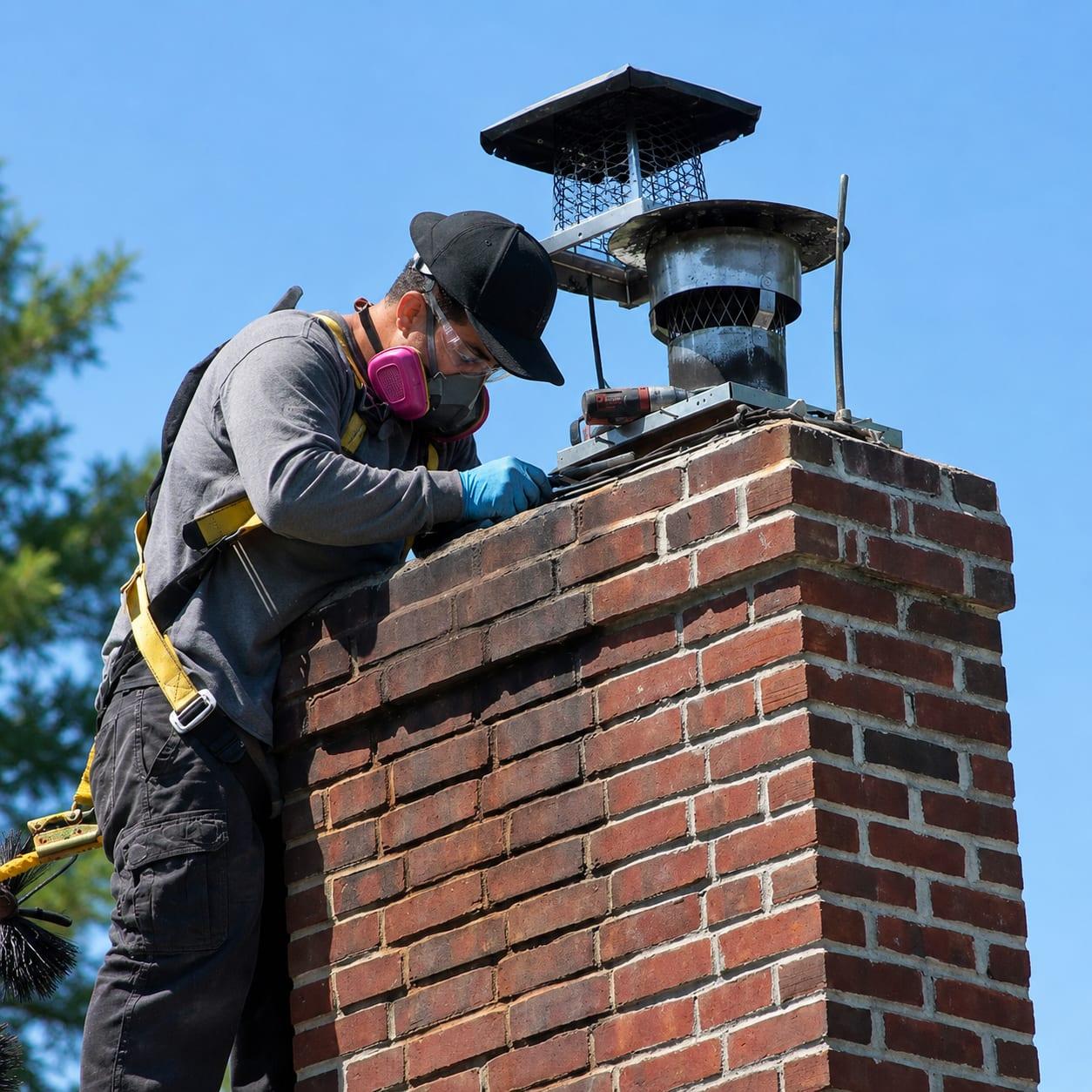
We look at the cap, crown and flue opening from the roof and check the damper and smoke chamber from the fireplace. A chimney camera inspection is used when the nest or blockage sits out of direct view.
Get any animal out first
If an animal is still in the flue, removing it comes before anything else. Some chimney-nesting birds are protected species, so an active nest with eggs or young can affect timing; we explain your options if that is what we find.
Remove the nest and debris
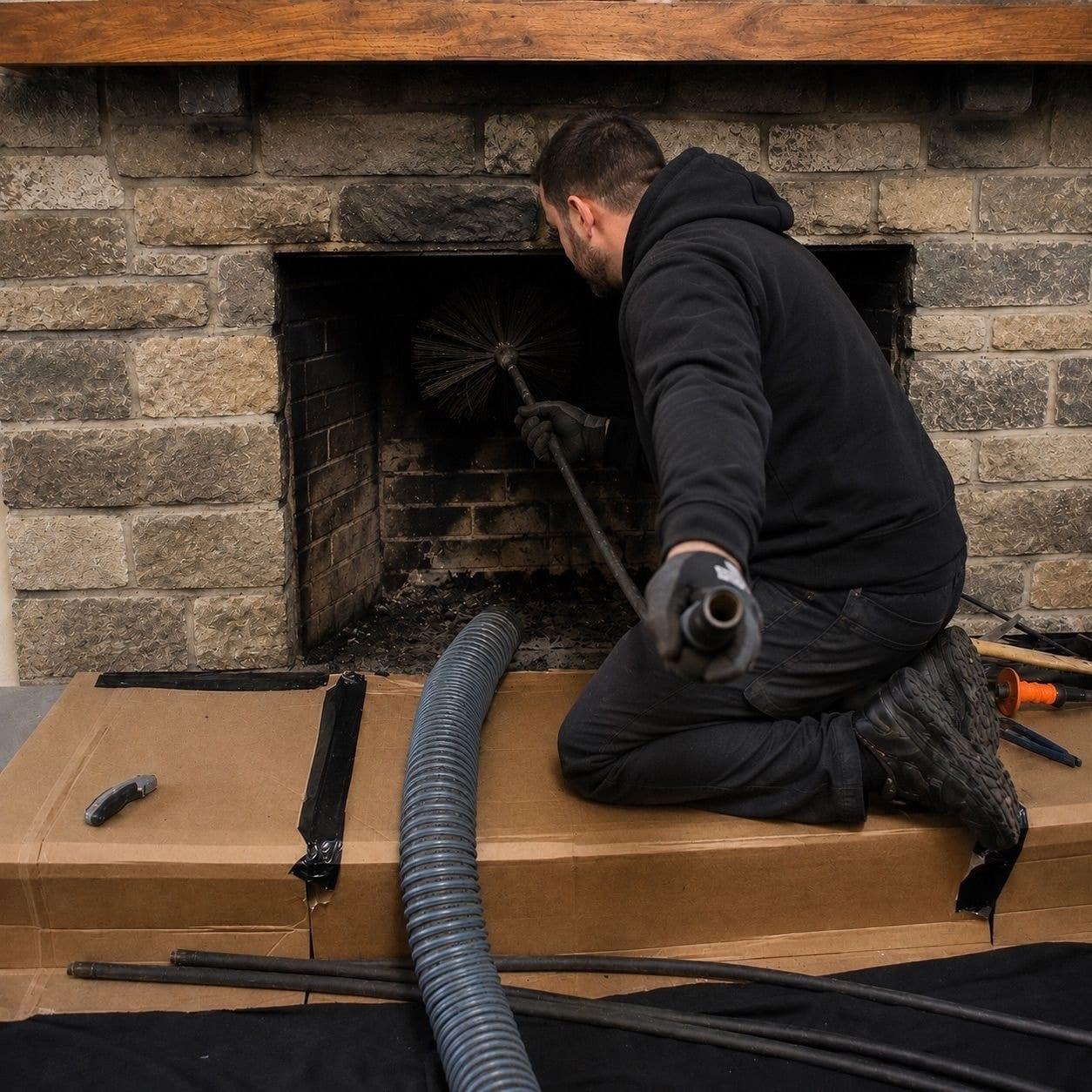
Nest material, droppings and loose debris are pulled out and the flue is swept so it can vent properly again.
Check for damage and the entry point
We look for a damaged cap, gaps around the crown or chase, or a damper that no longer seals, and show you what we found.
Recommend proofing
We explain what would keep animals out going forward so you can decide whether to have it done.
When the nest has packed the flue tightly or other debris has collected with it, the job overlaps with our chimney blockage removal service, and we handle both in the same visit when needed.
Chimney animal proofing
Proofing closes the openings animals use. What a chimney needs depends on how it is built and how the animal got in, and the options we offer include:
- Chimney cap installation or replacement with an integrated mesh screen that covers the flue opening
- Animal screen installation where a cap is sound but the opening is not protected
- Chase cover repair or replacement on prefab chimneys where rust or gaps let animals into the chase
- Chimney crown repair where cracks or gaps give animals a foothold
- Chimney damper repair so the damper closes fully and acts as a second barrier
Dampers vary a lot in how well they seal, and some designs double as a top-of-flue closure. Our guide to the types of chimney dampers explains the differences if a damper upgrade comes up.
Cleanup and safety after the nest is out
Droppings and decaying nest material can leave a smell that lingers well after the animal is gone, particularly when humidity is high. If it does not fade, our chimney odor removal work targets the source rather than covering it up. Soot and ash that came down with the nest can be cleared with fireplace cleaning, and if the flue also shows buildup from regular use, how creosote removal works is worth understanding before the next fire.
Nests are not limited to wood-burning chimneys. Gas fireplace and gas appliance vents can be blocked by nests too, and gas fireplace and gas appliance work is something we offer.
Booking chimney animal and nest removal
Call or request an estimate and tell us what you are hearing, smelling or seeing. Commercial and property-manager work is offered, so rental and multi-unit buildings can be scheduled the same way. We work on all major brands of fireplaces, inserts and stoves.
Related work covered on this page
- Chimney Animal Proofing