When the noise is coming from the chimney
A chimney is a tall, open shaft that runs from your living room to the roof, so it carries sound well. Most people notice a noisy chimney at night, early in the morning or on windy days, when the rest of the house is quiet. The type of sound matters. Scratching and chirping usually mean something is living in the flue. Howling and whistling usually mean wind is getting in. Rattling and banging usually mean a part has worked loose.
Common signs that go with a noisy chimney
- Scratching, scrabbling or fluttering behind the fireplace or inside the wall around it
- Chirping, peeping or squeaking, often loudest around dawn and dusk
- Whistling, howling or a low moan that rises and falls with the wind
- Rattling, flapping, banging or clanging from the damper or the top of the chimney
- Dripping or tapping inside the flue during rain
- Twigs, leaves, nesting material, droppings or feathers showing up in the firebox
- Bits of brick, mortar or flaky debris landing on the fireplace floor
- A musty or animal smell along with the sounds
Possible causes of chimney noise
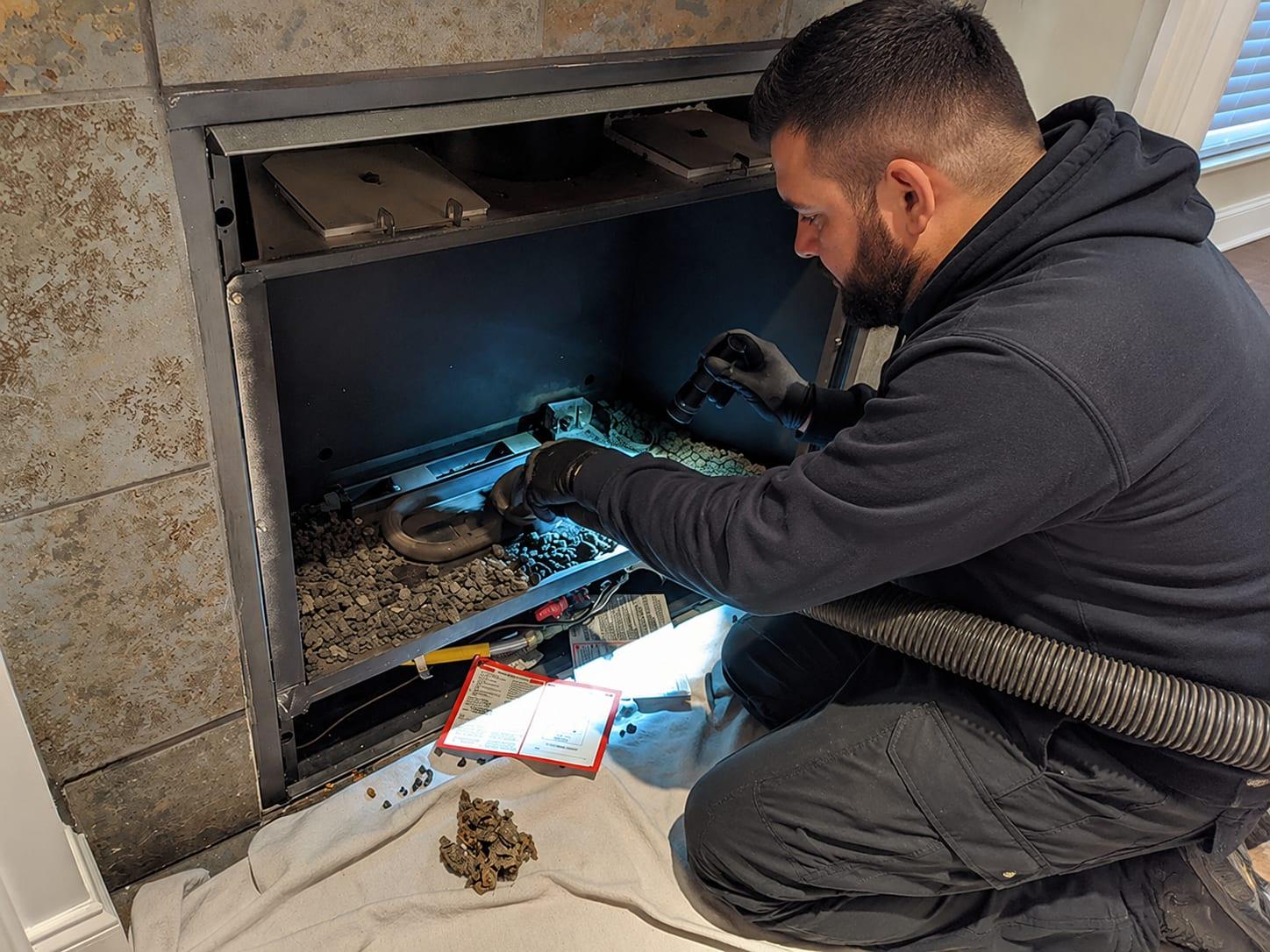
Matching the sound to a cause narrows things down, but it doesn't confirm anything. Someone has to look into the flue from the firebox and from the top, sometimes with a camera, to see what is actually going on. These are the usual possibilities.
What the sound may point to
01Animals or a nest in the flue
- What you may notice
- Scratching, chirping, fluttering or squeaking. Nesting material, droppings or feathers in the firebox. An animal smell.
- How it’s confirmed
- The flue is checked from the firebox and the roof, often with a camera, to find the nest or animal and see how it got in.
02A missing, damaged or poorly fitted chimney cap
- What you may notice
- Whistling or howling when the wind picks up, plus rain or animals getting into the flue.
- How it’s confirmed
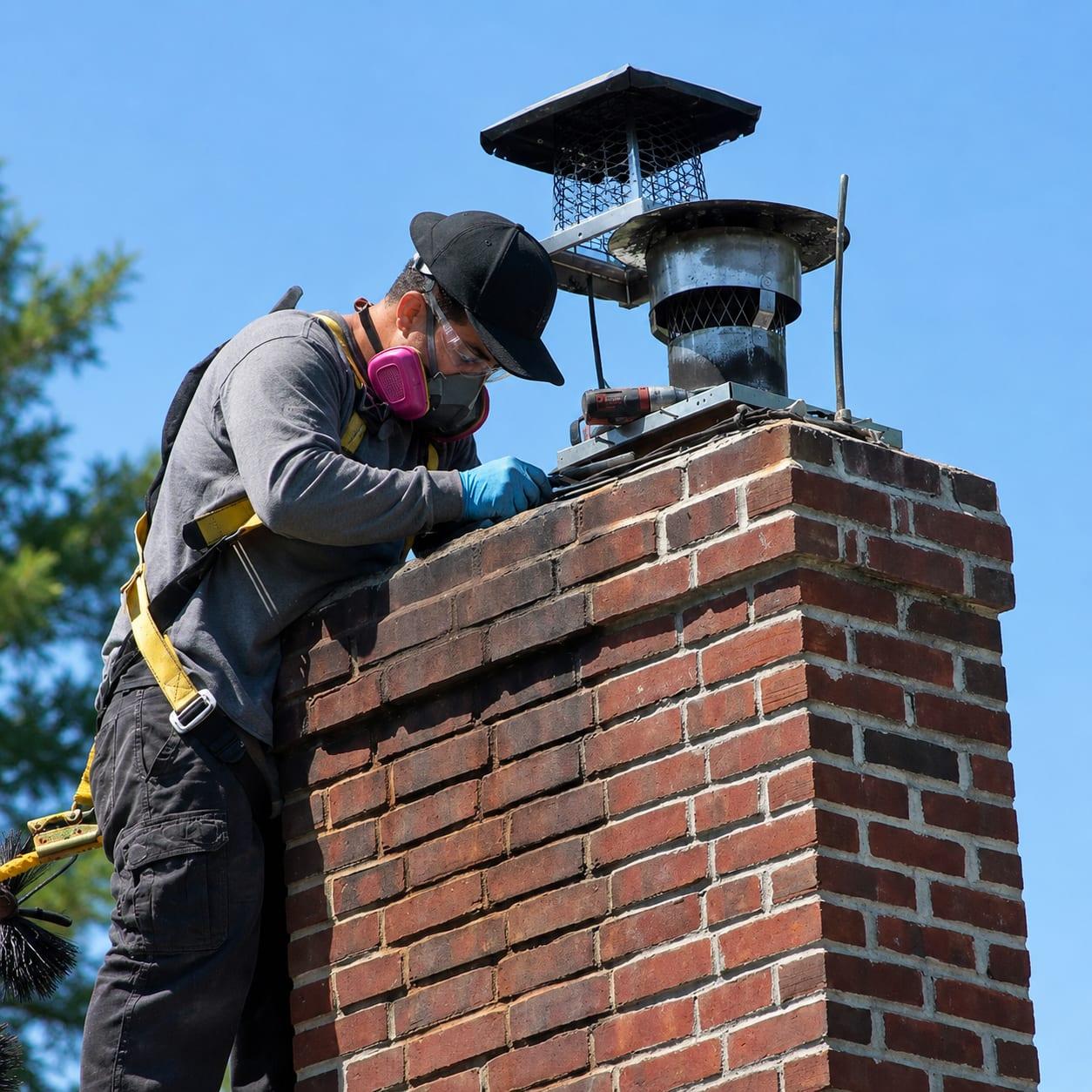
- At roof level the cap, its mesh screen and its fasteners are checked to see whether the cap is missing, bent, rusted through or loose.
03A loose or worn damper
- What you may notice
- Rattling, flapping or clanging in the wind, a damper that won't close fully, or drafts at the fireplace opening.
- How it’s confirmed
- The damper is opened and closed to check the plate, hinge, handle and seal for wear, rust or warping.
04Damaged masonry inside or at the top of the chimney
- What you may notice
- Grit, mortar or brick pieces falling into the firebox, sometimes with a crumbling crown or cracks you can see from the yard.
- How it’s confirmed
- The crown, bricks, mortar joints and flue are inspected from the top and inside for cracks, gaps and loose material.
05Fire burning inside the flue
- What you may notice
- A loud roar or rumble while a fire is burning, loud popping or cracking, dense smoke or a strong hot smell.
- How it’s confirmed
- This is an emergency, not something to inspect yourself. After the fire is out, the flue and liner are inspected for damage before the fireplace is used again.
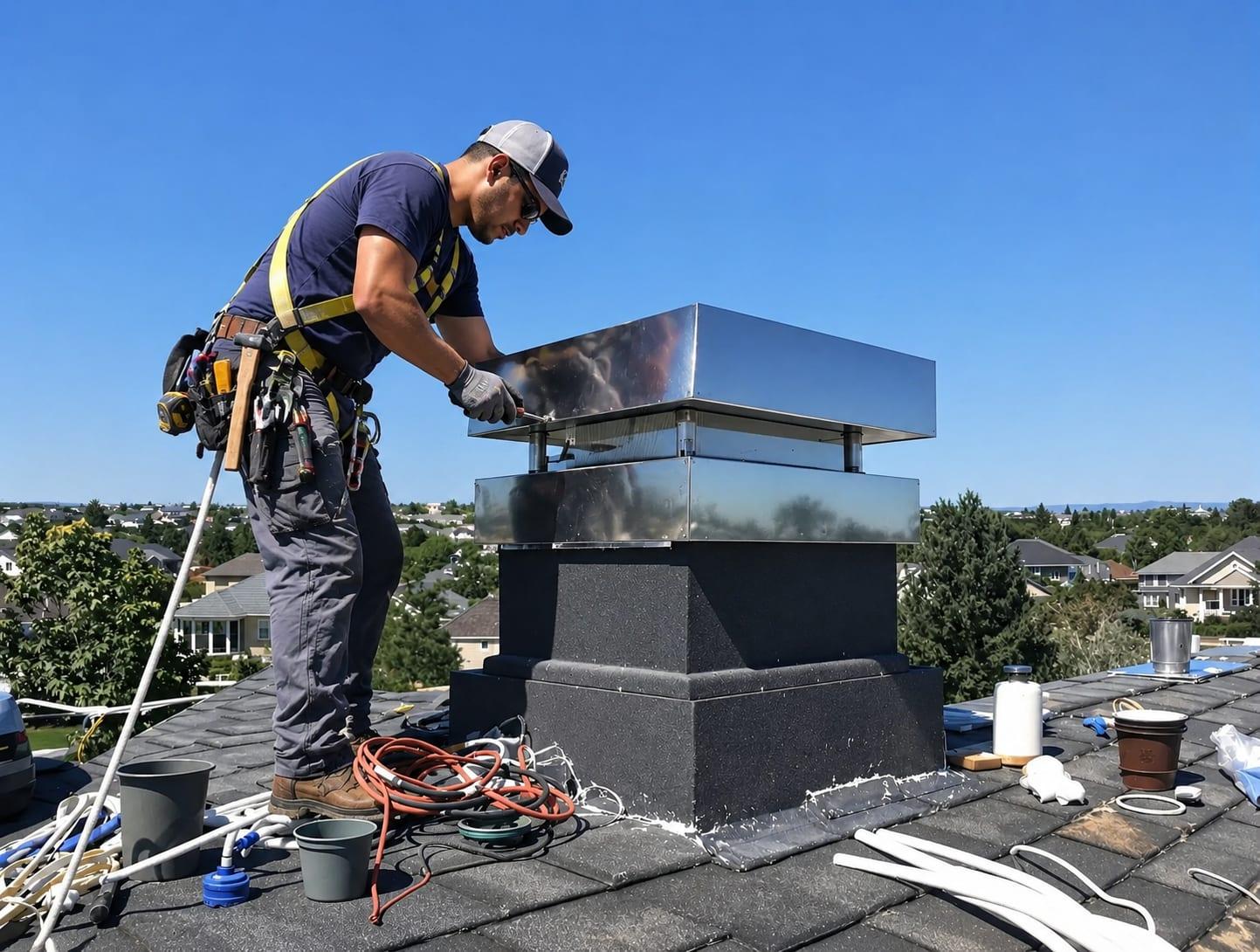
Factory-built (prefab) chimneys have a few causes of their own. A metal chase cover on top of the chimney box can loosen and bang in the wind. Metal flue sections may tick or pop as they heat up and cool down. Light ticking is common, but loud bangs or new sounds should be checked. Dripping or tapping during rain usually means water is getting past the cap, the crown or the flashing where the chimney meets the roof.
How urgent is a noisy chimney?
A roar while a fire is burning
A loud rumbling or roaring from the flue, especially with heavy smoke, popping or a hot smell, can mean a chimney fire. Get everyone out of the house and call 911. Don't try to put it out from inside the flue or from the roof.
Stop using the fireplace, wood stove or gas fireplace until the flue has been checked if you hear animals, see nesting material or debris in the firebox, or notice smoke coming back into the room. A fire can trap or kill an animal in the flue. Nests and twigs can catch fire. A blocked flue can push smoke and carbon monoxide into the house. Buildup in the flue also adds to chimney fire risk, which is why a noisy chimney and a dirty flue are often dealt with together.
A whistle on windy nights or a damper that rattles is less urgent, but it still deserves a visit soon. The same gap that lets wind in can let in rain and animals. Emergency calls are accepted, and 24-hour service runs Sunday–Friday.
What usually fixes a noisy chimney
How the problem is typically resolved
Find the source
An inspection from the firebox and the top of the chimney, with a camera where needed, shows whether the noise comes from an animal, a loose part, water or damaged masonry.
Remove any animal or nest
When something is living in the flue, the chimney animal & nest removal service clears the animal and the nesting material so the flue is open again.
Clean out what was left behind
Nests, droppings and debris usually come out along with a cleaning of the flue. Our chimney soot removal guide explains what that cleaning involves.
Close the opening
A properly fitted cap with mesh keeps animals out, keeps rain out and usually cuts wind noise. Read how chimney cap installation works to see what the job covers. Animal screens and chimney animal proofing are options for openings a cap doesn't cover.
Repair whatever is moving or leaking
A rattling damper may need chimney damper repair. A banging chase cover may need chase cover repair or replacement. Dripping may call for chimney leak repair, flashing repair or crown repair.
Mortar and brick falling down the flue point to damage higher up. That calls for masonry work such as crown repair or tuckpointing, and sometimes it shows up alongside a leaning Chimney. If the noise is a damper rattle, our guide to types of Chimney dampers explains the difference between throat dampers and top-mounted dampers, and why some seal better than others.
What not to do
- Don't light a fire to smoke an animal out. It can trap the animal in the flue, ignite the nest and fill the house with smoke.
- Don't close off the top of the chimney while an animal may still be inside.
- Don't put poison or traps down the flue. A dead animal in the chimney causes odor and blockage problems that are harder to fix.
- Don't climb onto the roof to look at the cap or chase cover yourself, especially in wind or wet weather.
- Don't reach up into the flue past the damper. Animals can bite or scratch, and loose debris can fall on you.
- Don't ignore dripping sounds. Water inside a chimney tends to cause more damage the longer it continues.