On this page
What chimney blockage removal involves
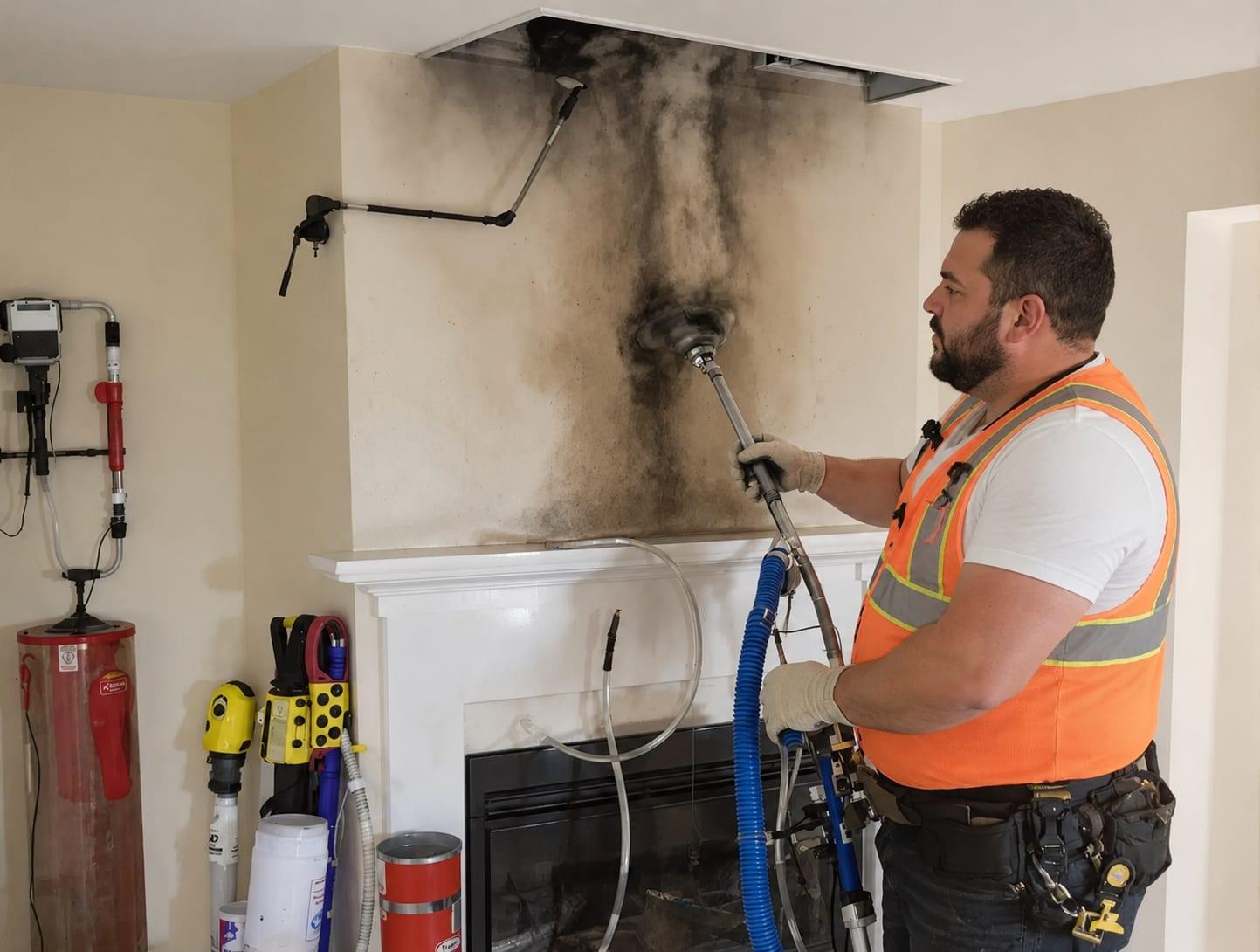
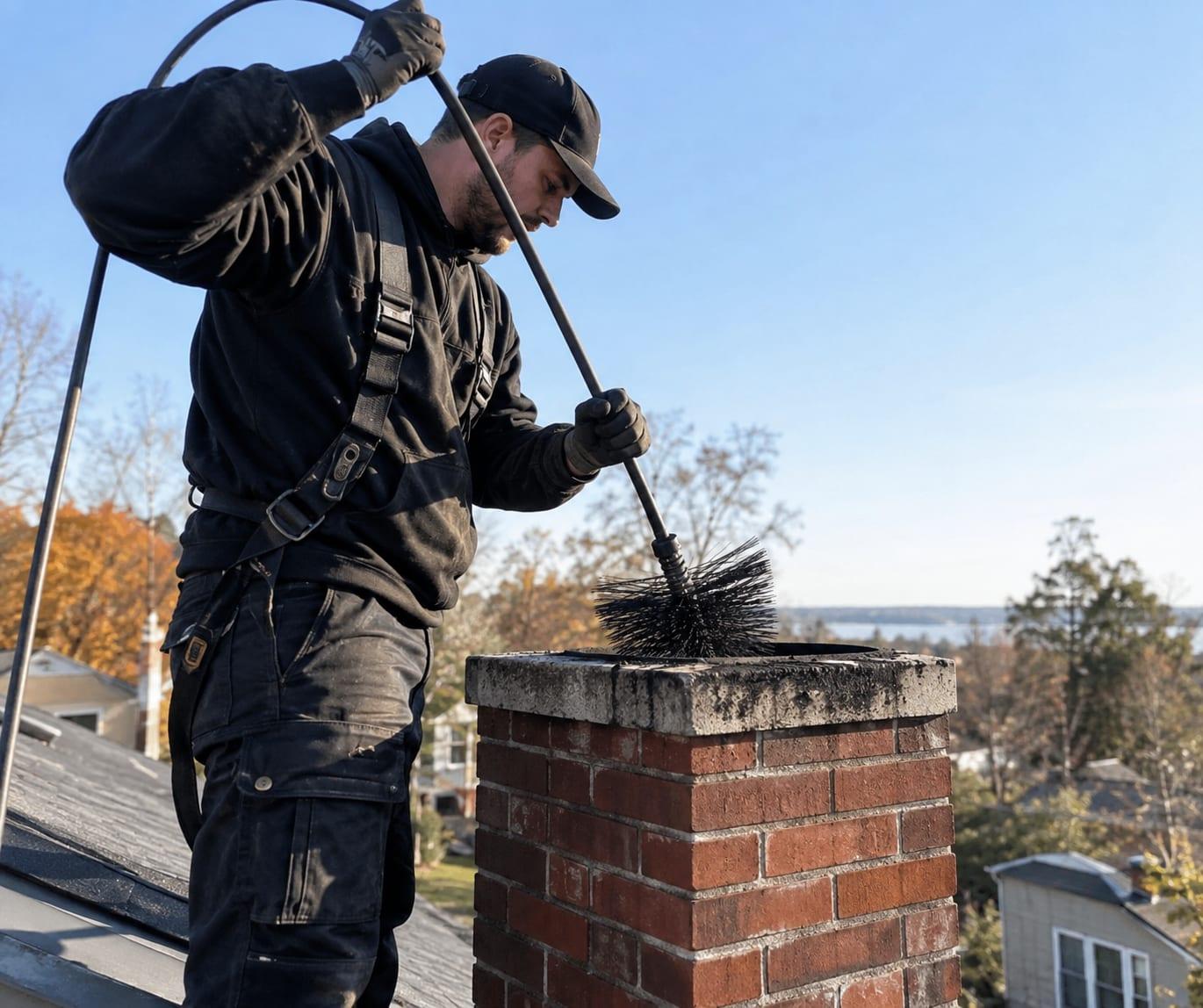
A chimney only works when the flue is open from the firebox or appliance connection all the way to the top. Chimney blockage removal means finding whatever is obstructing that path and taking it out without damaging the flue, liner or damper. The goal is simple: smoke, combustion gases and heat leave the house instead of coming back into it.
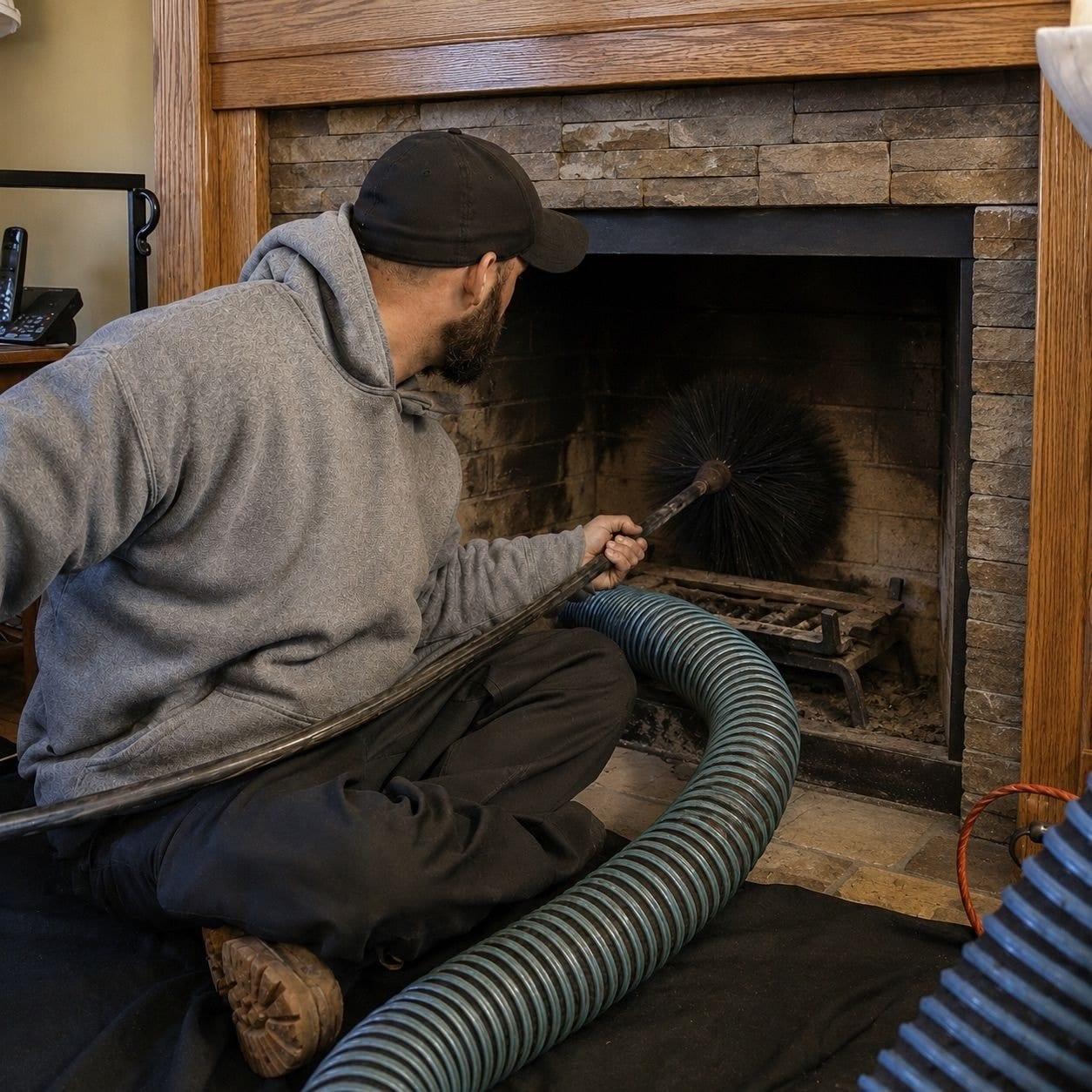
Blockages come in a few common forms. Some are built up over time, and some arrive all at once:
- Nests and nesting material from birds or other animals that move in when the top of the chimney is open.
- Leaves, twigs and other debris blown or washed in from above.
- Hardened creosote that has flaked off and collected, or built up enough to narrow the flue. Heavy buildup is handled with creosote removal.
- Loose mortar, brick fragments or pieces of a damaged liner that have fallen and lodged inside.
- A damper stuck partly or fully closed, which acts like a blockage even when the flue itself is clear.
If a blockage turns out to be an animal or nest, we handle that as part of our Chimney Animal & Nest Removal work. If the cause is damage, such as a cracked liner or crumbling masonry, we explain what we found so you can decide on repairs.
Signs your chimney may be blocked
A blocked flue rarely announces itself the same way twice, but these are the problems that most often lead homeowners to call:
Common signs of a blockage
- Smoke spills into the room instead of rising up the chimney, even with the damper open.
- The fire is hard to start, burns weakly or goes out on its own.
- Twigs, leaves, soot or mortar crumbs keep landing in the firebox.
- Scratching, chirping or rustling sounds come from inside the chimney.
- A strong smoky, musty or animal smell comes from the fireplace, especially in damp weather.
- The damper won't open fully, or it opens but there is still no draft.
Odors can come from a blockage, but they can also come from soot, moisture or creosote in an otherwise open flue. When smell is the main complaint, our chimney odor removal service may be the better fit, and we can tell which one you need once we look.
If a carbon monoxide alarm sounds
Get everyone out of the house, leave the door open behind you, and call 911 from outside. Do not go back in or try to clear the chimney yourself. A blocked flue can push carbon monoxide into living space, and it has no smell.
What the visit involves, step by step
How we clear a blocked chimney
Talk through what you've noticed
We ask when the problem started, what you've seen or heard, and whether you burn wood or have a gas fireplace or appliance venting through the chimney.
Protect the room
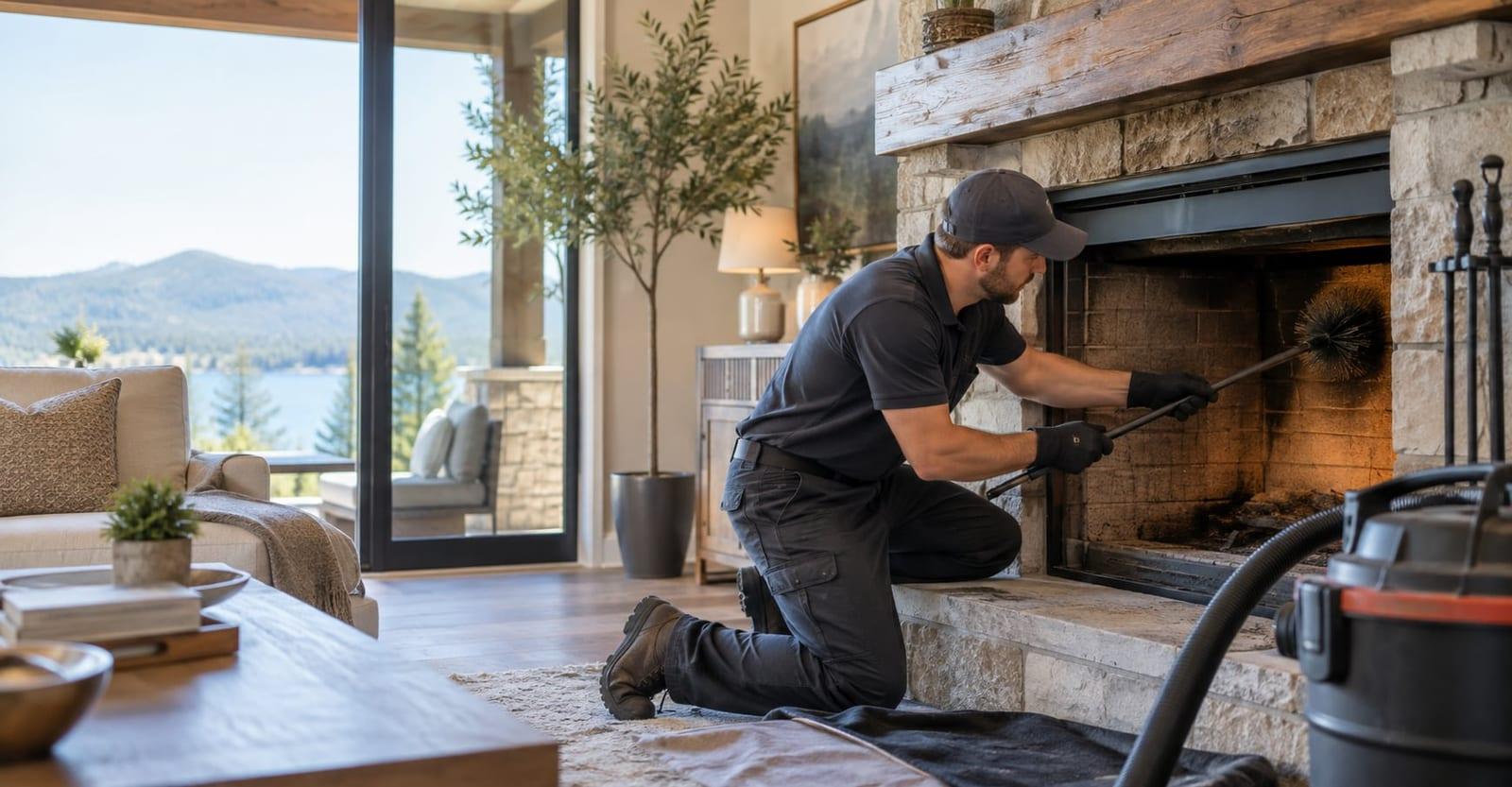
We cover the hearth and floor around the fireplace before anything comes down the flue.
Locate the blockage
We check the damper and look up the flue. When the obstruction is out of sight or its cause isn't obvious, a chimney camera inspection lets us see exactly what is there and where.
Remove it
We break up and pull out the material with tools suited to the flue type, working so debris comes down into the firebox rather than into the room.
Confirm the flue is open
Once the obstruction is gone, we check that the flue runs clear top to bottom and that the damper opens and closes.
Explain what we found
You hear what caused the blockage and whether anything else needs attention, such as a missing cap, creosote buildup or damage inside the flue.
If the flue is also coated with soot or creosote, a full chimney sweep is often done in the same visit so the whole system is clean, not just the blocked section.
Keeping the flue clear afterward
Many blockages come back because the opening at the top stays unprotected. A chimney cap or animal screen keeps out nests and most debris, and both are installations we do. Regular sweeping keeps creosote from building up and flaking loose. If you're unsure how thoroughly your chimney should be checked, chimney inspection levels explained walks through what each level covers.
Because a stuck or broken damper can mimic a blockage, it also helps to know which kind you have. Our guide to types of chimney dampers covers the common designs and how they fail.
Booking chimney blockage removal
Call or request an estimate and tell us what you're seeing. Until the chimney is cleared, don't light a fire or run any appliance that vents through it.
Commercial and property-manager work is offered, and gas fireplace and gas appliance work is offered, so a blocked flue serving a gas unit is something we handle too.