What a blocked chimney means for your home
A chimney works by drawing hot gases and smoke up and out of the house. When something narrows or closes the flue, those gases have nowhere to go, so they spill back into the room. You may see it as smoke, smell it as a sour or burnt odor, or not notice it at all, which is the bigger worry, since carbon monoxide has no smell.
A blockage can build up slowly over a season or show up overnight, for example when a bird builds a nest in an uncapped flue. Either way, the fix starts with finding out what is in the chimney and where.
Common signs of a blocked chimney
Signs worth taking seriously
- Smoke drifts into the room instead of rising up the flue, even with the damper open
- The fire is hard to light, burns poorly or goes out on its own
- Strong smoky, sour or musty smells from the fireplace, even when it isn't in use
- Twigs, leaves, nesting material, soot chunks or pieces of masonry falling into the firebox
- Scratching, chirping or fluttering sounds from inside the chimney
- Black staining on the wall or mantel just above the fireplace opening
- If a carbon monoxide alarm sounds, get everyone outside and call 911.
If a carbon monoxide alarm goes off
Get everyone out of the house and into fresh air, then call emergency services from outside. Do not go back in to put out the fire or open the damper. Headaches, dizziness or nausea while the fireplace is running are also reasons to leave and get help. If anyone has a headache, dizziness or nausea while an appliance runs, turn it off if you can, get everyone outside and call 911.
Possible causes of a blocked chimney
The signs above can come from several different problems, and some of them look alike from the living room. These are the usual possibilities; a technician confirms the actual cause by inspecting the flue, often with a camera.
What might be blocking the flue
01Animal nests or trapped animals
- What you may notice
- Sounds in the chimney, nesting material or droppings in the firebox, a musty smell
- How it’s confirmed
- Visual check from the top and bottom of the chimney, plus a camera look along the flue
02Leaves, twigs and outdoor debris
- What you may notice
- Debris in the firebox, weak draft that gets worse after storms or windy days
- How it’s confirmed
- Inspection from the roof and a look at whether a cap or screen is missing or damaged
03Heavy creosote or soot buildup
- What you may notice
- Black flakes falling into the firebox, a tar-like smell, smoky fires
- How it’s confirmed
- Inspection of the flue walls to see how thick and what type the deposits are
04Fallen masonry or broken flue tile
- What you may notice
- Brick, mortar or tile fragments in the firebox, a sudden drop in draft
- How it’s confirmed
- Camera inspection of the liner and a check of the masonry inside and out
05A stuck or broken damper
- What you may notice
- Smoke spills in right away, the damper handle won't move or feels loose
- How it’s confirmed
- Hands-on check of the damper plate, hinge and handle from inside the firebox
A damper that won't open can feel exactly like a blocked flue, so it is worth knowing which design you have. Our guide to types of chimney dampers explains how throat dampers and top-sealing dampers work and where each one tends to fail.
Masonry debris in the firebox deserves extra attention. Loose brick or broken tile can point to deterioration in the chimney itself, and if the chimney also looks tilted from outside, read about what causes a leaning chimney before using the fireplace again.
How urgent is a blocked chimney?
Treat it as urgent. Stop using the fireplace, wood stove or connected gas appliance as soon as you suspect a blockage, and keep it off until the flue has been inspected and cleared. A blocked flue can send carbon monoxide into living space, and when the blockage is creosote or dry nesting material, it can also add to chimney fire risk.
Getting help quickly
Emergency calls are accepted. Gas fireplace and gas appliance work is offered, so blocked gas venting can be checked as well.
What normally fixes a blocked chimney
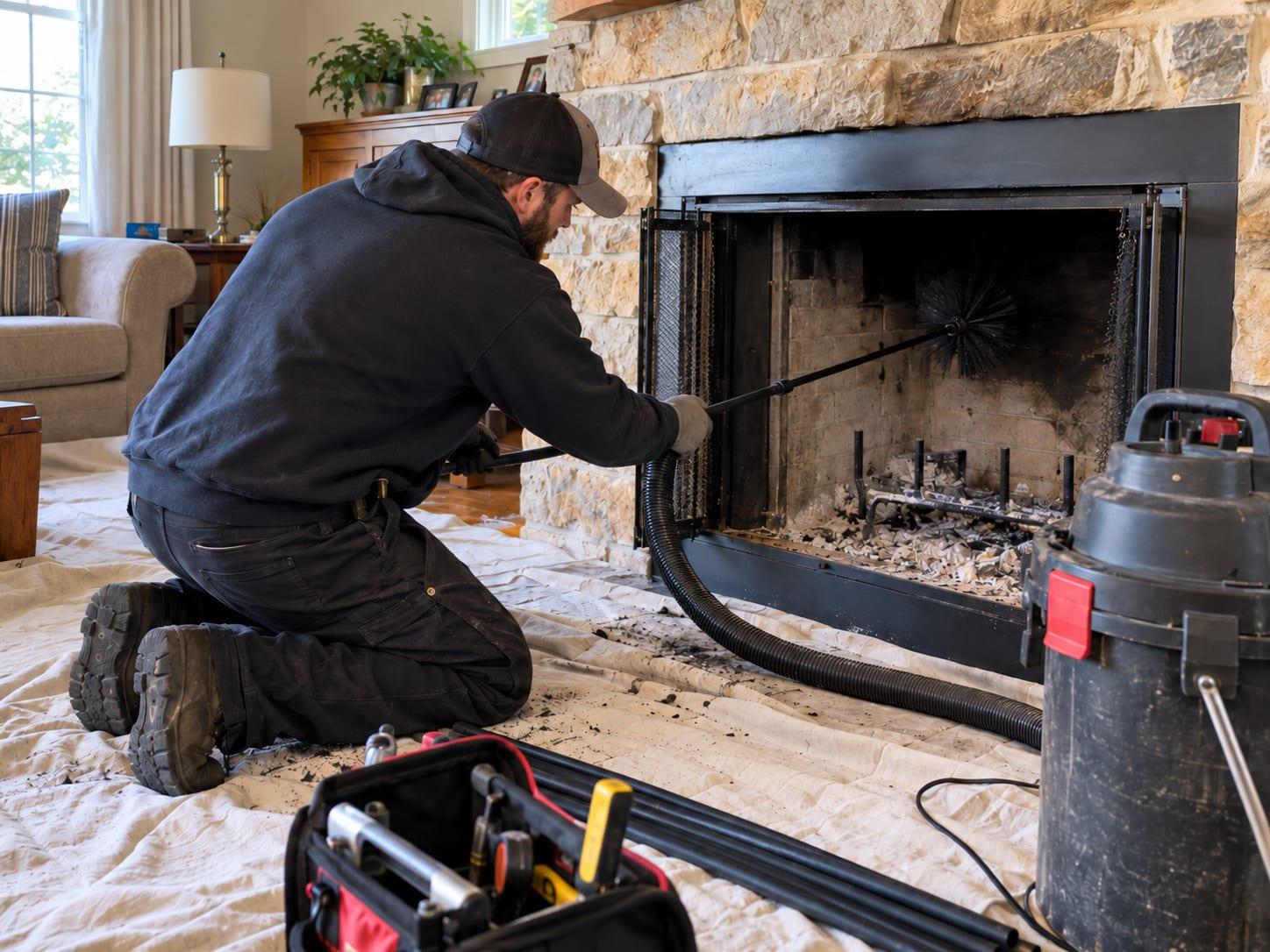
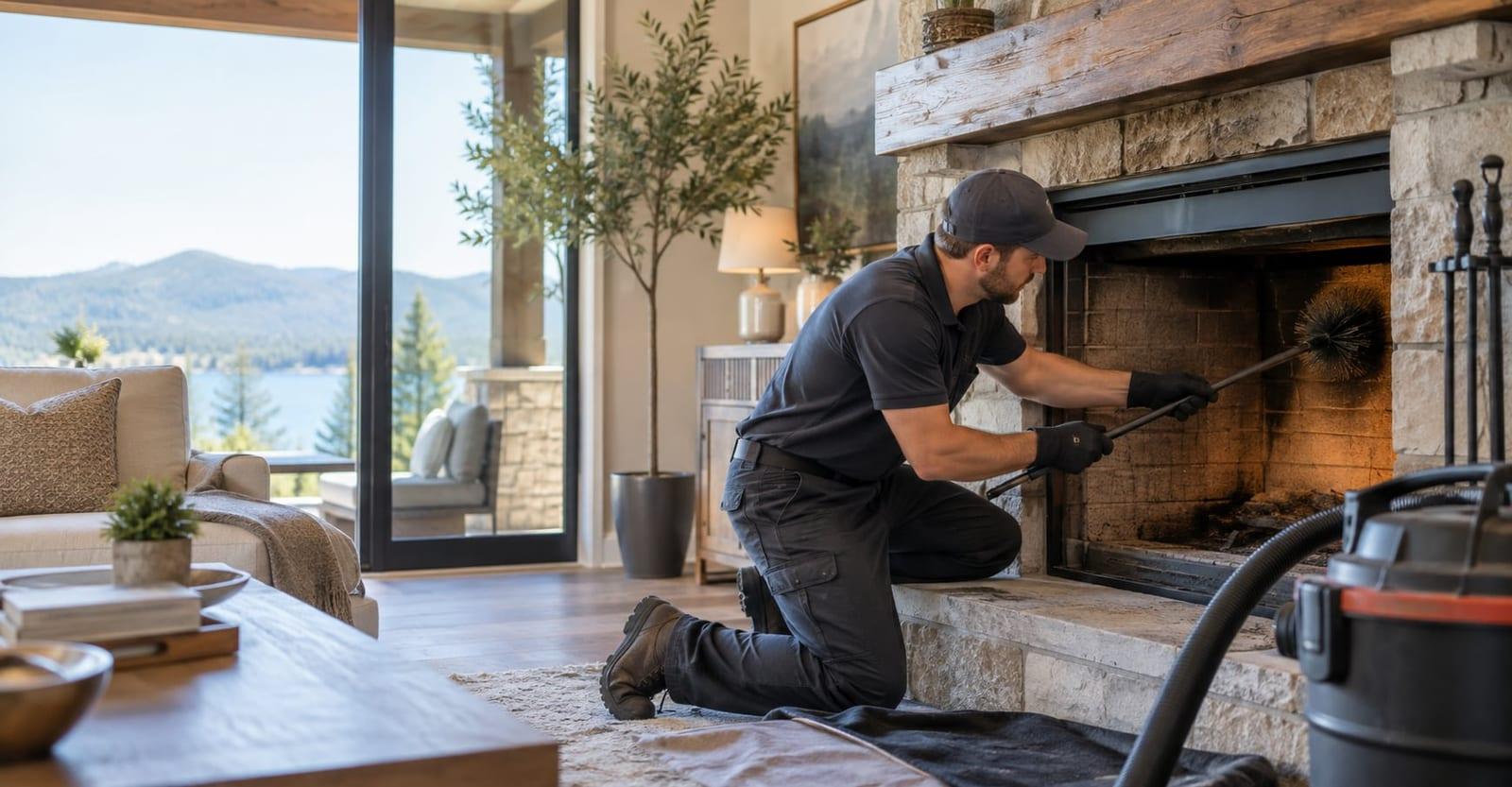
The repair depends on what the inspection finds. Most blockages are cleared from the flue with brushes, rods and vacuum equipment, and the chimney is checked again afterward to make sure it draws properly.
How a blockage is usually handled
Inspect
The chimney is checked from the firebox and, where needed, from the roof, often with a camera, to find what is blocking it and whether anything is damaged.
Clear the flue
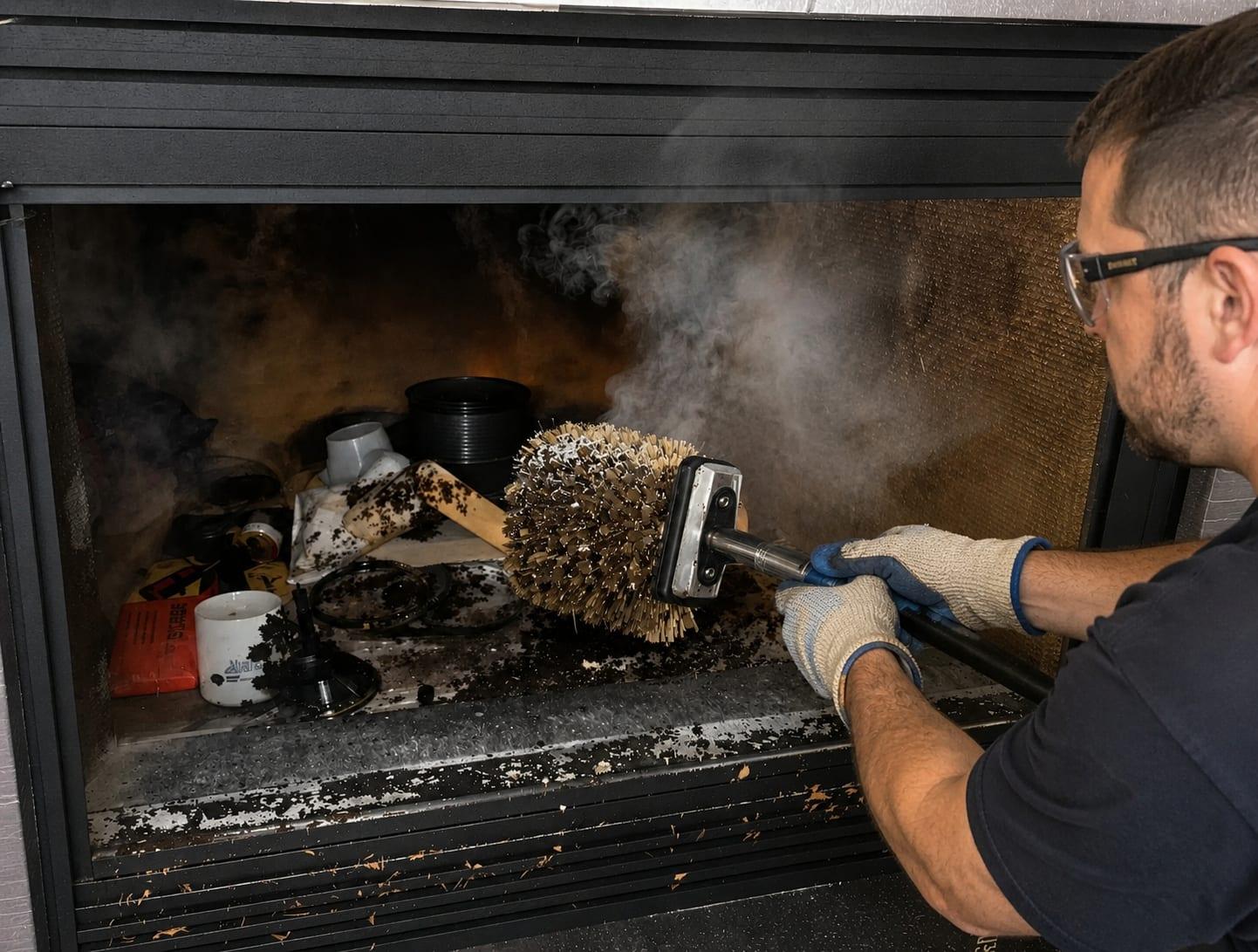
Nests, debris, fallen masonry and heavy buildup are removed. Animal nests are handled carefully so nothing is left lodged higher in the flue.
Clean the chimney
If creosote or soot is part of the problem, the flue is swept so the full passage is open, not just the blocked section.
Fix what let it happen
A missing cap, a damaged screen, a failed damper or cracked liner can be repaired or replaced so the same blockage doesn't come back.
For nests, debris and anything lodged in the flue, our chimney blockage removal service is the direct fix. When the problem is mainly buildup on the flue walls, a full chimney sweep service clears it and leaves the flue ready for inspection. If you want to understand what soot and creosote are and why they build up, the chimney soot removal guide covers the basics.
What not to do with a blocked chimney
- Don't light a fire to smoke out an animal or burn away a nest. It can trap the animal, set the nest alight and fill the house with smoke.
- Don't rely on chemical cleaning logs to clear a blockage. They don't remove nests, debris or fallen masonry.
- Don't reach up into the flue or poke at the blockage with a pole. Debris and heavy deposits can come down suddenly.
- Don't climb onto the roof to look down the chimney yourself.
- Don't close off the fireplace opening with an animal still inside the chimney.
Related services
Depending on what the inspection turns up, the work may include chimney cap installation or replacement, animal screen installation, chimney animal and nest removal, damper repair, chimney liner repair, chimney masonry repair or a chimney camera inspection. Commercial and property-manager work is offered, and the team works on all major brands of fireplaces, inserts and stoves.