On this page
If a chimney fire may be burning
Get everyone out of the house and call 911. Warning signs include a loud roaring or popping sound, dense smoke, a strong hot smell, or flames or sparks coming from the chimney top. Don't use the fireplace again until it has been inspected, even if the fire seems to have gone out on its own.
What creosote removal is and what it involves
Wood smoke cools as it rises through the flue, and as it cools it leaves deposits on the inside walls. Those deposits are creosote. They build up in three recognizable forms, and each form needs a different approach.
| Form | What it looks like | How it is usually removed |
|---|---|---|
| Light buildup | Dry, dusty black soot | Brushing and vacuuming during a standard sweep |
| Moderate buildup | Flaky, crunchy or puffy deposits | Stiffer brushes or rotary tools, then vacuuming |
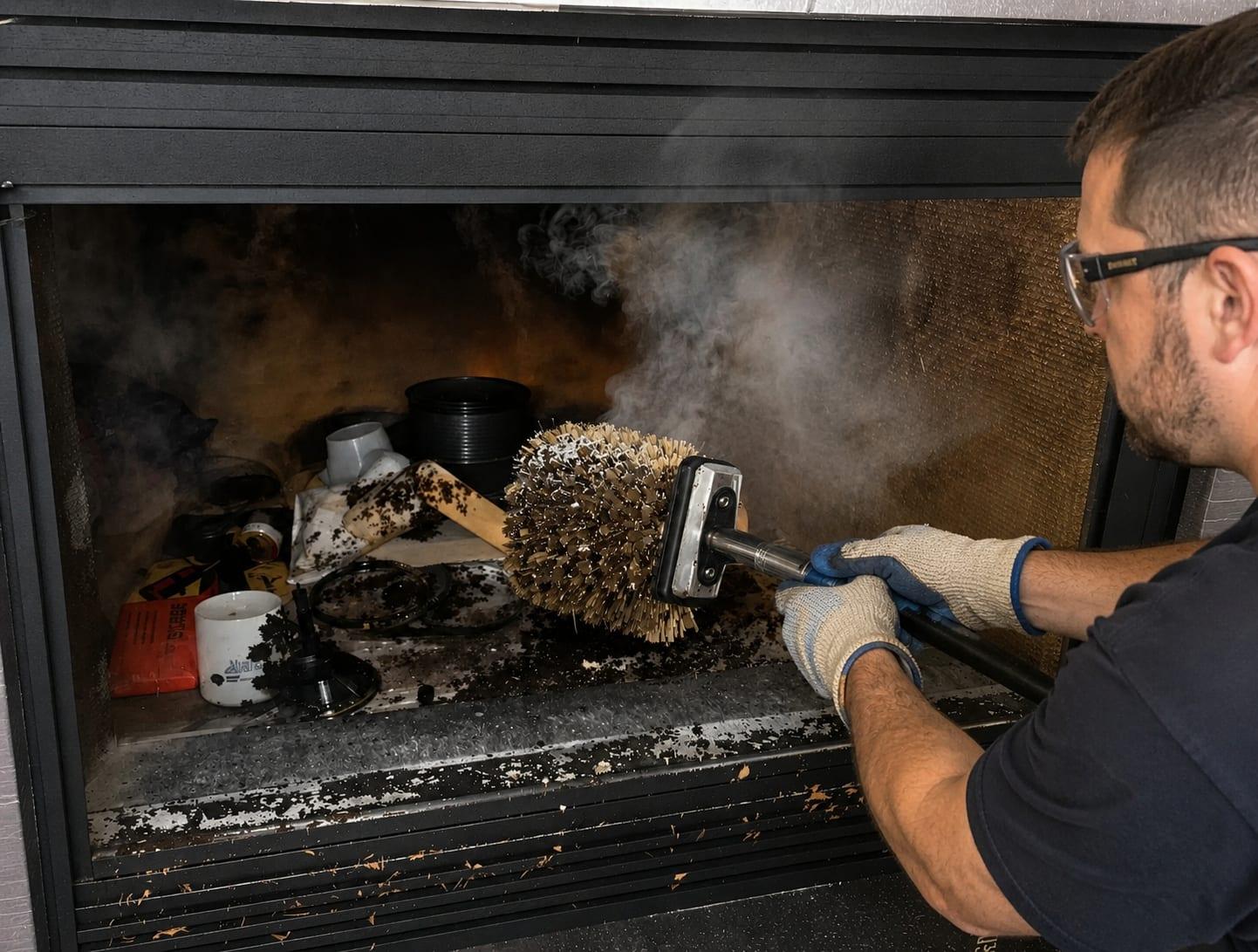
| Heavy or glazed buildup | Shiny, hard, tar-like coating that can drip | Rotary cleaning tools or a chemical treatment that loosens the glaze so it can be removed |
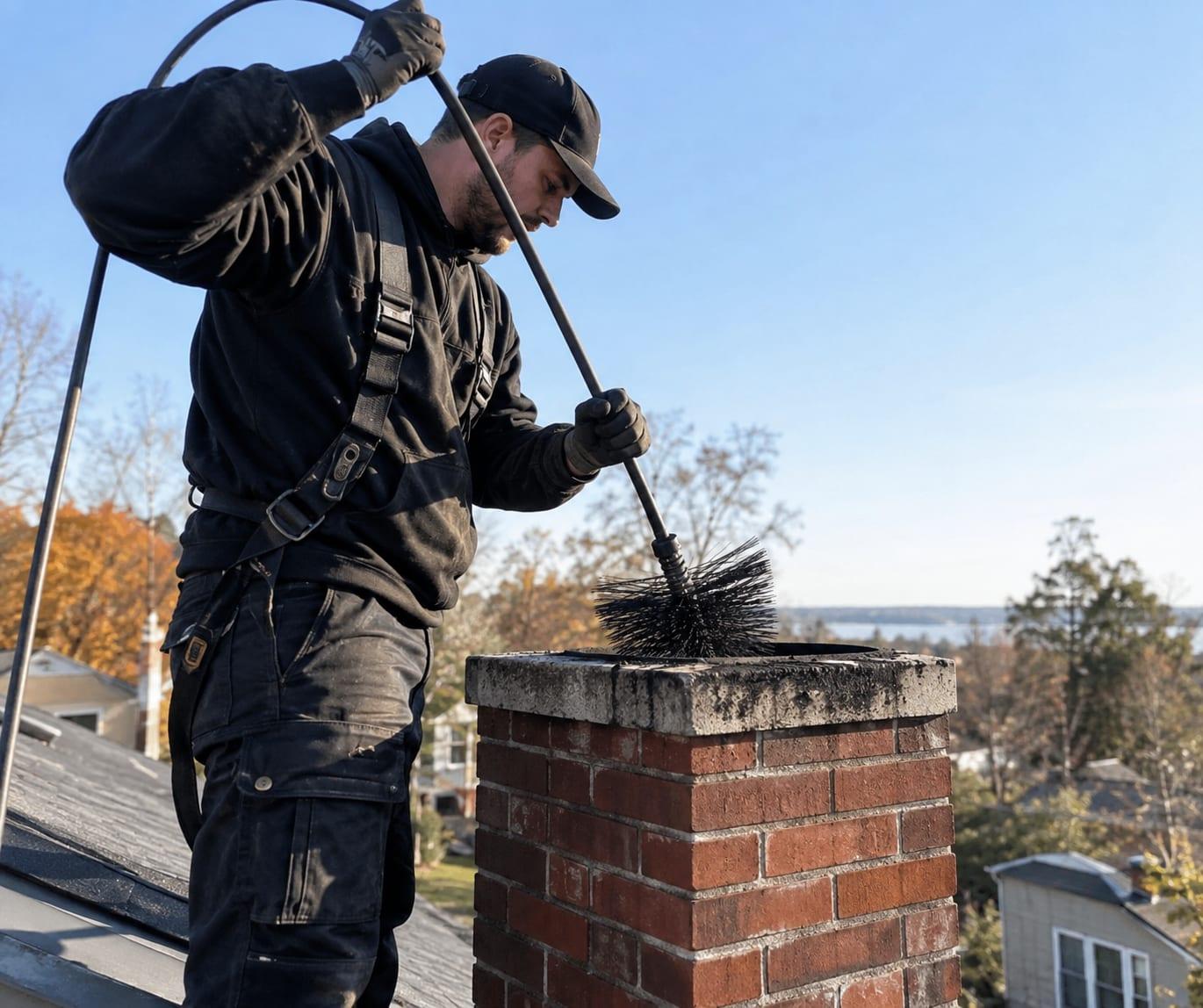
Light deposits are often handled during a routine chimney sweep service. Creosote removal is the heavier job, for buildup that a brush alone won't take off.
Signs your chimney needs creosote removal
Common signs of heavy creosote
- Black, shiny or tarry patches on the damper or the smoke chamber
- Flakes or chunks of black material falling into the firebox
- A smoky, campfire-like smell in the room, especially on humid days or with the fireplace cold
- Fires that are harder to light, burn poorly or push smoke into the room
- More than a season of regular burning since the last cleaning
- Burning wood that wasn't fully seasoned, or burning with the damper partly closed
A lingering smell can come from creosote, but it can also come from moisture or debris. If cleaning doesn't clear it, chimney odor removal looks at the other sources. Poor draft can also mean something is lodged in the flue, which our chimney blockage removal service handles.
Creosote buildup removal risks and fix
Creosote burns. A thick layer can ignite from a hot fire below and burn very hot inside the flue. That kind of fire can crack flue tiles, damage the masonry and spread heat to nearby framing. Heavy buildup also narrows the flue, which can push smoke and gases back into the room.
The fix has two parts. The first is removing the deposits with a method matched to their form. The second is dealing with what causes creosote buildup so it doesn't return as quickly. Common causes include unseasoned wood, smoldering low-heat fires, a restricted damper and a flue that runs cold.
Creosote removal: inspection first
We look inside the chimney before choosing a removal method. Glazed creosote calls for a different approach than flaky deposits, and a flue that has already had a chimney fire may have cracks that need attention before it is used again.
If the visit raises structural questions, a full chimney inspection service may be the right next step. Our guide to chimney inspection levels explained covers how far each level goes.
What the visit involves, step by step
Talk through the symptoms
We ask how often you burn, what wood you use and what you have noticed, such as smells, smoke or falling flakes.
Look before cleaning
We check the firebox, damper, smoke chamber and flue to see what form of creosote is there and how much.
Protect the room
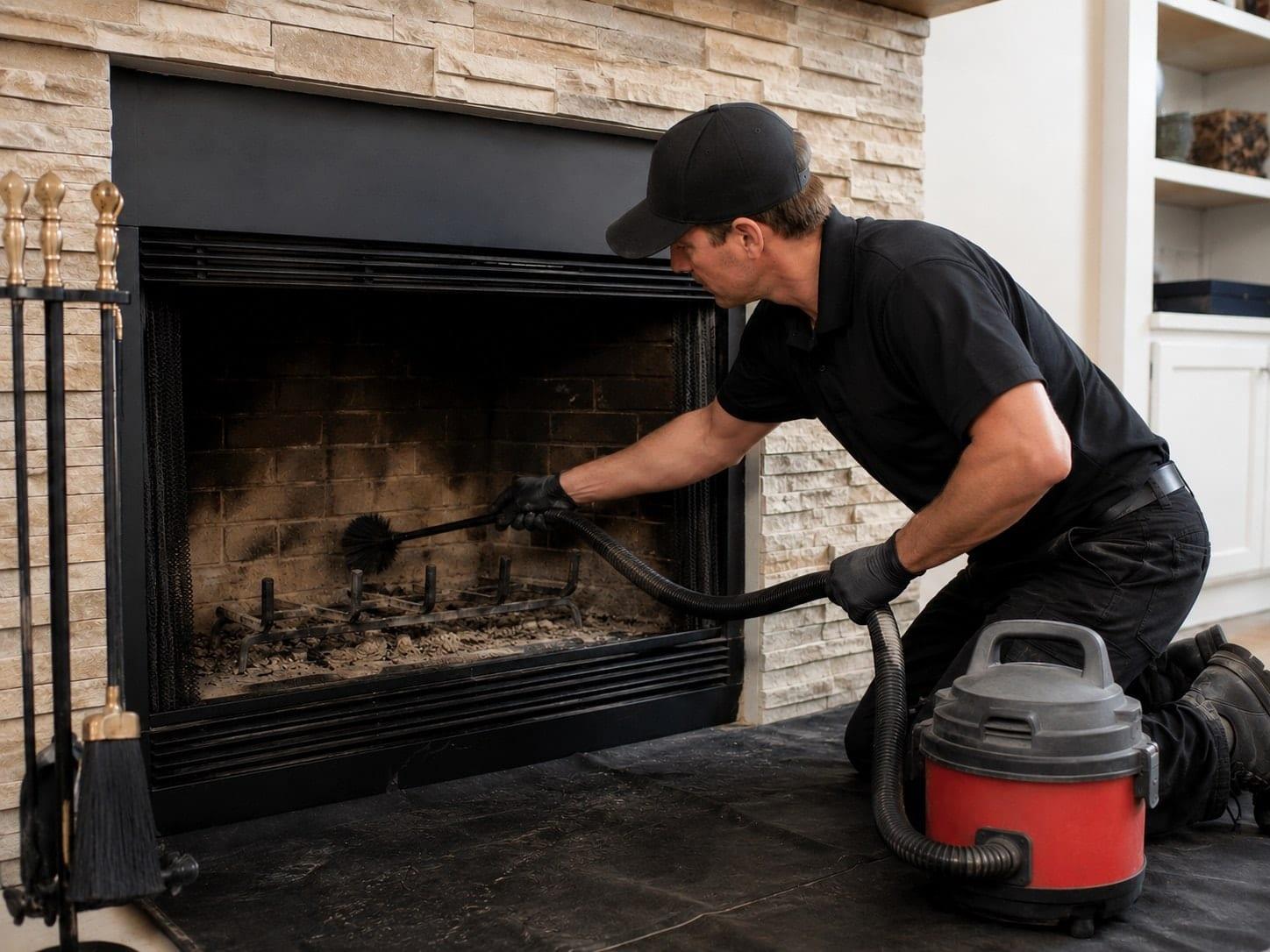
We cover the hearth and floor and seal off the fireplace opening to keep dust contained.
Remove the deposits
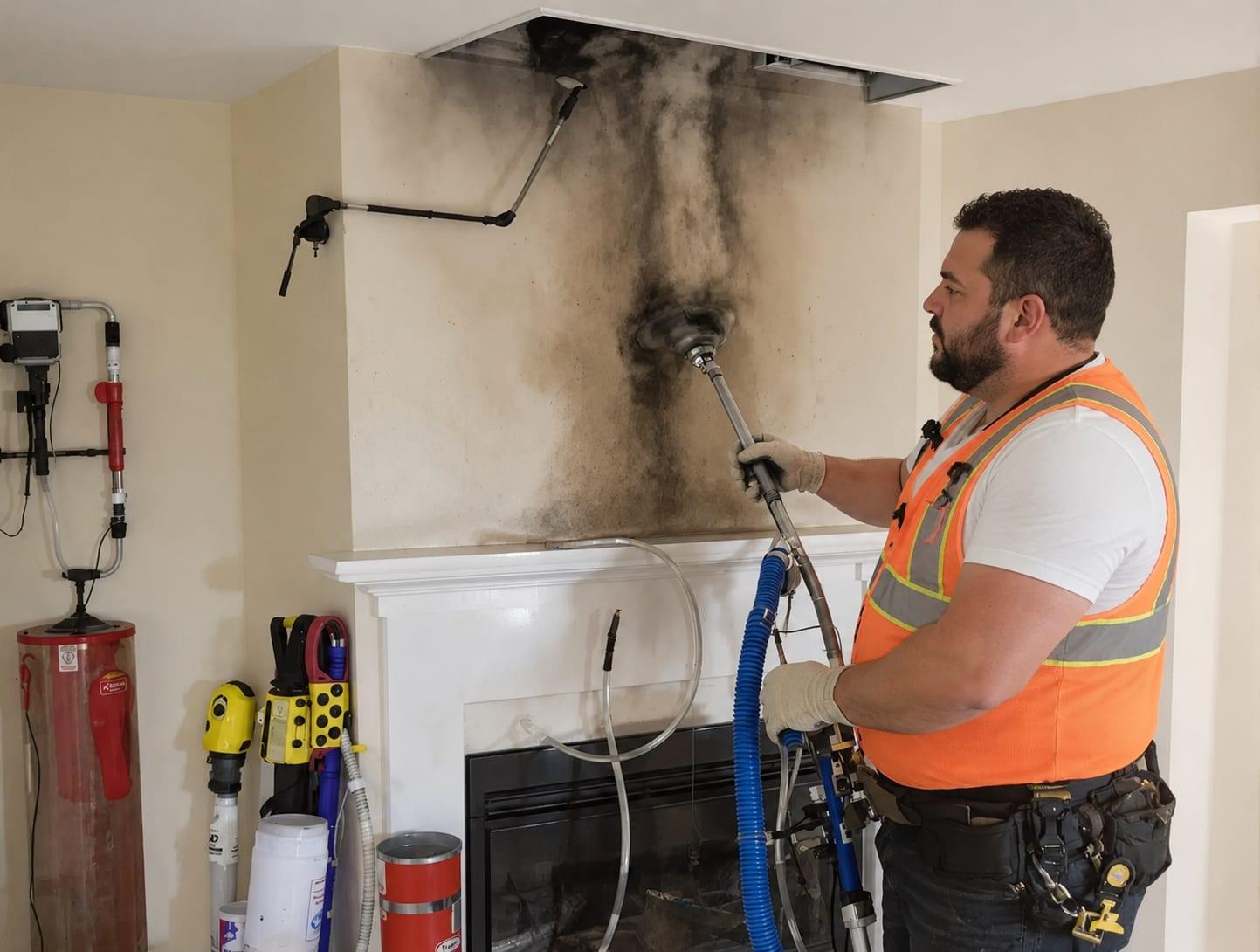
We use brushes for soot and flaky buildup. Hardened or glazed creosote gets rotary tools or a chemical treatment.
Check the result
We look again to confirm the flue walls are clear and to note any damage the buildup was hiding.
Explain what we found
You get a plain account of the chimney's condition and what would slow future buildup.
Fuel type and creosote
Wood is the main source of creosote, so wood-burning fireplaces, inserts and stoves are where it builds up most. Gas fireplaces don't produce creosote the same way, but they still need upkeep. Gas fireplace and gas appliance work is offered.
Booking creosote removal
Call or request an estimate and tell us what you're seeing.
Commercial and property-manager work is offered, so landlords and building managers can use our commercial & property management chimney services.