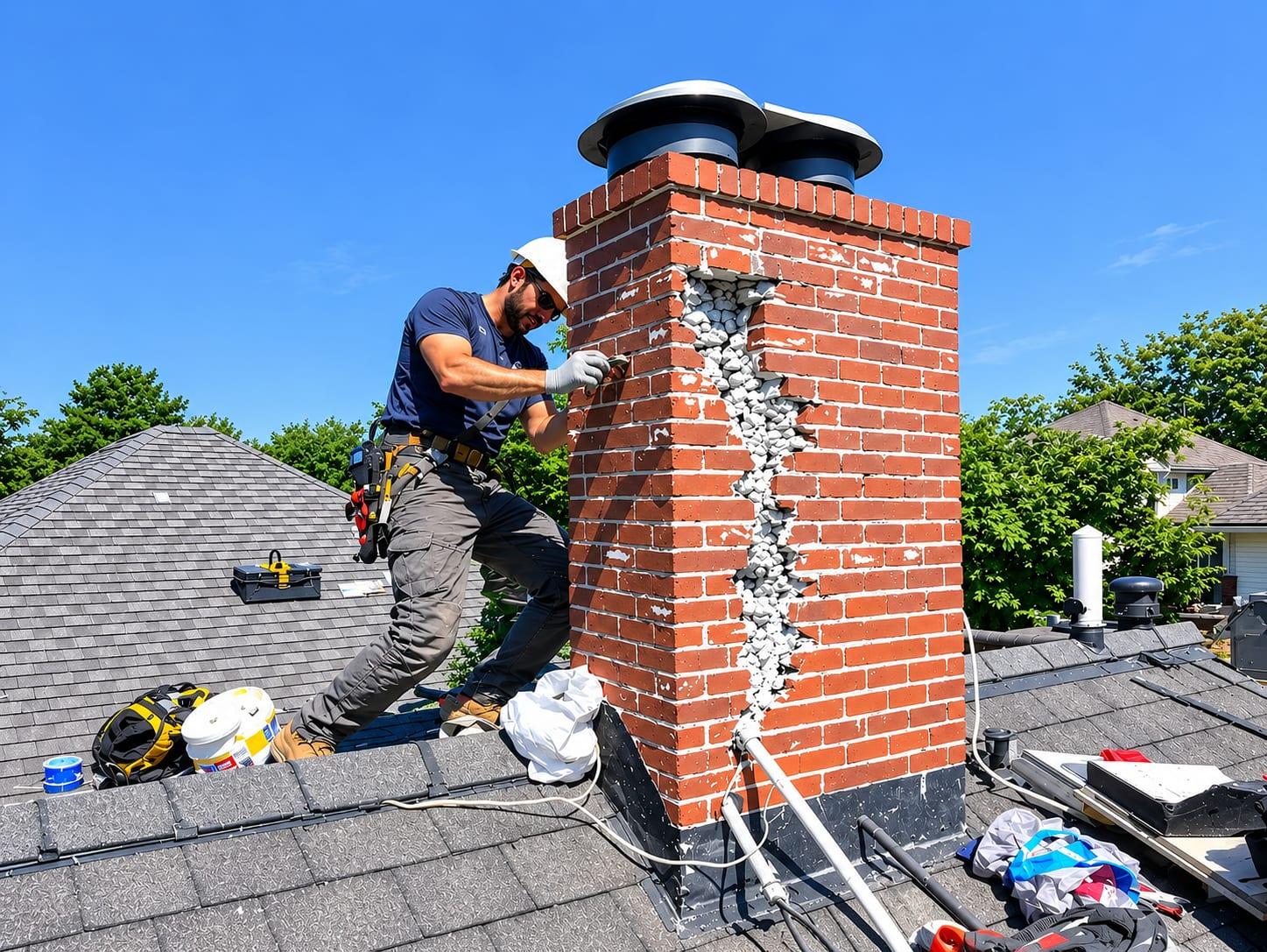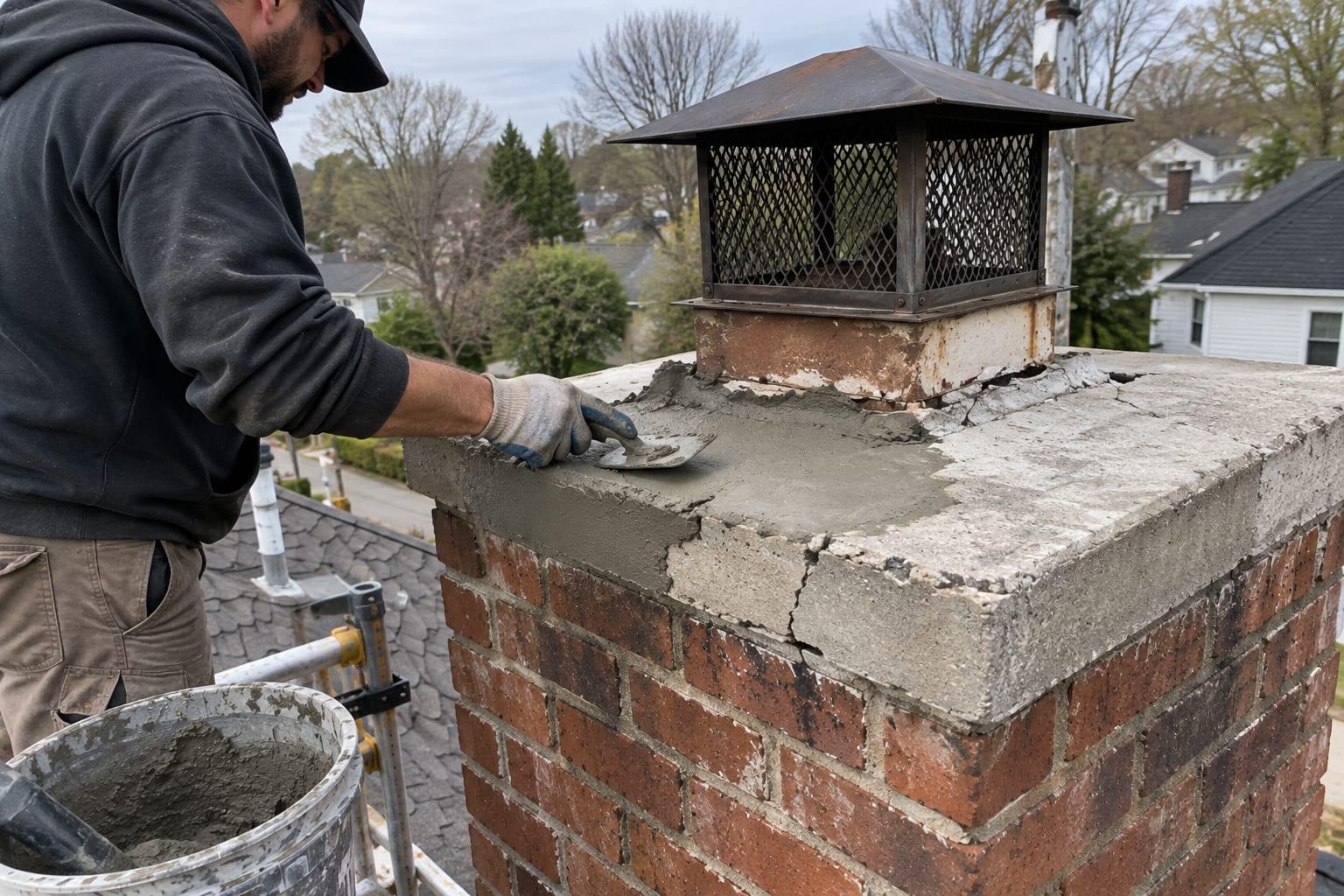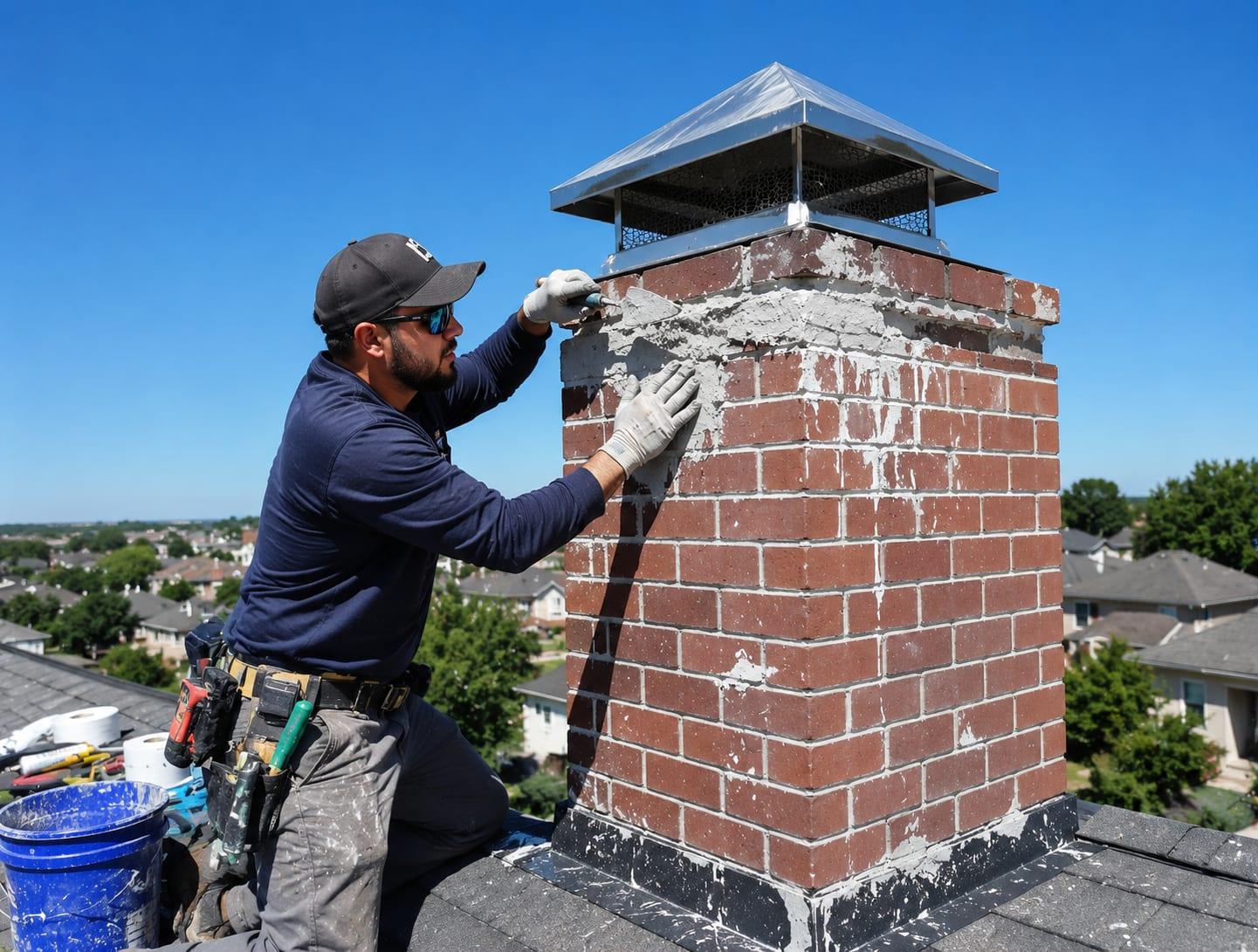
A cracked crown lets water into the chimney
The crown is the concrete or mortar slab that covers the top of a masonry chimney. It closes the gap between the outer brick and the flue liner and sheds rain off the stack. Once chimney crown cracks open up, rain runs straight into the brickwork below and sometimes down along the flue.
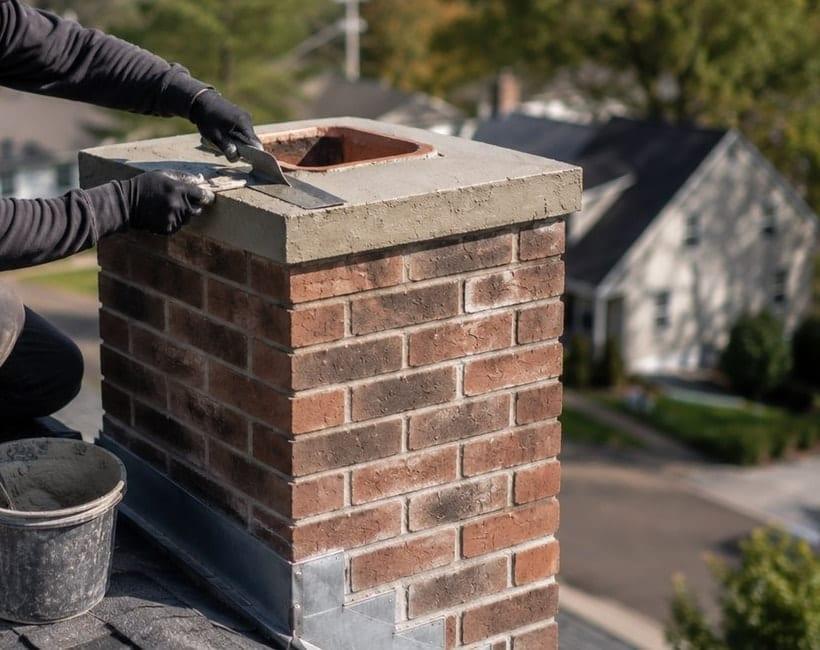
Cracks rarely stay the same size. Water that soaks into a crack can widen it, loosen pieces of the crown, and carry moisture into the bricks, the mortar joints, the damper and the firebox. A small crack caught early is usually a far simpler repair than the damage it leads to if it is left alone.
Common signs of a cracked chimney crown
Things homeowners often notice
- Visible cracks, gaps or missing chunks on top of the chimney, seen from the yard or through binoculars
- Small pieces of concrete or mortar on the roof, in the gutter or in the firebox
- Water, damp ash or a musty smell in the fireplace after rain
- Water stains on the ceiling or wall next to the chimney
- A rusty or sticking damper
- White, chalky staining (efflorescence) on the upper bricks
- Bricks near the top that are flaking, crumbling or popping their faces
- Moss or plant growth on the crown
Several of these signs can also come from other problems. Ceiling stains, for example, are just as often a flashing issue, which is why what causes chimney leaks is worth reading alongside this page's symptoms. Rust streaks down the masonry can also trace back to a rusted chimney cap rather than the crown itself.
Possible causes of chimney crown cracks
A crown can crack for more than one reason at once. These are the usual possibilities, and an inspection is what confirms which ones apply to your chimney.
- Water and temperature swings: water that seeps into small pores and hairline cracks expands and contracts as temperatures change, gradually opening the cracks wider.
- The wrong material: some crowns were built with ordinary mortar rather than a proper crown mix, and mortar tends to shrink and crack as it weathers.
- No room for the flue to move: the flue liner expands and contracts with heat; if the crown was poured tight against it with no expansion gap, that movement can crack the slab.
- A thin or flat crown: a crown that is too thin, or that doesn't slope and overhang the brick, holds water instead of shedding it.
- Age and weathering: even a well-built crown wears down after years of sun, rain and heat cycles.
- Impact or storm damage: falling branches or heavy debris can crack or break off part of the crown.
- Settling: movement in the chimney structure below can show up as cracks at the top.
How urgent is it, and when should you stop using the fireplace?
A hairline crack is not usually an emergency, but it shouldn't wait for years either. Every rain puts more water into the chimney, and the longer that goes on, the more likely the repair grows from sealing a crack to fixing masonry, the damper or the flue liner.
Stop using the fireplace and get it checked if:
pieces of the crown or masonry are falling into the firebox, a large section of the crown is broken or missing, water is running into the fireplace, or you suspect the flue liner is cracked or blocked by debris. Burning a fire with a damaged or obstructed flue can push heat and smoke where they shouldn't go.
Emergency calls are accepted, and 24-hour service runs Sunday–Friday. Same-day visits are available where the schedule allows. Please don't climb onto the roof to look at the crown yourself, especially when it is wet.
What normally fixes a cracked crown
How a crown repair usually goes
Inspect the chimney top and flue
The crown, bricks, flashing, cap and flue are checked to see how far the cracking goes and whether water has reached anything below. A camera inspection of the flue may be used when there is reason to suspect liner damage.
Seal hairline cracks
Fine cracks in an otherwise sound crown can often be cleaned out and sealed with a flexible crown sealant made for masonry.
Repair or rebuild a damaged crown
Wide cracks, crumbling sections or a crown made from the wrong material usually call for rebuilding it, ideally with a slope, an overhang that drips water clear of the brick, and a gap that lets the flue move.
Protect the chimney top
Depending on what the inspection finds, a chimney cap, waterproofing for the brick, or flashing repair may be recommended so water stops getting in by other routes.
| Feature | Sealing the crown | Rebuilding the crown |
|---|---|---|
| Usually suits | Hairline cracks in a crown that is otherwise solid | Wide or many cracks, loose or missing pieces, or a mortar crown |
| What it involves | Cleaning the surface and applying a flexible sealant | Removing the old crown and forming a new one with proper slope and overhang |
| What it doesn't solve | A crown that is too thin, flat or breaking apart | Damage already done to bricks, flashing or the flue liner, which is repaired separately |
Usually suits
- Sealing the crown
- Hairline cracks in a crown that is otherwise solid
- Rebuilding the crown
- Wide or many cracks, loose or missing pieces, or a mortar crown
What it involves
- Sealing the crown
- Cleaning the surface and applying a flexible sealant
- Rebuilding the crown
- Removing the old crown and forming a new one with proper slope and overhang
What it doesn't solve
- Sealing the crown
- A crown that is too thin, flat or breaking apart
- Rebuilding the crown
- Damage already done to bricks, flashing or the flue liner, which is repaired separately
Our chimney crown repair covers both sealing and rebuilding. When the inspection turns up damaged bricks, mortar joints or flashing as well, that work is handled through our wider masonry and chimney repair work.
What not to do
- Don't smear roofing tar or household caulk over the cracks. It can trap moisture underneath and makes a proper repair harder later.
- Don't pressure-wash the chimney top; it can force water deeper into the masonry.
- Don't keep using a fireplace that is dropping debris or letting water into the firebox.
- Don't go up on the roof yourself to inspect or patch the crown.
Related problems at the top of the chimney
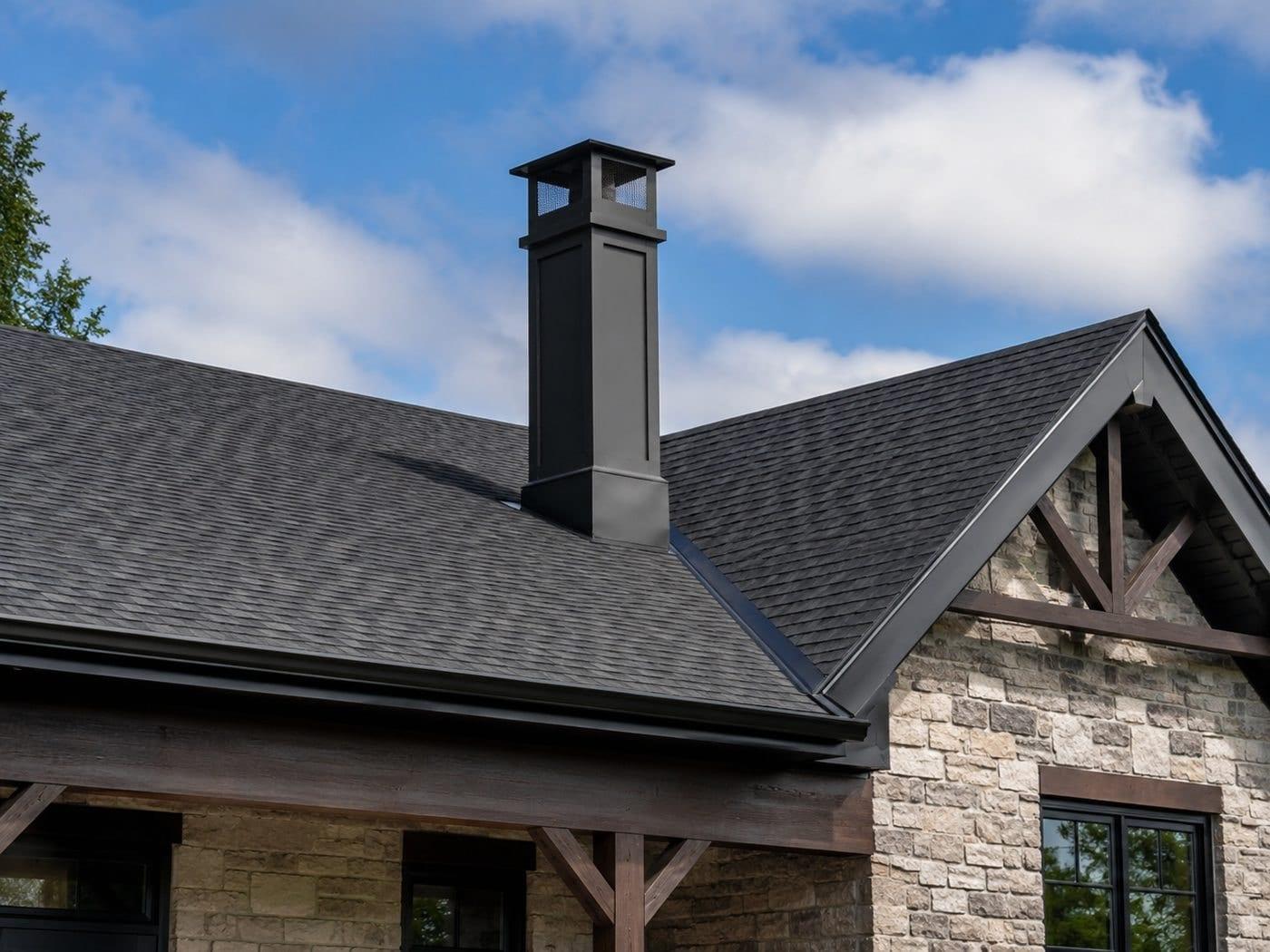
Factory-built chimneys don't have a masonry crown at all; they are topped by a metal chase cover, and the signs a chase cover needs attention are different from crown cracks. Water coming through a cracked crown also tends to reach the damper first, so if yours has started to rust or stick, damper problems and their causes explains what to look for.