On this page
- What chimney waterproofing is and what it involves
- Signs your chimney needs waterproofing
- Chimney water damage: what it does over time
- Chimney leak waterproofing: where it fits in a leak repair
- Components and materials involved
- What the visit involves, step by step
- Maintenance context
- Book chimney waterproofing
What chimney waterproofing is and what it involves
Chimney waterproofing means applying a penetrating water repellent to the outside of a masonry chimney. Brick, mortar and stone are porous. Left untreated, they absorb rain like a sponge. A good chimney sealant soaks into the surface and keeps liquid water out. It still lets water vapor from inside the masonry dry out through the face of the brick.
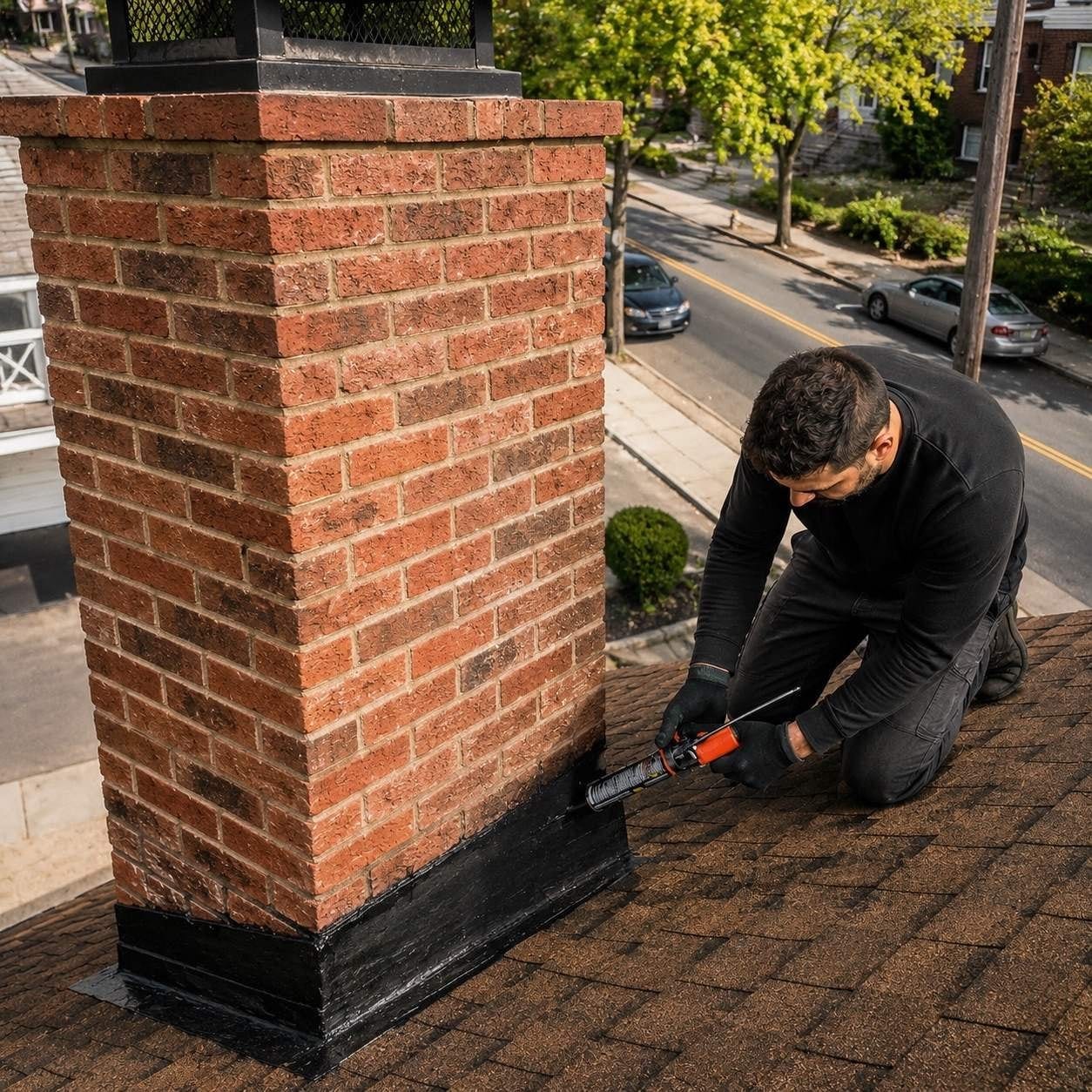
That breathability is the whole point. Paint, sealers that form a film, and other coatings that don't let vapor through can trap moisture behind them. Trapped moisture leads to spalling: the brick face flakes or pops off. The right product seals the brick against rain without sealing moisture in.
Waterproofing protects sound masonry. It does not repair damaged masonry. Open mortar joints, a cracked crown or loose flashing have to be fixed first, or the water simply finds those gaps instead.
Signs your chimney needs waterproofing
Others call because the outside of the chimney looks worn. Any of these signs is worth a closer look:
Common signs of chimney water problems
- Water stains on the ceiling or wall next to the chimney
- Damp or musty smells from the fireplace, especially after rain
- Water, rust flakes or puddles in the firebox
- Brick faces that are flaking, cracking or crumbling
- Mortar joints that are soft, sandy or recessed
- A rusted damper or rusted firebox parts
- Peeling wallpaper or bubbling paint near the chimney breast
If water is actively coming in, start with what causes a chimney leak. Waterproofing is often part of the fix, but it is rarely the only part.
Chimney water damage: what it does over time
Chimney water damage builds slowly, and much of it is out of sight. Water that soaks into brick and mortar wears joints down. It cracks the masonry as it expands and contracts. It can make the brick face break away. Inside, moisture rusts the damper and any metal parts. It stains the firebox and can wear down the smoke chamber and the liner. It can also reach framing, drywall and insulation next to the chimney.
Firebox water damage is one of the clearer warning signs. Rust, wet ashes or a damp, sour smell in the fireplace usually means water is getting in from above. The cause can be the cap, the crown, the flashing or the brick itself.
Don't ignore moisture in the firebox
Water in the fireplace can come from several places at once. Sealing the brick won't help if the real source is a missing cap or failed flashing. Have the whole chimney checked before you decide on the fix.
Chimney leak waterproofing: where it fits in a leak repair
A leaking chimney usually has more than one entry point. Here is how each one is typically handled:
| Entry point | What it looks like | Usual fix |
|---|---|---|
| Porous brick and mortar | Damp brick, efflorescence, spalling | Masonry repairs, then waterproofing |
| Cracked or worn crown | Cracks across the concrete slab on top | Crown repair, then sealing |
| Flashing at the roofline | Stains on the ceiling near the chimney | Flashing repair |
| Missing or damaged cap | Rain falling straight into the flue | Cap installation or replacement |
| Open or failing mortar joints | Recessed, crumbling joints | Tuckpointing |
We find and fix each entry point before we apply sealant. You can read more about fixing a chimney leak from the source. If the mortar is the problem, repointing worn mortar joints comes first. Cracked or spalled brick calls for repairing damaged chimney brick before any sealant goes on.
Components and materials involved
Masonry waterproofing
Masonry waterproofing covers the brick or stone and the mortar joints on the parts of the chimney exposed to weather. We use breathable, penetrating water repellents made for masonry. We do not use paint or coatings that seal moisture in.
Crown, cap and flashing
The crown is the concrete or mortar slab that caps the masonry. It takes direct rain, and small cracks in it let water straight into the chimney. Crowns are sealed with a product made for horizontal surfaces. A chimney cap keeps rain out of the flue opening itself. A buyer's guide to chimney caps explains the options. Flashing seals the joint between the chimney and the roof, and it is repaired separately from waterproofing.
Chimney damper and water
Dampers aren't waterproofed the way brick is. They are often where water damage shows first, as rust, sticking or a damper that won't seal shut. Stopping water from above protects the damper. If it's already rusted or stuck, repairing a rusted or sticking damper is a separate job.
Prefab chimneys
Factory-built chimneys inside a framed chase don't have exposed masonry to seal. On these, water usually gets in through a rusted or poorly fitted chase cover. Our guide to chase cover signs and solutions covers what to look for.
What the visit involves, step by step
How a chimney waterproofing job runs
Inspect the chimney
We look at the brick, mortar, crown, cap and flashing. We also check inside the firebox and at the damper for signs of water getting in.
Find the entry points
We match the stains or damage you're seeing to the likely sources. Then we explain what needs repair and what only needs sealing.
Repair first
We fix open joints, cracked brick, crown cracks, flashing or a missing cap before any sealant goes on.
Clean and let it dry
The masonry needs to be clean and dry so the repellent can soak in evenly.
Apply the water repellent
We apply a breathable masonry sealant to the exposed brick and mortar, and seal the crown as needed.
Walk you through it
We show you what was done and what to watch for after the next heavy rains.
Maintenance context
Waterproofing works best as part of regular chimney care. An annual inspection catches cracked crowns, worn joints and cap problems while they're small. Sealant wears down over the years, so it should be checked during those inspections and reapplied when water stops beading on the brick. Keeping a cap on the flue and the flashing in good shape does as much to keep water out as the sealant does.
Book chimney waterproofing
Get in touch to request a visit. If water is coming in now, emergency calls are accepted, and 24-hour service runs Sunday–Friday. Commercial and property-manager work is offered too, so you can contact us about rental or business properties.