On this page
What pellet fireplace installation involves
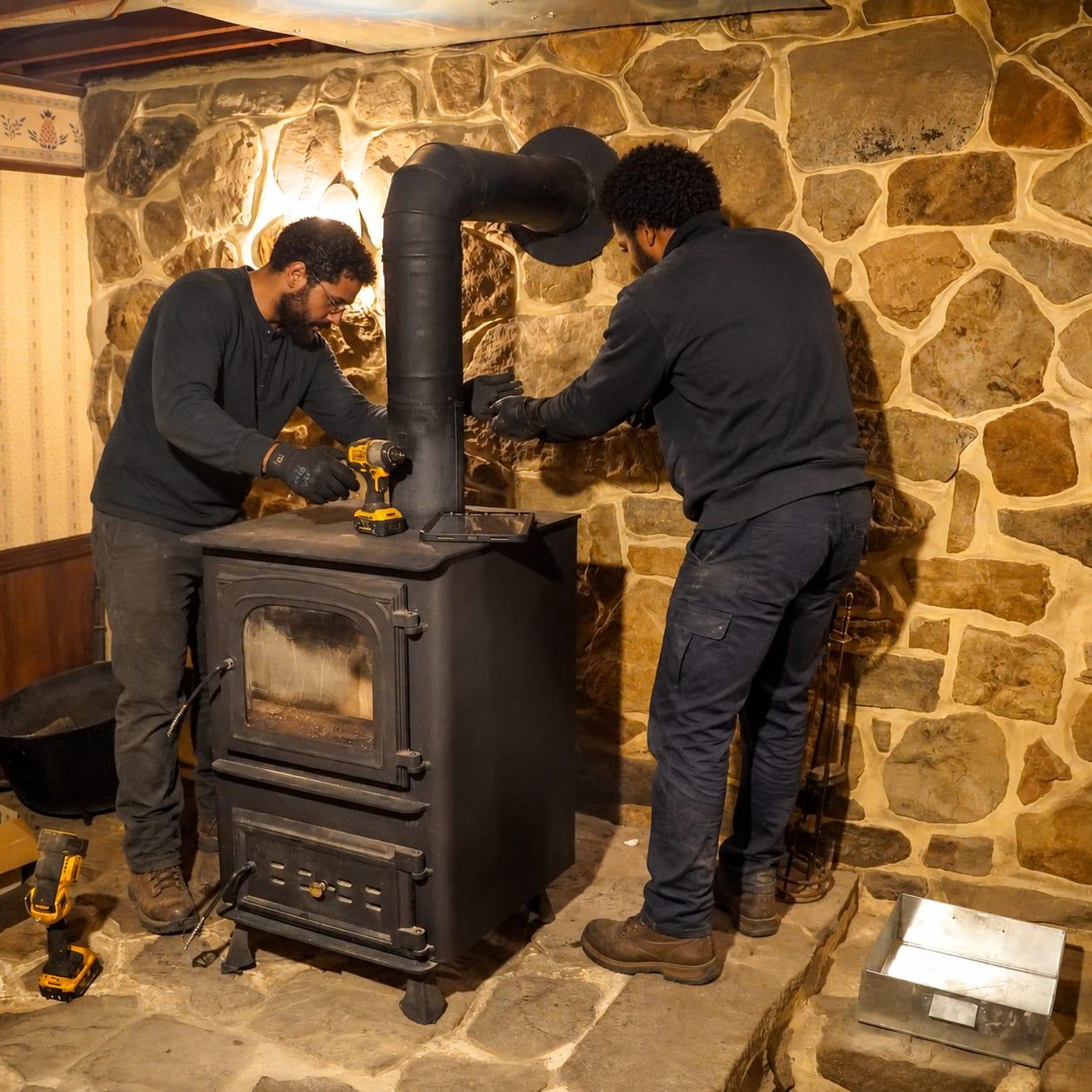
A pellet fireplace is a heater, not just a flame to look at. Pellets go into a hopper. An electric auger moves them into a burn pot, an igniter lights them, and a combustion fan pulls air through the fire and pushes exhaust out through a dedicated vent. A second blower moves warm air into the room. Because so much of it is mechanical and electrical, installing one well means getting three things right: where the unit sits, how it vents, and how it gets power.
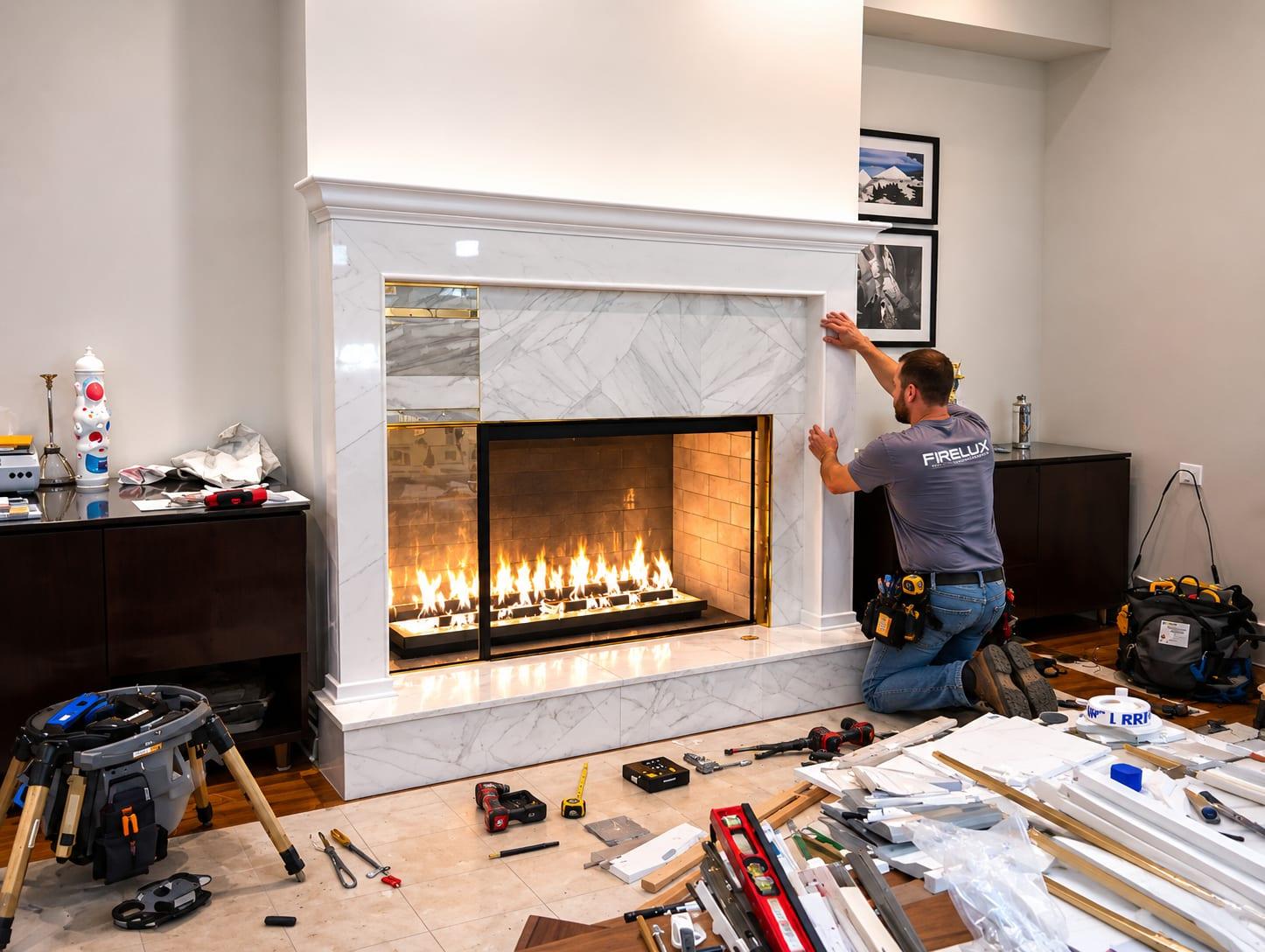
There are two main forms. A pellet insert slides into an existing masonry or factory-built fireplace and vents up through a liner run inside the old chimney. A freestanding pellet fireplace or stove stands on a hearth pad and usually vents straight out through a wall or up through the roof. If you're still choosing a format, our guide on choosing between a fireplace insert and a freestanding wood stove covers the same placement questions.
What the installation covers
- Checking the space: floor protection, clearances to walls and trim, and room for the hopper lid to open fully.
- Planning the vent route with pellet-rated vent pipe, whether that's a liner through an existing chimney or a new wall or roof penetration.
- Setting and leveling the unit, connecting the vent, and sealing the joints so exhaust can't leak into the room.
- Confirming there's a suitable outlet nearby, since the auger, fans and controls all need power.
- A test burn to check ignition, feed rate and draft, then a walk-through of startup, shutdown and routine cleaning.
Signs a pellet fireplace makes sense, or needs repair
Installation usually comes up when a homeowner wants real heat from a fireplace that currently gives very little, or wants a heater that runs for hours on one hopper load. Repair calls come from units that already exist but have stopped behaving.
When a new pellet unit is worth a look
- Your open wood fireplace sends most of its heat up the chimney.
- You want steady heat but don't want to split, store and haul firewood.
- You'd like a heater that cycles on its own without constant tending.
- An old pellet unit is worn out and replacement parts are hard to find.
Common pellet fireplace problems we repair
01Won't ignite
- What you may notice
- Pellets drop into the burn pot but never light, or the unit shuts down with a failure code during startup.
- How it’s confirmed
- We clean the burn pot and air holes, then check the igniter, the combustion fan and the safety switches that must close before ignition.
02Fire goes out or runs lazy
- What you may notice
- Flame is dark and smoky, unburned pellets pile up, or the unit shuts off mid-cycle.
- How it’s confirmed
- We look for ash buildup in the vent and heat exchanger, check the door gasket, and test the feed rate and draft.
03Auger jams or won't feed
- What you may notice
- Grinding or clicking from the hopper, or the hopper stays full while the fire starves.
- How it’s confirmed
- We clear fines and swollen pellets from the auger tube, then check the auger motor and its switch.
04Smoke or smell in the room
- What you may notice
- Smoke puffs at startup, a burnt smell, or soot around the door or vent joints.
- How it’s confirmed
- We inspect the vent connections and seals, clean the venting, and confirm the combustion fan is moving enough air.
What the visit looks like, step by step
From first call to first fire
Tell us what you have
Describe the room, any existing fireplace or chimney, and whether you're replacing or repairing a pellet unit. For repairs, note any error code on the display.
On-site look
We check the fireplace or wall, measure clearances, find the best vent route and confirm where power will come from.
Plan and estimate
You get a clear explanation of the unit placement, venting and work involved before anything starts.
Installation or repair
We set and vent the unit, or clean, test and replace the failing parts on an existing one.
Test burn and hand-off
We run it, watch ignition and draft, and show you the daily and seasonal cleaning it needs.
Pellet vs. other fireplace choices
| Feature | Pellet | Gas |
|---|---|---|
| Fuel | Bagged wood pellets loaded into a hopper | Natural gas or propane through a gas line |
| Power | Needs electricity to run the auger and fans | Many units can run without household power |
| Routine upkeep | Burn pot and ash cleaning, plus vent cleaning | Periodic service and inspection |
| Fire feel | Real wood fire, small and active | Steady flame over logs or media |
Fuel
- Pellet
- Bagged wood pellets loaded into a hopper
- Gas
- Natural gas or propane through a gas line
Power
- Pellet
- Needs electricity to run the auger and fans
- Gas
- Many units can run without household power
Routine upkeep
- Pellet
- Burn pot and ash cleaning, plus vent cleaning
- Gas
- Periodic service and inspection
Fire feel
- Pellet
- Real wood fire, small and active
- Gas
- Steady flame over logs or media
If gas or electric sounds like a better fit after all, we do gas fireplace and gas appliance work too, and our guide to weighing an electric vs gas fireplace lays out those trade-offs. For a wider look at the options we fit, see how our fireplace installation service works. If the goal is mostly the look rather than heat, decorative fireplace installation or a multi-color fireplace installation may suit the room better.
Keeping a pellet fireplace safe and running
- Scrape or empty the burn pot as often as the manual calls for. Clogged air holes are behind many ignition failures.
- Use dry, good-quality pellets. Damp pellets swell, crumble into fines and jam the auger.
- Have the vent and heat exchanger cleaned on a regular schedule. Pellet ash is fine and builds up quietly.
- Keep working smoke and carbon monoxide alarms in the home, as with any fuel-burning appliance.
Don't just pull the plug
If a burning pellet unit starts smoking, use its normal shutdown on the control panel rather than unplugging it. Cutting power stops the combustion fan, and smoke can then back up into the room. If smoke keeps coming in, get everyone out and call for help.
Booking pellet fireplace installation or repair
Get in touch to request an estimate for a new unit or a repair visit. We work on all major brands, and commercial and property-manager work is offered as well.