On this page
What outdoor fireplace installation involves
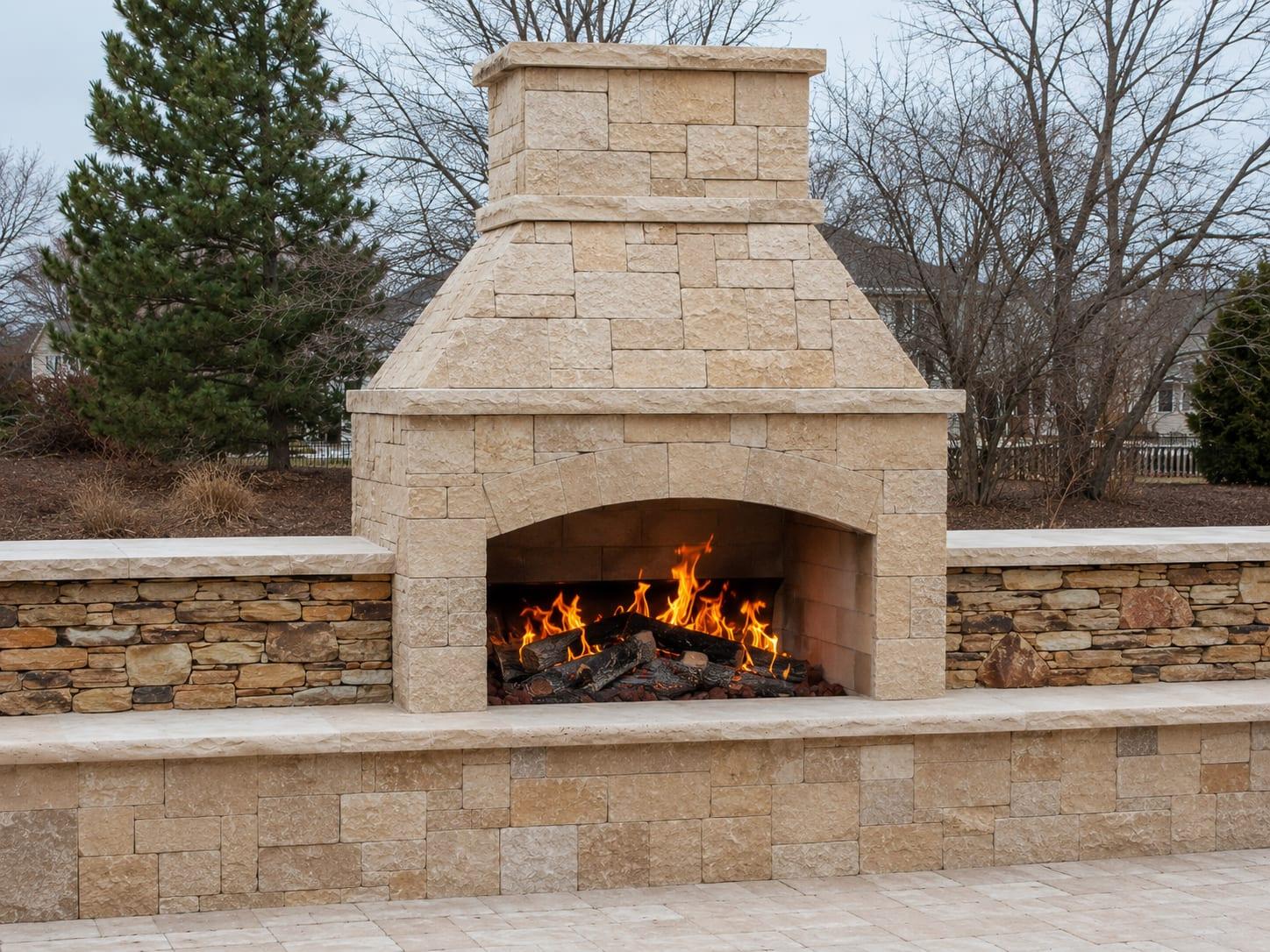
Outdoor fireplace installation means building or fitting a permanent fireplace in an outdoor living space, such as a patio, a covered porch or a corner of the yard. Each one gets the base, fuel supply, venting and clearances it needs to burn safely. It is a construction project rather than a product drop-off. The fireplace has to stand on a stable base, keep heat and sparks away from the house and plantings, and send smoke where it won't drift into the seating or through open windows.
Most projects take one of three forms: a masonry fireplace with its own chimney, a prefabricated outdoor firebox finished in brick or stone, or a gas unit fed by a natural gas or propane line. Fireplaces inside the house involve different planning, and our fireplace installation service covers indoor work.
Signs an outdoor fireplace is the right project
- A patio or porch that sits empty once evenings turn cool.
- A portable fire bowl or patio heater you're tired of moving, refueling or storing.
- An existing outdoor fireplace that smokes into the seating area, has crumbling masonry or no longer lights reliably, where replacing it makes more sense than patching it.
- Plans for an outdoor dining or kitchen area that needs a focal point.
- A clear preference for either a fire you start with a switch, which points toward gas, or the crackle and smell of real wood.
If the goal is mostly visual, with a flame as a design feature rather than a heat source, decorative fireplace installation or multi-Color fireplace installation may be a closer match.
Choosing the fuel and the build
| Feature | Wood-burning | Gas (natural gas or propane) |
|---|---|---|
| The fire | Real logs, crackle, wood smoke | Steady flame, little or no smoke |
| Starting and stopping | Build the fire, then wait for it to burn down | Light and shut off with a valve or switch |
| Venting | Needs a chimney tall enough to lift smoke above the seating | Follows the unit's design and manufacturer requirements |
| Fuel supply | Dry, seasoned firewood stored nearby | A gas line run to the unit |
| Ongoing care | Ash removal, chimney cleaning, cap upkeep | Periodic checks of burners, valves and connections |
The fire
- Wood-burning
- Real logs, crackle, wood smoke
- Gas (natural gas or propane)
- Steady flame, little or no smoke
Starting and stopping
- Wood-burning
- Build the fire, then wait for it to burn down
- Gas (natural gas or propane)
- Light and shut off with a valve or switch
Venting
- Wood-burning
- Needs a chimney tall enough to lift smoke above the seating
- Gas (natural gas or propane)
- Follows the unit's design and manufacturer requirements
Fuel supply
- Wood-burning
- Dry, seasoned firewood stored nearby
- Gas (natural gas or propane)
- A gas line run to the unit
Ongoing care
- Wood-burning
- Ash removal, chimney cleaning, cap upkeep
- Gas (natural gas or propane)
- Periodic checks of burners, valves and connections
Electric units are another option for some spaces, provided the model is rated for outdoor use. For a closer look at how gas and electric flames compare, read our guide to electric vs gas fireplace options.
How an installation visit works, step by step
From first look to first fire
Walk the space
We look at where you want the fireplace and how close it sits to walls, roof overhangs, railings and trees. We also check the slab or ground it would stand on and which way smoke is likely to travel.
Settle the fuel and style
Together we choose wood, gas or another fuel, masonry or prefab construction, and a size and finish that suit the house.
Plan the supply and venting
For gas units, we plan how the line will reach the fireplace. For wood-burning units, we plan the chimney height and clearances. Every unit needs a planned base.
Build or install
The base, firebox, chimney or vent, gas connection and finished surround go in.
Test and walk you through it
We light the fireplace, check the draft or flame, and check gas connections for leaks. Then we show you how to start it, use it and shut it down.
Safety and upkeep once it's in use
- Keep cushions, furniture and planters well back from the opening.
- Don't add a pergola or roof over a wood-burning unit without having the clearances checked first.
- Burn only dry, seasoned firewood. Wet wood makes more smoke and more creosote.
- Fit a cap or spark arrestor on a wood-burning chimney to keep out rain, animals and stray embers.
- Have gas burners, valves and connections checked regularly, and schedule inspections and cleanings as part of routine fireplace care.
Smell gas near the fireplace?
Shut off the gas supply only if you can do it safely, and keep flames and sparks away. Move away from the area, then call your gas utility or 911 from a safe distance. Emergency calls are accepted, and we can check the unit once the area is safe.
Booking outdoor fireplace installation in Atlanta
Get in touch to describe the space and what you have in mind, and we'll arrange a visit to see it in person.
Commercial and property-manager work is offered, so outdoor fireplaces for businesses and managed rentals are part of the work. Gas fireplace and gas appliance work is offered as well, and we work on all major brands.
We also handle outdoor fireplace installation in Alpharetta, outdoor fireplace installation in Sandy Springs and outdoor fireplace installation for homes in South Fulton.