On this page
What brick fireplace repair involves
A brick fireplace has two kinds of masonry working together. The firebox is the part that holds the fire. It is lined with firebrick, a dense brick made to take direct heat, laid in refractory mortar. Around it are the face brick and the hearth. These are the visible parts, and they also protect the floor and wall around the opening. Brick fireplace repair means restoring whichever part has failed: replacing cracked or missing firebrick, repointing worn joints, resetting loose face brick or repairing a cracked hearth.
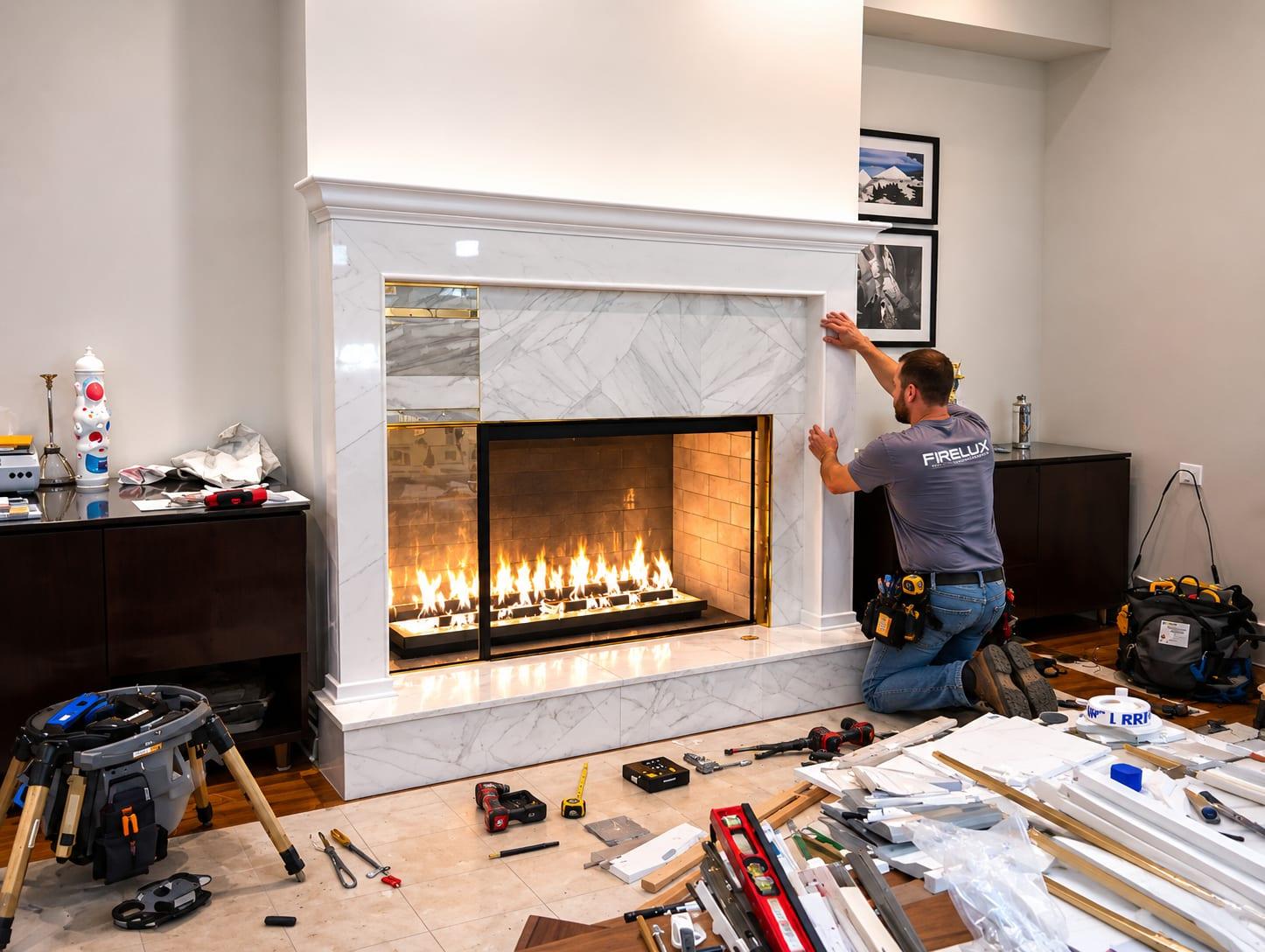
Installation is the other half of this service. That can mean building a new brick fireplace or rebuilding a firebox that is too far gone to patch. For a broader look at adding a fireplace of any type, here is how fireplace installation works.
The materials that matter
- Firebrick: heavier and more heat-tolerant than ordinary brick. It lines the back, sides and floor of the firebox.
- Refractory mortar: the heat-resistant mortar that holds the firebrick together. Ordinary masonry mortar breaks down under direct flame.
- Face brick and surround: the decorative brick around the opening. It deals with radiant heat, soot and moisture rather than open flame.
- Hearth: the brick or masonry floor in front of the opening that catches sparks and embers.
Signs your brick fireplace needs repair
| What you see | What it often means | Sensible next move |
|---|---|---|
| Gaps in firebox mortar joints you can see into | Refractory mortar worn away by repeated heating and cooling | Stop burning until the joints are repaired |
| Firebrick cracked all the way through, shifting or missing | The protective lining has a weak spot or a hole | Stop burning and have the brick replaced |
| Fine hairline cracks on the surface of firebrick | Normal expansion and contraction from use | Keep an eye on them and have them checked at the next inspection |
| Flaking or crumbling face brick, or white powdery deposits | Moisture moving through the masonry | Find the water source before repairing the brick |
| Loose bricks in the surround or hearth | The mortar bond has failed | Reset them before they fall out or crack further |
| Smoke stains on the brick above the opening | Smoke spilling into the room, often a draft problem rather than a brick problem | Have the damper, smoke chamber and flue checked |
Take seriously anything that opens a path for heat to reach behind the firebox, such as wide joint gaps, firebrick broken through or pieces missing. The firebrick lining keeps fire heat away from the framing and materials around the fireplace. Cosmetic face brick problems are less urgent, but they often point to moisture that keeps doing damage if it isn't dealt with.
Skip the hardware-store patch
Don't fill firebox joints with standard mortar, caulk or general-purpose filler. These materials aren't made for direct flame. They crack, fall out and can hide a gap that is still letting heat through.
What a brick fireplace repair visit involves
From first look to first fire
Talk through what you've noticed
We ask when the problem showed up and how you use the fireplace: wood, gas logs or not at all lately.
Inspect the firebox, face and hearth
We check each section of brick and every joint, along with the damper and the area just above it. A firebox problem sometimes traces back to moisture or a poor draft rather than the brick itself.
Explain findings and options
You hear what needs fixing before the next fire, what can wait and whether repair or a rebuild makes more sense.
Make the repair
Damaged firebrick and failed mortar are cut out, and new firebrick is set in refractory mortar. On the face and hearth, worn joints are raked out and repointed and loose brick is reset, matched as closely as available brick allows.
Cure, clean up and restart
Refractory mortar needs to cure before a full fire. We clean up the work area and explain how to bring the fireplace back into use with small fires first.
When installation makes more sense than repair
If the firebrick is failing across the whole firebox rather than in a few spots, rebuilding the firebox is often more practical than replacing bricks one at a time. If a home has no fireplace and you want the look and feel of brick, a new brick fireplace can be built.
Gas fireplace and gas appliance work is offered, so a brick fireplace doesn't have to burn wood. If the main goal is appearance, decorative fireplace installation and our multi-color fireplace installation service are other routes. Fuel choice affects how the fireplace is built and used. Our guide to electric vs gas fireplace and the comparison of fireplace insert vs freestanding wood stove lay out the trade-offs.
Keeping brick in good shape between repairs
Habits that are easier on firebrick and mortar
- Use a grate so logs don't rest against the back wall of the firebox.
- Build fires sized to the firebox, with flames staying inside the opening.
- Let fires die down on their own. Water on a hot firebox causes a sudden temperature change that stresses the brick.
- Burn dry, seasoned wood rather than green or wet wood.
- Look over the joints and firebrick at the start of each burning season, and book an annual inspection.
Booking brick fireplace repair
Call or request an estimate and describe what you're seeing: cracked firebrick, open joints, loose face brick or a new fireplace you have in mind. Commercial and property-manager work is offered, and we work on all major fireplace brands.
Homeowners there can also find details on brick fireplace repair and installation.