On this page
What smoke chamber repair is and what it involves
In a masonry fireplace, the firebox is where the fire burns and the flue is the long passage that carries smoke up and out. The smoke chamber sits between them, just above the damper. Its walls angle inward so smoke speeds up and moves smoothly into the narrower flue.
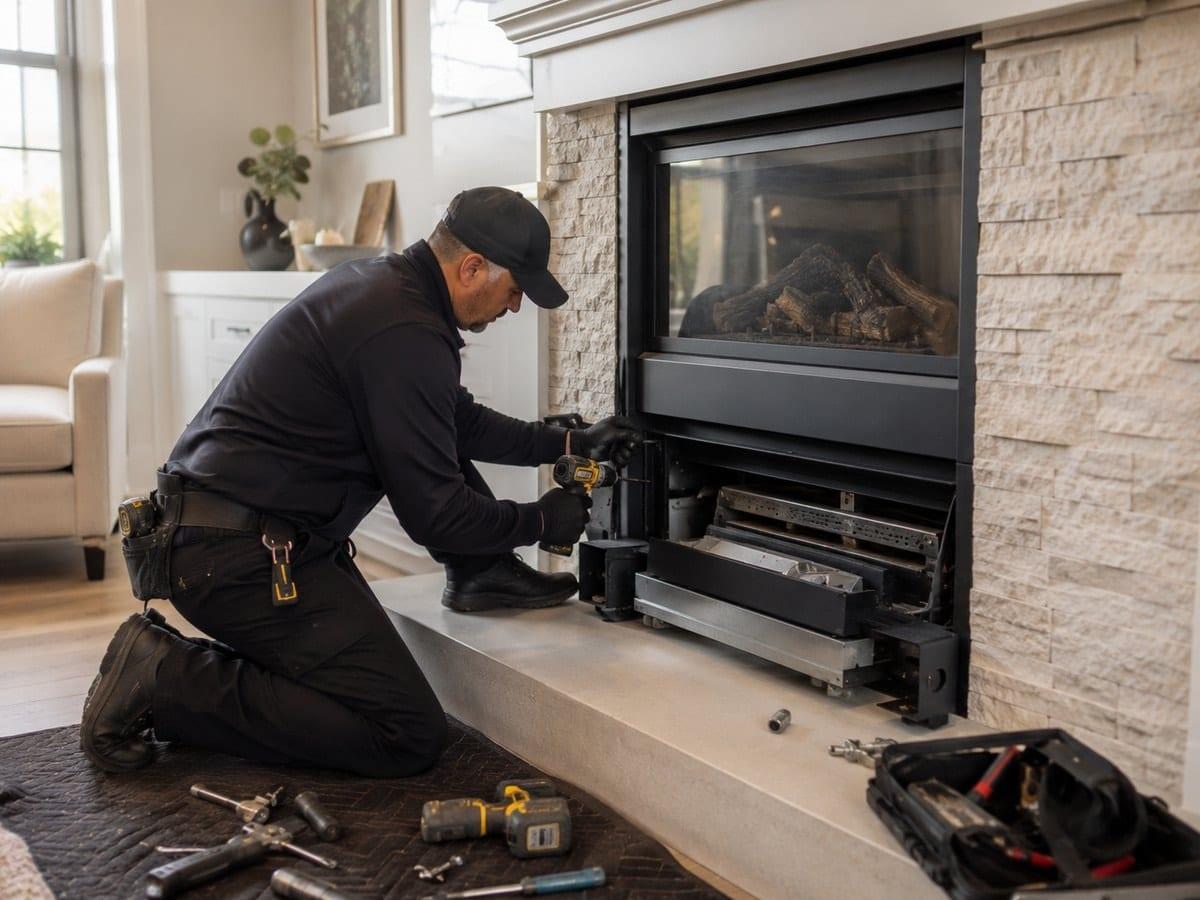
Many chambers were built with brick laid in steps, called corbeling, and left rough. Others were smoothed with mortar at the time but have cracked or lost pieces over years of heating and cooling. Smoke chamber repair means restoring a sound, smooth, heat-resistant surface: filling cracks, replacing loose or missing mortar, and in many cases parging the whole chamber with a coat of heat-rated mortar so the walls are even from the damper to the flue.
It is one specific part of masonry and wood-burning fireplace repair, and it is often found alongside other issues in the firebox or at the damper.
Signs your smoke chamber needs repair
Common reasons homeowners call
- Smoke drifts into the room even with the damper fully open and the flue clear
- Flakes of mortar, bits of brick or gritty debris land on the damper or in the firebox
- A flashlight above the damper shows open joints, cracks or rough, stepped brick
- A chimney inspection report notes a cracked, unparged or deteriorated smoke chamber
- Heavy, fast creosote buildup above the damper, where rough walls catch soot
- Staining or unusual heat on the wall or mantel area above the fireplace opening
None of these signs proves the chamber is the cause on its own. Smoke spillage, for example, can also come from a blocked flue, a damper that won't open fully or a fireplace opening that is out of proportion with its flue. That is why the visit starts with an inspection rather than a repair.
What the visit involves, step by step
How a smoke chamber repair usually goes
Protect the room
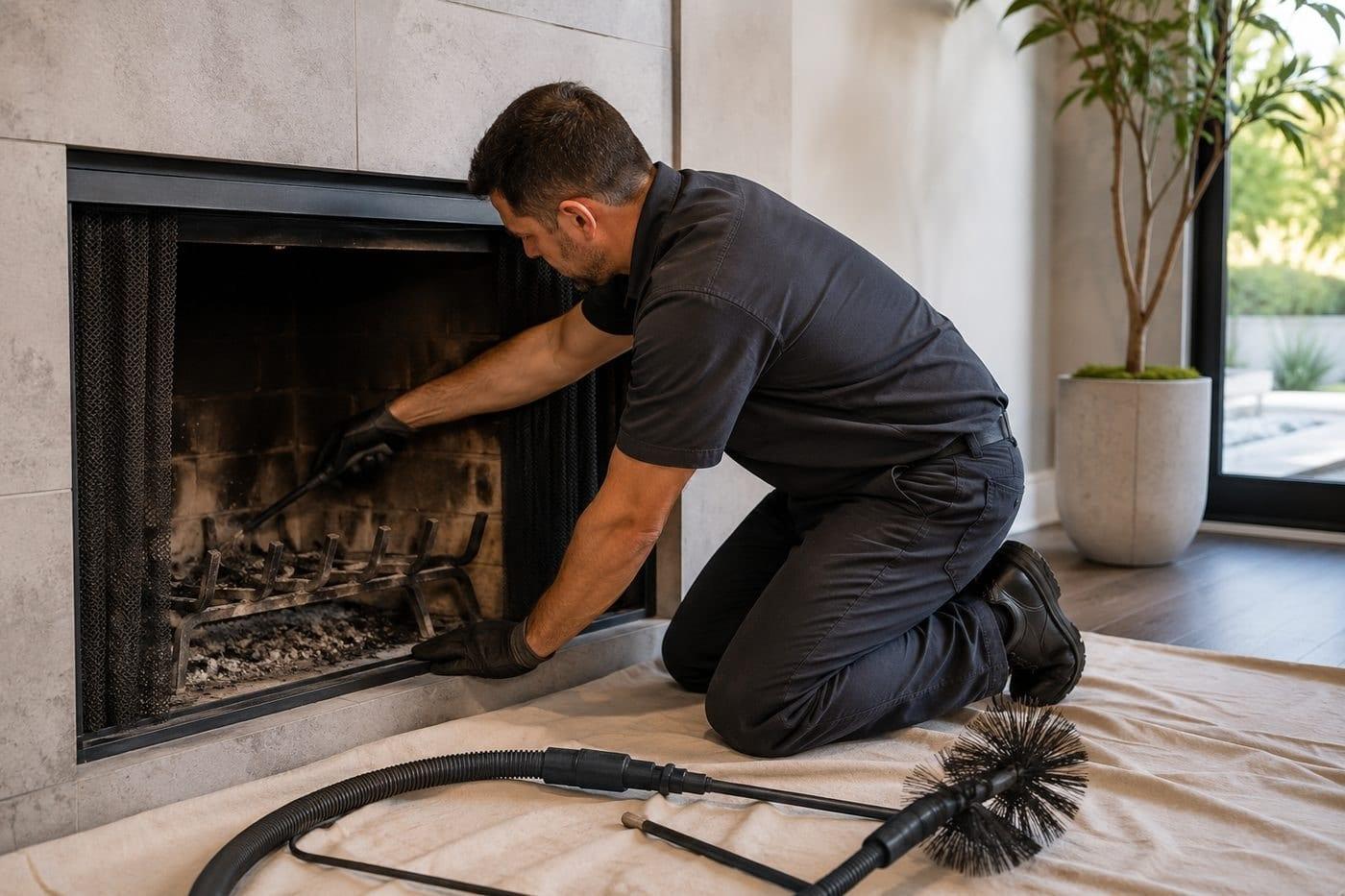
We cover the hearth and floor and set up so soot and mortar dust stay inside the fireplace.
Inspect the chamber
We look at the chamber walls, the damper and the lower flue with lights and, where it helps, a chimney camera. Then we explain what we found and what we recommend.
Clean before repairing
Mortar won't bond to soot or creosote, so the chamber is cleaned first. If the rest of the fireplace needs it, a full fireplace cleaning can be done on the same visit.
Repair cracks and loose material
Loose mortar and failing pieces are removed, and cracks and open joints are filled with heat-rated material.
Parge the chamber where needed
If the walls are stepped or rough, we apply heat-rated mortar to create a smooth, continuous surface from the damper up to the flue.
Check the damper and finish up
We confirm the damper opens and seals properly, clean up the work area and tell you how long to wait before your next fire.
Parts and materials involved
- Corbeled brick: the stepped brick courses that form the chamber walls in many masonry fireplaces.
- Heat-rated mortar: used to fill cracks and to parge the chamber smooth; standard mortar isn't made for these temperatures.
- Damper and smoke shelf: the damper sits at the base of the chamber, often with a ledge behind it; both are checked during the repair.
- Fuel type: wood fires and gas logs set in a masonry fireplace both vent through the smoke chamber, so the repair applies to either.
Safety and maintenance
Hold off on fires if you suspect damage
The smoke chamber takes some of the hottest gases in the system. Cracks can let heat and smoke reach the surrounding structure, and rough walls collect creosote that can ignite. If you see debris falling from above the damper or smoke spilling into the room, stop using the fireplace until it has been looked at.
After a repair, the best protection is routine care: keep the fireplace and flue clean, and have the chamber looked at during regular inspections so small cracks are caught early. If an inspection shows the fireplace is beyond practical repair, installing a new fireplace may make more sense, and we can talk through that option with you.
Booking smoke chamber repair
Call or request an estimate and describe what you're seeing, whether it's smoke in the room, debris on the damper or a note on an inspection report. Commercial and property-manager work is offered, and gas fireplace and gas appliance work is offered too.