The short answer
If you already have a chimney, the usual answer is to repair it as the type it is. A masonry chimney gets masonry repairs, and a prefab chimney gets parts that match its listing. The masonry vs prefab chimney question becomes a real choice in two situations: when you are adding a new fireplace or stove, or when an existing system has failed badly enough that replacement is on the table.
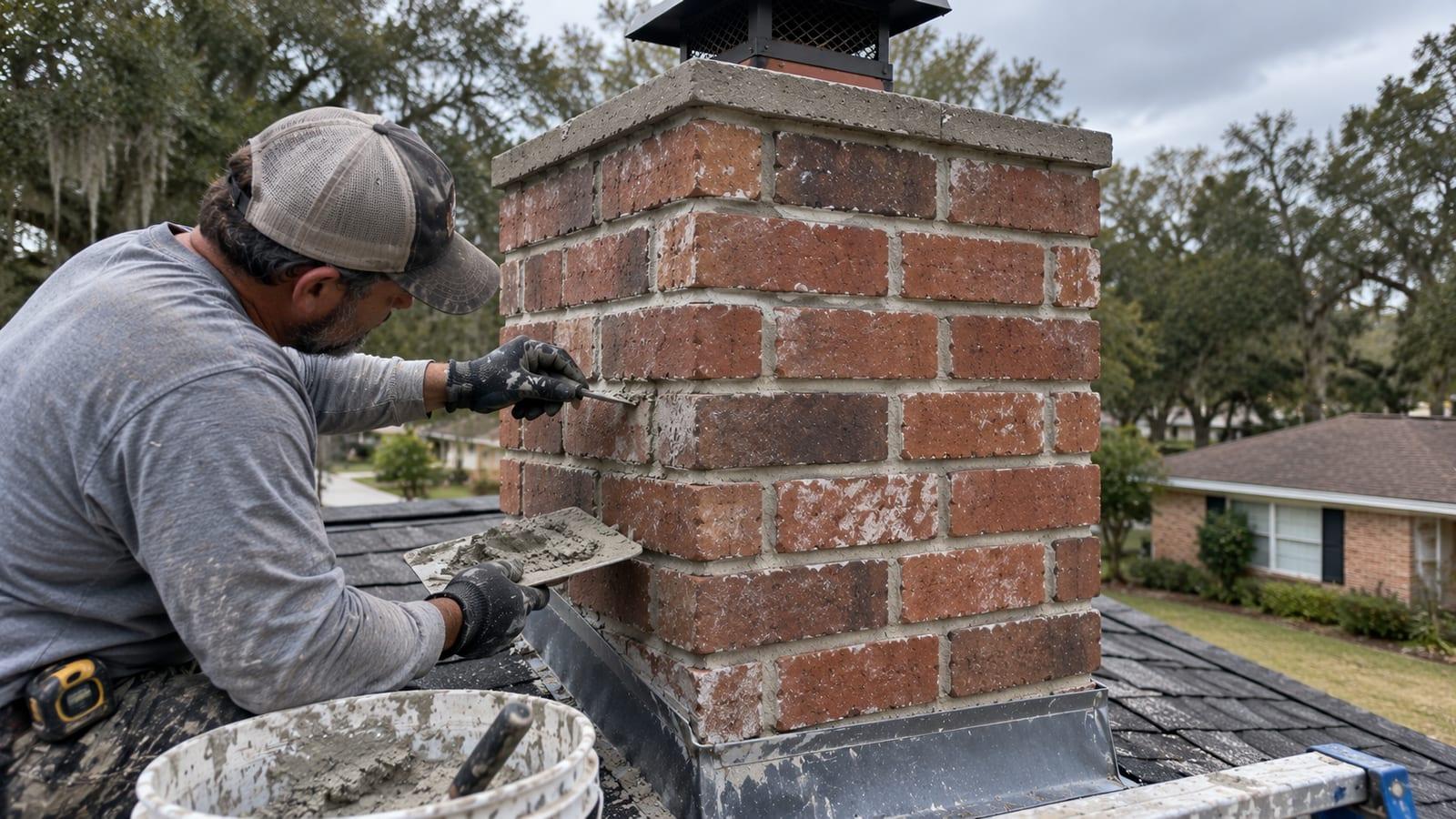
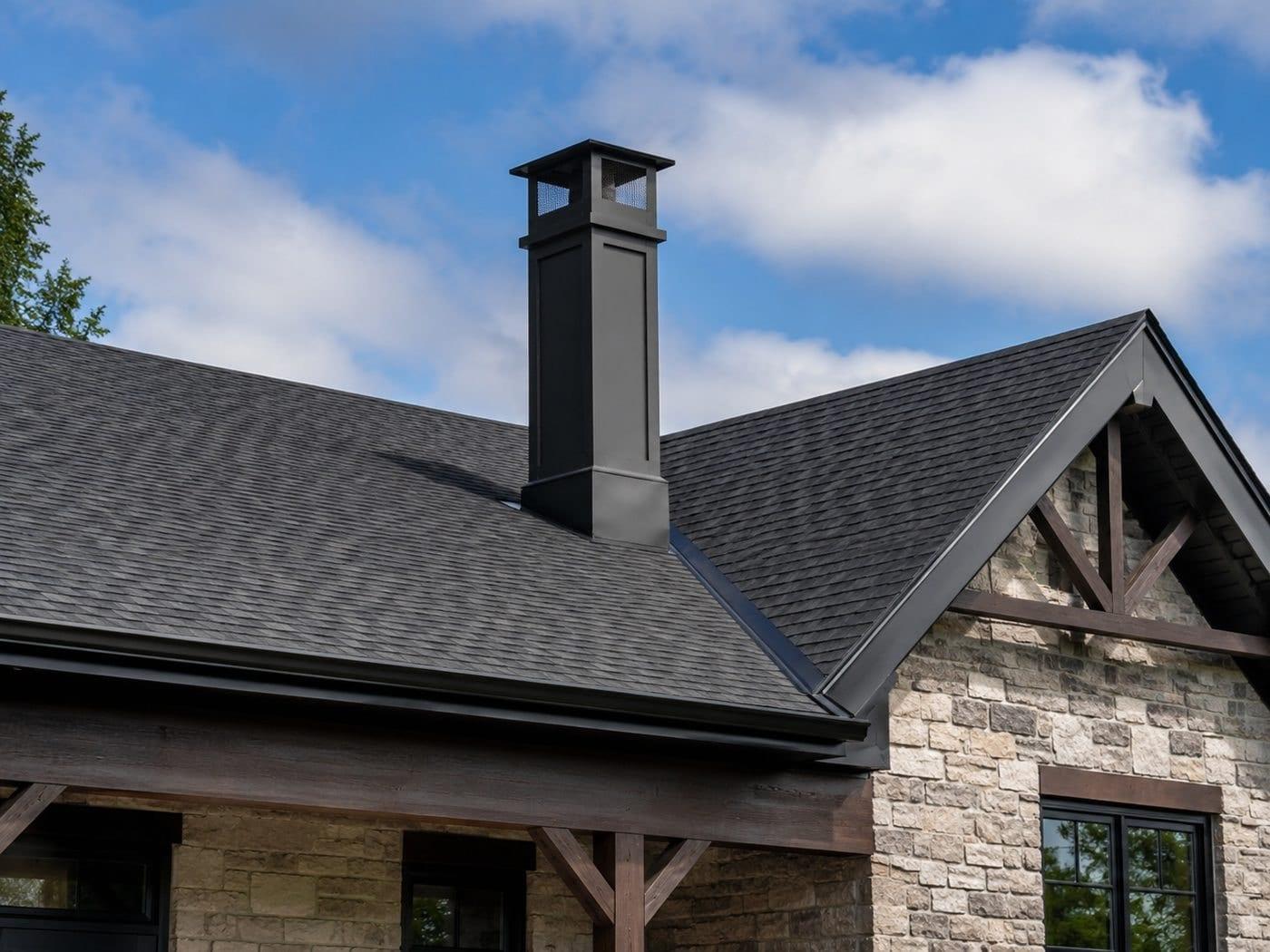
Masonry chimneys are heavy, built in place and need their own foundation, but individual parts can be repaired one at a time. Prefab chimneys are lighter and can be framed into a wall or chase without a masonry footing, but every part has to come from the system they were tested with.
How each type is built
| Feature | Masonry chimney | Prefab (factory-built) chimney |
|---|---|---|
| Main structure | Brick, block or stone laid in mortar on site | Metal flue pipe sections inside a framed chase or enclosure |
| Firebox | Firebrick set in refractory mortar | Factory-made metal firebox lined with refractory panels |
| Flue liner | Usually clay tile, sometimes a metal or cast-in-place liner added later | Insulated metal pipe that is part of the listed system |
| Top of the chimney | A mortar or concrete crown that sheds water, plus a cap | A metal chase cover over the framed chase, plus a listed termination cap |
| Foundation | Needs its own footing to carry the weight | Rests on the house framing, so no masonry footing is needed |
| Damper | Often a cast-iron throat damper or a damper added at the top | Built into the unit as designed by the manufacturer |
| Repair approach | Bricks, mortar joints, crown and liner can each be repaired | Repairs must use components that match the unit's listing |
Main structure
- Masonry chimney
- Brick, block or stone laid in mortar on site
- Prefab (factory-built) chimney
- Metal flue pipe sections inside a framed chase or enclosure
Firebox
- Masonry chimney
- Firebrick set in refractory mortar
- Prefab (factory-built) chimney
- Factory-made metal firebox lined with refractory panels
Flue liner
- Masonry chimney
- Usually clay tile, sometimes a metal or cast-in-place liner added later
- Prefab (factory-built) chimney
- Insulated metal pipe that is part of the listed system
Top of the chimney
- Masonry chimney
- A mortar or concrete crown that sheds water, plus a cap
- Prefab (factory-built) chimney
- A metal chase cover over the framed chase, plus a listed termination cap
Foundation
- Masonry chimney
- Needs its own footing to carry the weight
- Prefab (factory-built) chimney
- Rests on the house framing, so no masonry footing is needed
Damper
- Masonry chimney
- Often a cast-iron throat damper or a damper added at the top
- Prefab (factory-built) chimney
- Built into the unit as designed by the manufacturer
Repair approach
- Masonry chimney
- Bricks, mortar joints, crown and liner can each be repaired
- Prefab (factory-built) chimney
- Repairs must use components that match the unit's listing
How to tell which one you have
Signs that point to each type
- Look inside the firebox. Firebrick with mortar joints suggests masonry, and smooth panels with a visible metal frame suggest prefab.
- Shine a light up the flue. Square or rectangular clay tiles point to masonry, and a round metal pipe points to prefab.
- Check the top from the ground. A flat metal pan with a round cap is a chase cover on a prefab system, and a sloped mortar or concrete surface is a masonry crown.
- Look in the attic, if the chimney passes through it. Metal pipe with firestop spacers means a factory-built system.
- Look for a metal label, often near the firebox opening or behind a lower panel. Prefab units carry a listing plate with the model and approved fuels.
- Look at the outside wall material. Siding on the chimney almost always means a framed chase around a prefab flue.
Brick on the outside doesn't settle it
A prefab flue can be enclosed in a chase finished with brick veneer or stone, so a brick exterior does not prove a masonry chimney. The firebox, the flue and the listing label are better clues than the outside finish.
Where each type tends to fail
Masonry chimneys
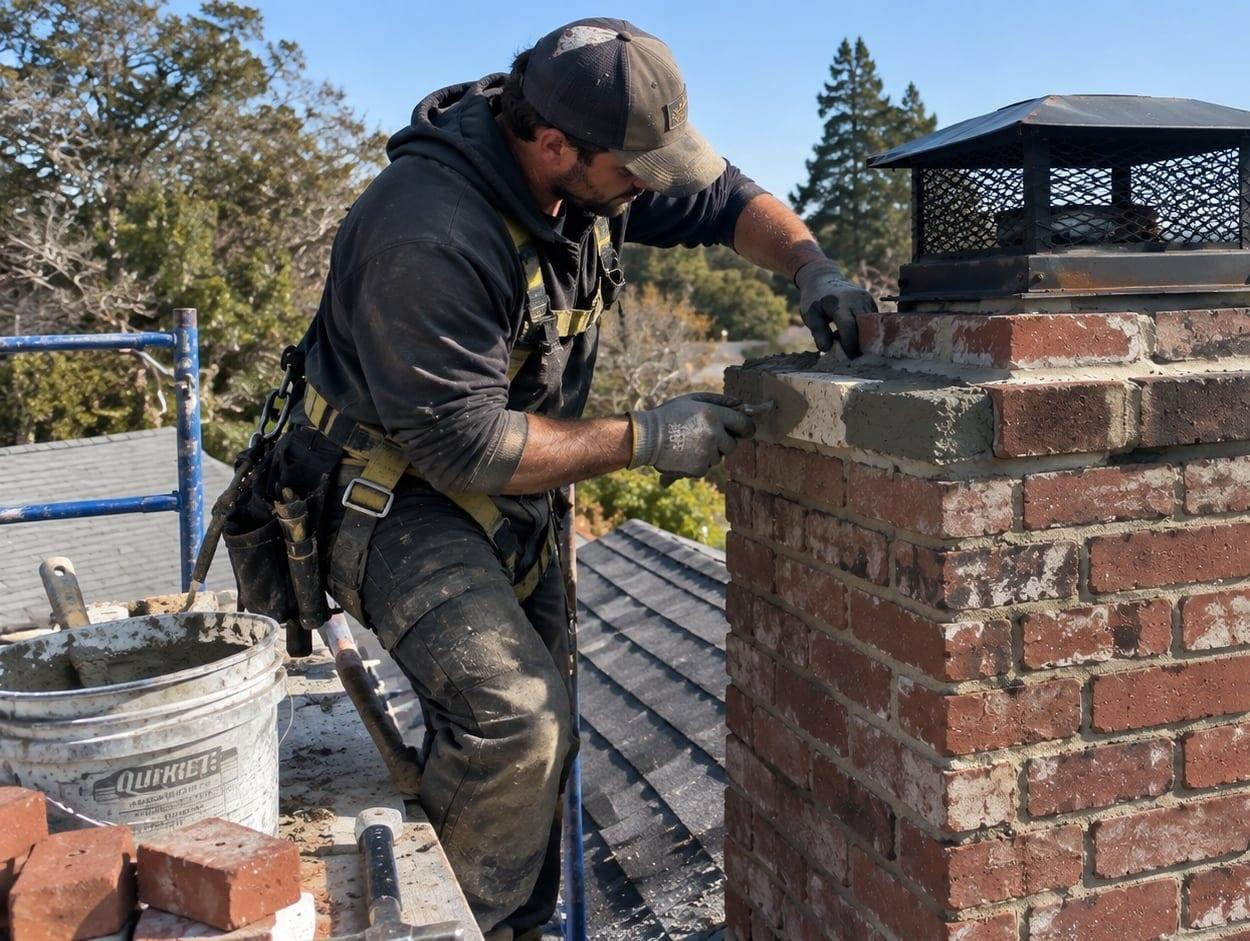
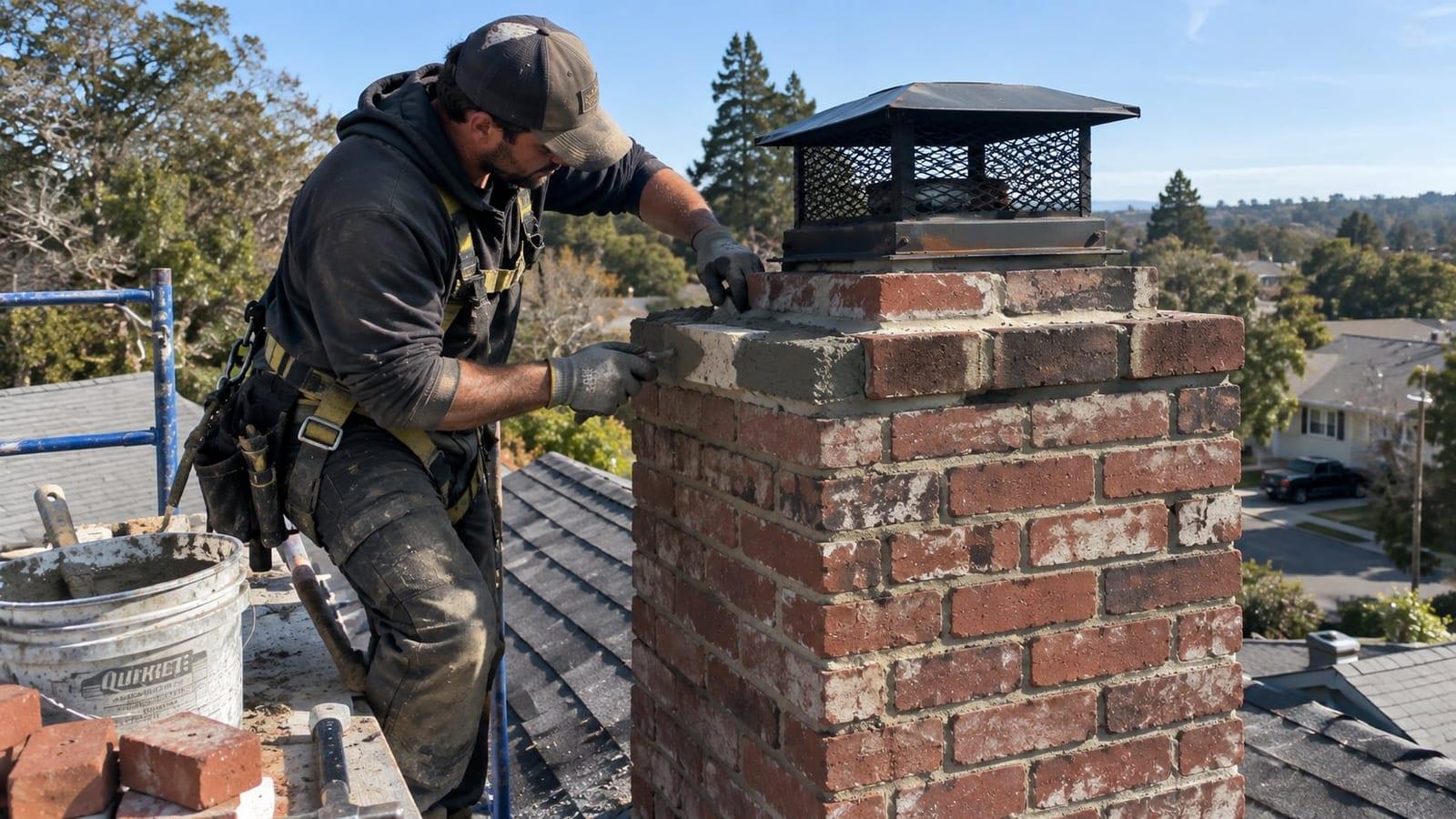
- Cracked or crumbling crowns that let water into the brick and down the flue. Here is what causes chimney crown cracks and how they are fixed.
- Eroded mortar joints and spalling brick, often after years of water getting in and freezing.
- Cracked or gapped clay flue tiles, which leave the surrounding masonry unprotected from heat and flue gases.
- Failing flashing where the chimney meets the roof, a common source of water coming in around the chimney.
- Rusted or warped throat dampers that won't seal or won't open fully.
Prefab chimneys
- Rusted or sagging chase covers that hold water and drip into the chase. Our guide to chase cover signs, planning and solutions covers what to look for.
- Wet or rotting framing and siding around the chase after water gets past the cover or flashing.
- Cracked or crumbling refractory panels inside the firebox.
- Separated, dented or corroded pipe sections, or missing firestop pieces where the pipe passes through floors and the attic.
- Damper mechanisms that stick or no longer close, since they are built into the unit.
Damper trouble shows up in both types, and the fixes differ. Our guide to damper problems, their causes and repair options walks through the signs.
Why repairs follow the system's rules
A prefab chimney is tested as a complete assembly of firebox, pipe, firestops, cap and clearances. Replacement parts need to match that listing, and mixing in pieces from another system or improvising a fix can leave the unit operating outside the conditions it was tested for. That is why repairing a prefab chimney and its chase starts with identifying the exact unit from its label.
Masonry is more forgiving of piece-by-piece work, but it has its own rules. Mortar needs to suit the brick it sits against, crowns need to shed water away from the stack, and a damaged clay liner may need relining rather than patching. You can read how chimney masonry repair works from inspection through rebuilding.
Stop using the fireplace if you see these
Cracked refractory panels with metal showing behind them, separated pipe sections, gaps or missing pieces in a clay flue liner, or smoke escaping into the room are all reasons to stop burning until the system has been inspected.
What helps you decide
Questions to work through
Is the existing system repairable?
Most masonry problems can be repaired in stages. A prefab unit whose firebox has failed or whose model can no longer be matched with listed parts may be a candidate for replacement instead.
Can the house carry a masonry chimney?
A new masonry chimney needs a footing and room for its weight and size. On an upper floor, an addition or a framed wall, a factory-built system is often the practical option.
What fuel will you burn?
Prefab units are listed for specific fuels. Some are rated for wood, and others are gas-only. A masonry fireplace can usually be fitted with an insert or gas logs later, but only when the chimney and liner suit that appliance.
How do you want it to look?
Both types can be finished in brick or stone. A prefab chase can be clad to match the house, so appearance alone rarely decides it.
How much upkeep are you prepared for?
Masonry needs attention to the crown, mortar and flashing. Prefab needs attention to the chase cover, the framing and the panels. Both need regular sweeping and inspection.
If a factory-built system is the right fit for a new fireplace or a replacement, it helps to understand what prefab chimney installation involves before you plan the space around it.
Whichever type you have, we can inspect it, sweep it and repair or replace it, from masonry crowns and tuckpointing to prefab chases, chase covers and new chimney installations.