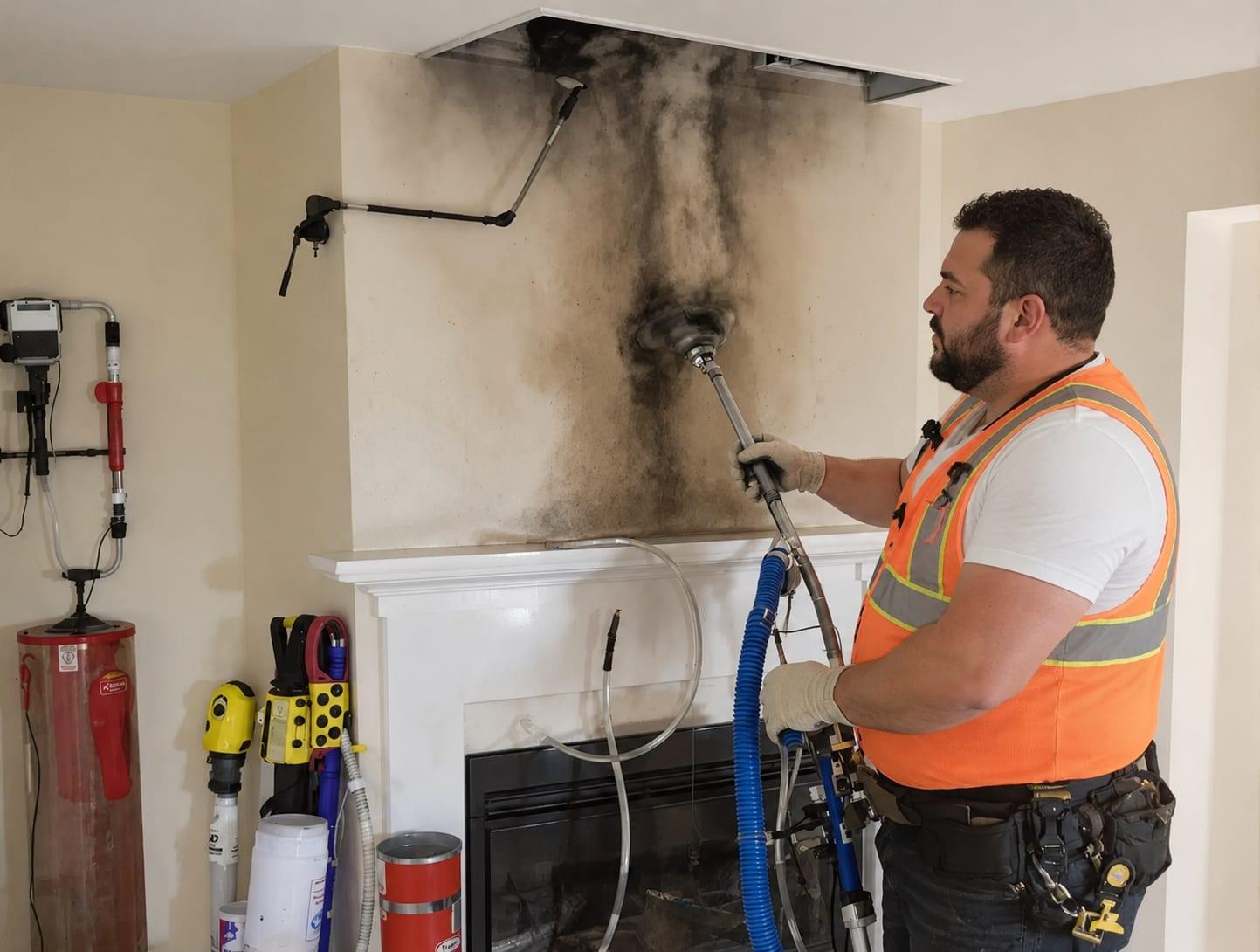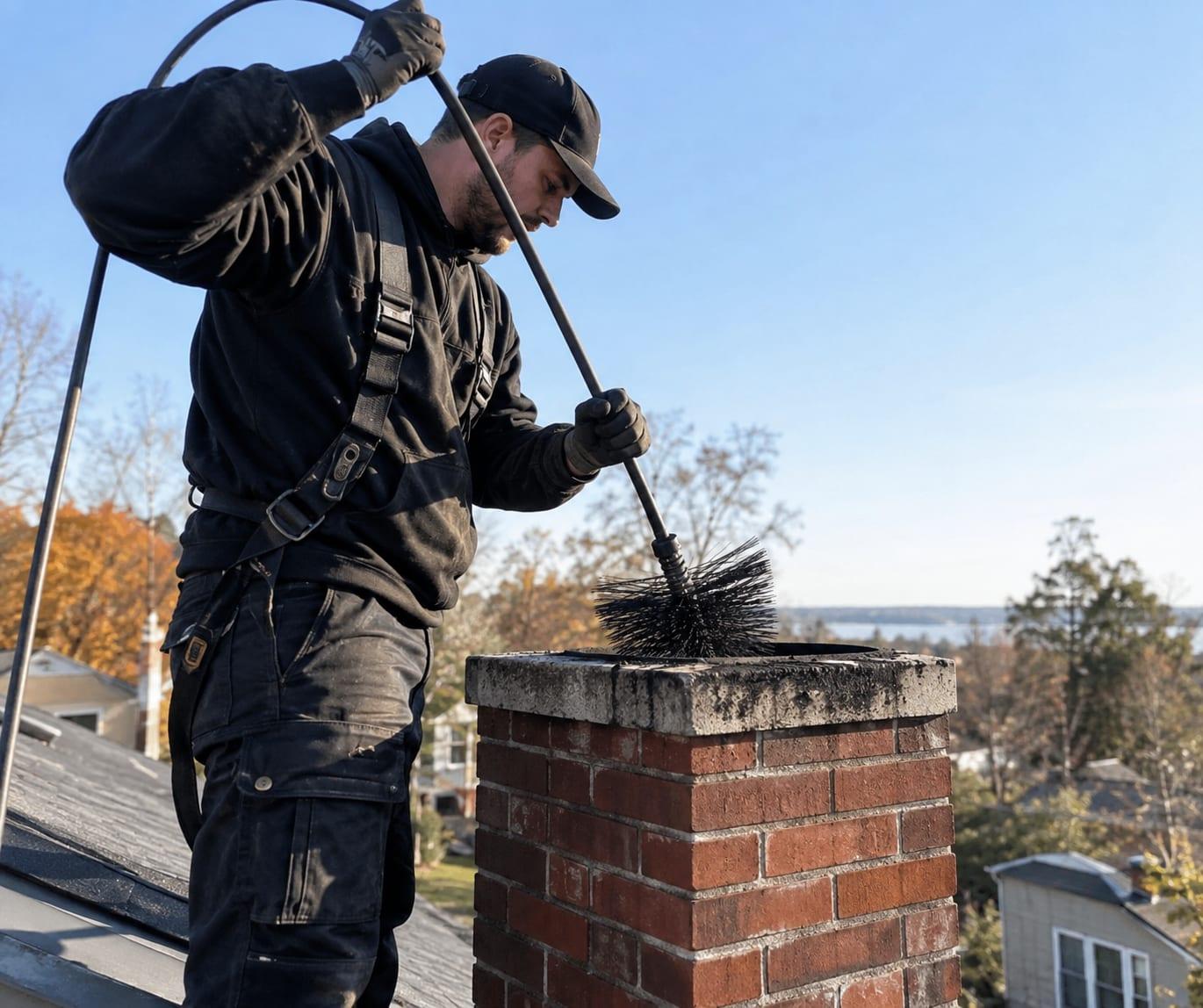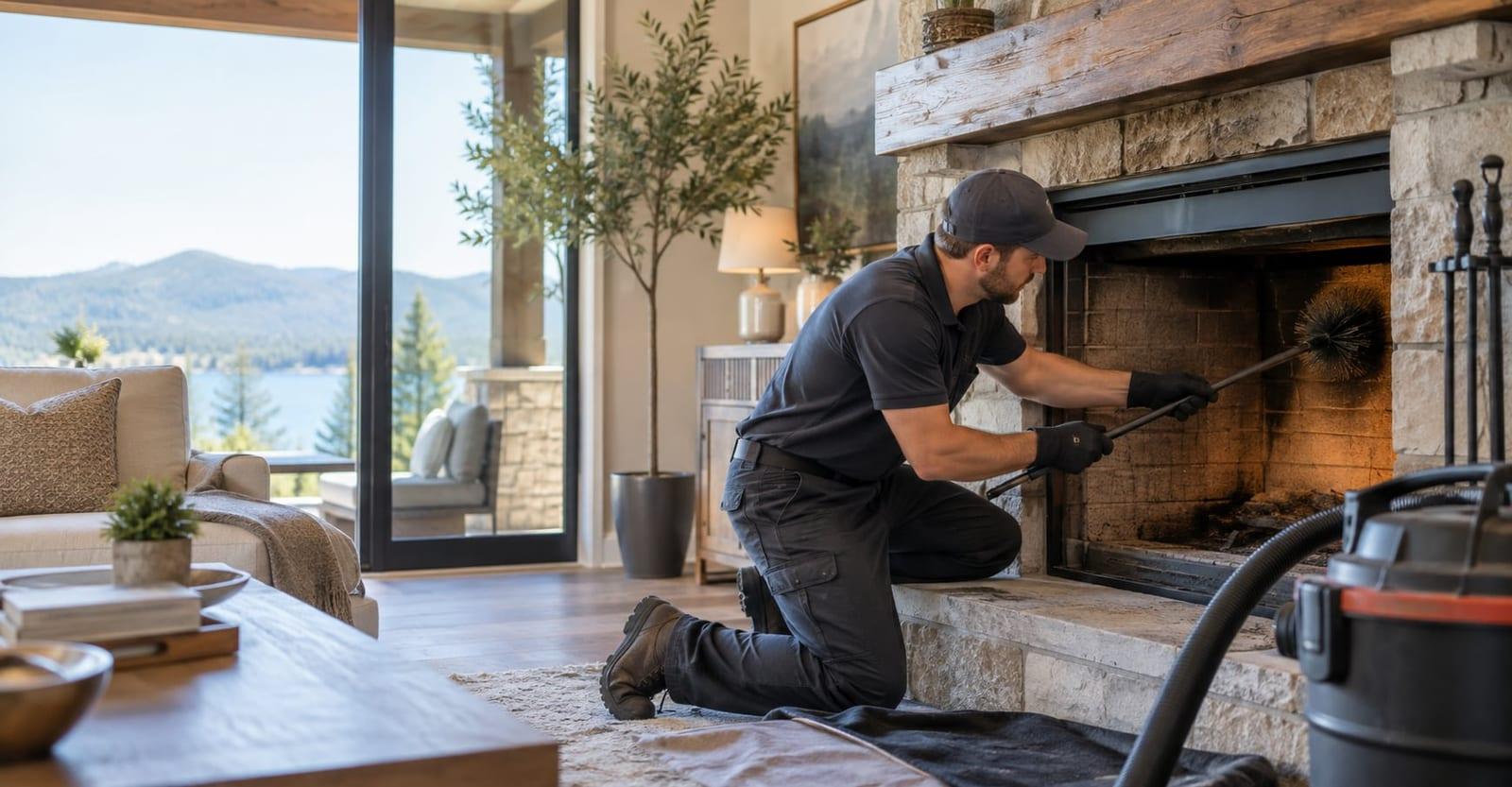
Our chimney sweeping in Tucker clears soot and creosote from the full flue. Two parts get a closer look before the job is called done: the flue above a fireplace insert and the damper. If you suspect a blocked flue, mention it when you get in touch so we can plan the visit around it.
Sweeping the flue behind a fireplace insert
An insert sits inside the old firebox and vents through its own connection up the chimney. Soot and creosote can collect where that connection meets the flue, and that spot is hard to reach from the room. How the insert was set up decides the cleaning method. It can mean sliding the unit forward to reach the connector, or working from the top down a liner that runs the full height of the chimney.
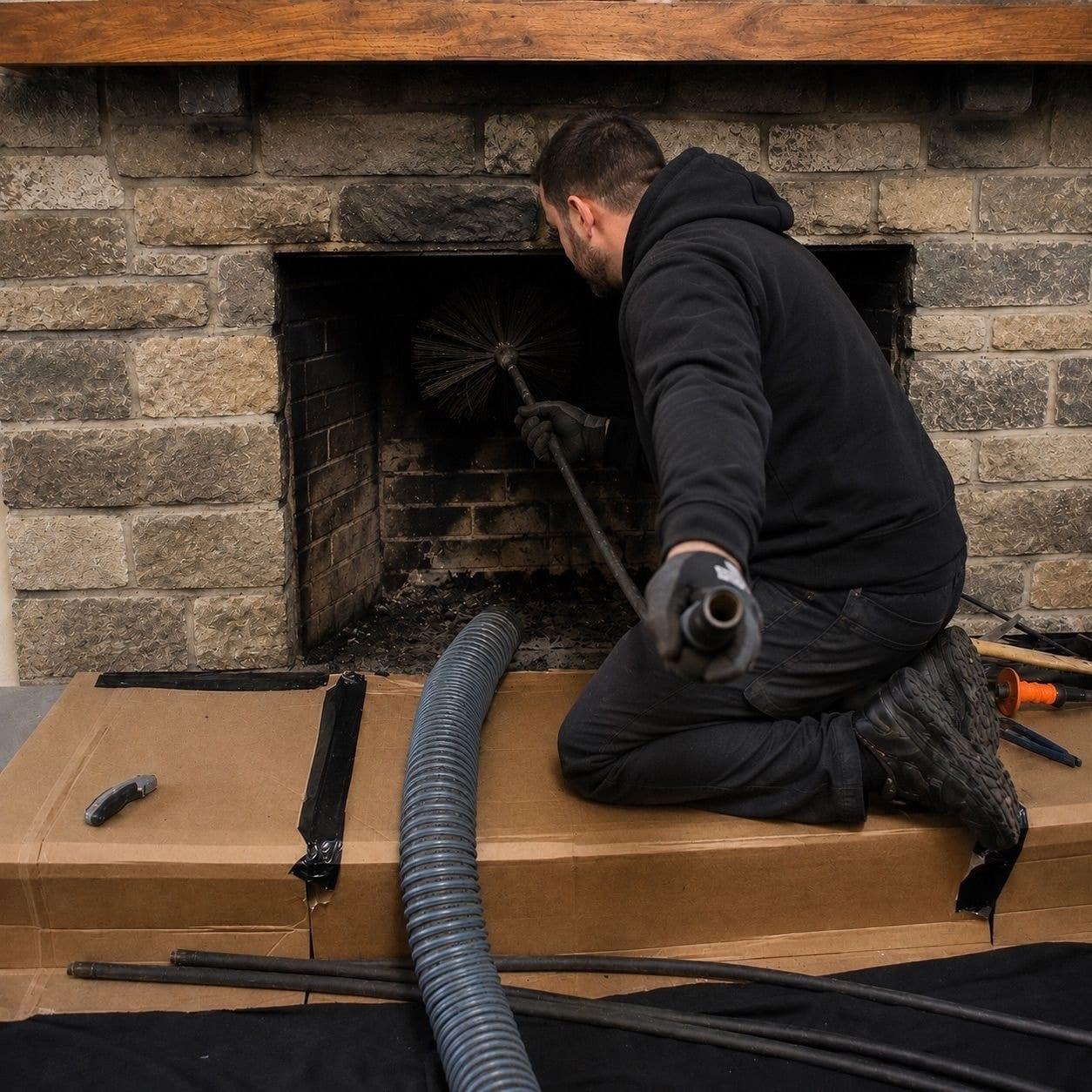
What you learn: whether the insert vents in a way that lets every surface be swept, and whether the flue it connects to is sound enough to keep using. If the connection stops short or the lining is damaged, the next step is a lining job, not another cleaning.
What happens at the damper
Soot and creosote on the damper plate and frame can keep it from closing fully. During the sweep the damper is cleaned. It is then opened and closed to check that it moves freely, seals reasonably and isn't rusted through or warped. With an insert installed, the original damper is often removed or fixed open, so the check also confirms what is actually there. If you're not sure which kind you have, our guide to types of chimney dampers explains the differences.
What you learn: whether cleaning was all the damper needed, or whether a stuck, rusted or poorly sealing damper calls for a repair or a different style.
Older housing in Tucker
About 6% of the housing units in Tucker were built before 1960, according to the U.S. Census Bureau's American Community Survey 2019–2023 5-year estimates (table B25034, Year Structure Built). If your home is one of them, tell us its age when you book. That helps us plan the sweep for an older flue and whatever insert or damper it has now.
When the flue is blocked
Sweeping a blocked flue starts with finding where the blockage sits and what it is. It can be heavy creosote, fallen masonry debris, leaves or nesting material. We then clear it from the top or from the firebox side and check that air moves up the flue again. If part of the flue can't be seen clearly, a camera can show the rest. Animals or nests found inside are removed as part of clearing the flue. A cap or screen can keep them from coming back.
Work a sweep can lead to
- Chase cover replacement: the right job when a prefab chimney's metal top cover is rusted, bent or letting water into the chase, which can wash debris into the flue.
- Chimney liner installation: the right job when the sweep finds a cracked or missing flue lining, or an insert that needs a full-height liner to vent and clean properly.
- Chimney inspection: the better first step when you want the flue's condition documented in detail before deciding on repairs.
We also sweep chimneys in Norcross, Doraville and Decatur.
For the full overview of how chimney sweep works, including the visit and what gets checked, go to the service page. For everything else we handle locally, start with Tucker.
Booking a sweep in Tucker
Call or request an estimate, and tell us what the chimney serves (an open fireplace, an insert or a stove) and when it was last swept. We work on all major brands, and commercial and property-manager work is offered too.
Sources (1)
The sources of the Tucker facts on this page.
- 1U.S. Census Bureau, American Community Survey 2019–2023 5-year estimates, table B25034 (Year Structure Built)