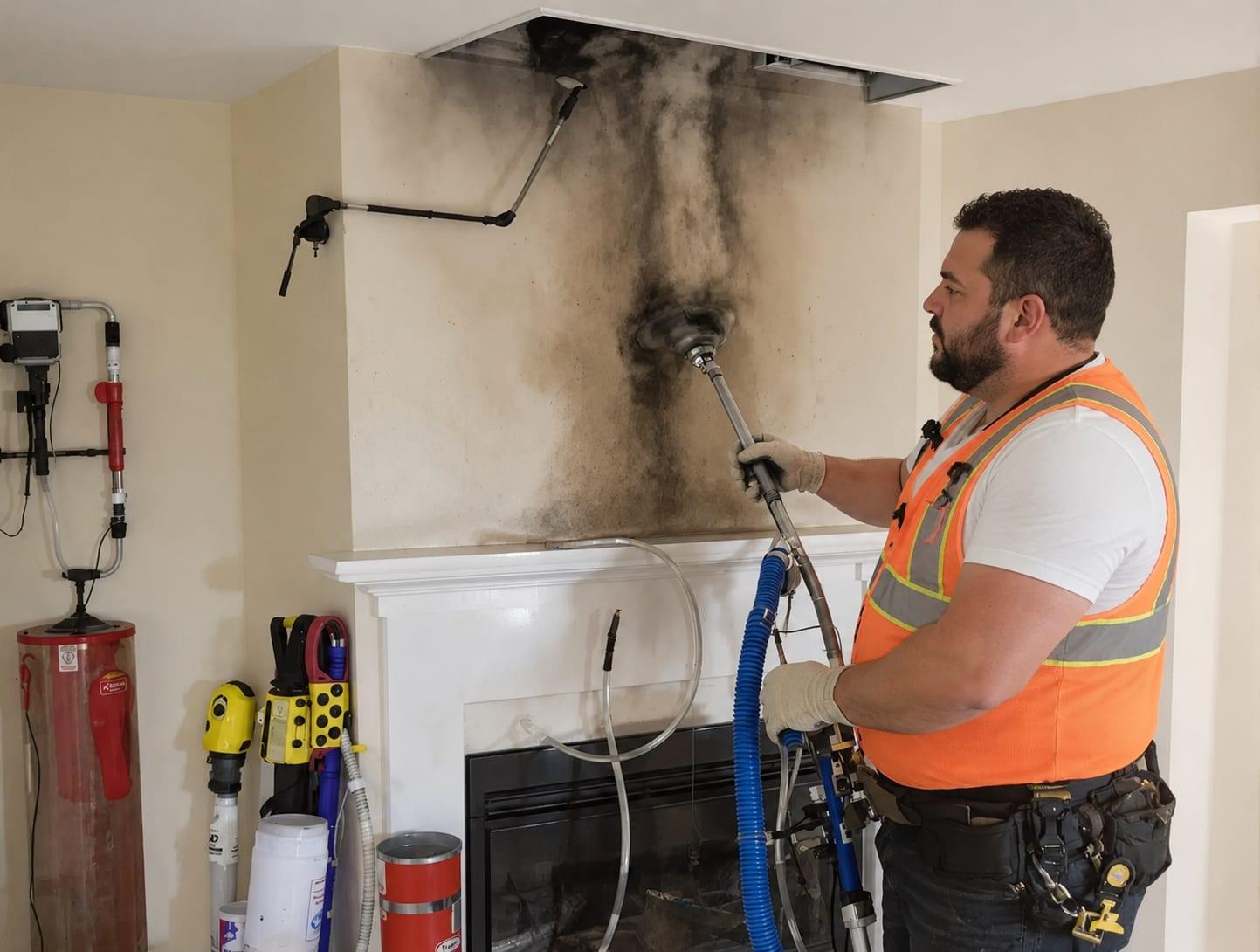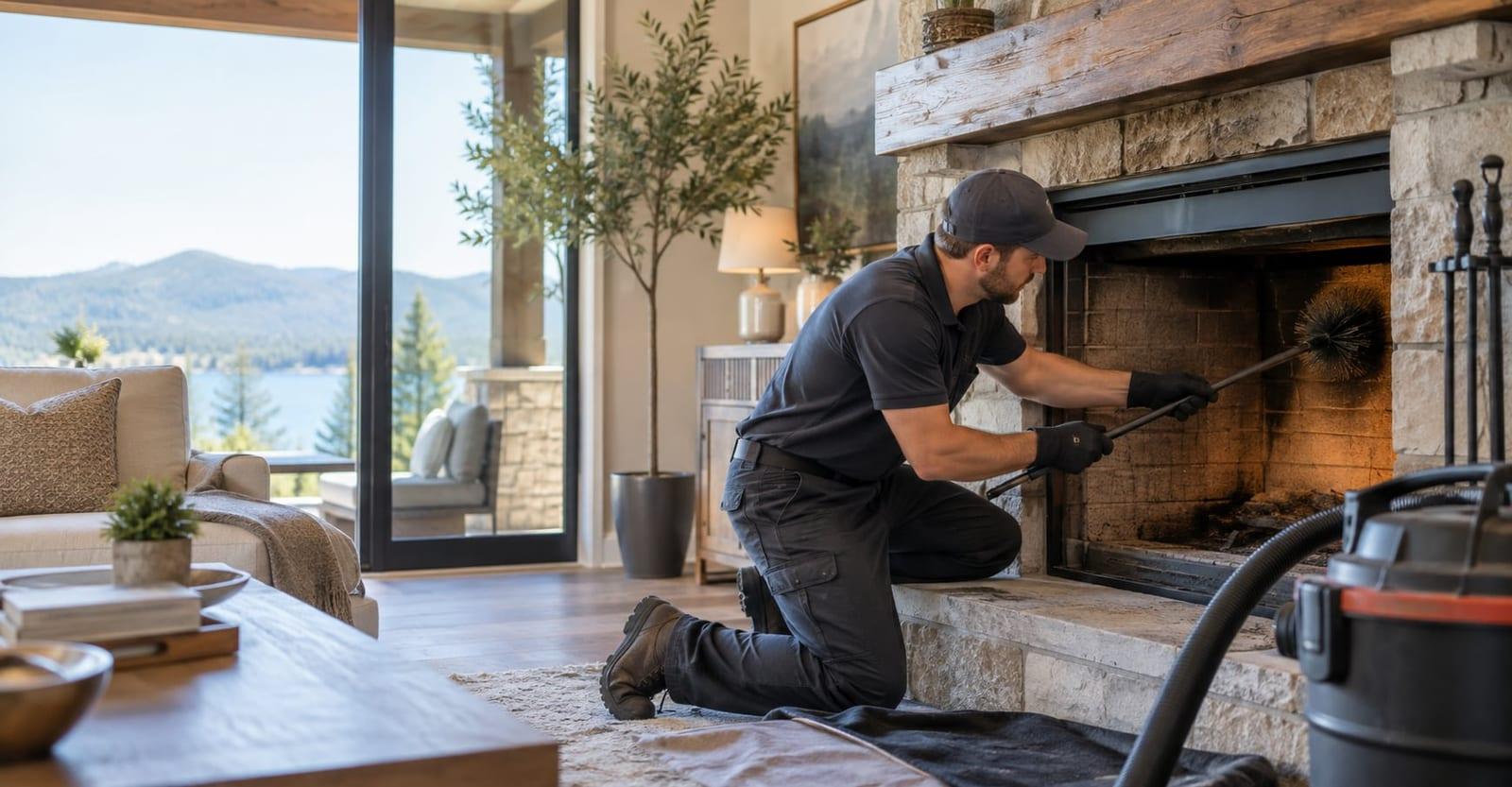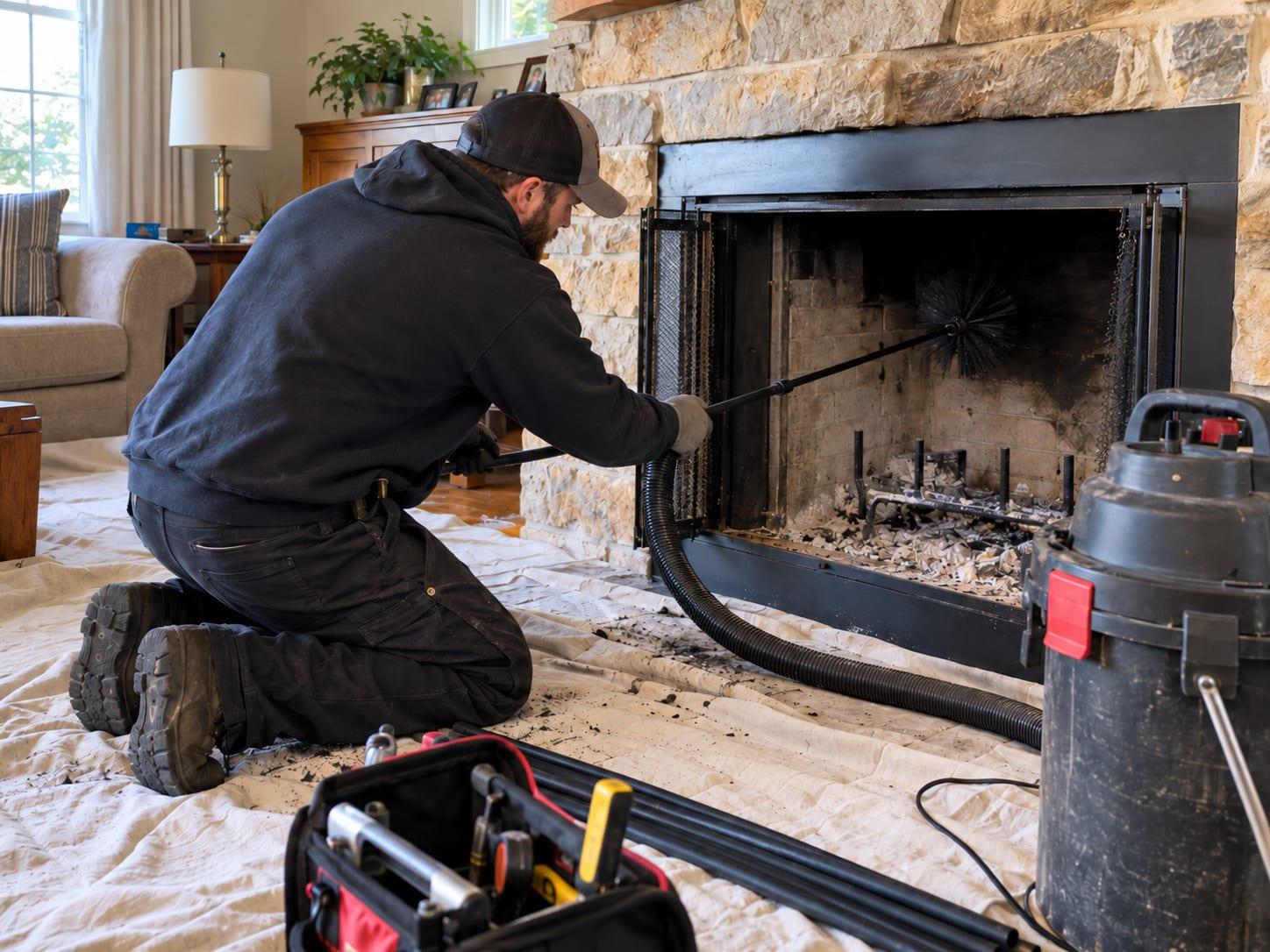
We sweep chimneys for homes in Peachtree City, clearing soot and creosote buildup from the flue and firebox. This page focuses on two parts of the job: the firebox cleanout and the damper. Together they tell you how the fireplace is holding up and how often it needs attention. If your fireplace is due, request an estimate and we'll find a time that works.
What affects chimney sweep in Peachtree City
- Almost all of the housing units in Peachtree City were built in 1960 or later. Source: U.S. Census Bureau, American Community Survey 2019–2023 5-year estimates, table B25034 (Year Structure Built).
The firebox cleanout
The firebox is where a chimney sweep visit starts and ends. Ash, half-burned wood and fallen soot are cleared out, and the floor and walls are wiped down so they can actually be seen. With the firebox clean, we look for cracked brick, gaps in the mortar joints and worn or crumbling refractory panels in factory-built units. We also note how much creosote has collected and what kind it is.
That last point helps you decide how often to book a sweep for the way you use the fireplace. Light, dry soot after a season of regular fires points to a different schedule than heavy, shiny buildup from a few smoky ones. Any damage we find is shown to you, so you can choose between continuing to burn and scheduling minor repairs first.
Checking the damper
The damper sits just above the firebox, and it gets worked on during every sweep. We open and close it, check that the handle and plate move freely, and clear the soot and debris that collect on the smoke shelf behind it. Rust, a warped plate or a frame that no longer seals all show up here.
A damper that sticks open lets heated or cooled air escape up the chimney. One that won't open fully can push smoke back into the room. Once you know which one you have, you can decide whether it only needs cleaning and adjusting, or whether it needs repair or replacement. If replacement comes up, our guide to types of chimney dampers explains the throat and top-sealing options before you choose.
What Peachtree City housing data tells us
According to the U.S. Census Bureau's American Community Survey 2019–2023 5-year estimates (table B25034, Year Structure Built), almost all of the housing units in Peachtree City were built in 1960 or later. The year a house was built doesn't show what's inside its chimney. A sweep is planned around what the firebox, damper and flue actually show, along with how the fireplace has been used.
When animals or nests are in the flue
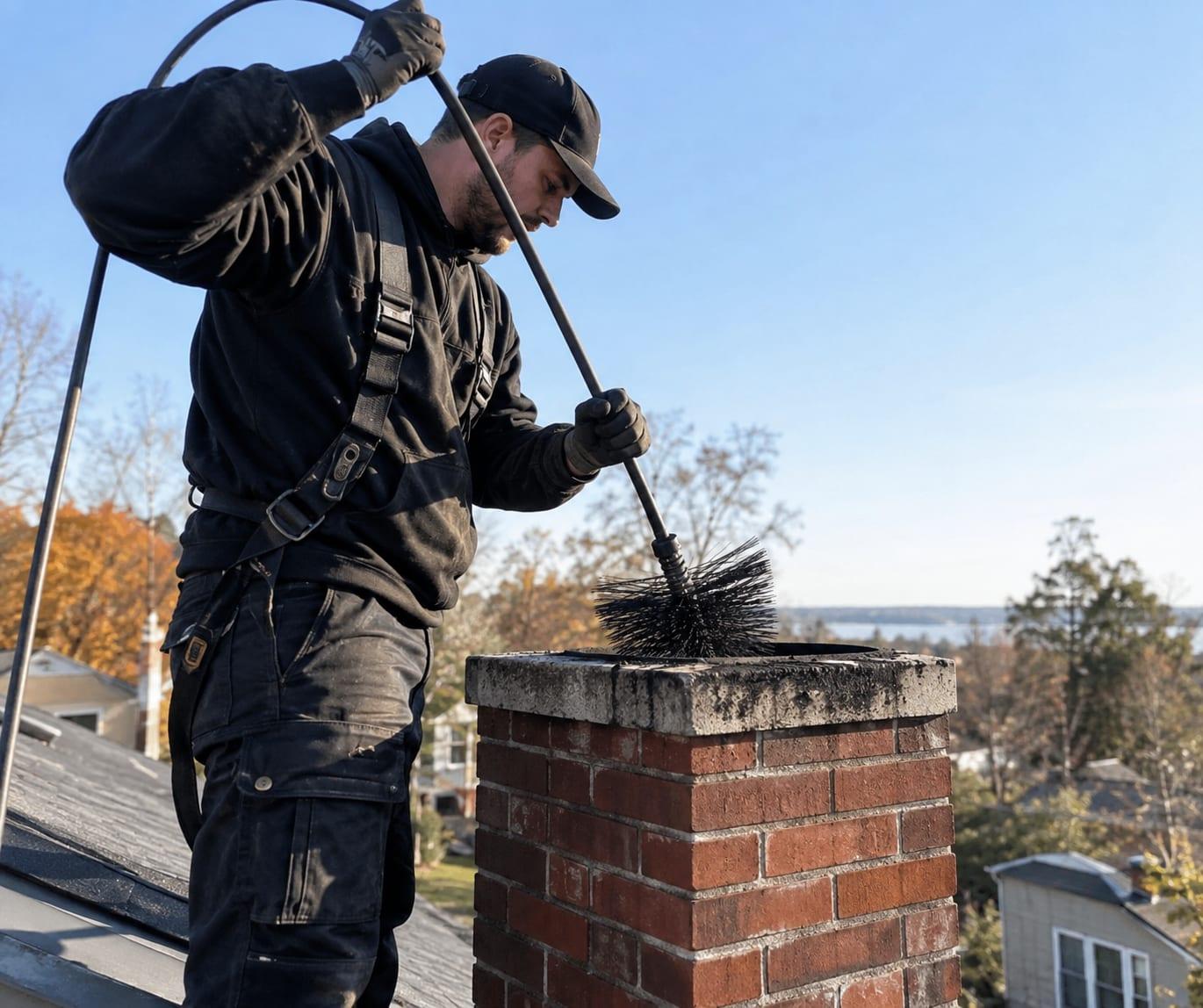
Sometimes a sweep turns up more than soot. Birds, squirrels and other animals can nest in an uncapped or damaged flue. Nesting material, twigs and droppings can block the draft and cause odors. When that happens, the work can involve removing the nest and debris by hand or with brushes, cleaning the soiled sections of the flue, and checking the damper and smoke shelf for anything that fell through. If an animal is still inside, it is removed before the cleaning goes ahead. Afterward, installing an animal screen or chimney cap can keep the opening covered.
Related jobs we can handle
- If clothes take longer than they used to dry, or the laundry room runs hot, a dryer vent inspection and airflow check shows whether the vent line is restricted.
- If the vent is crushed, disconnected or venting into a wall or attic, dryer vent repair replaces or reconnects the damaged sections.
We also offer chimney sweeping in Fayetteville, South Fulton and Mableton.
For the full overview of the work, including its types, process and components, read how our chimney sweep service works, or see everything we offer in Peachtree City.
Booking a sweep
Call or request an estimate to schedule. We also take on commercial and property-manager work, as well as gas fireplace and gas appliance work.
Sources (1)
The sources of the Peachtree City facts on this page.
- 1U.S. Census Bureau, American Community Survey 2019–2023 5-year estimates, table B25034 (Year Structure Built)