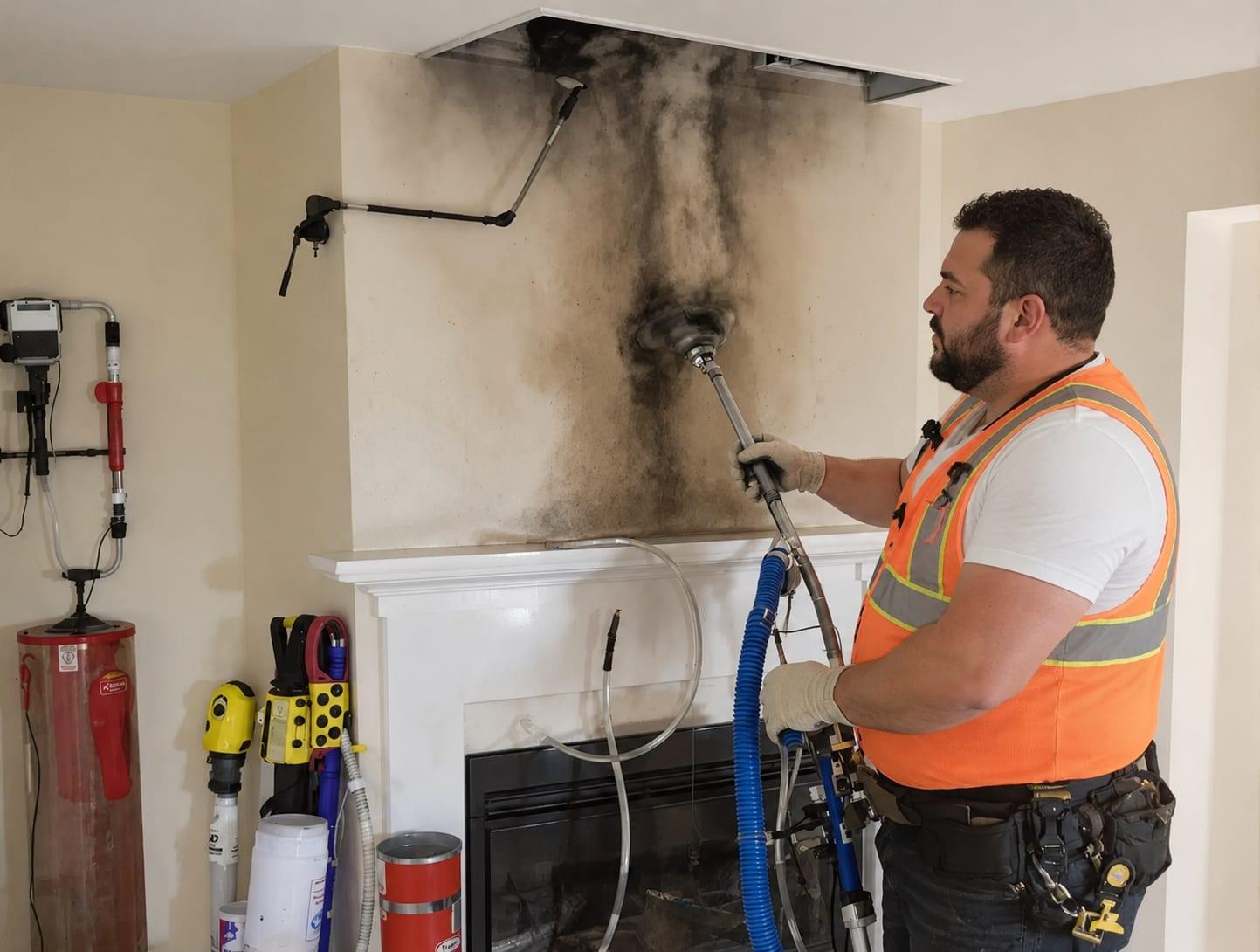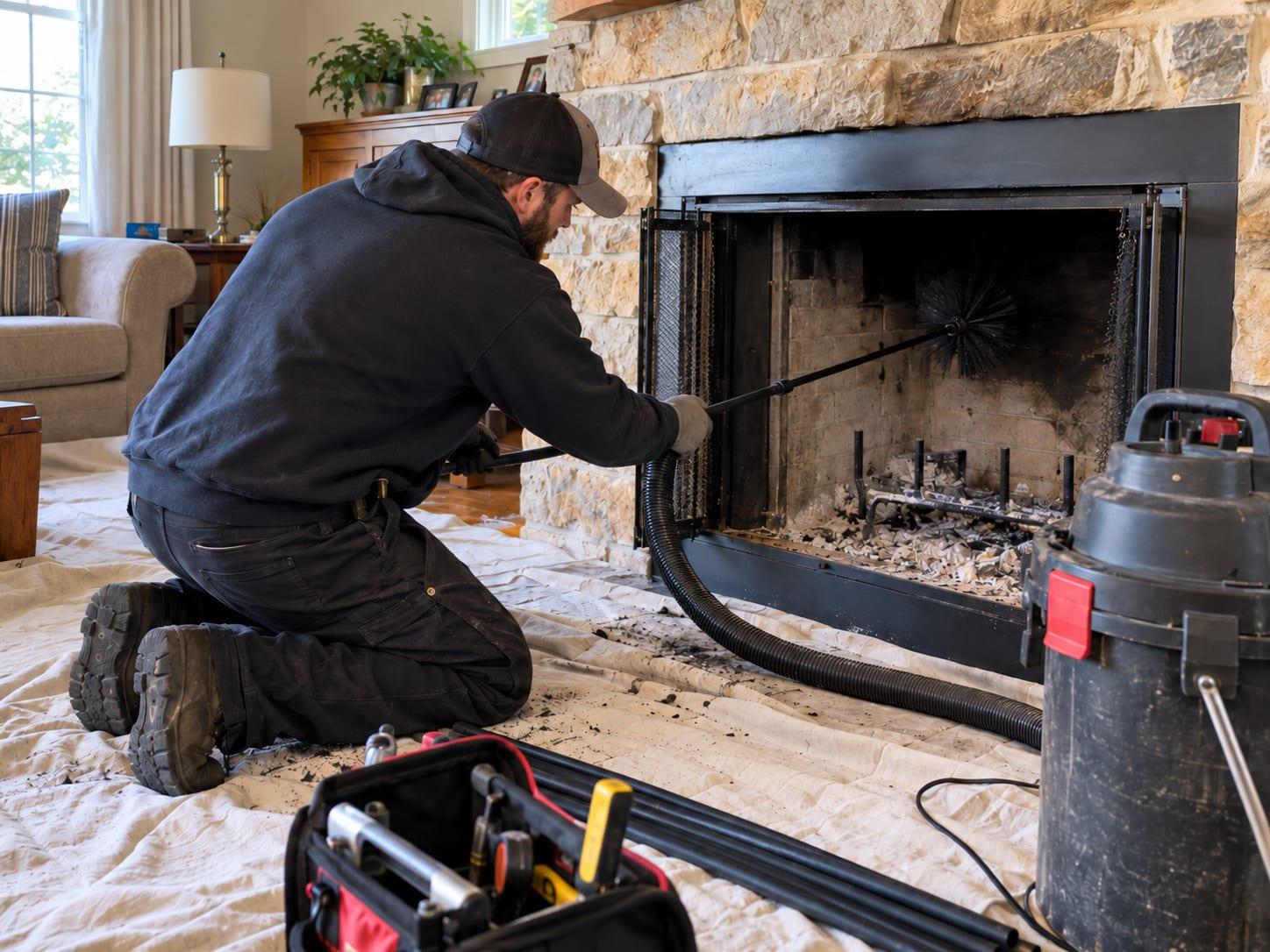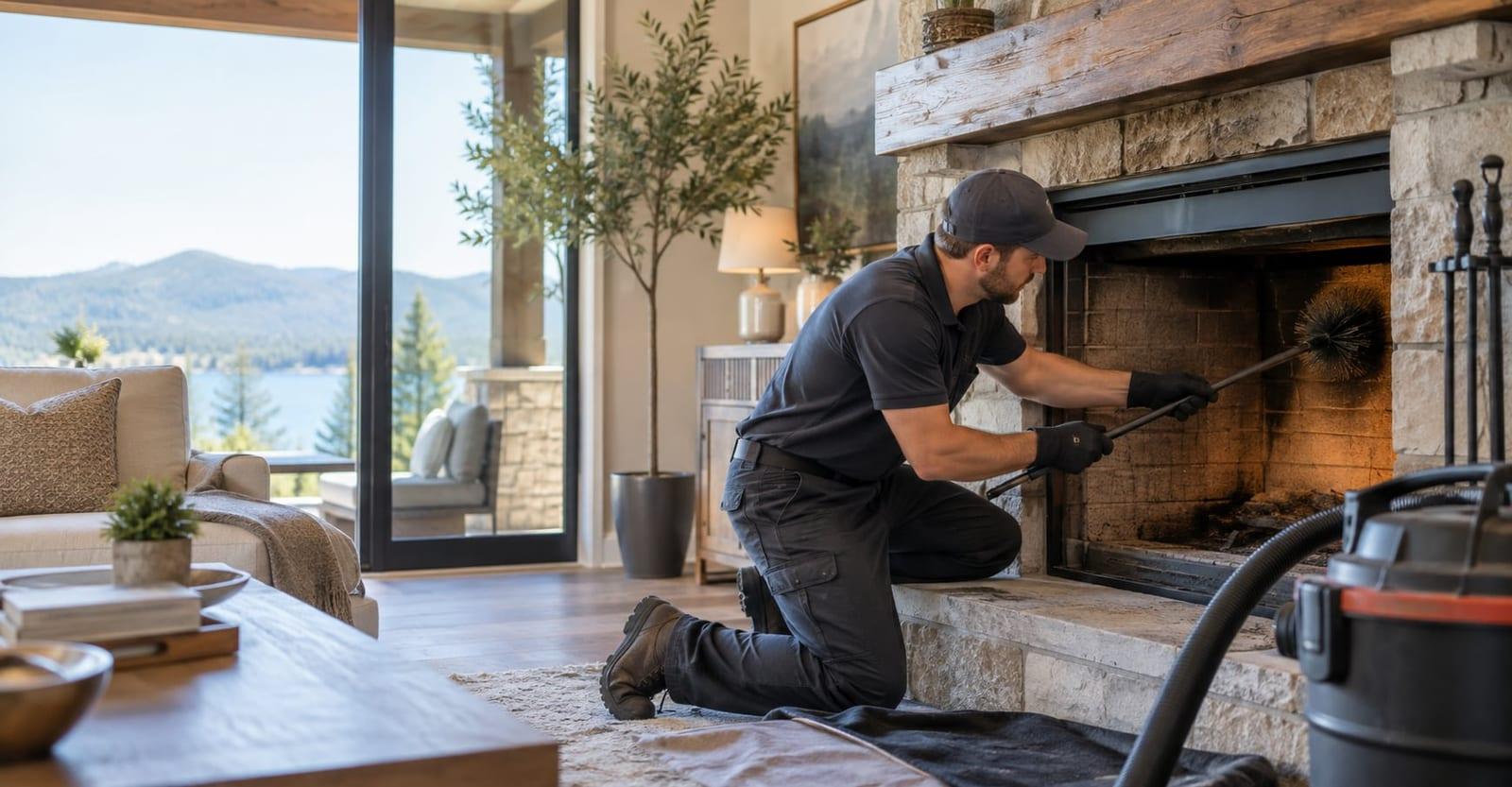
When a fireplace or wood stove is due for cleaning, we handle the chimney sweep for Fayetteville homes, removing soot and creosote from the flue. Two parts of the chimney get extra attention on these visits: the cap and screen at the top, and how well the fireplace draws. That way you know whether anything else needs work before you light a fire. Request a sweep whenever you're ready.
What the sweep checks at the cap and screen
The top of the chimney is where a sweep often finds the first clues. A mesh screen can clog with soot and creosote, which narrows the opening smoke has to escape through. Leaves, twigs or nesting material can collect under the cap, and a cap can rust, loosen or go missing altogether.
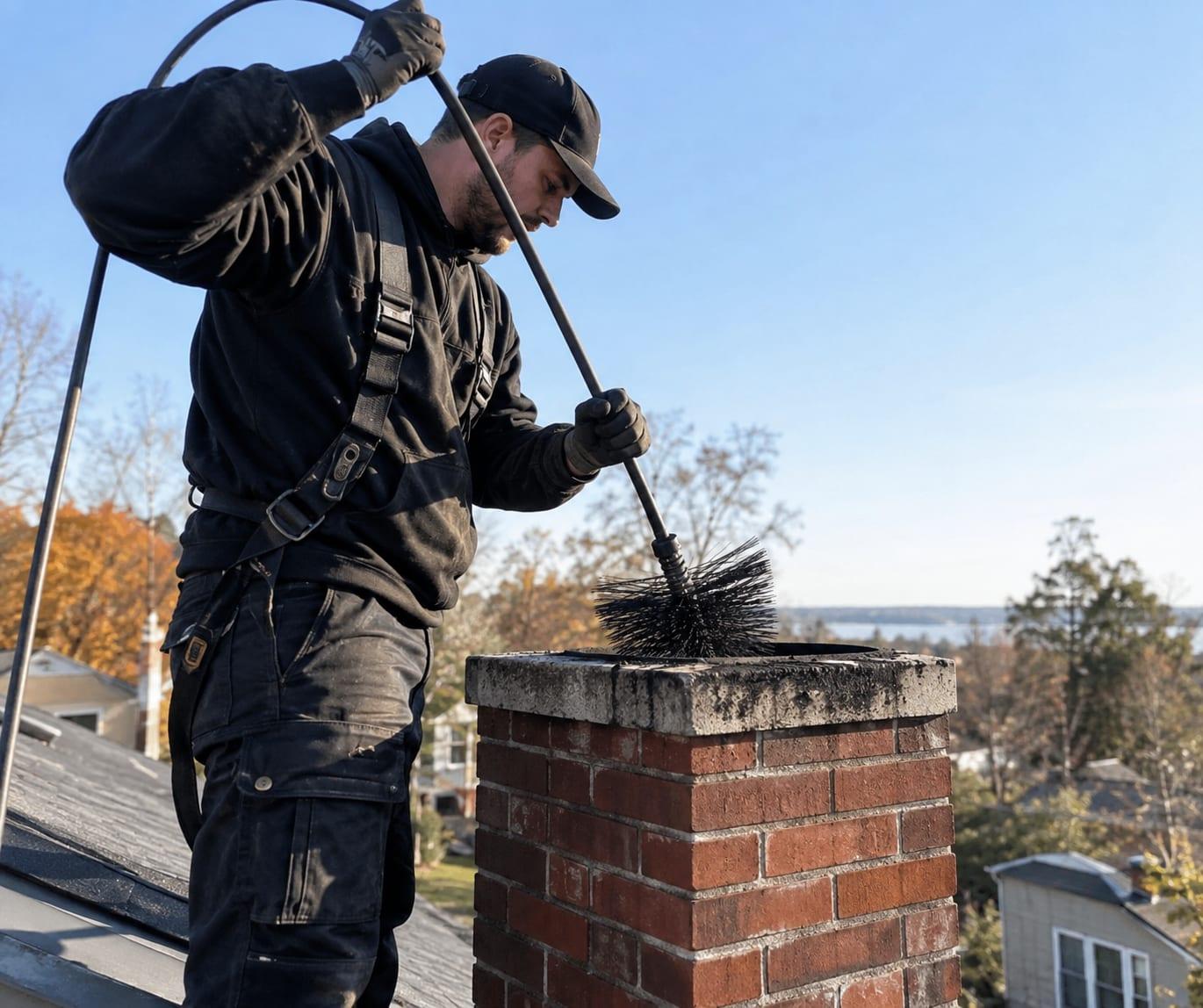
- Clogged screen: cleaned during the visit so smoke can exit freely.
- Debris or nests: cleared out, since they block the flue and can carry odors into the house.
- Rusted, bent or missing cap: noted so you can decide whether it should be replaced before rain and animals get in.
What you get from this part of the visit is a clear answer: the cap can stay as it is, or it's time to plan a replacement.
When the sweep turns to the draft
If smoke rolls back into the room, a fire is hard to start, or the fireplace smells smoky on warm days, the draft gets a closer look. We check that the damper opens fully and seals when closed, that the flue is clear from top to bottom, and whether a clogged cap screen is restricting airflow.
Many draft problems clear up once the flue and screen are clean. When they don't, the cause is usually a damper that no longer works properly or a flue that is the wrong size or damaged, and you'll know which before deciding on any repair. To learn more about what's in your firebox throat, read about the types of chimney dampers.
What the census figure says about homes in town
About 1% of the housing units in Fayetteville were built before 1960 (U.S. Census Bureau, American Community Survey 2019–2023 5-year estimates, table B25034). That means very few homes in town predate 1960. For most chimneys here, condition depends on how the fireplace has been used and maintained, which is exactly what a sweep shows.
When creosote buildup is heavy
Light, flaky soot brushes out easily. Heavy creosote, thick and tar-like or hardened into a shiny glaze, takes more work. Removing it can involve rotary tools or a chemical treatment that loosens the deposits so they can be cleared. The job can take longer than a routine sweep. Once the flue is clean, its lining is checked, because heavy buildup sometimes hides cracks or gaps that weren't visible before.
Related work a sweep can lead to
- Chimney cap replacement: the right job when the cap is rusted through, damaged or missing, or its screen can no longer keep animals and debris out.
- Chimney liner installation: the right job when the flue lining is cracked or deteriorated, or the flue is the wrong size for the fireplace or stove it serves.
We also sweep chimneys for homes in Peachtree City, South Fulton and Decatur.
For a full overview of the types, process and components, read how chimney sweep works. You can also find everything else we do in Fayetteville.
Booking a sweep in Fayetteville
Call or request an estimate to schedule a visit. Our 24-hour service runs Sunday through Friday, and emergency calls are accepted. We also do gas fireplace and gas appliance work, and we take on commercial and property-manager jobs.
Sources (1)
The sources of the Fayetteville facts on this page.
- 1U.S. Census Bureau, American Community Survey 2019–2023 5-year estimates, table B25034 (Year Structure Built)