Inspection visits for Stonecrest homes
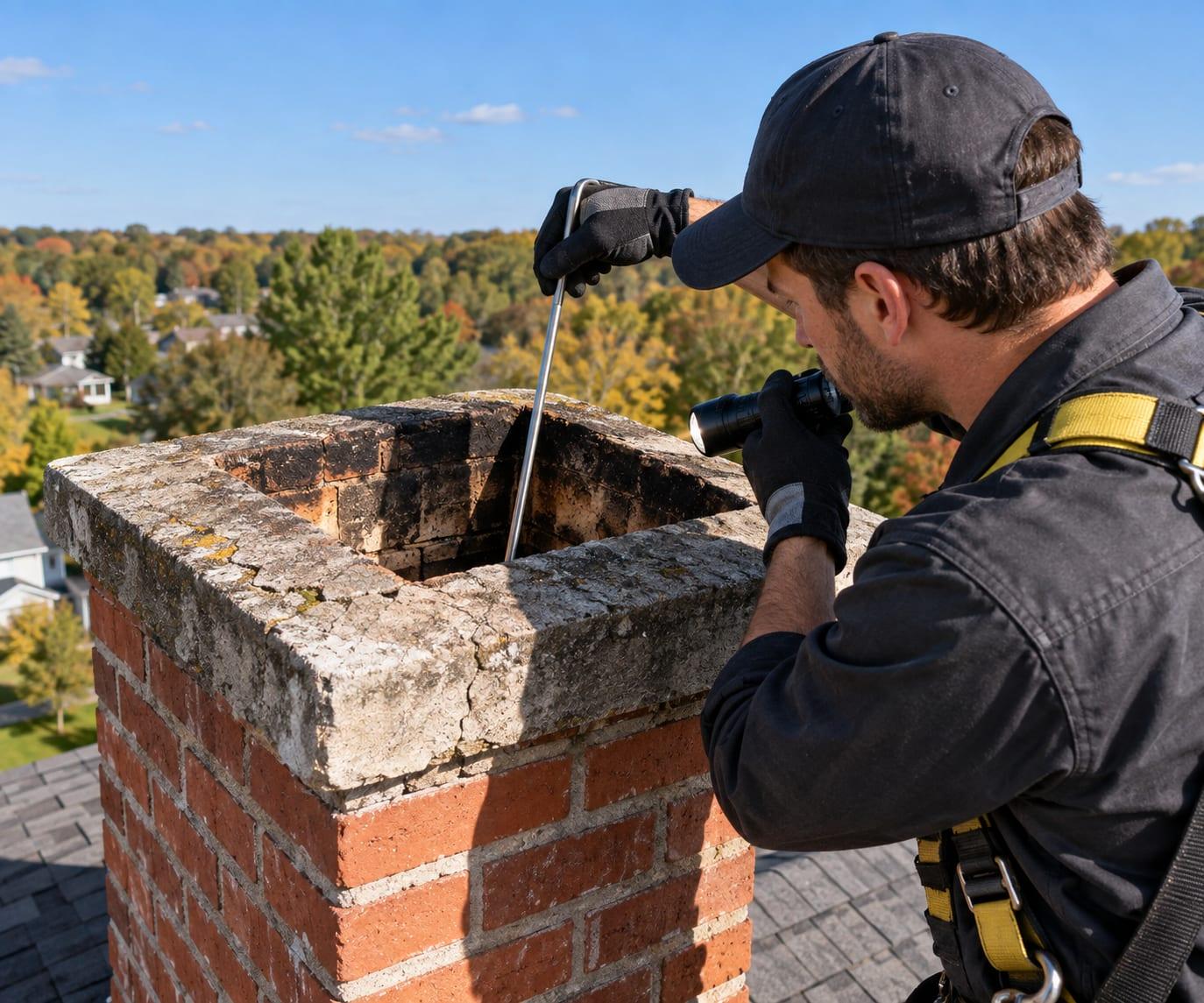
For homeowners in Stonecrest, we inspect chimneys and fireplaces with particular attention to three things: how well the flue draws, how gas appliances vent through it, and cracks inside the flue that can't be seen from the hearth. If a fire smokes, a gas appliance shares the chimney, or you're planning a new liner or insert, request an inspection and we'll tell you what we find.
When the visit turns to draft
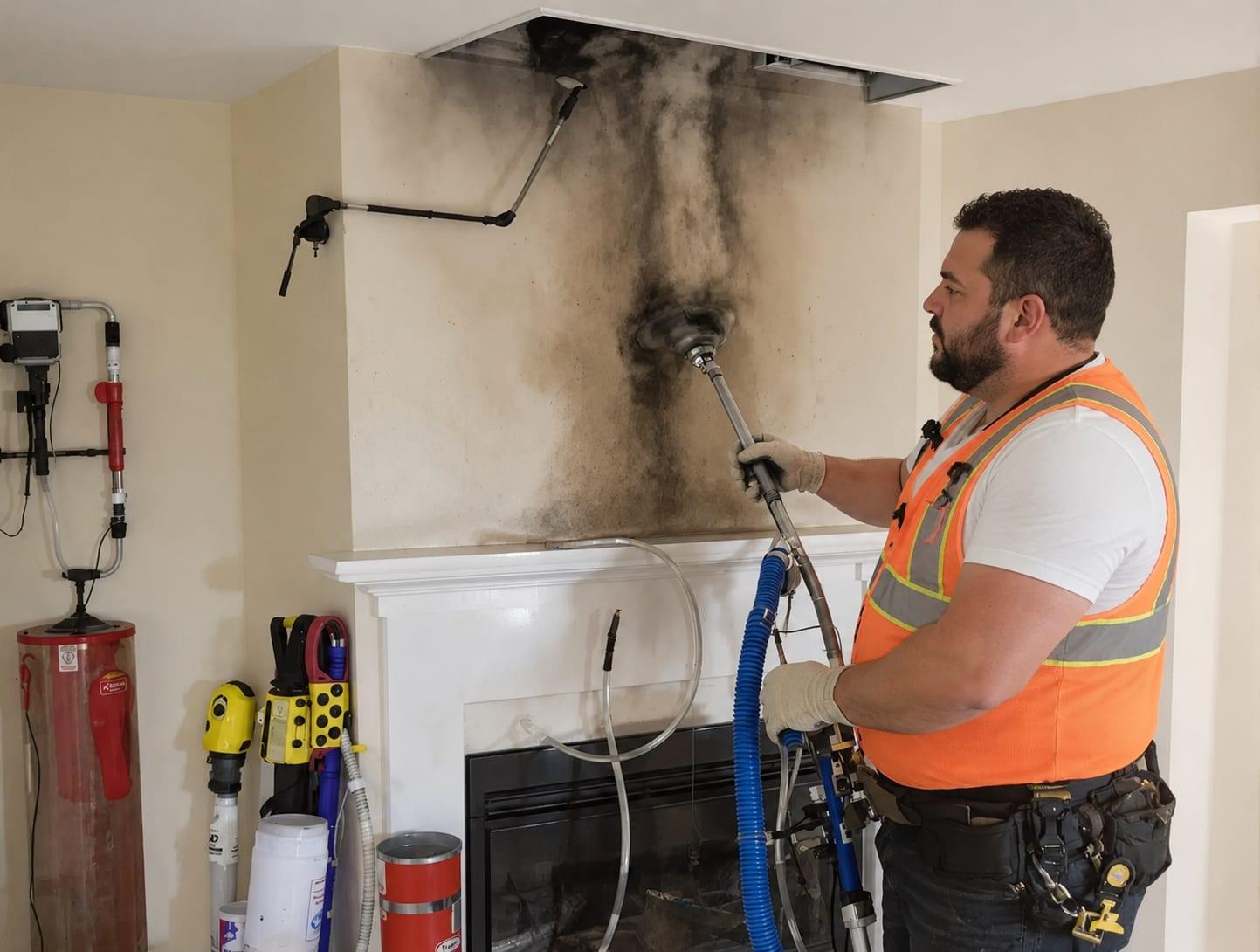
Draft is the flue's pull. Warm exhaust rises and draws fresh combustion air in behind it. When a fire smokes into the room, is hard to get going, or leaves a smell after it's out, the inspection looks for the reason. That means checking the flue for anything narrowing it, such as soot and creosote buildup, debris or a nest, and comparing the flue's size with the fireplace opening it serves. We also note conditions outside the chimney itself, such as a tightly sealed house or exhaust fans pulling air against the fireplace.
What it helps you decide: whether a cleaning will clear the problem, whether the top of the chimney needs a change, or whether the flue itself needs work before the fireplace is used again.
Gas appliance venting
A gas fireplace, gas logs, a furnace or a water heater may send its exhaust through the chimney. If yours does, the inspection follows that path from the appliance connection to the top. We look for an open, unobstructed vent and a liner sized for that appliance. We also look for signs that exhaust is condensing inside the flue, such as crumbling mortar, staining, or debris collecting at the base. Gas exhaust carries a lot of water vapor, and a flue built for wood fires isn't always suited to it.
What it helps you decide: whether the appliance can keep venting as it is, needs service, or needs a properly sized liner first.
What Census housing data shows
About 2% of the housing units in Stonecrest were built before 1960, according to the U.S. Census Bureau's American Community Survey 2019–2023 5-year estimates (table B25034, Year Structure Built). That figure describes when houses were built. It says nothing about the condition of any particular chimney. Whatever a home's age, the flue's lining, joints and venting have to be checked directly, and that is what an inspection does.
Hidden cracks in the flue
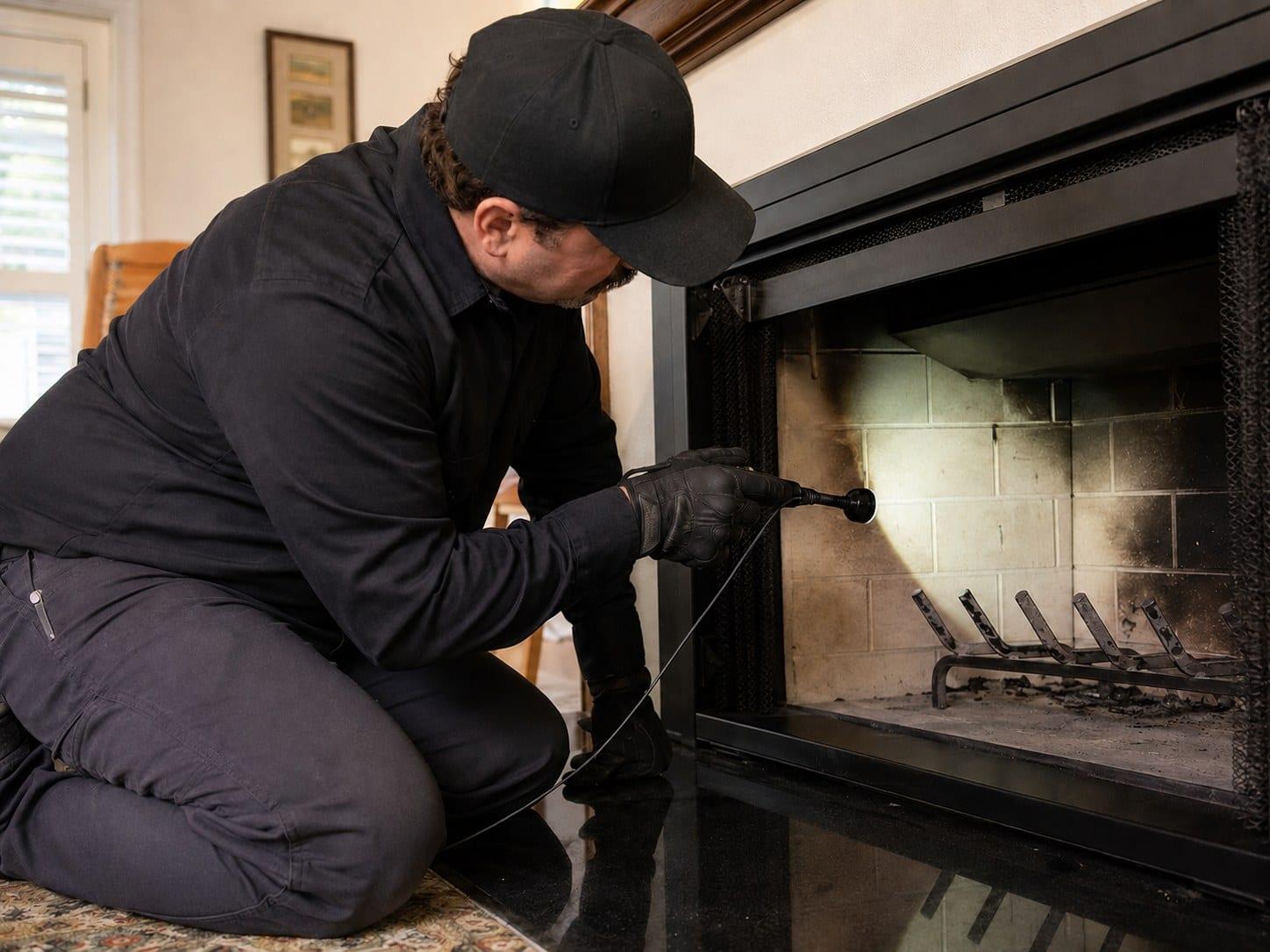
Cracks in a flue liner can sit where nobody sees them from the firebox or the roof. When that's the concern, the inspection can involve running a camera up the flue to look at the liner tiles and the joints between them. We note where any cracks, gaps or missing mortar are. A cracked liner can let heat and exhaust reach the surrounding structure, which adds to chimney fire risk. If damage turns up, the next step is chimney repair in Stonecrest or relining, depending on how much of the flue is affected.
Jobs an inspection can lead to
- A chimney sweep is the right next job when the inspection finds soot or creosote buildup narrowing the flue or hurting the draft.
- Fireplace insert cleaning fits when an insert is already in place and its flue or connector shows buildup.
Nearby areas served
We also inspect chimneys for homes in Tucker, Decatur and Doraville.
More on inspections and local work
For the types of inspection, the full process and every part that gets checked, read how chimney inspection works. You can also browse everything we offer in Stonecrest.
Booking an inspection in Stonecrest
Call or request an estimate to set up an inspection. We also take commercial and property-manager work and handle gas fireplace and gas appliance jobs, and we work on all major brands.
Sources (1)
The sources of the Stonecrest facts on this page.
- 1U.S. Census Bureau, American Community Survey 2019–2023 5-year estimates, table B25034 (Year Structure Built)