We inspect chimneys and fireplaces for homes in Smyrna. These visits pay particular attention to the smoke chamber, to how well the chimney draws, and to what remains after a chimney fire. If any of those has you uneasy about lighting the next fire, request an inspection before you use the fireplace again.
When the inspection turns to the smoke chamber
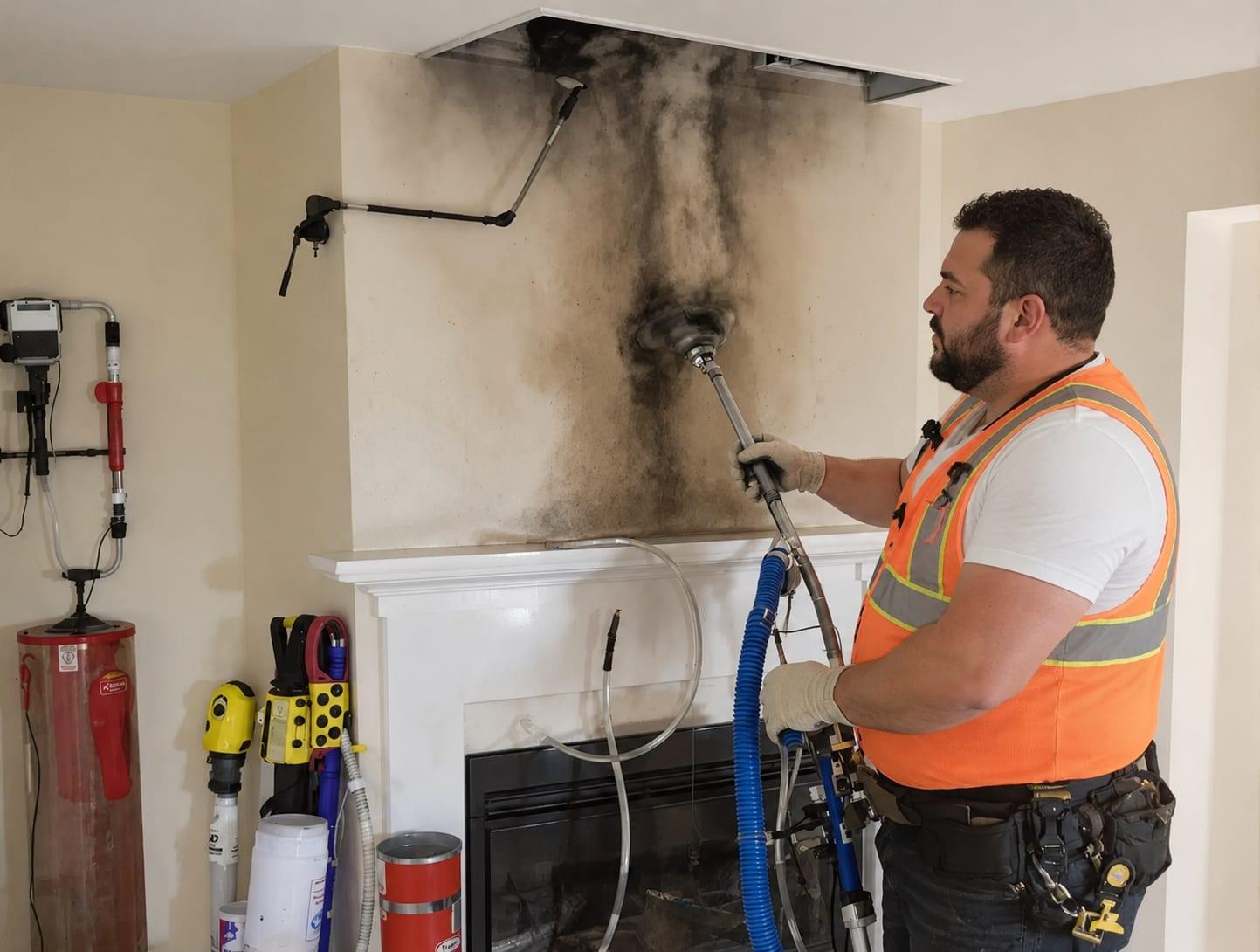
The smoke chamber is the sloped, funnel-shaped space above the damper where smoke gathers before it enters the flue. We look for cracked or missing parging, rough stepped brickwork that catches soot, open joints and heavy creosote on the sloped walls. A rough or damaged chamber can slow smoke, collect deposits and let heat reach the masonry around it.
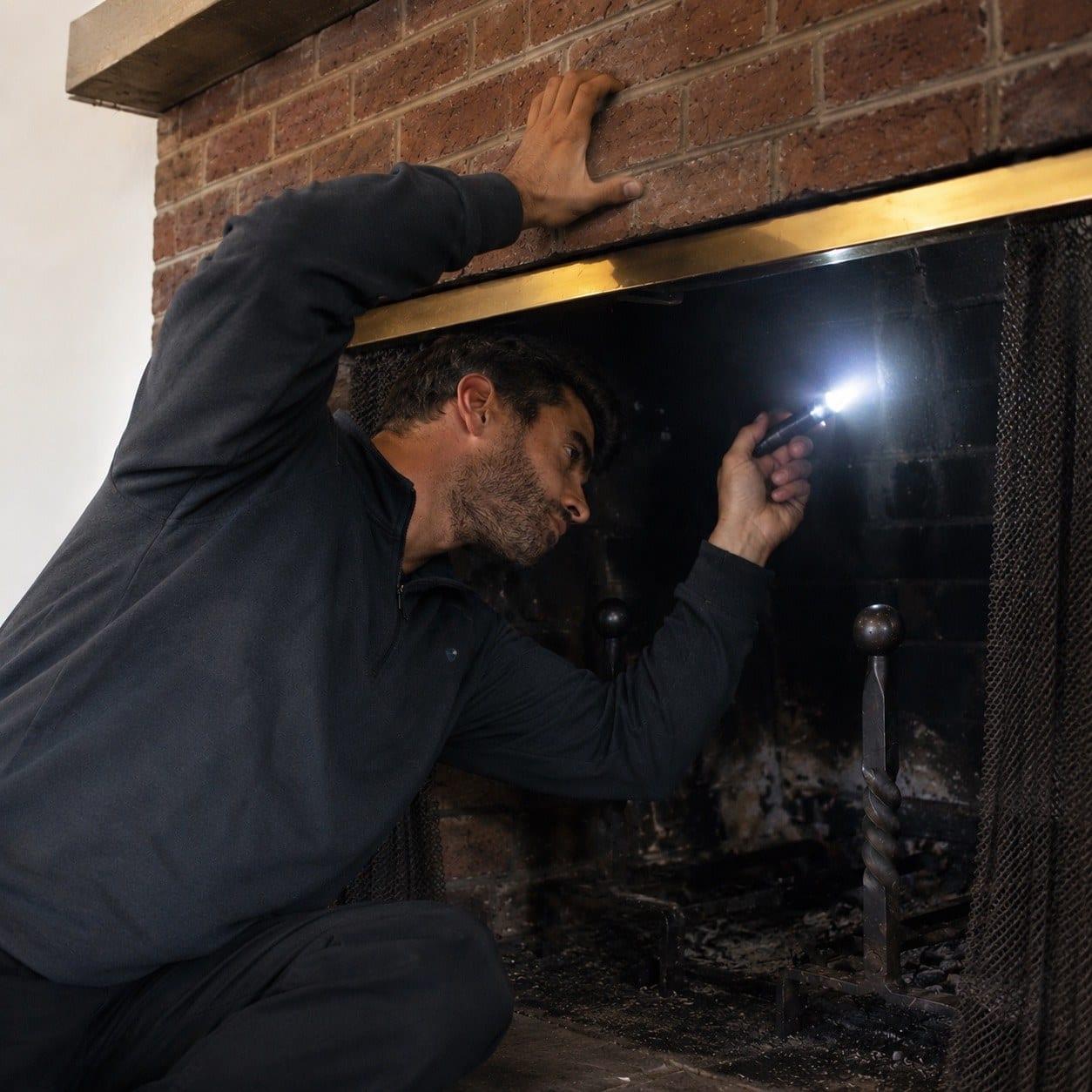
What we find there helps you decide on one of three paths: a cleaning is enough, the chamber needs repair before it goes back into regular use, or it is sound and can be left alone.
When the inspection turns to the draft
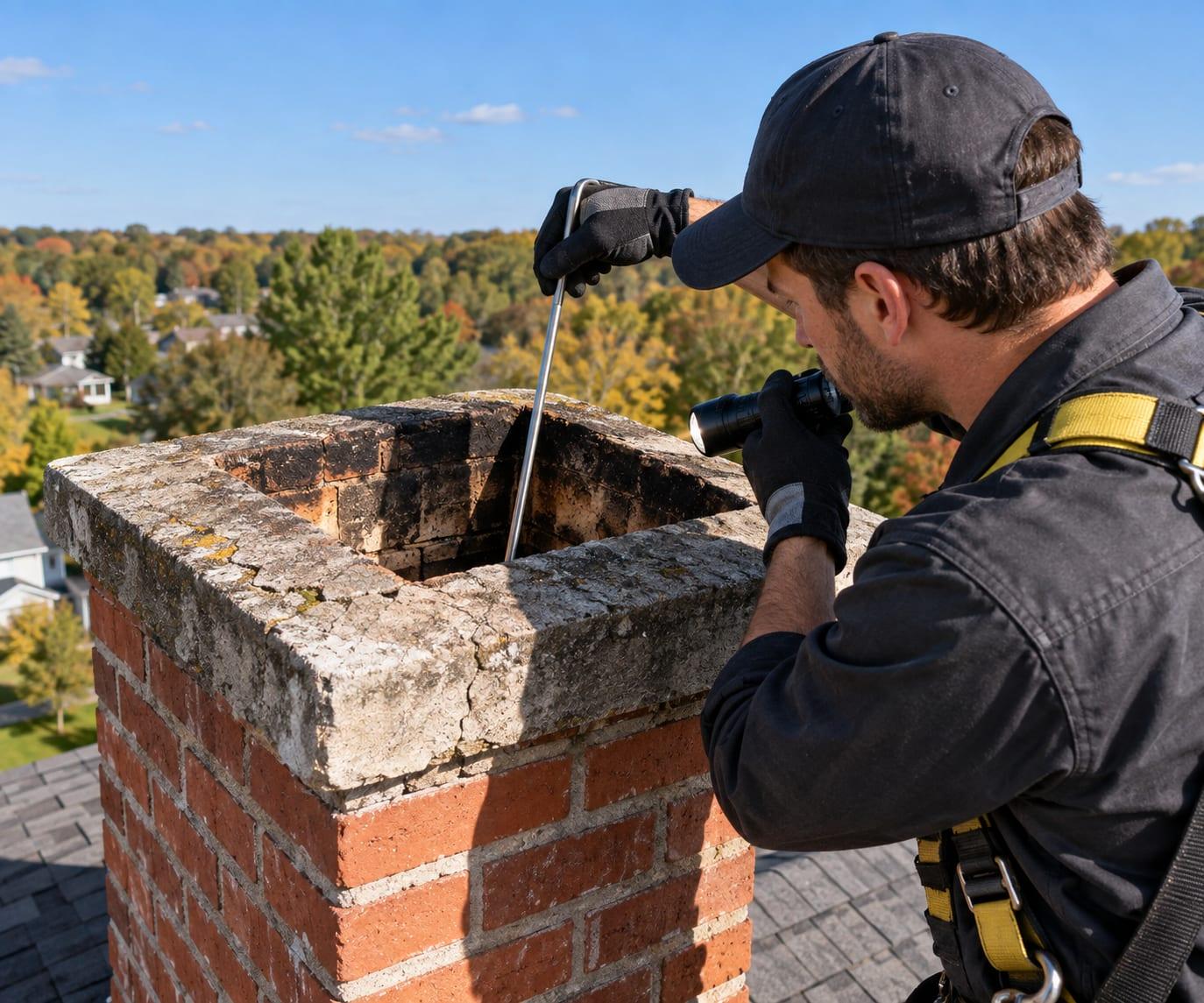
Weak draft shows up as smoke rolling into the room, a fire that is hard to start, or a smell after the fire is out. We check whether the damper opens fully and seals when closed, look for anything narrowing the flue such as debris or nesting material, check the cap at the top, and compare the flue's size with the fireplace opening. We also note household conditions that compete with the chimney for air, such as running exhaust fans.
The result tells you whether the fix is a cleaning, a blockage removal, damper work or a cap. If the damper is part of the problem, our guide to types of chimney dampers explains the options.
What the housing figures suggest for Smyrna chimneys
About 10% of the housing units in Smyrna were built before 1960, according to the U.S. Census Bureau's American Community Survey 2019–2023 5-year estimates (table B25034, Year Structure Built). If your home is one of them, its chimney and smoke chamber have seen decades of use. An inspection tells you their current condition so you don't have to guess.
Inspecting for damage after a chimney fire
Chimney fires are not always noticed while they happen. Afterward, an inspection can involve looking for puffy or flaky creosote, cracked or shifted flue tiles, a warped damper, a heat-damaged cap and cracks in the smoke chamber. A camera run through the flue can show sections that can't be seen from the firebox or the roof.
Hold off on the next fire
If you suspect a chimney fire, leave the fireplace unused until it has been inspected. Damaged flue tiles can let heat reach nearby framing the next time you burn.
Related work an inspection can lead to
- Chimney animal screen installation: the right next step when the inspection finds nesting material or signs that birds or animals have been getting into the flue.
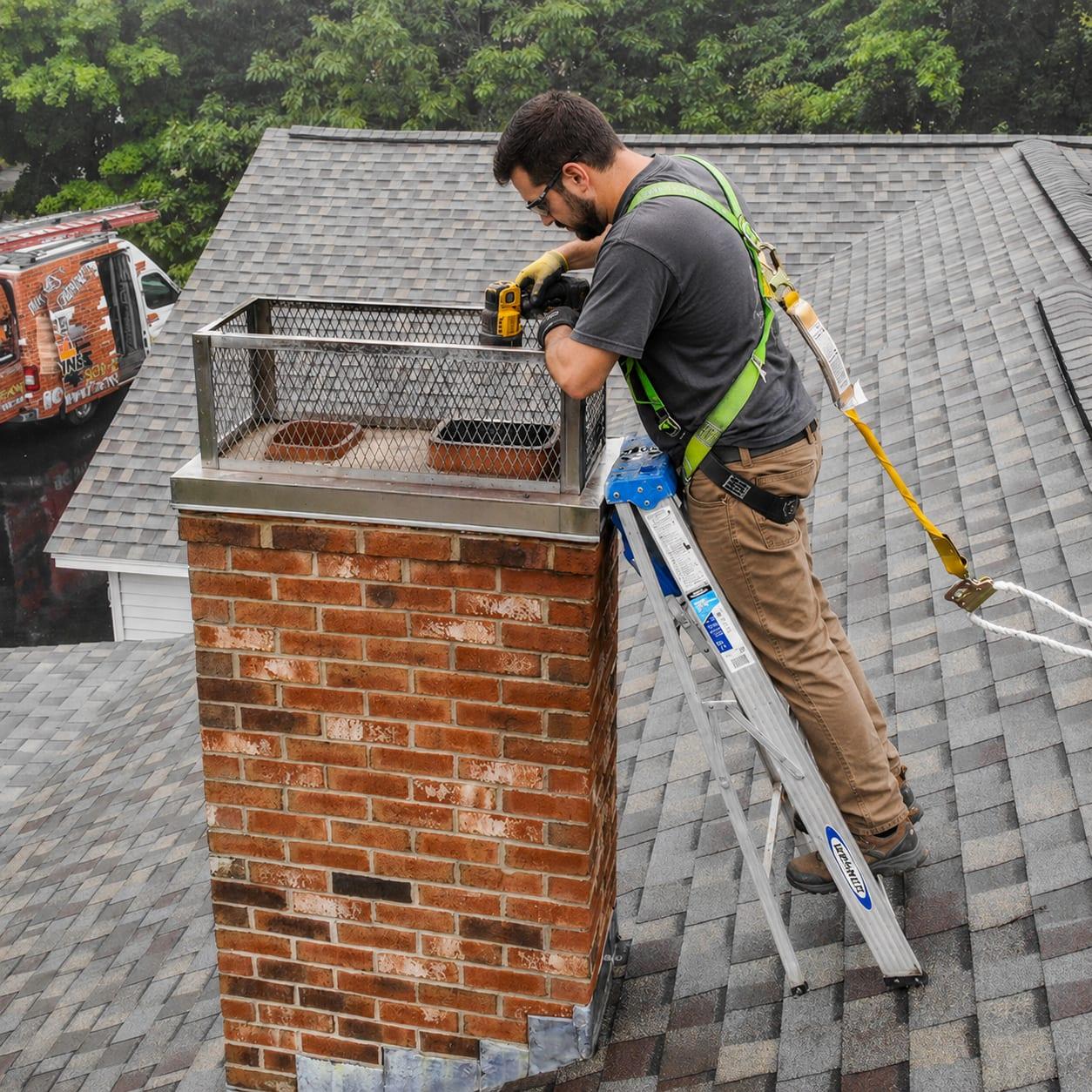
- Chimney cap installation: the right choice when the top of the chimney is open or the old cap is damaged and is letting in rain or debris.
If you are planning a new firebox or insert, an inspection beforehand shows whether the existing chimney can support it. See fireplace installation for homes in Smyrna for that work.
Nearby areas and the full overview
We also inspect chimneys in Mableton, Marietta and Sandy Springs.
For inspection types, the visit process and the components we check, read how chimney inspection works. For every other service we offer here, see our work in Smyrna.
Booking an inspection in Smyrna
We also work on gas fireplaces and gas appliances. Call or request an estimate, and tell us what you've noticed so the visit can focus on it.
Sources (1)
The sources of the Smyrna facts on this page.
- 1U.S. Census Bureau, American Community Survey 2019–2023 5-year estimates, table B25034 (Year Structure Built)