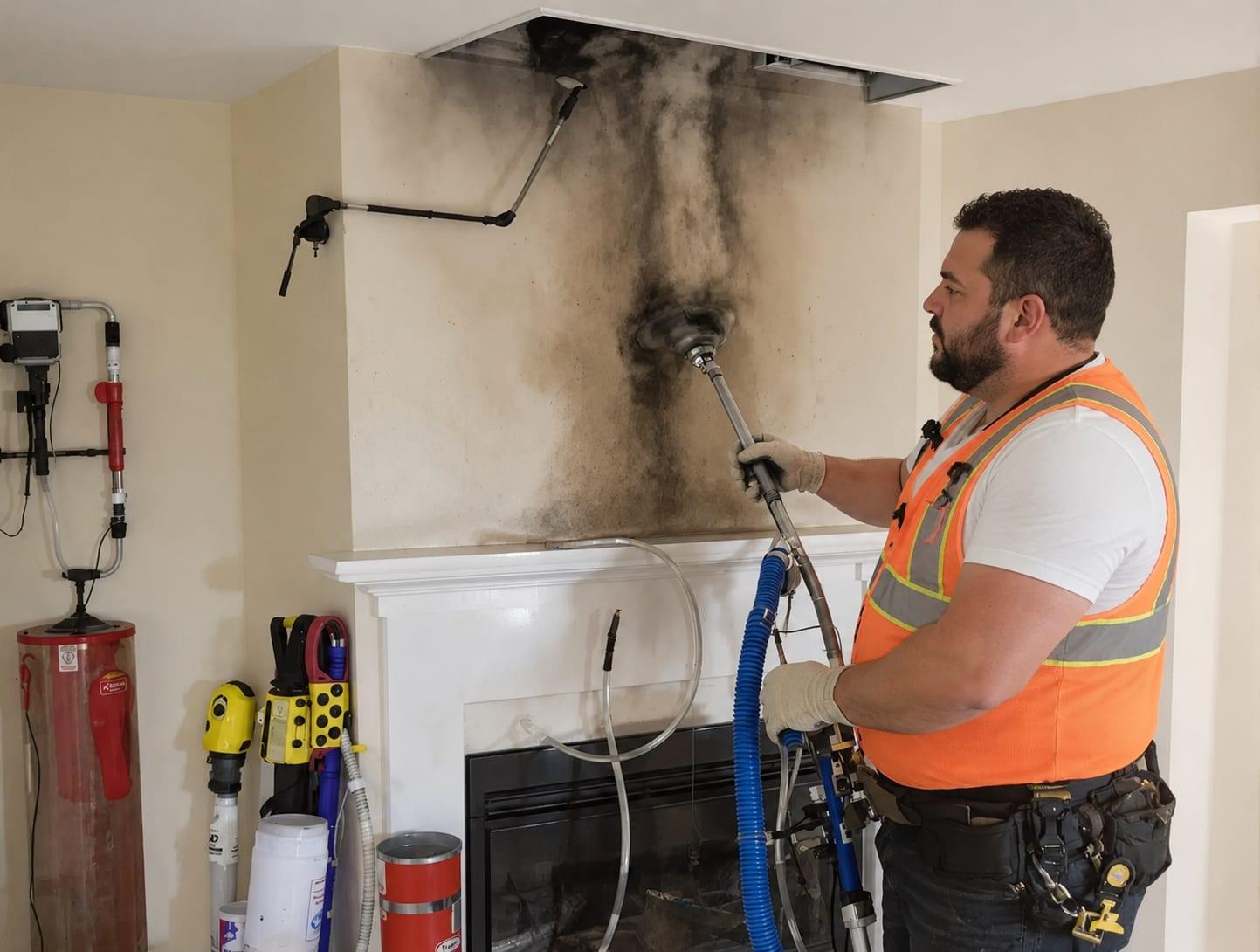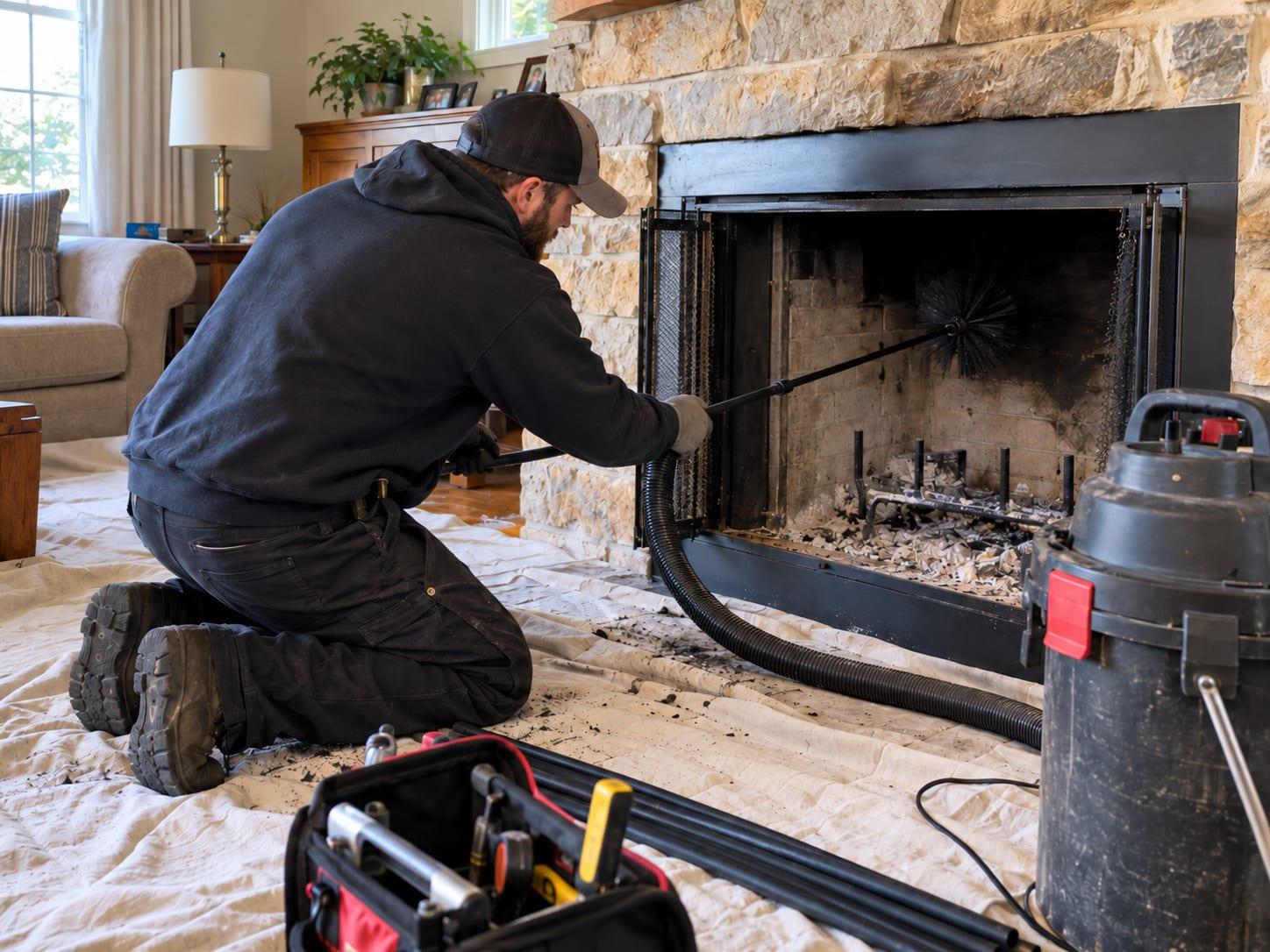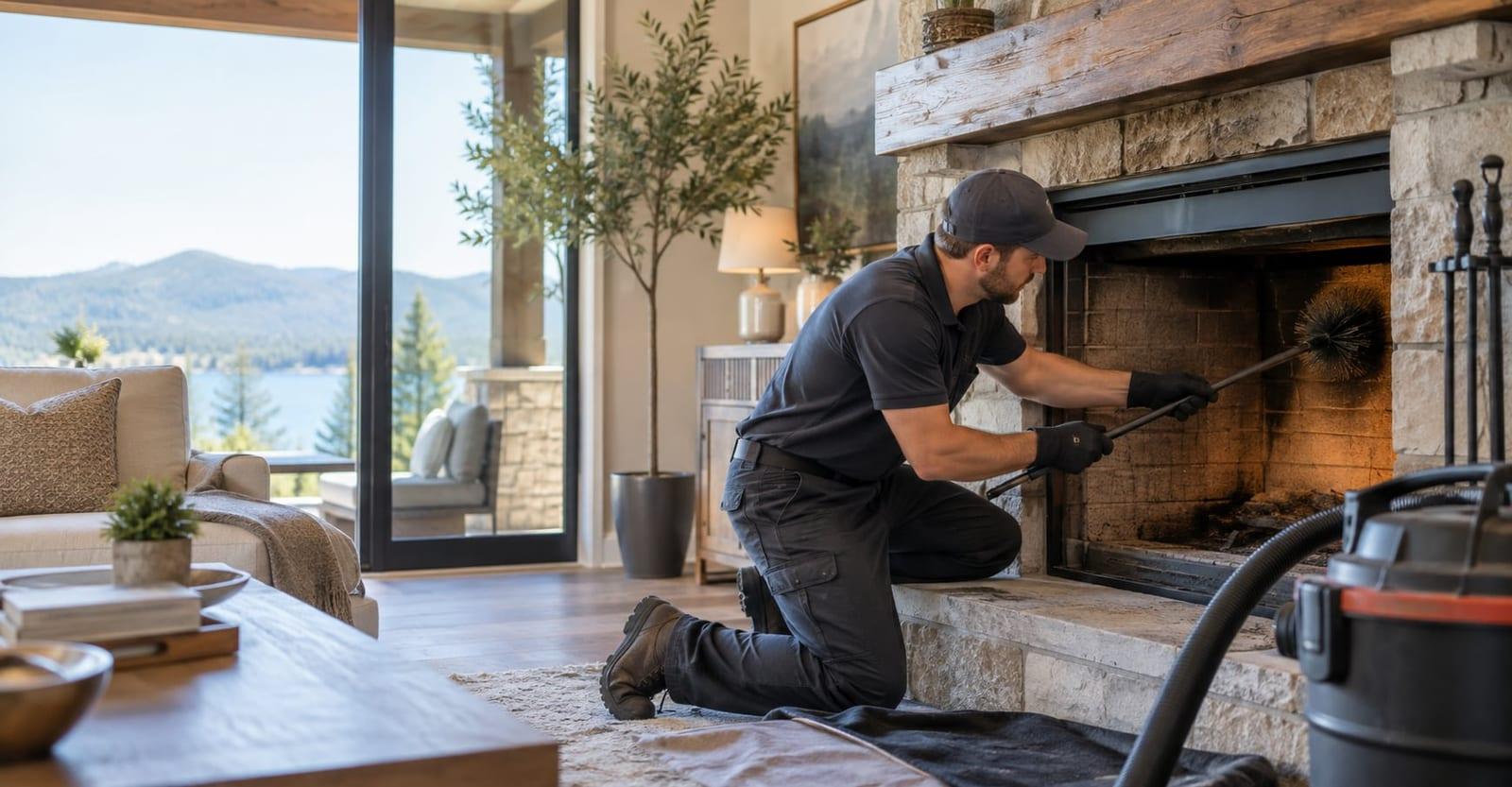
We clean chimneys for Lawrenceville homes. A sweep often starts with a specific complaint: something nesting in the flue, a sooty smell that won't go away, or smoke drifting back into the room. For each one, we check specific things and give you a straight answer on what comes next. When you're ready, call or request an estimate.
When a sweep finds nests or debris in the flue
Birds, squirrels and other animals can carry twigs, leaves and nesting material into an uncapped flue. Loose mortar or pieces of a failing cap can fall in too. When we find debris, we check where it sits: at the damper, on the smoke shelf or higher in the flue. Then we clear it so the flue is open from top to bottom. If an animal is still inside, we remove it before the cleaning continues.
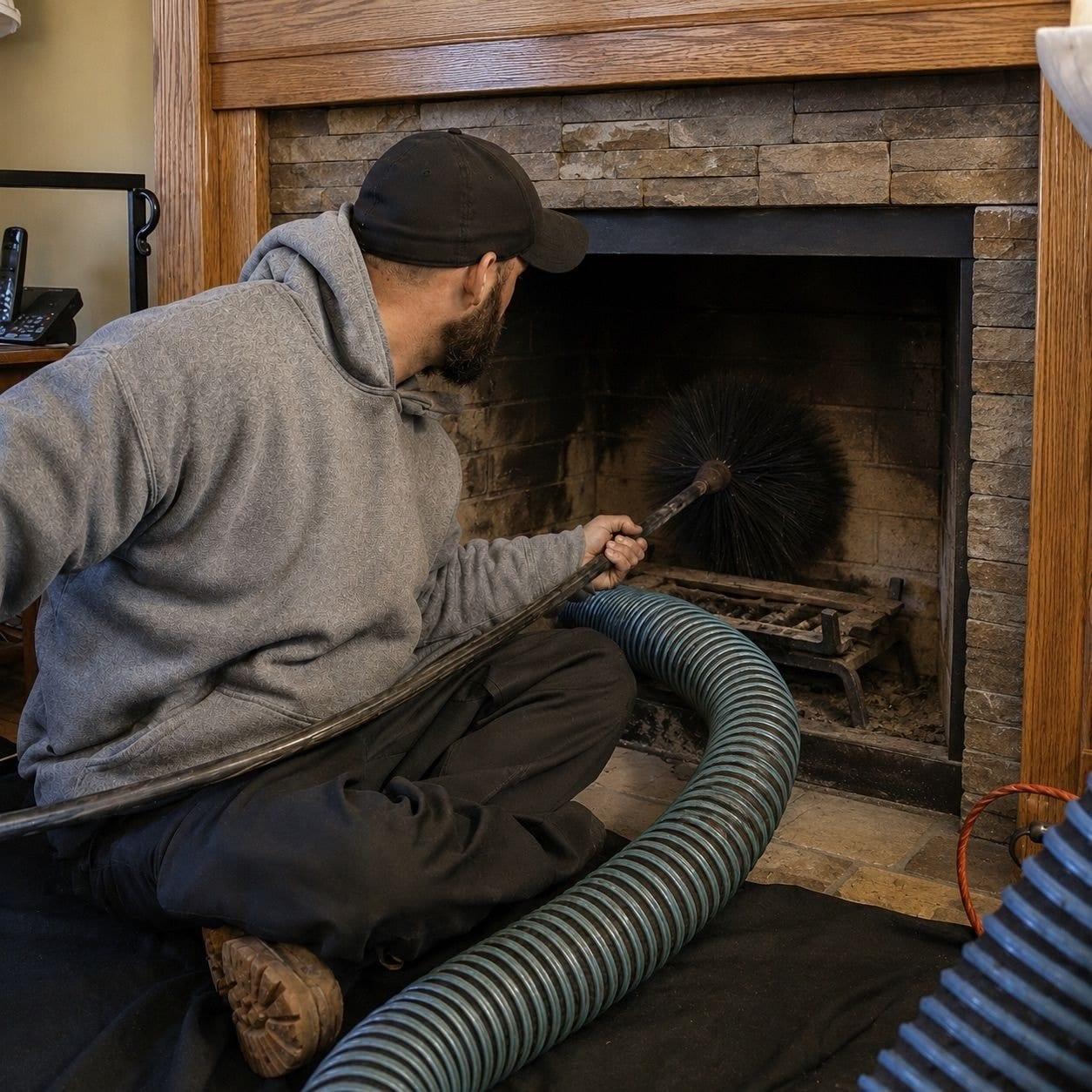
What this helps you decide: whether the top of your chimney is open to entry. If debris keeps getting in, a chimney cap or animal screen is usually the fix worth considering, and we install both.
Tracking down a sooty or smoky smell
A campfire or tar smell that hangs around after the fire is out usually comes from creosote and soot on the flue walls. It tends to get stronger in damp air or when the house pulls air down the chimney. A thorough cleaning removes the deposits behind most of these odors. While sweeping, we also look for signs of water getting in, such as staining or wet debris. Moisture mixed with creosote smells worse, and cleaning alone won't get rid of it.
What this helps you decide: whether a sweep solves the smell, or whether a leak needs repair first.
Lawrenceville housing age and your chimney
About 5% of the housing units in Lawrenceville were built before 1960, according to the U.S. Census Bureau, American Community Survey 2019–2023 5-year estimates, table B25034 (Year Structure Built). If your home is one of those older houses, mention it when you book, because an older chimney's liner and mortar deserve a closer look during the sweep. For any home, how often the fireplace is used is the better guide to how often it needs sweeping.
When smoke comes into the room
Smoke that rolls out of the firebox instead of going up the flue can have several causes, and a sweep helps sort them out. Heavy creosote or a nest can narrow the flue so it can't carry smoke away fast enough. A damper that only opens partway, or that has warped, can cause the same problem. Our guide to the different chimney damper types explains how each one opens and seals. If the flue is clean and the damper works but smoke still spills out, the liner may be damaged or the wrong size. That calls for a repair, not a cleaning.
Related work a sweep can lead to
- Chimney flashing repair is the right job when water stains, a musty smell or wet debris point to a leak where the chimney meets the roof.
- Chimney liner repair fits when the sweep turns up cracked, gapped or crumbling liner sections, or when smoke still spills out after cleaning.
We also offer chimney sweeping in Suwanee, Norcross and Johns Creek.
For the full overview of the types, process and parts involved, read about how our chimney sweep service works, or look through everything we do for Lawrenceville homes.
Booking a chimney sweep in Lawrenceville
Call or request an estimate to schedule a visit. If you have a gas fireplace or gas appliance, mention it, because we work on those too. Property managers and commercial clients can book with us as well.
Sources (1)
The sources of the Lawrenceville facts on this page.
- 1U.S. Census Bureau, American Community Survey 2019–2023 5-year estimates, table B25034 (Year Structure Built)