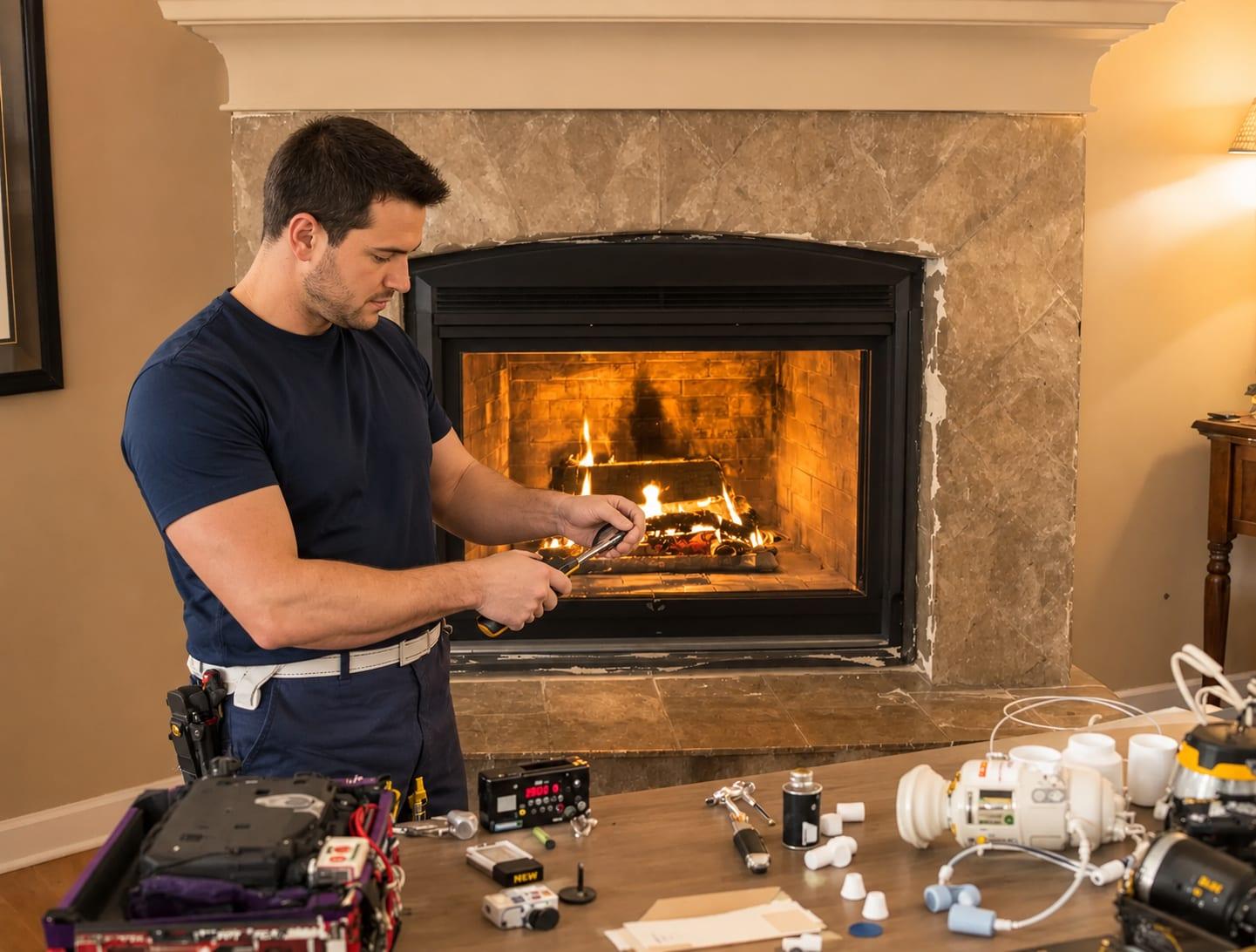
A smoky firebox and a gas unit that refuses to light are two problems we fix on repair visits to homes in East Point. Two areas often decide how big the job is: the smoke chamber above the damper, and the gas logs and burner below it. Request an estimate, and we'll find the cause before anyone talks about repairing versus replacing.
When the repair turns to the smoke chamber
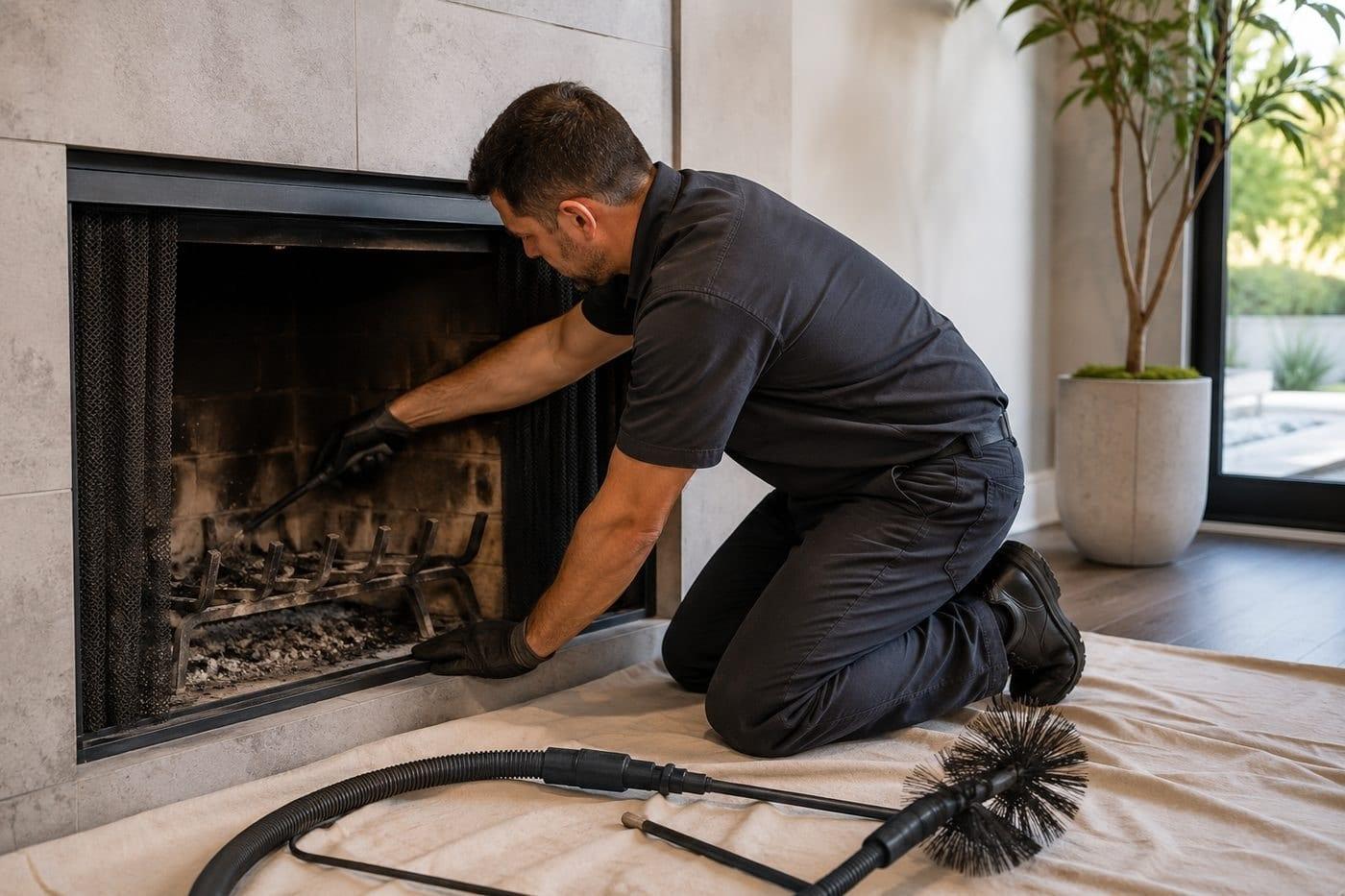
The smoke chamber is the sloped space above the damper where the firebox narrows into the flue. We check its walls for cracks, missing mortar and rough, stepped brick that was never smoothed over. Those surfaces can catch creosote and disturb the draft, which is one reason a fireplace pushes smoke into the room even when the flue is clear. If the masonry is sound, the fix can be resurfacing the walls with heat-rated mortar. If the damage seems to continue up the flue, a chimney inspection is the better next step. What this tells you: whether a smoky fireplace needs chamber work, flue work or both.
When the repair turns to gas logs and burners
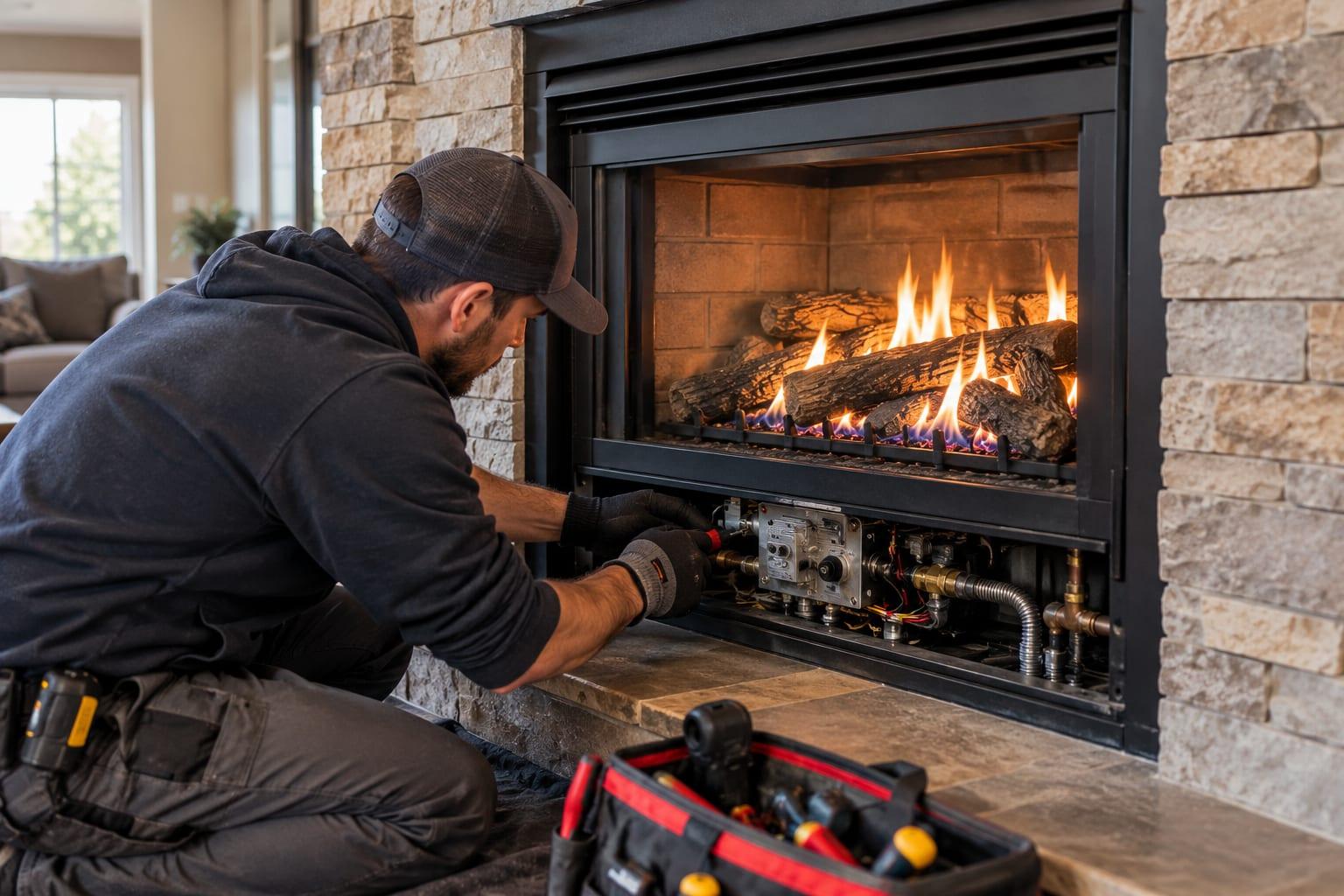
With a gas log set, we look at log placement, clogged burner ports, the ember material, and the pilot assembly and valve that feed the flame. Logs set in the wrong spots can block the flame and leave soot on the logs and firebox. That is often corrected by cleaning the burner and putting each log back where the manufacturer's layout calls for it. Cracked or crumbling logs and a corroded burner pan point toward a new set instead. This part of the visit helps you decide whether to tune the existing set or plan for a new one.
East Point's housing age and this repair
About 34% of the housing units in East Point were built before 1960, and about 9% in 1939 or earlier (U.S. Census Bureau, American Community Survey 2019–2023 5-year estimates, table B25034). If your home is one of them, its fireplace may have decades of use behind it. That makes a close look at the smoke chamber and firebox worthwhile before you choose between repair and replacement.
A gas fireplace that won't light
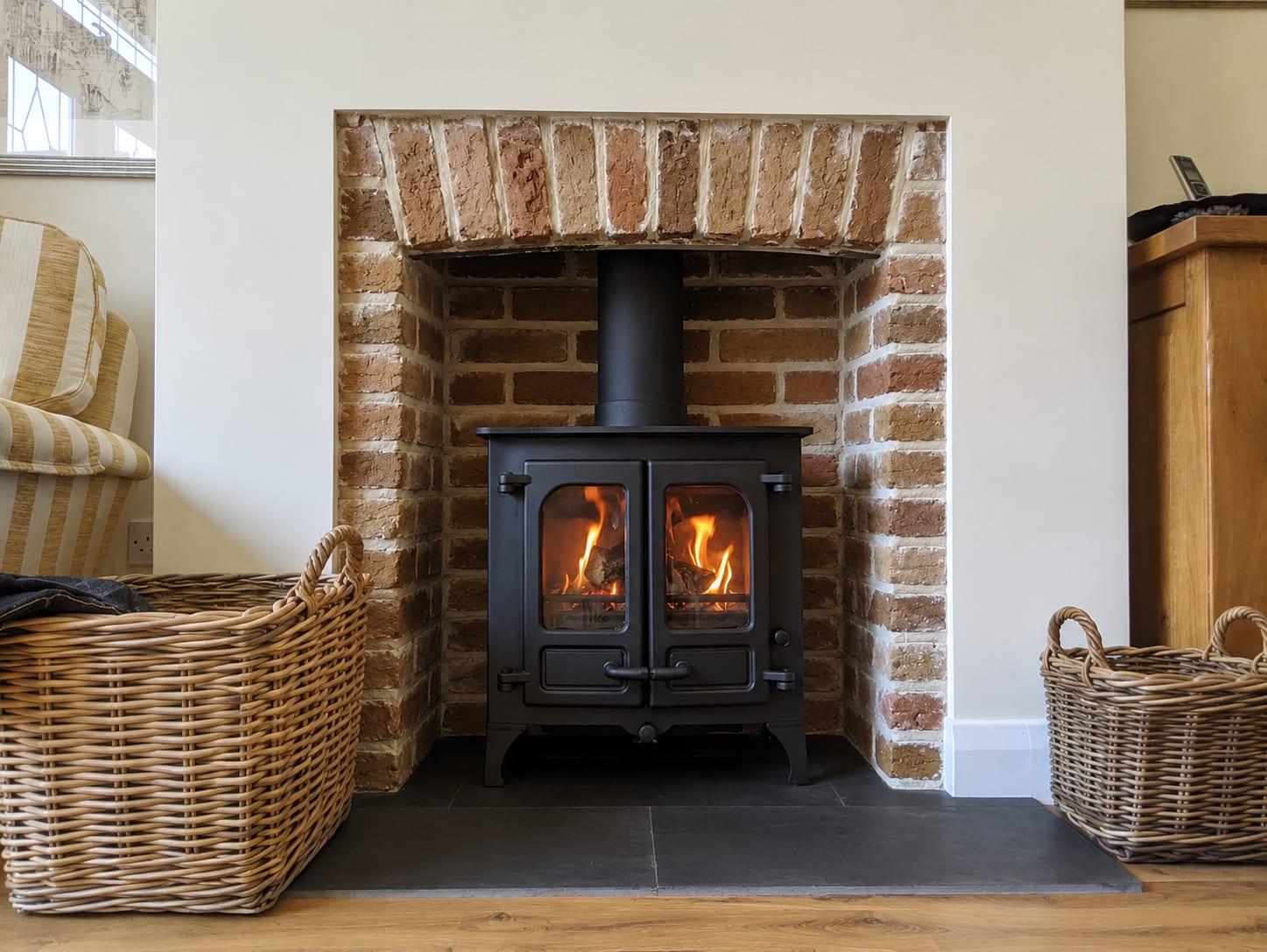
When the burner won't light, the repair can involve confirming gas reaches the valve, cleaning a pilot orifice clogged with dust or webs, and testing the thermocouple or thermopile that tells the valve a pilot flame is present. On units with a remote or wall switch it can also involve the igniter, receiver and batteries. If the valve or controls have failed on an aging unit, replacement may make more sense. If you're weighing a different kind of heater, our guide to fireplace insert vs freestanding wood stove compares two choices.
If you smell gas
Don't try to light the fireplace or flip switches. Leave the house and call your gas utility from outside.
Related jobs this repair can lead to
- Chimney blockage removal is the right job when the fireplace smokes because debris, nesting material or fallen masonry is obstructing the flue, not because of a chamber defect.
- Chimney odor removal fits when the fireplace works but a stale, smoky smell hangs in the room between fires.
Nearby areas we also serve
We also handle fireplace repair for homes in South Fulton, Smyrna and Decatur.
The complete fireplace repair overview
For repair types, the components and the steps of a visit, read how fireplace repair works, and for everything else we do in East Point, visit the area page.
Booking fireplace repair in East Point
Get in touch to request an estimate. Gas fireplace and gas appliance work is offered, and we work on all major brands.
Sources (1)
The sources of the East Point facts on this page.
- 1U.S. Census Bureau, American Community Survey 2019–2023 5-year estimates, table B25034 (Year Structure Built)