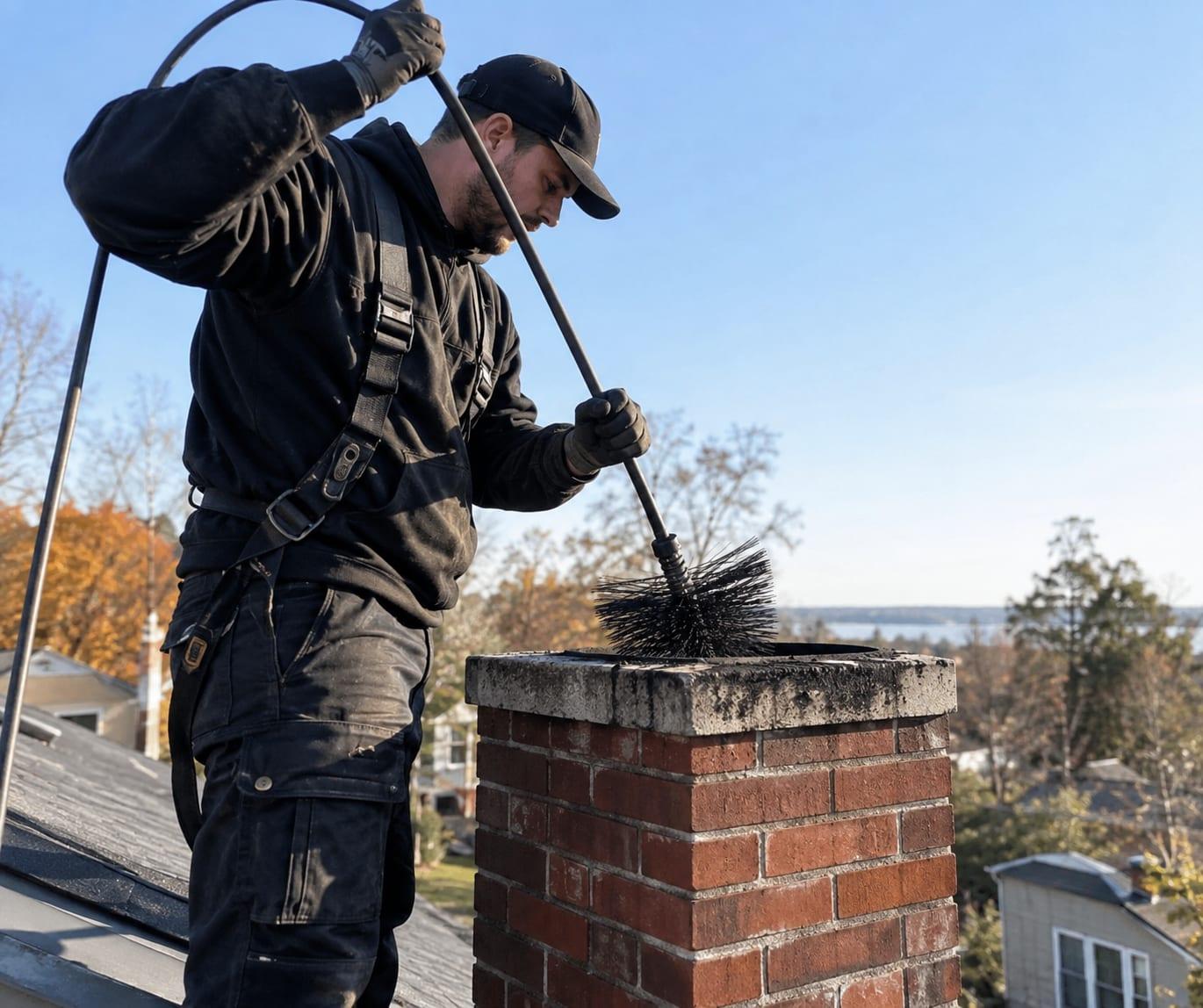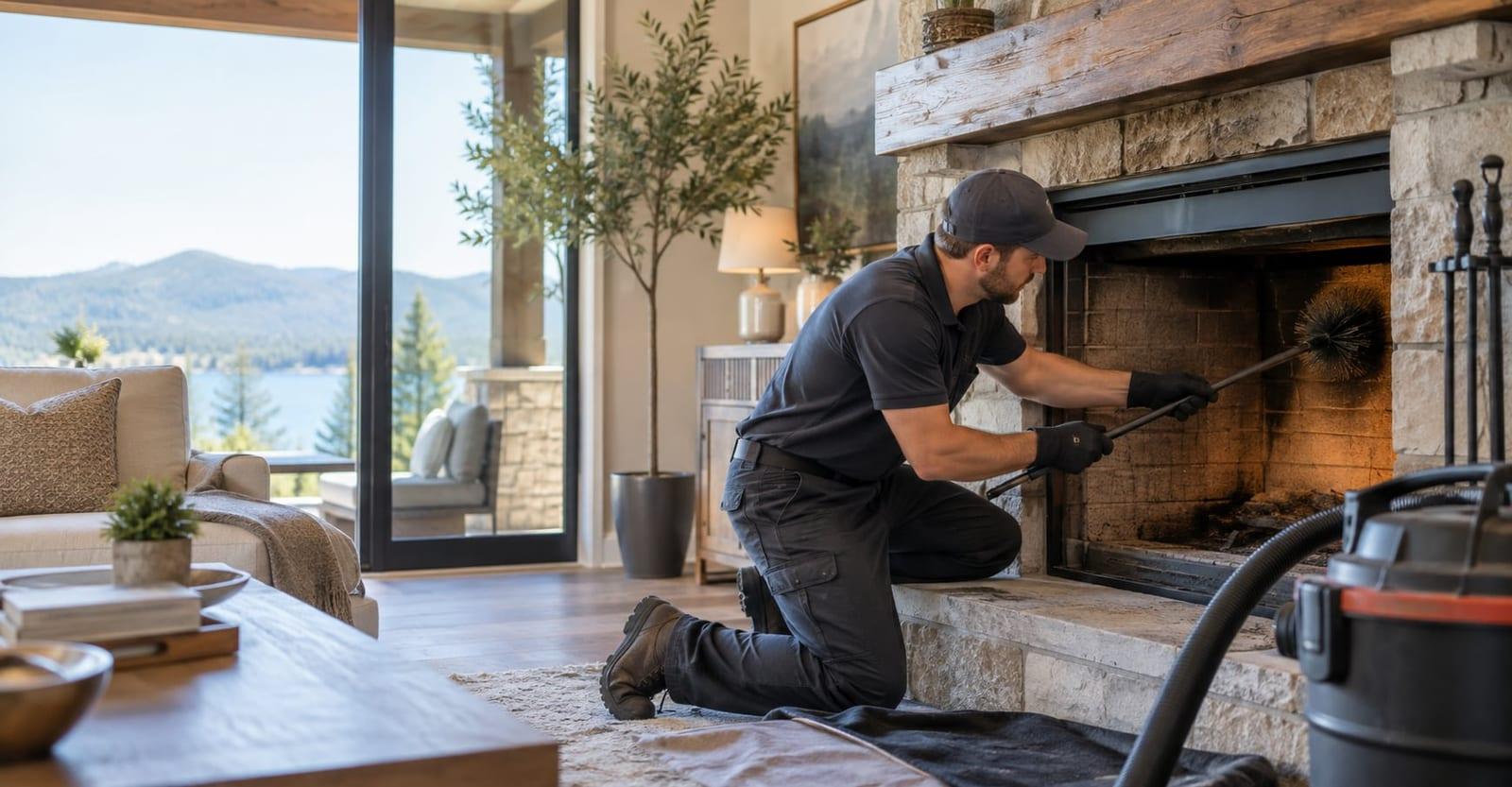
Two parts of the chimney get extra attention when we sweep for Duluth homeowners: the smoke chamber above the firebox and the damper that closes it off. If you're planning to light the fireplace, have noticed creosote buildup, or suspect something is nesting in the flue, request a sweep and we'll start there.
Cleaning the smoke chamber
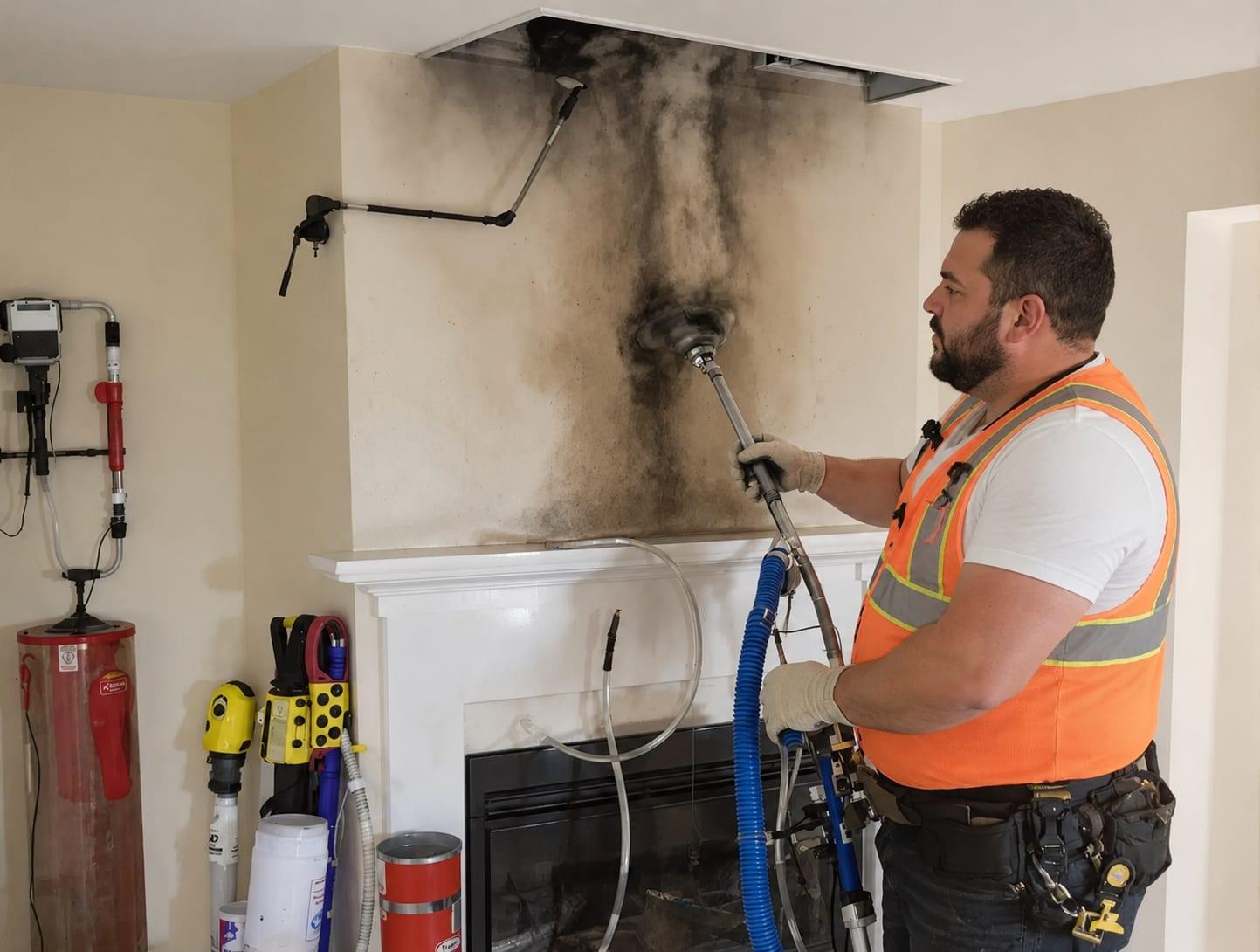
The smoke chamber is the sloped space between the damper and the bottom of the flue. Smoke slows down as it passes through, so soot and creosote can settle on its walls, especially where the brick steps inward instead of being smoothed over. On a Duluth sweep we brush and scrape this area along with the flue, then look at what's left: glazed creosote that brushing won't lift, open mortar joints, or cracked or missing parging. That tells you whether a standard cleaning did the job, whether the deposits need a dedicated creosote removal treatment, or whether the chamber itself needs repair before the next fire.
What happens at the damper
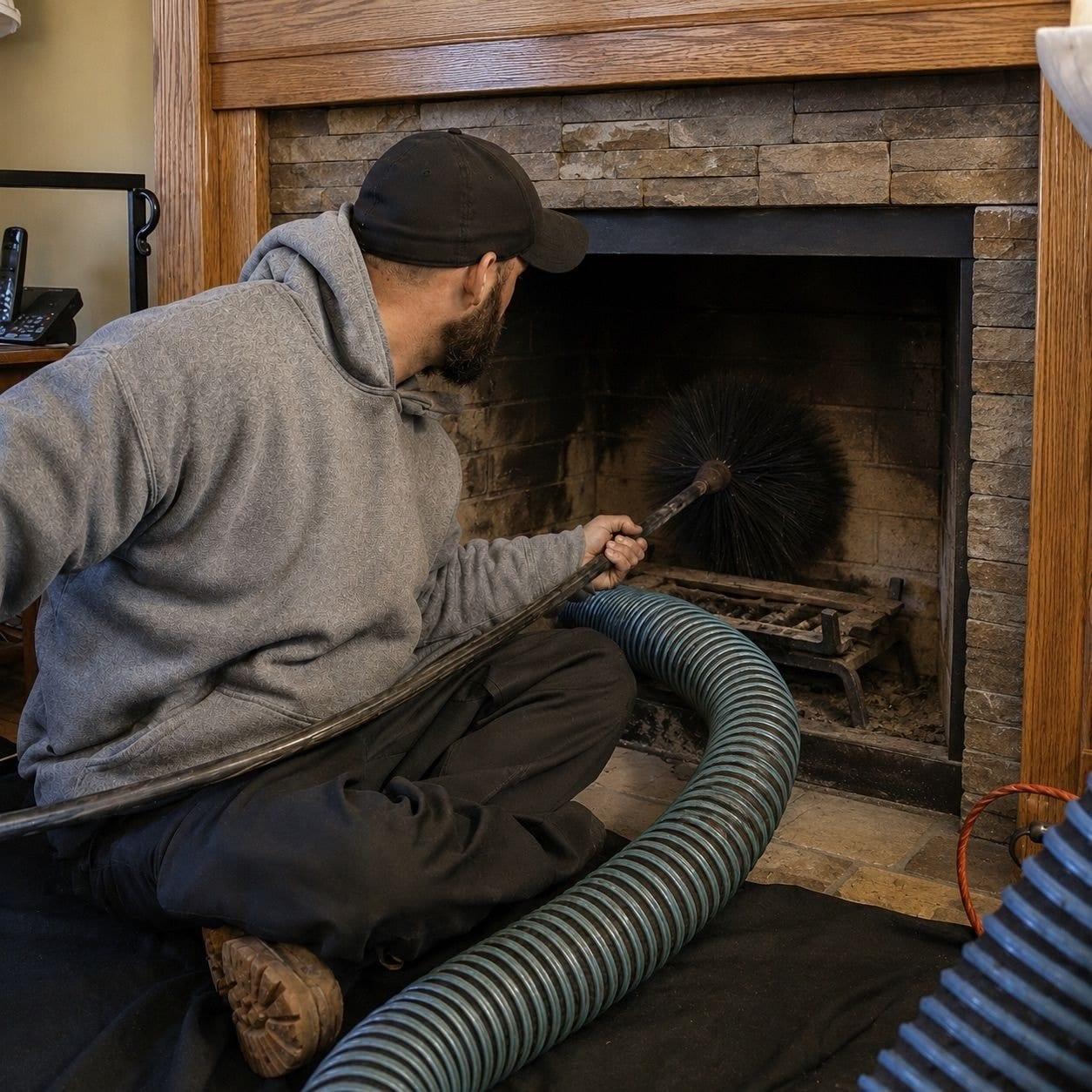
The damper is the first thing a sweep has to get past. We clear soot and debris off the plate, the frame and the handle, then open and close it to check that it moves freely and seats properly. Rust, a warped plate or a handle that won't hold its position all get noted for you. If you're not sure what kind you have, our guide to types of chimney dampers explains the differences. The decision it helps with: whether the damper only needed cleaning or needs repair before it can close the chimney off again.
What the Census figures say about Duluth homes
About 1% of the housing units in Duluth were built before 1960, according to the U.S. Census Bureau's American Community Survey 2019–2023 5-year estimates (table B25034, Year Structure Built). That means the large majority of homes we sweep in Duluth were built in 1960 or later. We still judge each smoke chamber, damper and flue by what we find on the visit.
When a nest is in the flue
Birds, squirrels and other animals can build nests in an uncapped flue, and the sweep then becomes a removal job as well. It can involve confirming nothing is still living in the chimney, pulling out twigs, leaves and nest material, clearing droppings and debris from the smoke shelf, and then sweeping the flue so smoke can draw again. Don't light a fire to drive anything out. A packed nest can block the flue and push smoke into the house. Once the flue is clear, a chimney cap or animal screen can keep the next nest out.
When a different job fits better
- During a chimney fire, get everyone out and call 911 first. A chimney inspection is the right call when you need the chimney's condition assessed rather than cleaned, for example after a chimney fire or when you suspect damage. For local details, there's chimney inspection.
- A real estate chimney inspection fits when you're buying or selling a home and need the chimney's condition documented for the sale.
- A sweep is enough when buildup is the issue and the chimney otherwise works the way it should.
Also served nearby
We also sweep chimneys for homes in Johns Creek, Norcross and Peachtree Corners.
More on this service and this area
The complete overview of how chimney sweep works, including its types, the process and the components, is on the main service page, and everything we offer in Duluth is gathered on the area page.
Booking a sweep in Duluth
To book a sweep for a Duluth home, get in touch and request a visit. Commercial and property-manager work is offered too, so rentals and managed properties can be booked the same way.
Sources (1)
The sources of the Duluth facts on this page.
- 1U.S. Census Bureau, American Community Survey 2019–2023 5-year estimates, table B25034 (Year Structure Built)