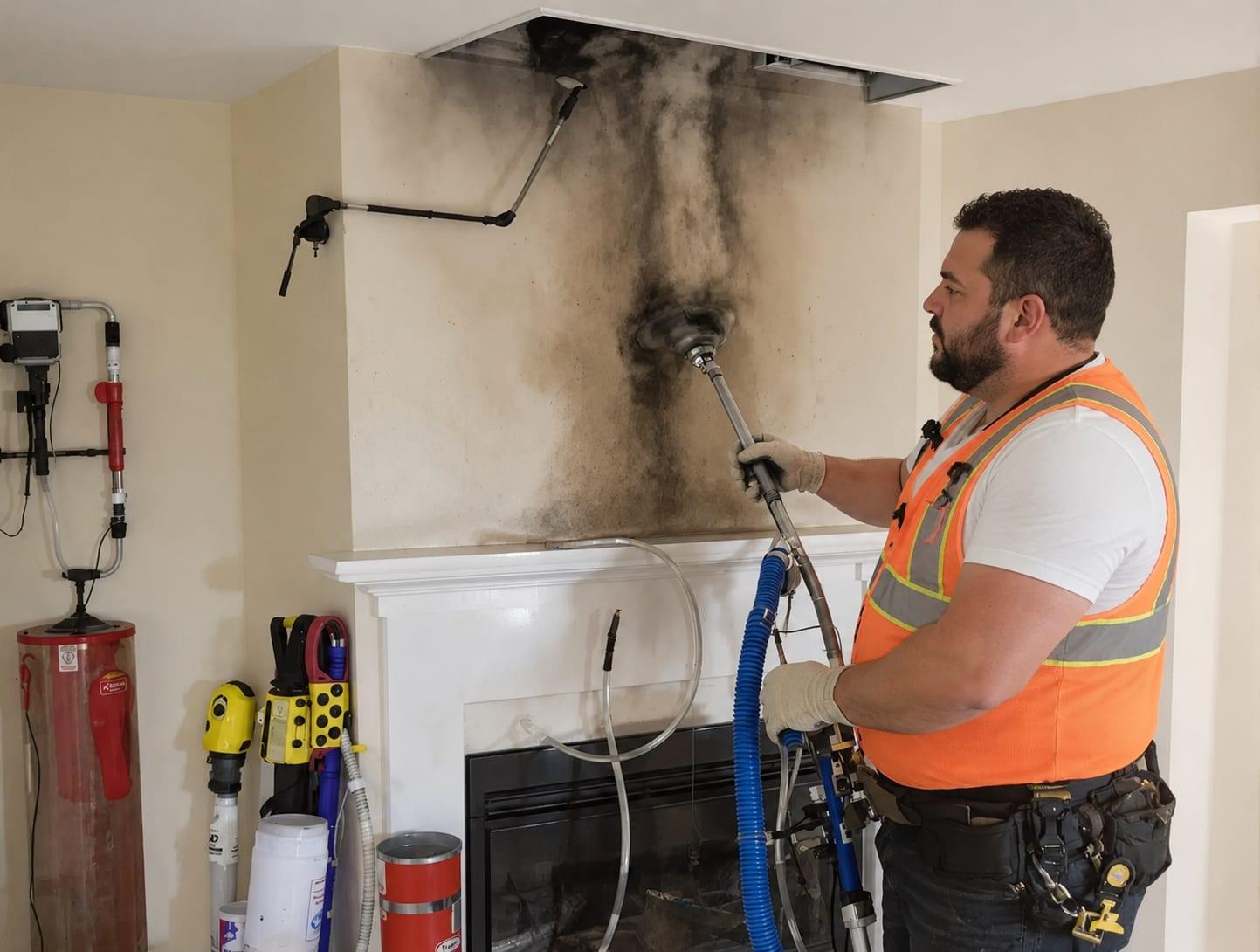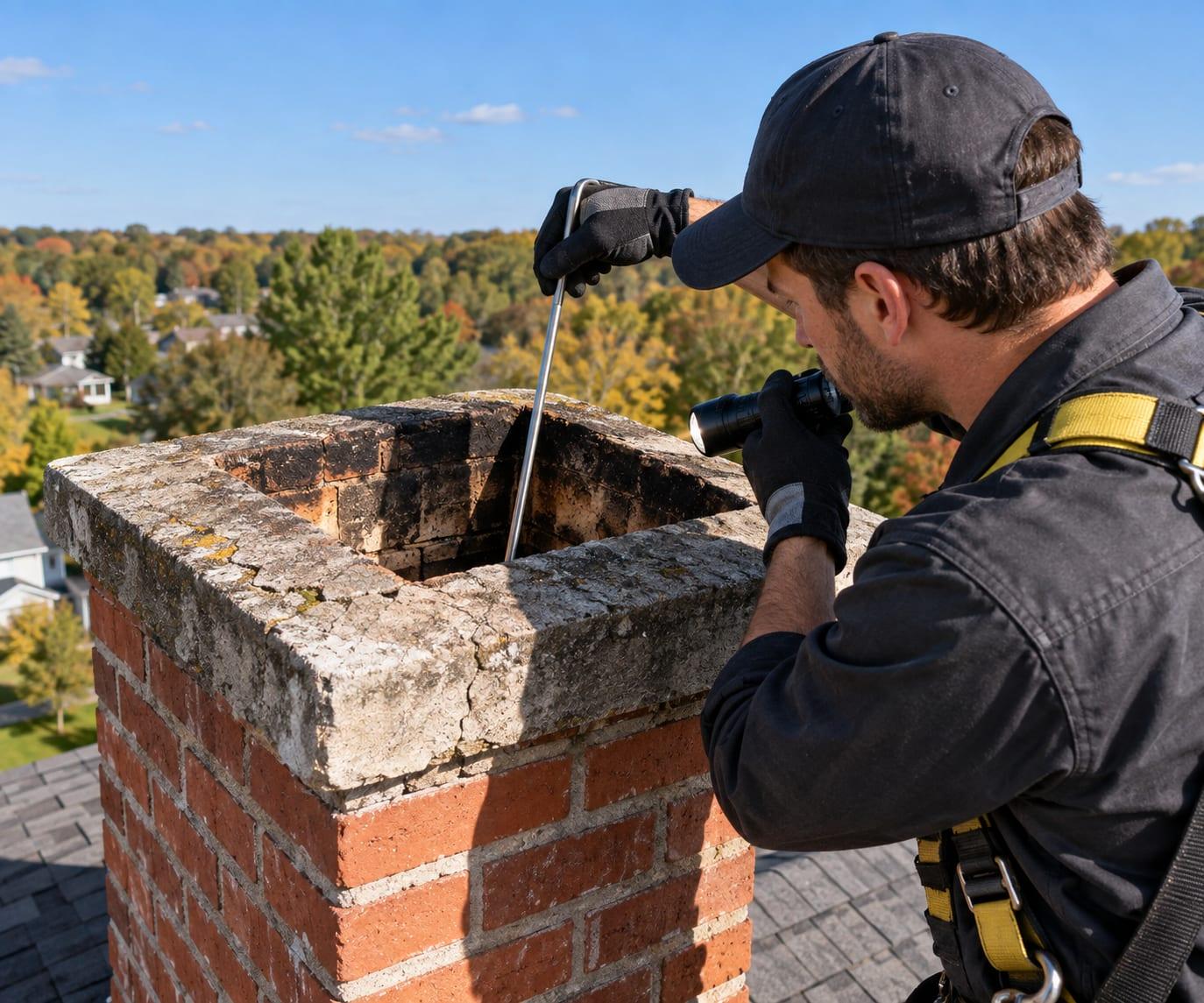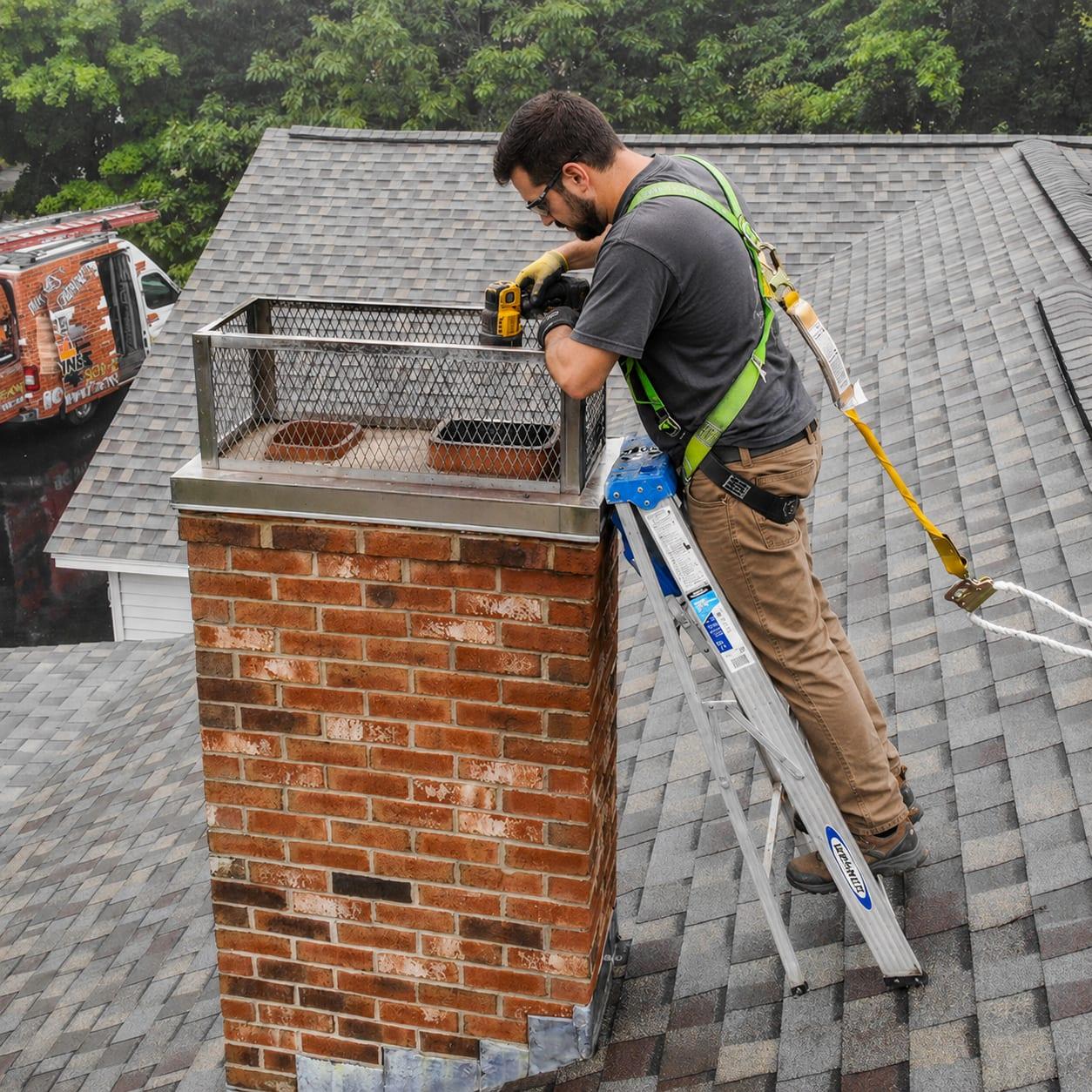
We inspect chimneys and fireplaces for homes in Cumming. Two parts of that work are worth understanding before you book: the camera look inside the flue and the check of the roof flashing. Together they show whether the chimney is ready for another season of fires, a new liner or an insert. To get on the schedule, call or request an estimate.
What the flue camera shows
The camera becomes part of the visit when the inside of the flue can't be judged from the firebox or the top of the chimney. Examples include before a liner or insert goes in, after signs of a chimney fire, or when buildup or past damage leaves open questions. The camera runs up the flue to check the joints between flue tiles, the tile faces, the seams and connections of a metal liner, and any gaps, shifted sections or heavy deposits along the way.
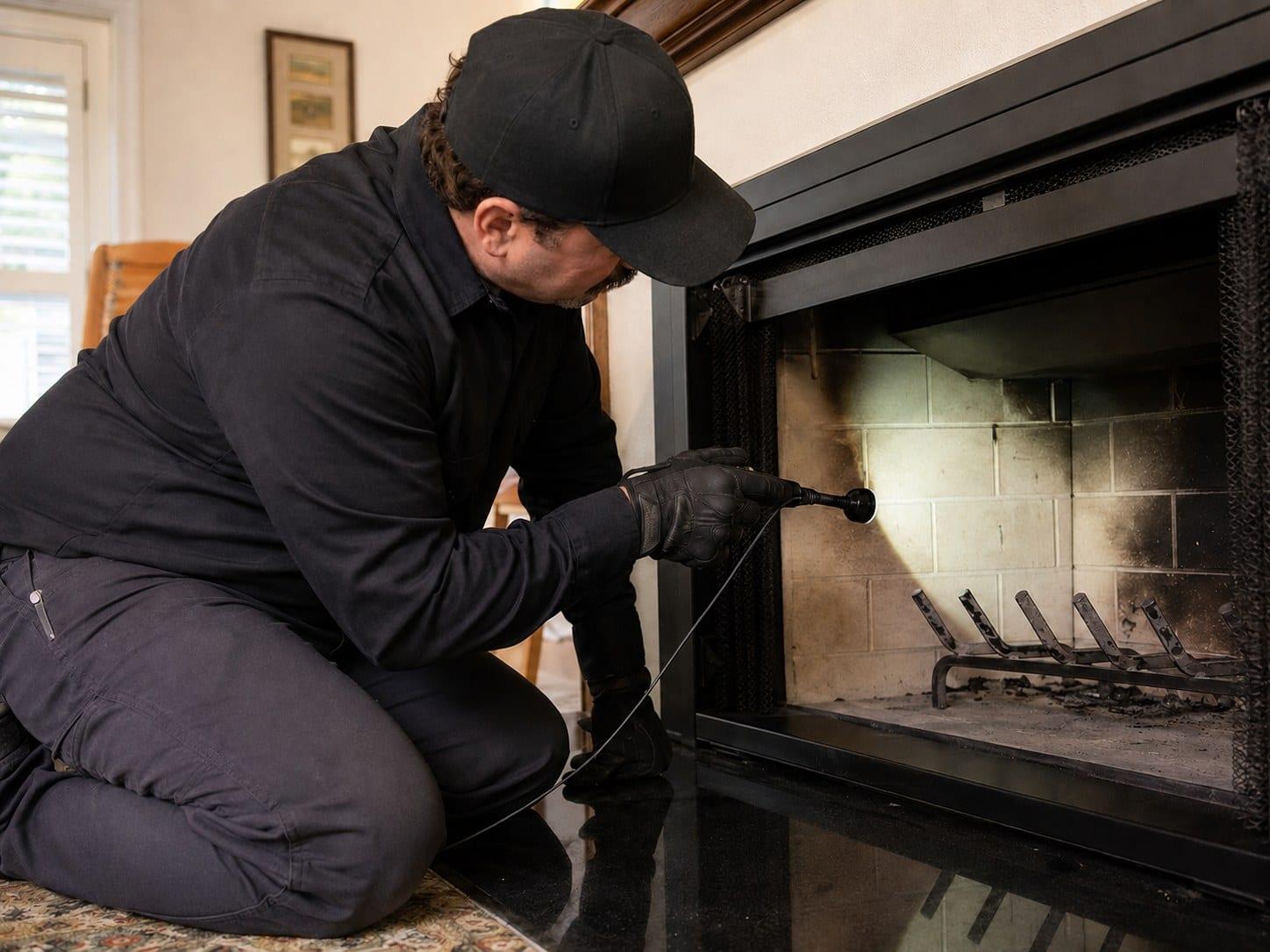
The result is a decision with evidence behind it. The flue may be sound and fine to keep using, or it may need cleaning before it can be judged properly. A damaged section may need repair, or the flue may need a new liner before an insert or heavier use.
Checking where the chimney meets the roof
Staining on a ceiling or on attic framing near the chimney, water in the firebox and damp masonry all send the inspection up to the roof line. The flashing is checked for lifted or bent edges, gaps, failed sealant and counterflashing that has pulled out of its mortar joints. The nearby shingles and masonry are looked at too, so the real entry point isn't missed. This shapes what you do next: a leak at the flashing is a different job from water coming through the crown, cracked brick or an open flue, and knowing which one it is keeps the wrong part from being repaired.
What the housing figures say about Cumming
About 2% of the housing units in Cumming were built before 1960, according to the U.S. Census Bureau's American Community Survey 2019–2023 5-year estimates (table B25034, Year Structure Built). That means the large majority of housing units date from 1960 or later. For an inspection, a home's age alone says little about the condition of its flue. The more useful questions are how the chimney has been used, whether there have been leaks or past damage, and whether a liner or insert is planned.
When the worry is a hidden crack in the flue
A cracked flue tile or a separated joint usually can't be seen from below. Finding one can involve a full camera pass of the flue, sometimes after a sweep clears the soot and creosote that would hide the surface. A chimney sweep for homes in Cumming handles that part. If a crack turns up, the inspection notes where it is and how far it runs. A damaged flue can let heat and gases reach places they shouldn't, which ties directly to chimney fire risk. From there, the choice is usually between repairing the liner and relining the flue.
When the findings lead to repair work
- Book chimney flashing repair when the inspection traces a leak to loose, gapped or pulled-away flashing at the roof line.
- Book chimney liner repair when the camera finds cracked tiles, open joints or a damaged section of liner that can be fixed without replacing the whole lining.
Nearby areas we also serve
Chimney inspections are also available for homes in Suwanee, Johns Creek and Alpharetta.
The full overview
Our chimney inspection service covers the types of inspection, how a visit runs and every component that gets checked. Our Cumming area page lists everything else we do for homes here.
Booking an inspection in Cumming
Call or request an estimate to schedule a visit. Commercial and property-manager work is offered, as is gas fireplace and gas appliance work, and we work on all major brands.
Sources (1)
The sources of the Cumming facts on this page.
- 1U.S. Census Bureau, American Community Survey 2019–2023 5-year estimates, table B25034 (Year Structure Built)