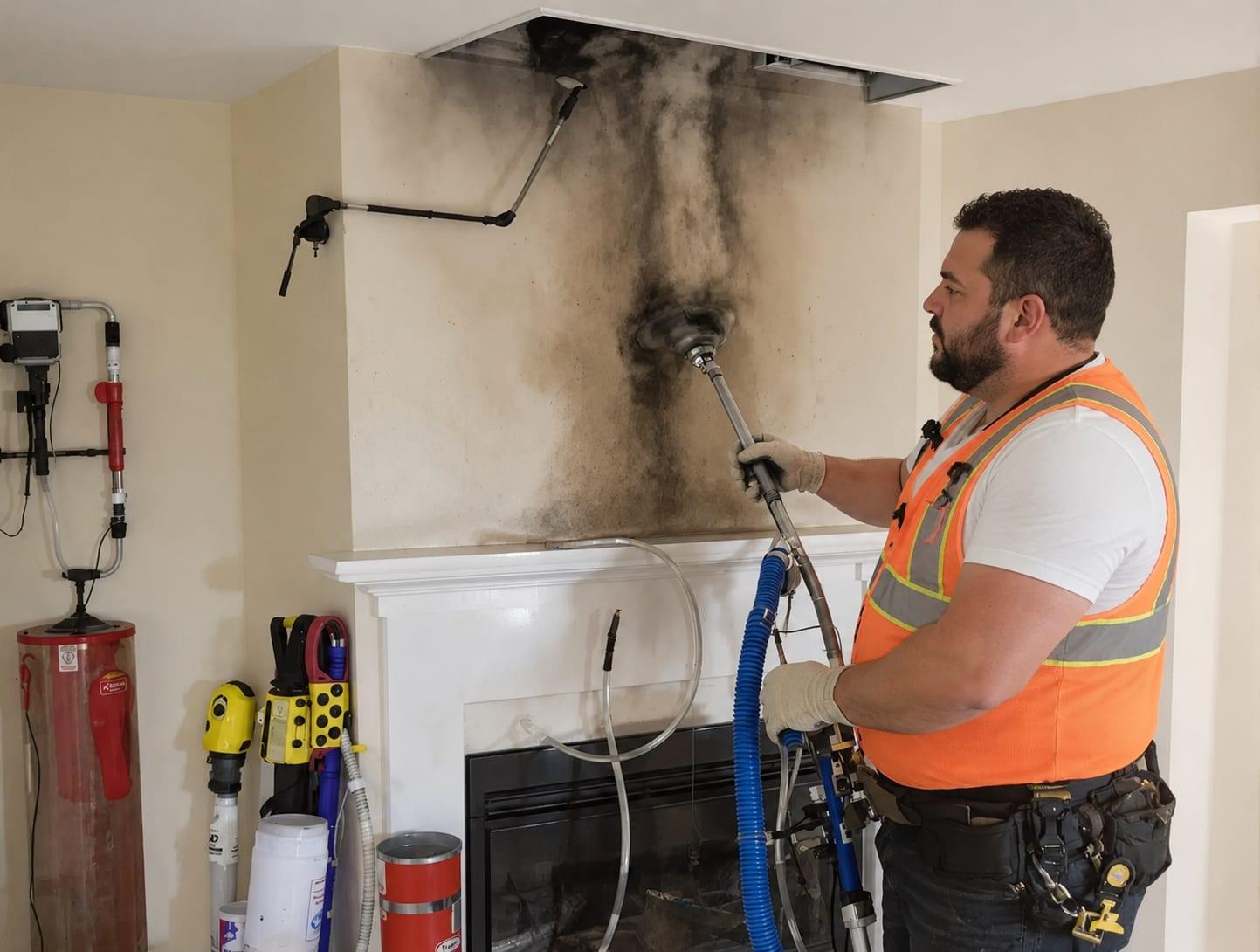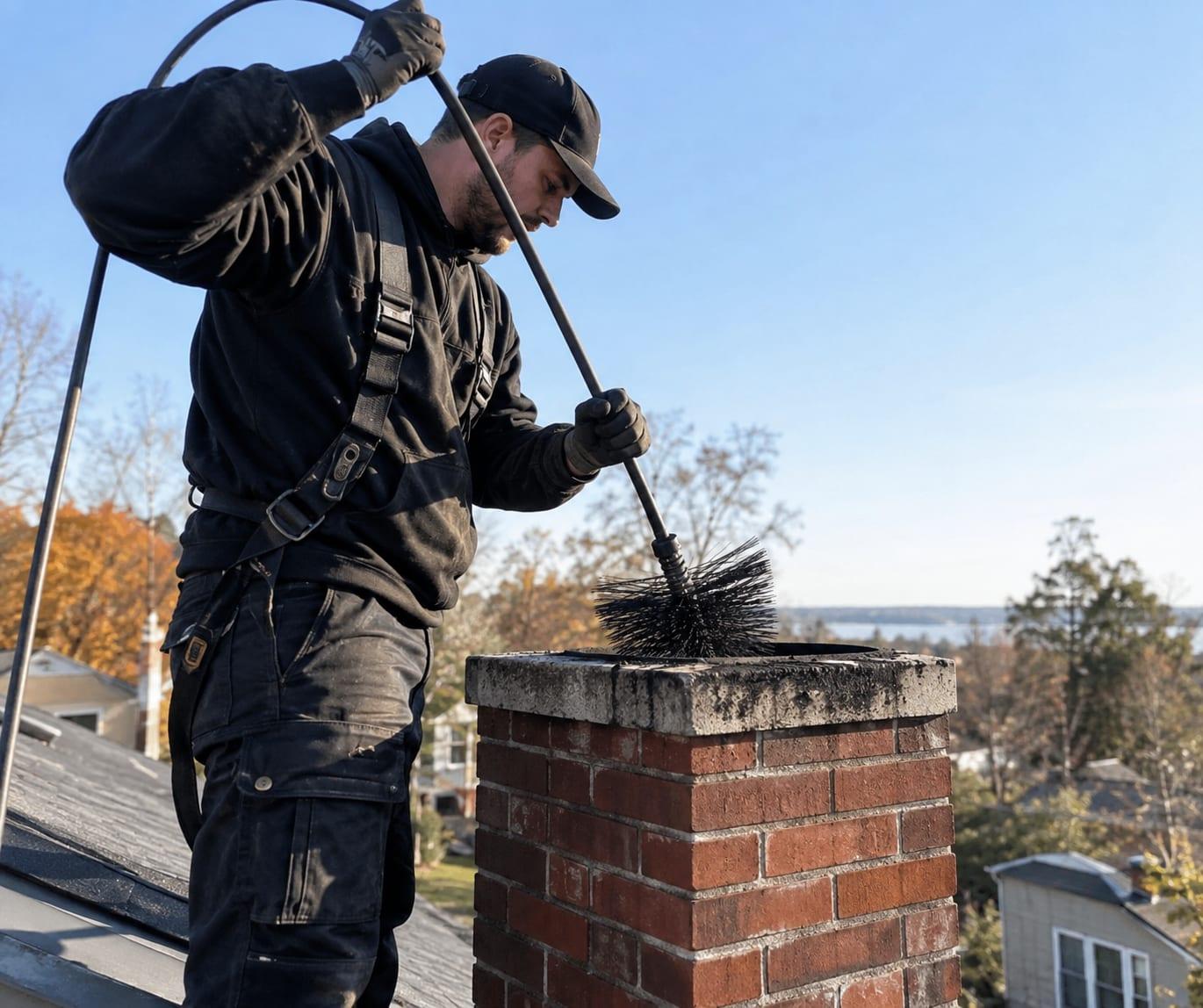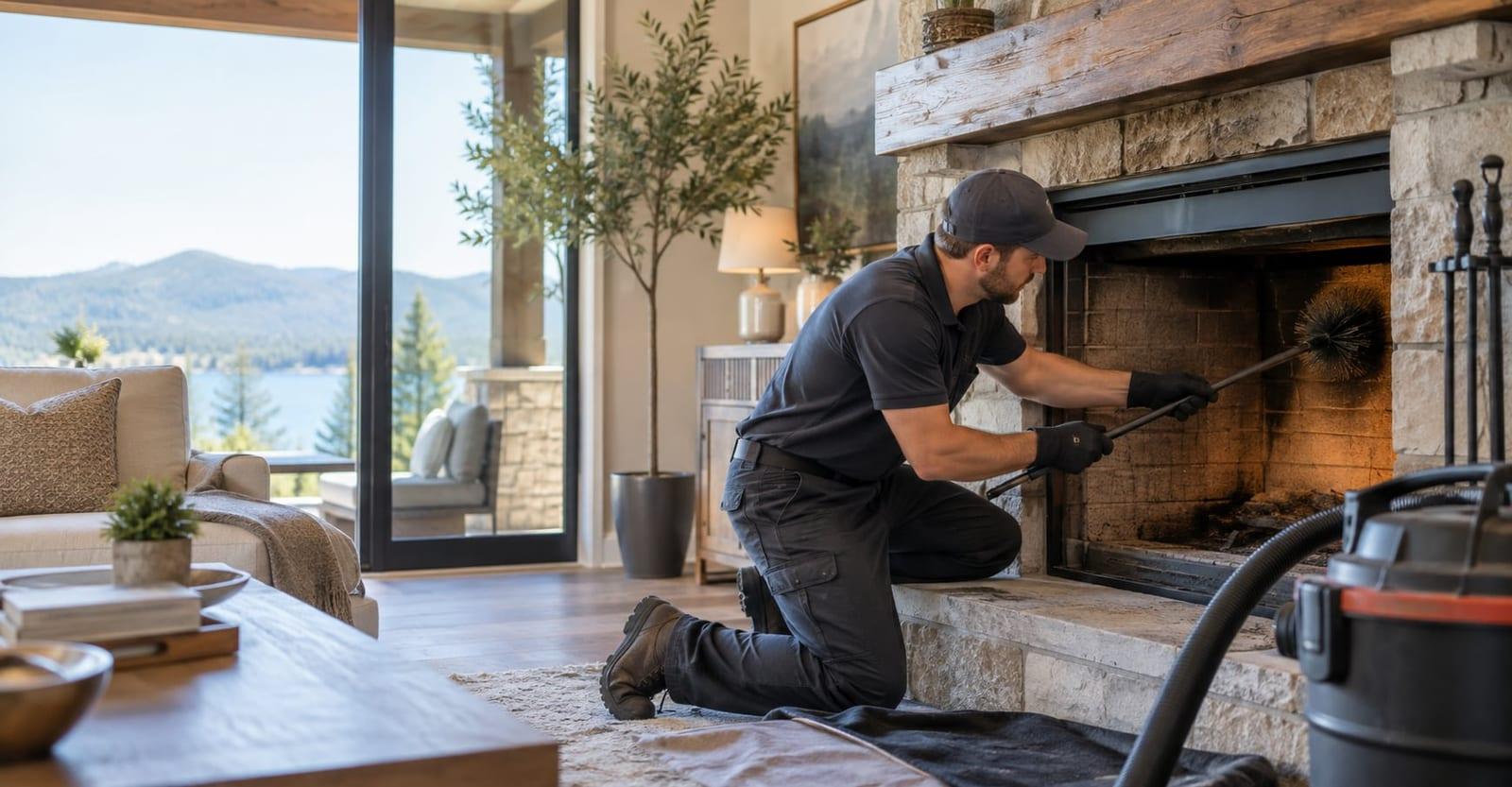
We sweep chimneys for homes in South Fulton. This page covers two parts of the visit that homeowners book: the firebox cleanout and lingering soot smells. It also covers what changes when creosote has built up heavily. When you're ready, call or request an estimate and tell us how often you burn and what you've noticed.
What the firebox cleanout tells you
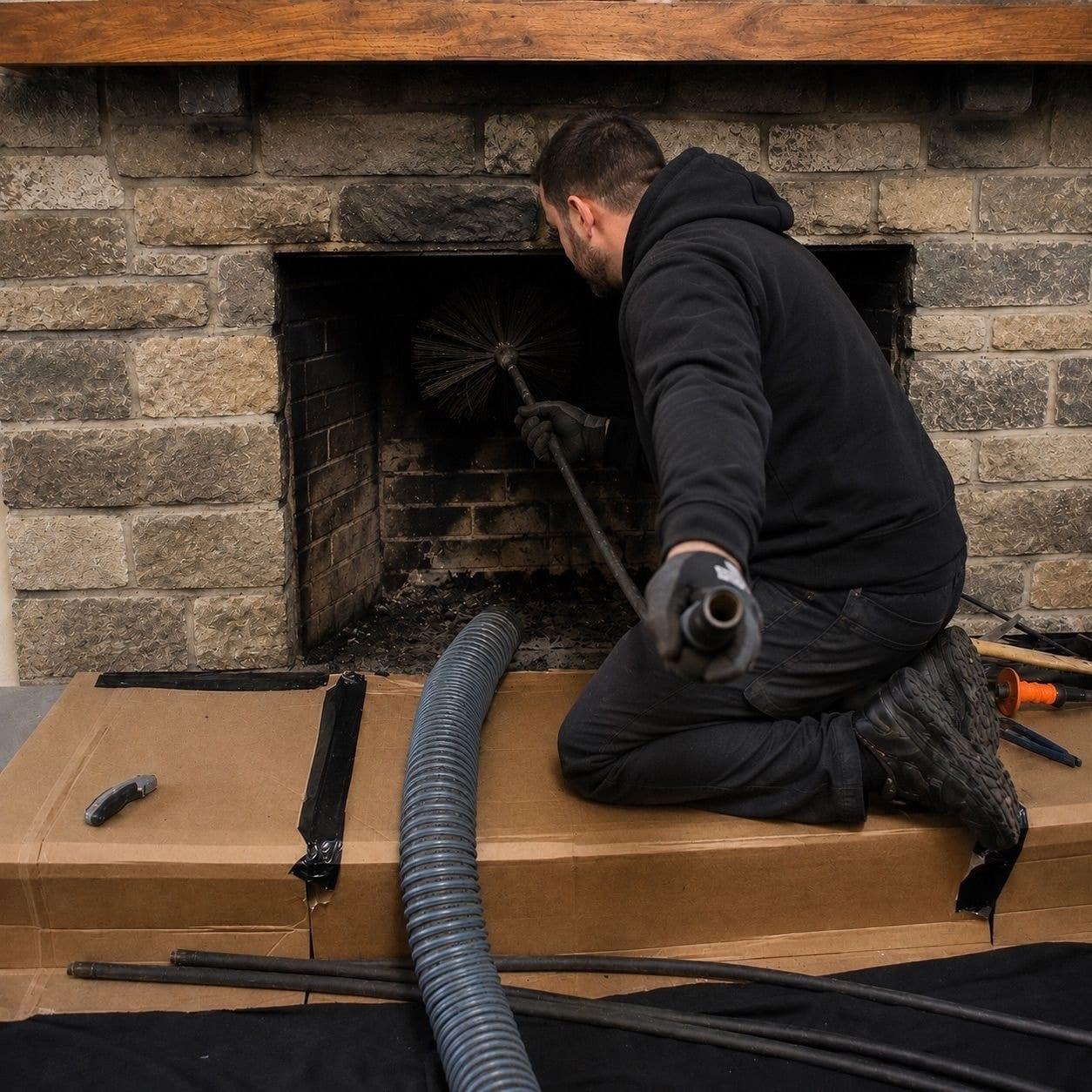
The firebox is where a chimney cleaning starts and finishes. Ash, half-burned wood and debris that falls from the flue all end up here, and once it's cleared out, the walls and floor can actually be seen.
What we look at once the firebox is clean
- Firebrick or refractory panels: cracks, gaps or crumbling joints
- The hearth floor: loose or broken sections
- The damper: whether it opens, closes and seals
- Heavy debris that came down from the smoke shelf
This helps you make one practical decision: whether the fireplace is ready to use as it is, or whether a cracked panel or a damaged firebox wall should be fixed before your next fire.
Tracking down soot odors
A smoky or tar-like smell in the room usually comes from deposits left in the flue and on the smoke shelf. Damp soot, old creosote, or debris from a nest can all smell. Air drawn down the chimney when the house is closed up brings that smell inside.
During the sweep we remove those deposits and check how well the damper closes, since a poor seal lets chimney air into the room. If you're weighing a different damper, our guide to types of chimney dampers explains the options. Afterward you'll know whether cleaning was enough or whether the odor points to a sealing or moisture problem that needs more work.
What the housing figures mean for your visit
About 3% of the housing units in South Fulton were built before 1960, according to the U.S. Census Bureau's American Community Survey 2019–2023 5-year estimates (table B25034, Year Structure Built). That puts most homes here in the 1960-or-later group. Even so, it's worth telling us whether your fireplace is masonry or a factory-built unit, because that changes what the firebox check covers.
When creosote has built up heavily
Creosote doesn't always brush off. Light, sooty deposits come out with standard sweeping. Thick, crusty or glazed layers can take more than one pass, and sometimes a different approach is needed to break them loose. The work can also involve:
- Clearing large amounts of fallen deposits from the firebox and smoke shelf
- Checking the flue walls after cleaning for damage the buildup was hiding
- Advising you not to use the fireplace until any damage is dealt with
Related work the sweep can lead to
- Fireplace repair is the next step when the cleanout turns up a damaged firebox, hearth or damper. For local details, see fireplace repair for homes in South Fulton.
- Refractory panel replacement is the right job when the panels in a factory-built firebox are cracked or crumbling.
Nearby areas
We also offer chimney sweeping for homes in Mableton, Fayetteville and Smyrna.
More on the service and the area
For the full overview, including what's included and how the visit runs, read how chimney sweep works. To see everything else we handle in South Fulton, visit the area page.
Booking a sweep in South Fulton
Call or request an estimate to set up a visit. We also take on commercial and property-manager work, as well as gas fireplace and gas appliance work.
Sources (1)
The sources of the South Fulton facts on this page.
- 1U.S. Census Bureau, American Community Survey 2019–2023 5-year estimates, table B25034 (Year Structure Built)