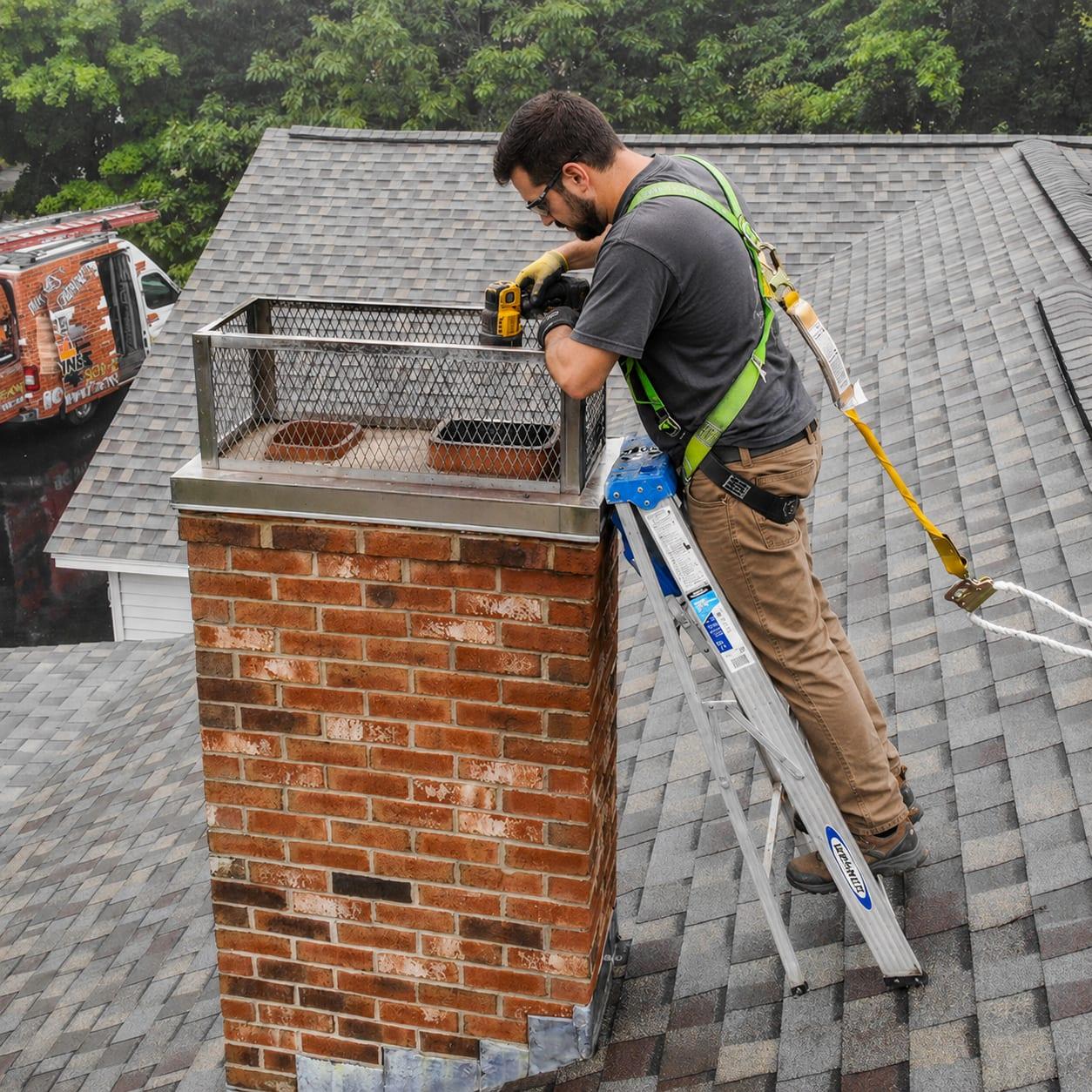
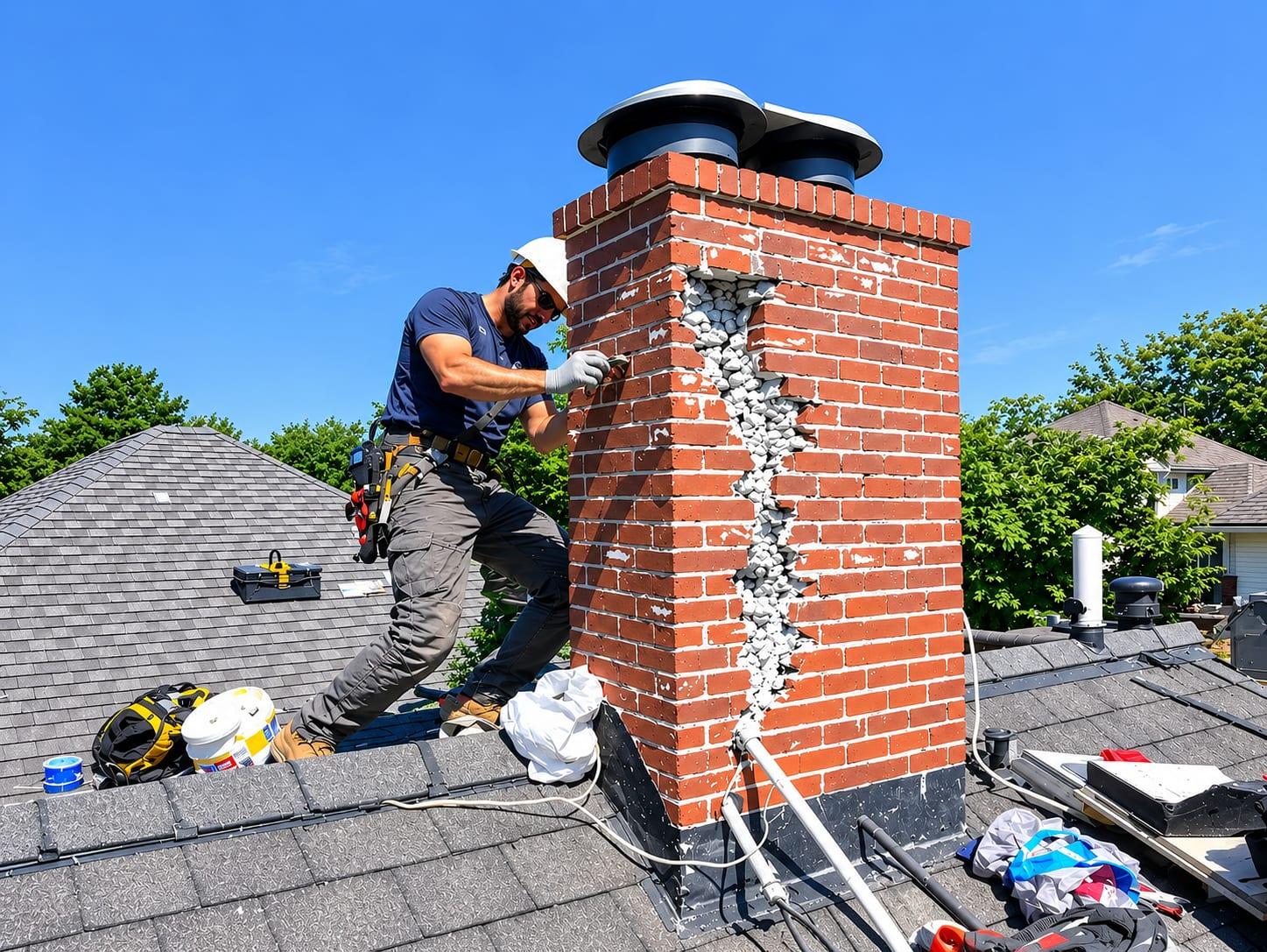
Chimney services Austell homeowners can book
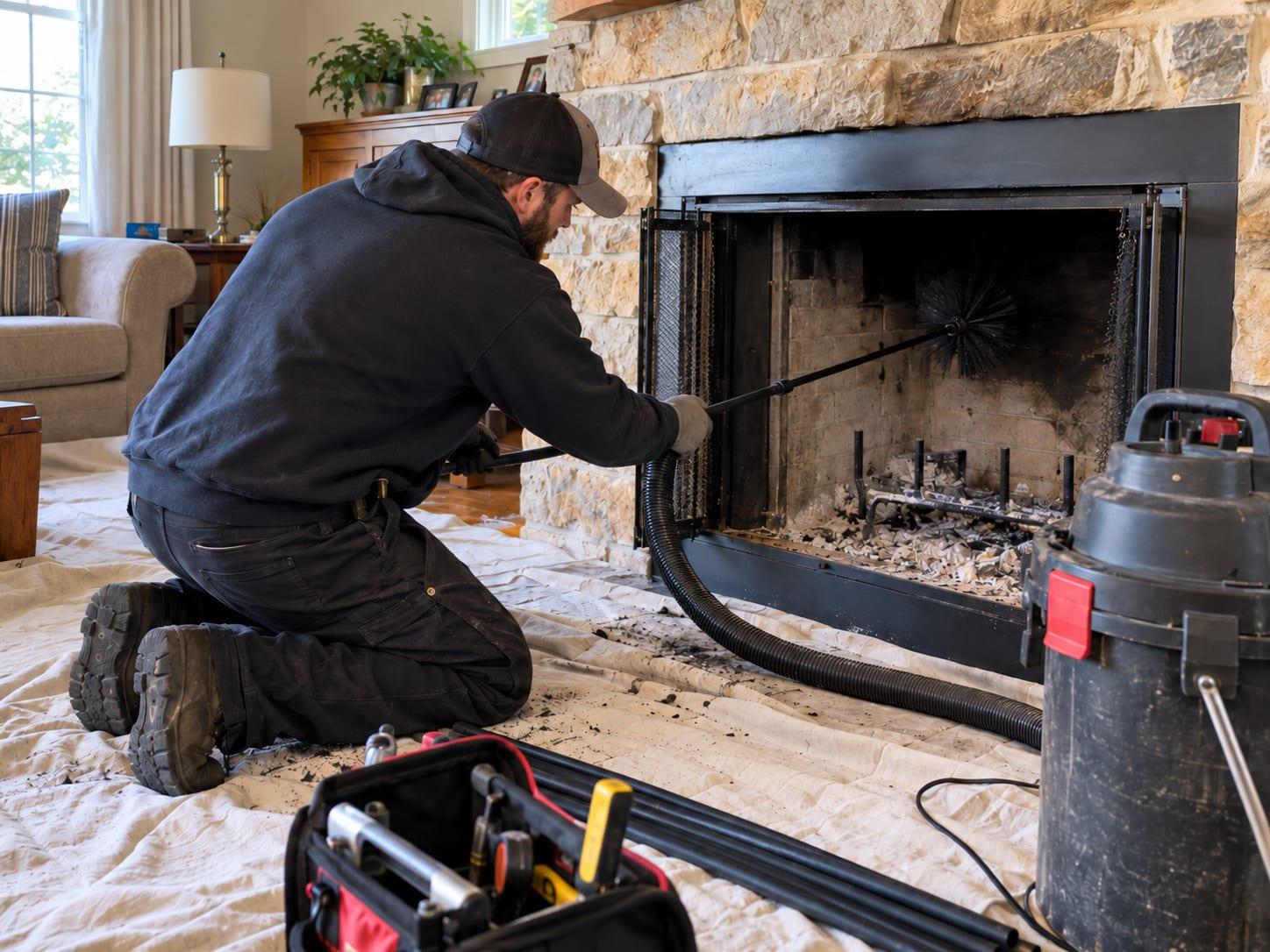
Most visits in Austell start with one of three needs: a fireplace that hasn't been cleaned in a while, a chimney with a problem you can see or smell, or a dryer that takes too long to dry a load. For the first, our chimney sweep service removes soot and creosote from the flue, smoke chamber and firebox. For the second, a chimney inspection, with a camera run up the flue when needed, shows what is actually wrong before any repair is discussed. Dryer vents get cleared from the dryer to the outside termination, including vents that exit through the roof.
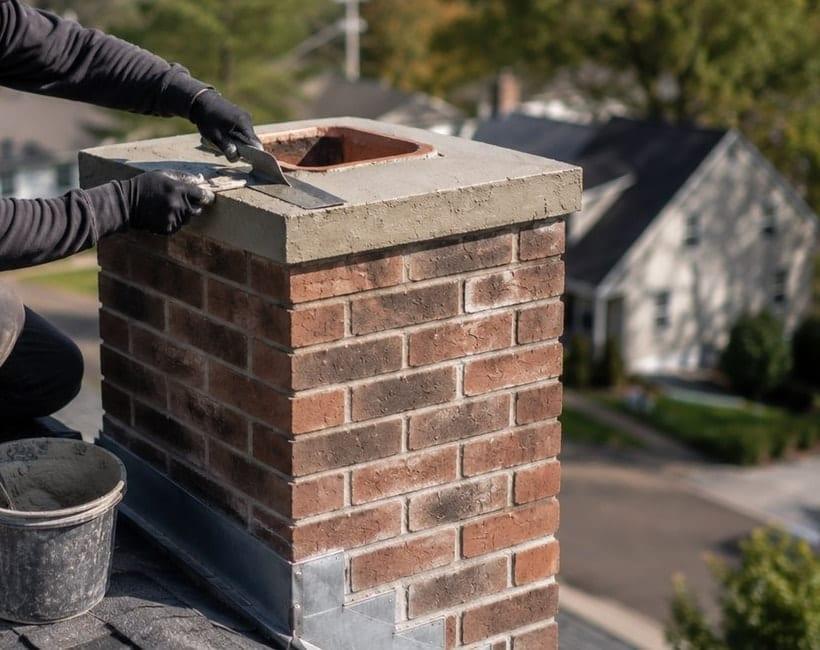
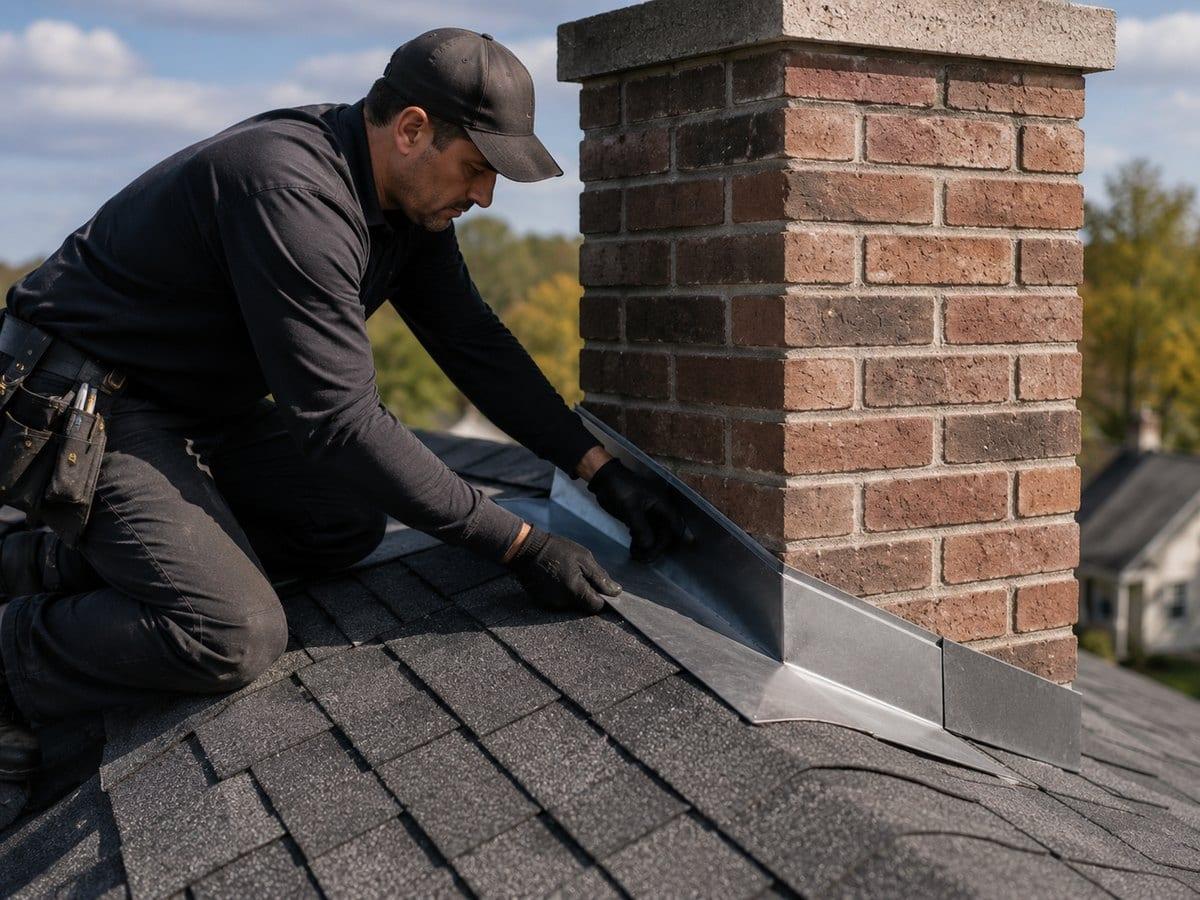
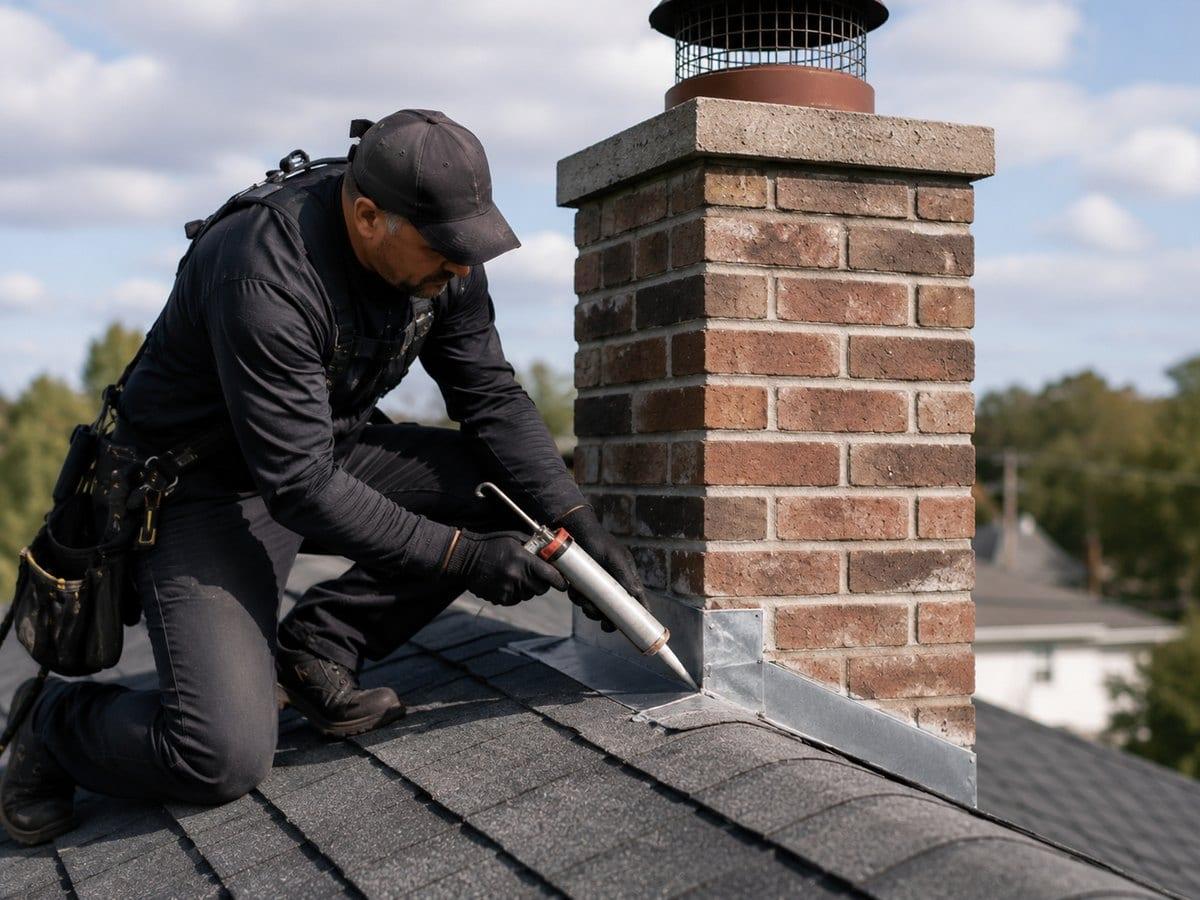
Beyond cleaning, we handle masonry and crown work, leaks and flashing, caps and animal screens, liners, dampers, prefab chimneys and chase covers, plus wood-burning, gas and electric fireplaces, inserts and wood stoves.
What Austell's housing age means for your chimney
According to the U.S. Census Bureau's American Community Survey 2019–2023 5-year estimates (table B25034, Year Structure Built), about 15% of the housing units in Austell were built before 1960, and about 5% in 1939 or earlier. Most homes in town are newer than that, but a meaningful share have chimneys that have been standing for more than six decades.
In general, age matters for a masonry chimney because the parts that wear out are the parts you can't easily see: mortar joints erode, crowns crack and let water in, clay flue tiles can crack or shift, and some older chimneys were built with no liner at all. A chimney can look fine from the yard and still have gaps inside the flue that let heat and smoke reach the framing around it. That is why, for an older house, an inspection usually comes before the first fire, not after a problem shows up.
Signs worth mentioning when you call about an older chimney
- Crumbling or missing mortar between bricks, or bricks flaking on the face
- Water stains on the ceiling or wall beside the chimney
- Rust on the damper or firebox, or a damper that won't close
- A strong smoky or musty smell from the fireplace, especially after rain
- Pieces of tile or masonry falling into the firebox
- Smoke drifting into the room instead of drawing up the flue
- No cap on top, or signs of birds or animals in the flue
If the inspection turns up damage, you'll get an explanation of what was found and what fixing it involves. Our overview of how chimney repair works covers the common jobs, from tuckpointing and crown repair to relining a flue that is no longer safe to use.
Unsure about a fireplace you haven't used?
If you've bought an older home or haven't lit the fireplace in years, hold off on a fire until the flue has been checked. Nests, debris and cracked liners are common in chimneys that have sat unused.
Sources (1)
Facts and figures on this page come from these references.
- 1U.S. Census Bureau, American Community Survey 2019–2023 5-year estimates, table B25034 (Year Structure Built)