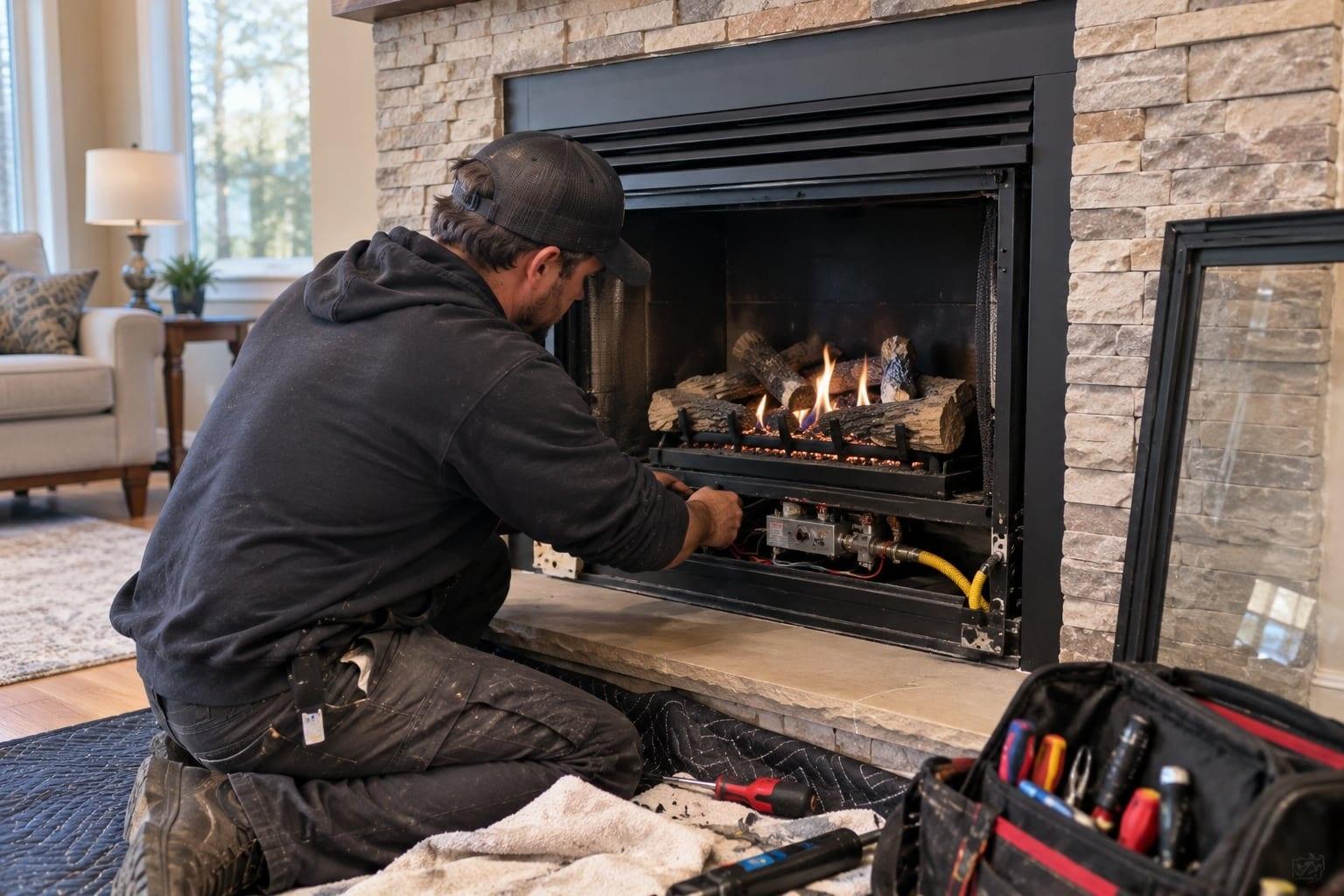
When your fireplace smells like rotten eggs
Natural gas and propane have no smell of their own. Suppliers add an odorant so a leak smells like rotten eggs or sulfur. If you notice that odor near a gas fireplace or log set, gas may be escaping somewhere it shouldn't. This can happen whether the fire is on or off. Treat it as a possible leak until someone qualified has shown otherwise.
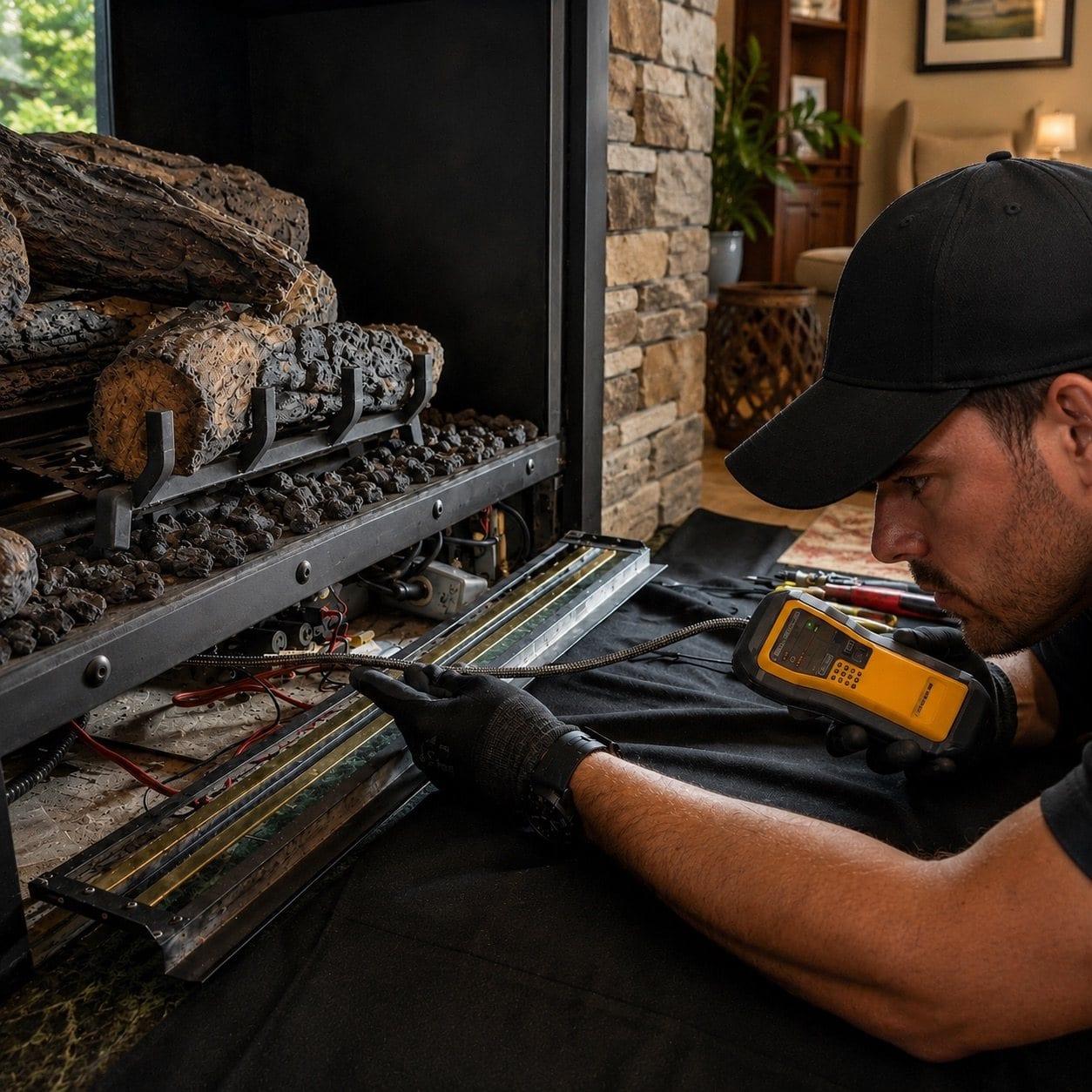
If you smell gas
Leave the building now and take everyone with you. Inside, don't flip light switches, use phones or light any flame. Don't try to relight the fireplace or look for the source. Once you're outside and a safe distance away, call the gas utility or 911.
Common signs it's gas and not ordinary fireplace odor
- A rotten-egg or sulfur smell, strongest near the fireplace, its lower access panel or a floor or wall key valve.
- The smell is there when the fireplace is off, not just while it's burning.
- A hissing sound near the fireplace or its gas connection when nothing is lit.
- The odor gets stronger the longer the unit runs, or it lingers after the fire is shut off.
- Headaches, dizziness or nausea in the room. Get outside right away if this happens.
- Musty, smoky or burnt-dust odors are a different problem, and what causes a fireplace to smell bad covers them.
Possible causes of a gas smell from a fireplace
Several faults can produce the same smell, and only a hands-on inspection confirms which one you have. These are the possibilities a technician checks. A smell that shows up along with ignition trouble often points to the controls, and a gas fireplace not lighting can share some of the same failed parts.
What may be behind the smell
01Loose or worn gas connection
- What you may notice
- Smell near the valve area or behind the lower panel, present even when the fireplace is off.
- How it’s confirmed
- Once the gas is made safe, fittings and the flexible connector are leak-tested and inspected for wear or damage.
02Valve, pilot or safety-control fault
- What you may notice
- Odor with the unit off, a pilot that keeps going out, or trouble lighting.
- How it’s confirmed
- The gas valve, pilot assembly, thermocouple or thermopile and their connections are inspected and tested.
03Log-set key valve not fully closed
- What you may notice
- Smell around a gas log set that has no standing pilot, often near the floor or wall key.
- How it’s confirmed
- The valve's position and seal are checked, along with the burner it feeds.
04Venting, damper or log-type issue
- What you may notice
- Odor or fumes only while the fire is burning, soot on the glass or logs, or a stuffy room.
- How it’s confirmed
- The damper, vent and flue are checked, and the log set is confirmed as the right type for the fireplace.
05Burner or log placement problem
- What you may notice
- Smell while running, along with lazy yellow or sooty flames or logs that have shifted.
- How it’s confirmed
- The burner, ports and log arrangement are inspected and cleaned or reset to the manufacturer's layout.
How urgent is it, and when to stop using the fireplace
A strong smell, one that spreads through the house, or one that comes with hissing or physical symptoms is an emergency. Leave and call the gas utility or 911 from outside. A faint smell that comes back every time you use the fireplace is not an emergency in the same way, but it is still a reason to stop using it. Leave the fireplace off until it has been inspected and repaired.
Leave it off until it's checked
Don't go back to using the fireplace because the smell faded. A leak that comes and goes is still a leak, and it can get worse.
Emergency calls are accepted, and 24-hour service runs Sunday–Friday.
What normally fixes a gas smell
How the repair usually goes
Make it safe first
Repair work starts only after the gas utility or emergency responders have handled any active leak.
Inspect and test
The connections, valve, pilot assembly, burner and venting are checked to find where the smell is coming from.
Repair or replace the faulty part
Common fixes include tightening or replacing a fitting or connector, replacing a failed valve or pilot component, resetting logs, or correcting a venting or damper problem.
Test before use
The fireplace is leak-tested and run so you can see it lights and burns properly before it goes back into service.
Most of this work falls under gas fireplace repair, and we work on all major brands. Worn parts and dirty burners are often caught early during routine gas fireplace service and maintenance.
What not to do
- Don't relight the pilot or turn the fireplace back on to see if the smell returns.
- Don't search for the leak yourself, with a flame or any other way.
- Don't flip switches, unplug things or use a phone inside while you can smell gas.
- Don't count on your nose alone. Carbon monoxide has no odor, so working CO alarms matter in any home with gas appliances.