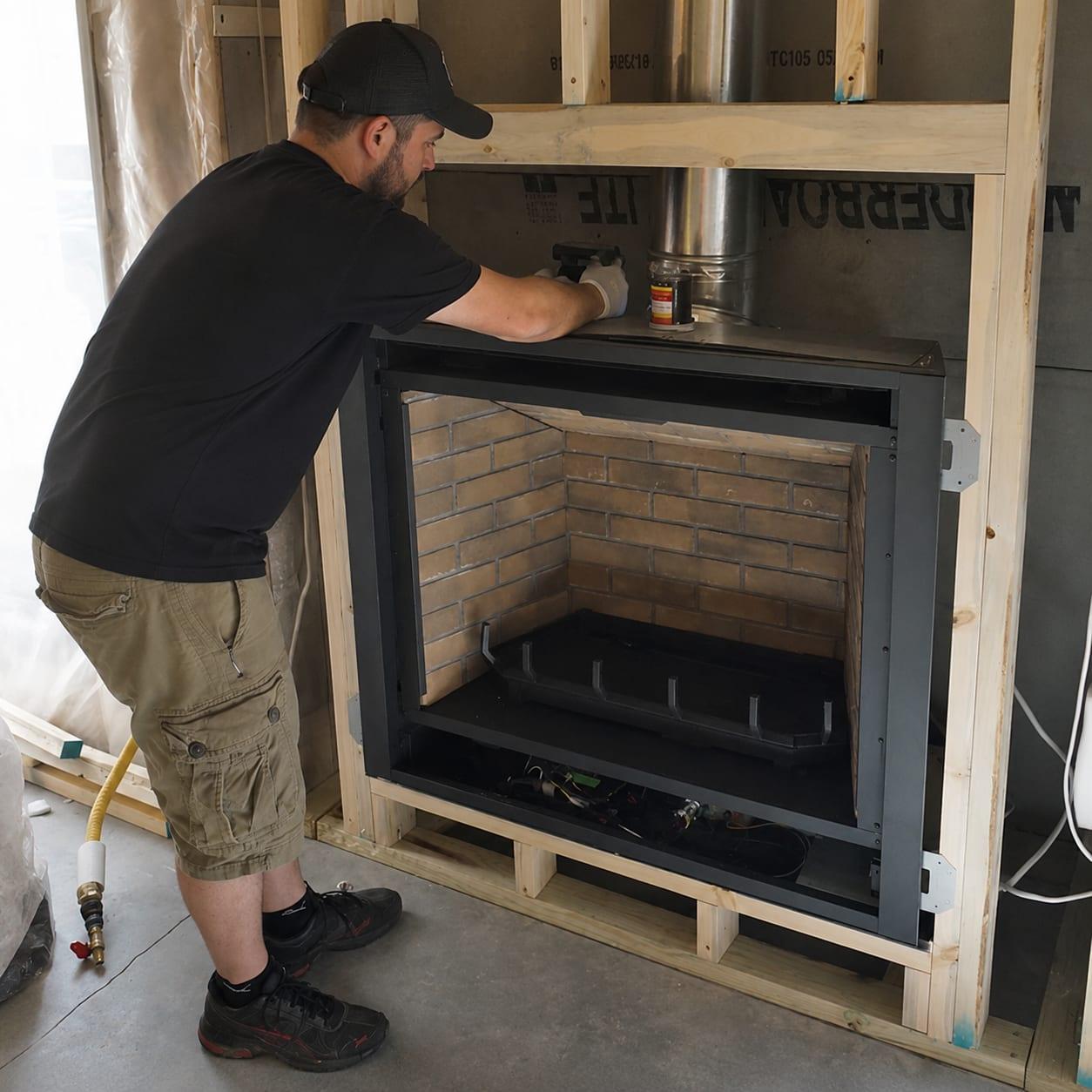
When you try to light it and nothing catches
A gas fireplace that won't light can fail in a few different ways. Sometimes the igniter clicks and no flame appears. Sometimes the pilot lights, then goes out as soon as you let go of the knob. Sometimes the pilot burns but the main burner never comes on, or the remote and wall switch do nothing at all. Each pattern points toward a different part of the system, which is why it helps to notice exactly what happens before you call.
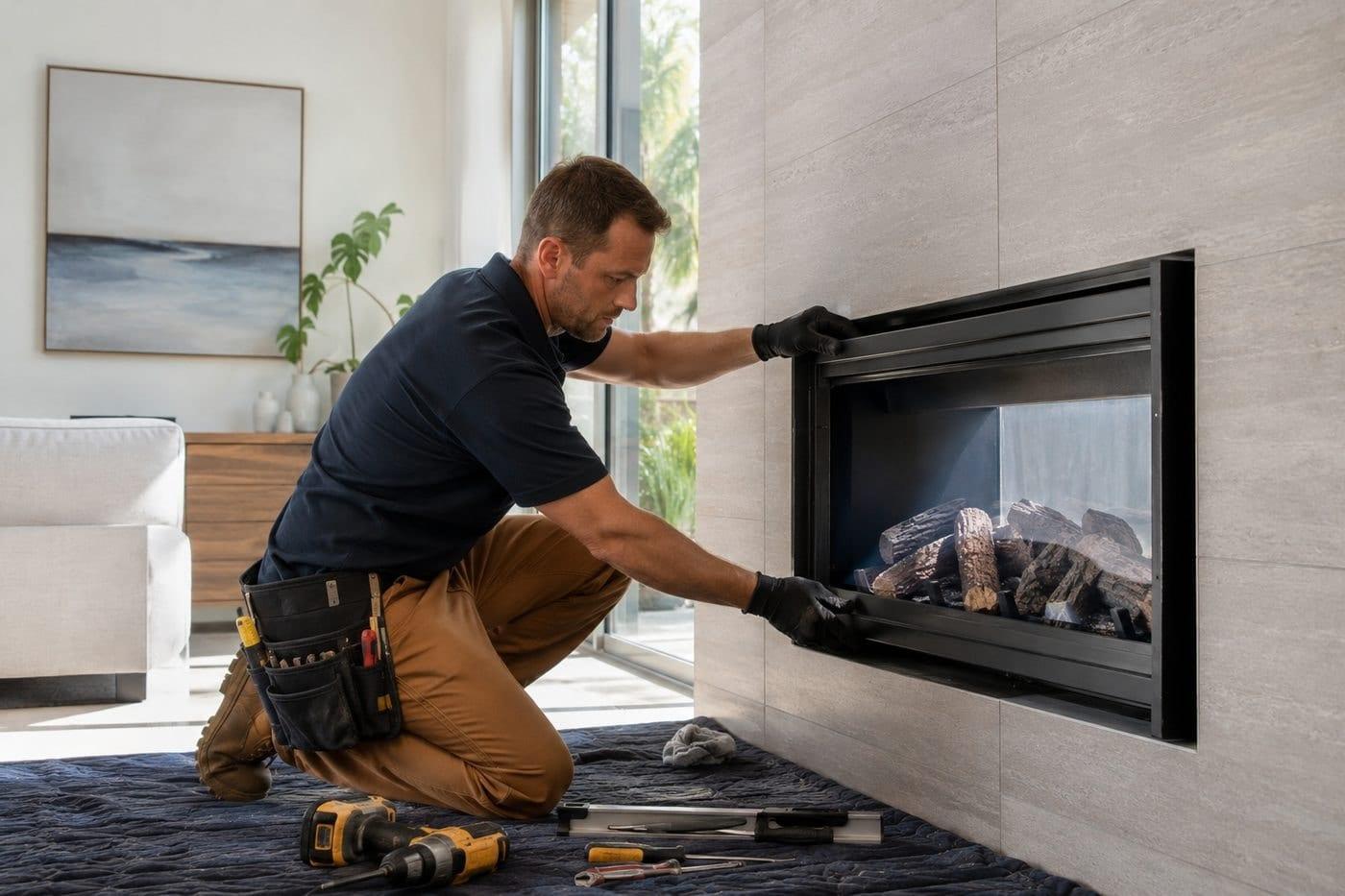
If you smell gas, stop and leave
Get everyone out of the building now. Don't use light switches, phones or any flame inside, and don't try to relight the fireplace. Once you are outside, call the gas utility or 911.
A faint whiff right when a burner lights can be normal, but a smell that lingers is not. There's more on what causes gas smell from fireplace systems, after everyone is safe.
Common signs of a gas fireplace not lighting
- The igniter clicks repeatedly but no pilot flame appears.
- The pilot lights while you hold the control knob in, then goes out when you release it.
- The pilot stays lit, but the main burner won't come on from the switch, remote or knob.
- The remote or wall switch does nothing, with no click and no response.
- The pilot flame looks small, weak, lazy or mostly yellow instead of a steady blue.
- The fireplace lit last season but won't start after sitting unused for months.
- The burner lights, then shuts off on its own a few minutes later.
Possible causes
The list below covers what commonly stops a gas fireplace from lighting. These are possibilities, not a diagnosis. Several symptoms overlap, and only an inspection of your unit confirms which part is at fault.
What may be keeping the fireplace from lighting
01Dead or weak batteries
- What you may notice
- The remote or wall switch does nothing, or the unit responds only now and then. Electronic-ignition models may also stop sparking.
- How it’s confirmed
- The batteries in the remote, the receiver and any backup battery pack are tested, then the receiver is checked for power and a signal.
02Dirty or failing thermocouple or thermopile
- What you may notice
- The pilot lights but goes out when you let go of the knob, or the pilot stays lit and the main burner won't turn on.
- How it’s confirmed
- The sensor's position in the pilot flame and its output are checked, and it is cleaned or replaced if it isn't producing enough signal to hold the gas valve open.
03Clogged pilot orifice or pilot assembly
- What you may notice
- The pilot is weak, flickers, burns yellow or won't stay lit, especially after a long idle stretch.
- How it’s confirmed
- The pilot assembly is inspected for dust, debris or insect nests, and the flame is checked after cleaning.
04Worn igniter or ignition module
- What you may notice
- There's no spark, a weak spark, or clicking with no flame.
- How it’s confirmed
- The spark gap, the wiring and the module are tested, and the faulty part is replaced if needed.
05Gas supply or control valve problem
- What you may notice
- There's no gas at the pilot at all, or the unit won't respond even though the pilot assembly looks clean.
- How it’s confirmed
- The shutoff and control valve are checked, along with the gas pressure at the appliance and the connections for leaks.
06A safety sensor shutting the unit down
- What you may notice
- The burner lights and then shuts off, or the unit refuses to stay on. Ventless units have an oxygen depletion sensor, and some vented units have a sensor that trips if exhaust isn't venting properly.
- How it’s confirmed
- The sensor is tested and the venting is inspected for blockage or damage. A tripped safety device can be a warning, so it is never bypassed.
Ventless and vented gas units use different safety parts, so the type of fireplace you have matters. Our guide to vented vs ventless gas logs explains the difference if you aren't sure which you have.
How urgent is it?
A gas fireplace that simply won't light, with no gas smell, is usually not an emergency. Leave it off and schedule a repair. It becomes urgent when the failure comes with warning signs, because some of these parts exist to cut off gas when something isn't right.
Stop using the fireplace if you notice any of these
Turn the fireplace off and don't keep trying to light it if you notice a gas smell, a delayed lighting with a whoosh or pop, soot on the glass or surrounding wall, a burner that keeps shutting off on its own, or headaches or dizziness while it runs. If you smell gas, leave the building and call the gas utility or 911 from outside.
Emergency calls are accepted, and 24-hour service runs Sunday–Friday.
What you can safely check first
Only if there is no gas smell
- Replace the batteries in the remote, and in the receiver or backup battery pack if your model has one.
- Confirm the wall switch is on and that the circuit feeding an electronic-ignition unit hasn't tripped.
- Make sure the fireplace's own control knob is set to the correct position for lighting.
- Follow the lighting instructions on the label, usually found near the controls or in the owner's manual, exactly as written.
If the fireplace still won't light after those checks, stop there. The remaining causes involve gas components and safety controls that should be tested by a technician.
What not to do
- Don't keep pressing the igniter over and over. Gas can build up and then light all at once.
- Don't light the fireplace with a match or lighter unless the manufacturer's instructions call for it.
- Don't bypass, jumper or remove a thermocouple, thermopile or oxygen depletion sensor to get the unit running.
- Don't take apart the gas valve or pilot assembly, or loosen gas connections yourself.
- Don't remove the glass front while the unit is hot, or run the fireplace with the glass off.
What normally fixes a gas fireplace that won't light
Most ignition problems are solved by cleaning or replacing one part: the pilot assembly, the thermocouple or thermopile, the igniter, the receiver or the control valve. Our gas fireplace repair service starts by finding which part has failed, then fixes it and tests the full lighting sequence before the visit ends. We work on all major brands of gas fireplaces and gas appliances.
What a repair visit usually involves
Describe the symptom
Tell us what happens when you try to light it. Clicking with no flame points somewhere different than a pilot that won't stay lit.
Inspect and test
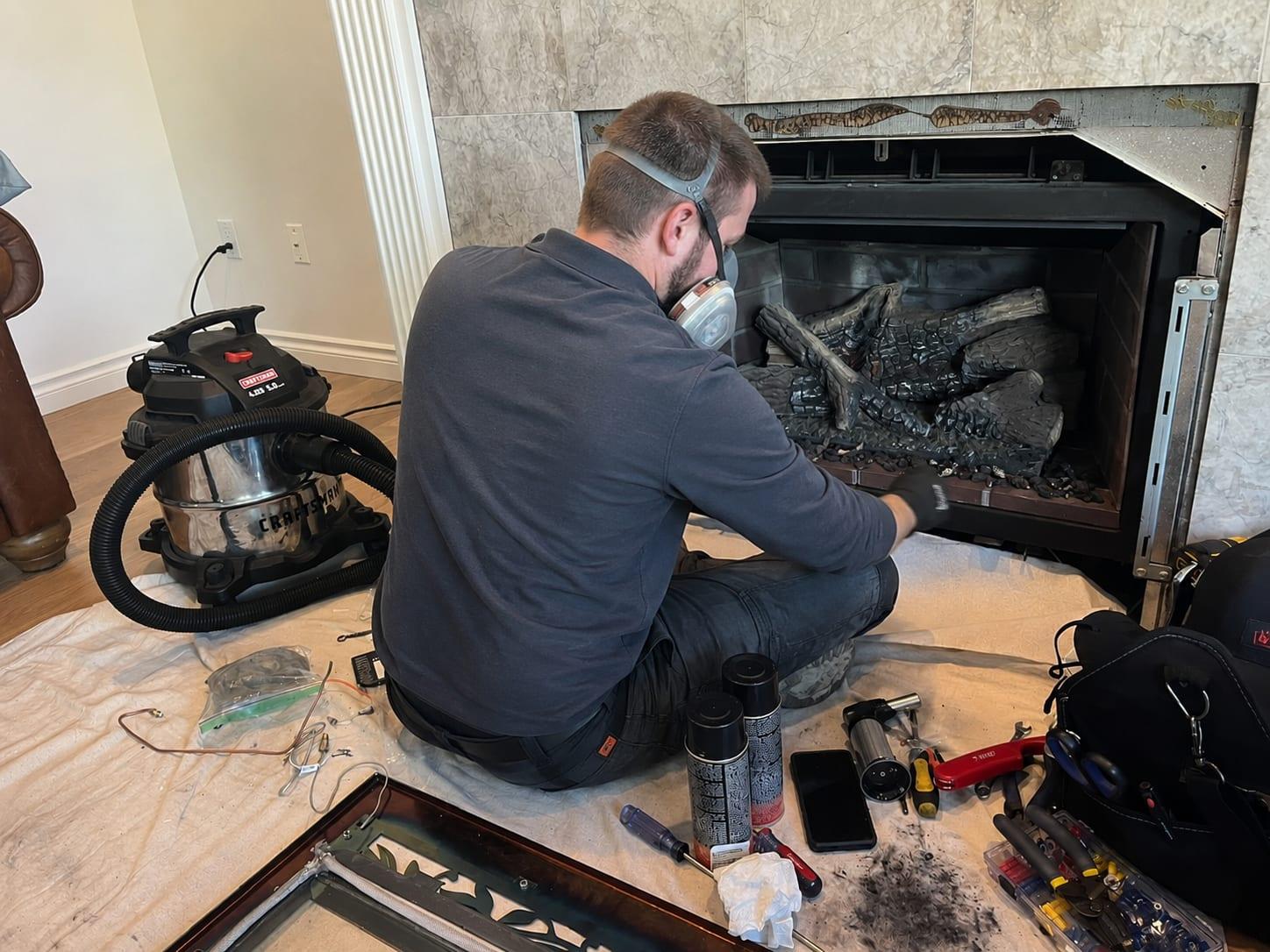
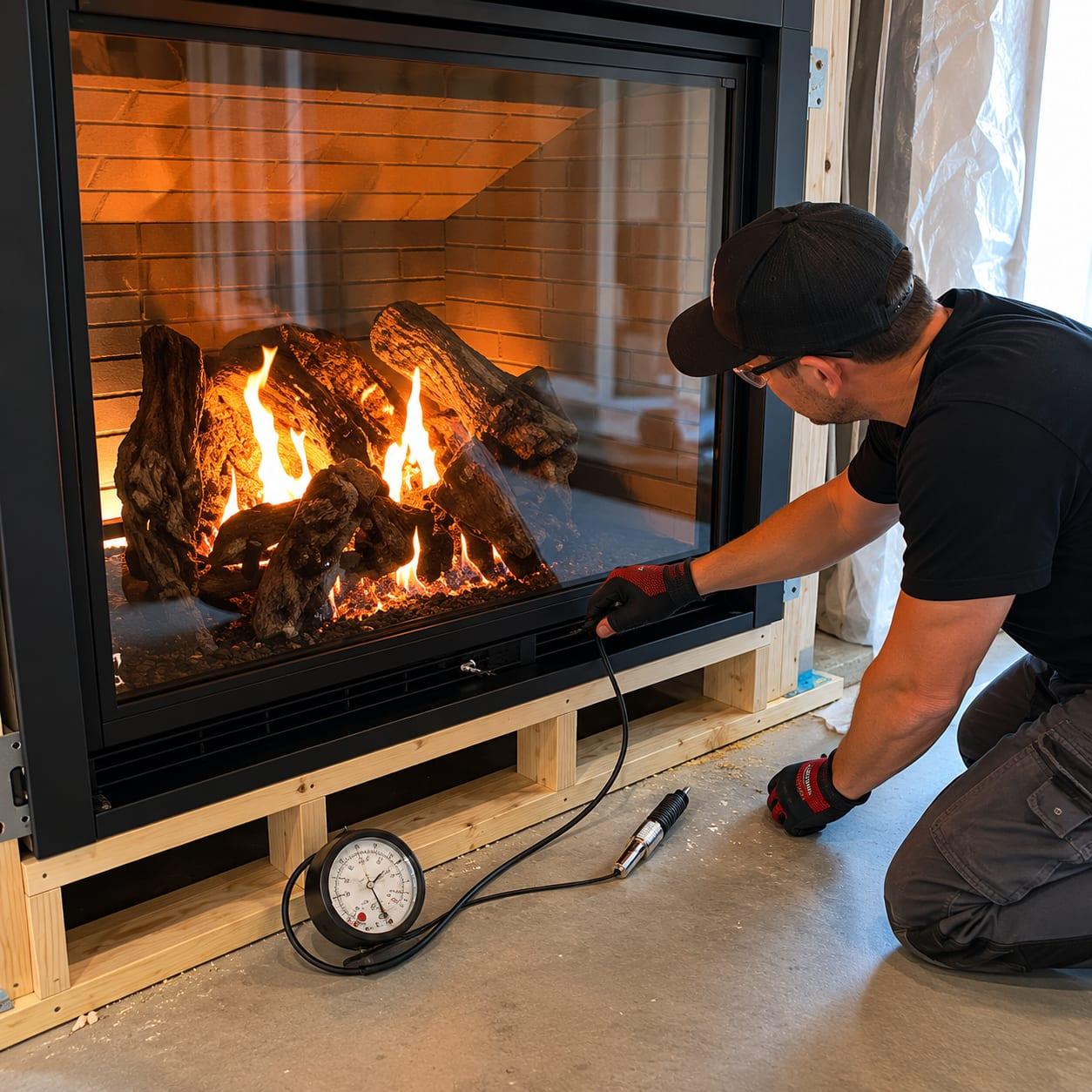
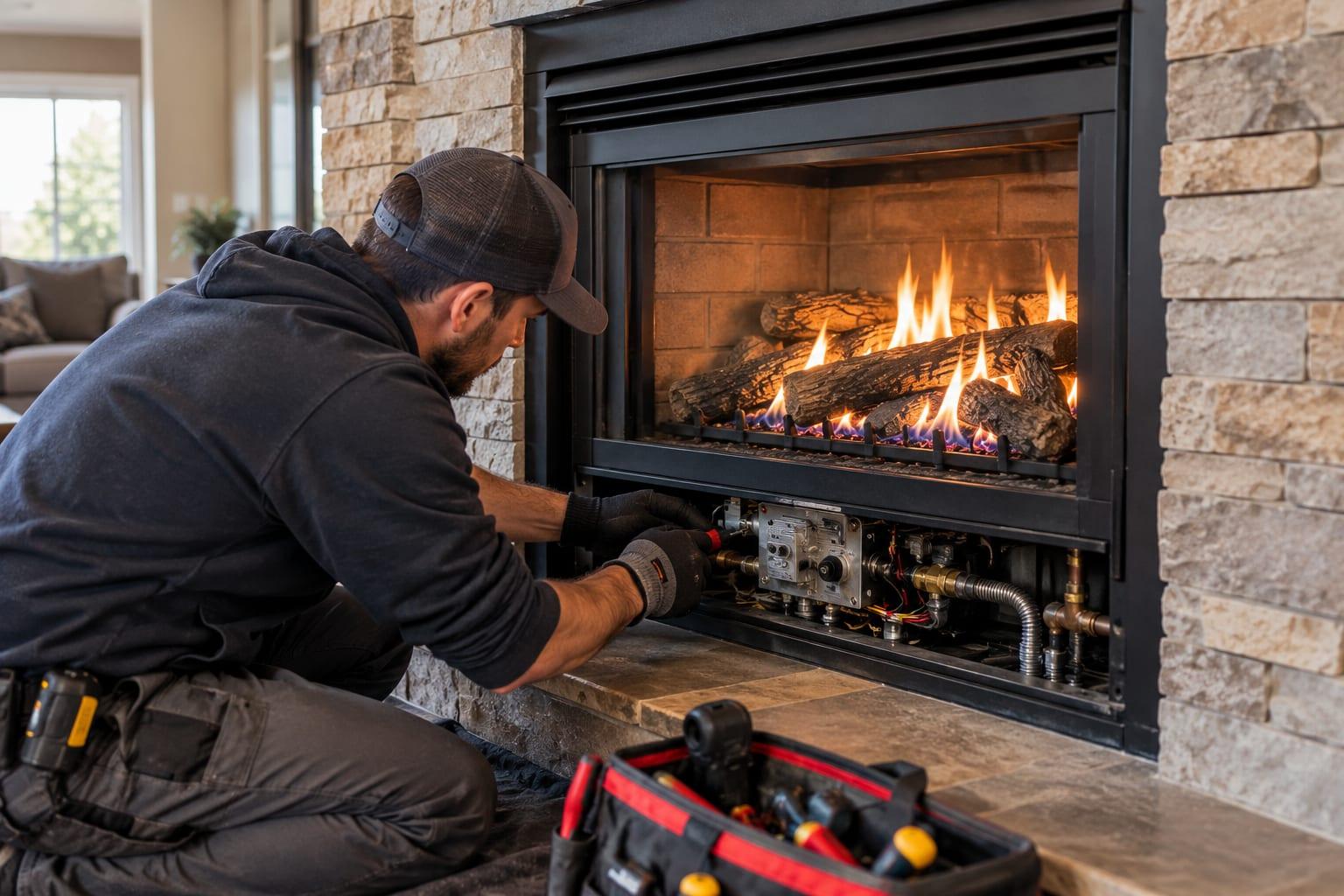
The pilot, ignition parts, safety sensors, valve and gas connections are checked, along with the venting on vented units.
Clean or replace the faulty part
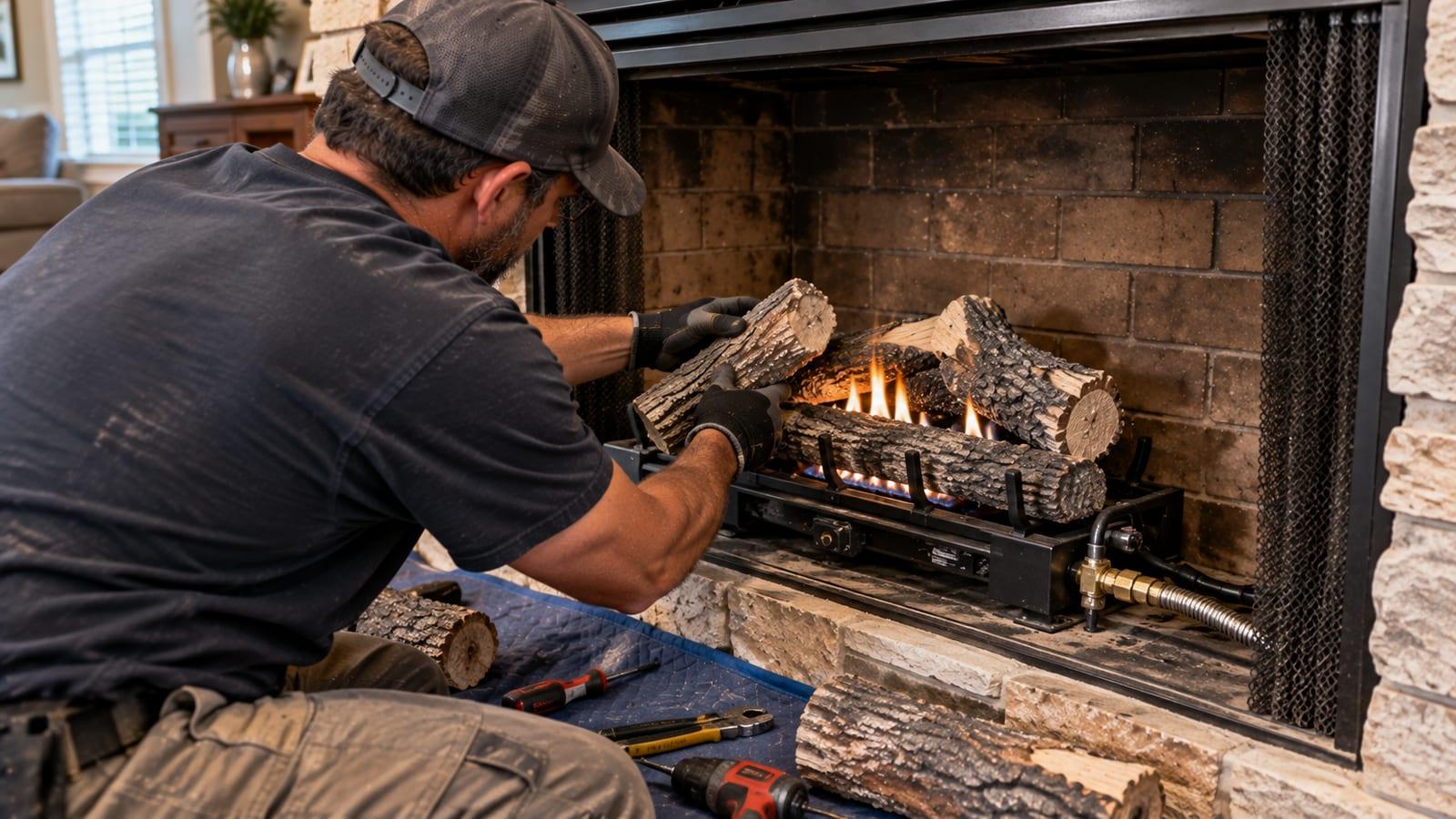
The pilot assembly is cleaned, or a worn sensor, igniter, receiver or valve is replaced.
Confirm it lights and stays lit
The fireplace is run through several lighting cycles, and the flame appearance and shutdown behavior are checked.
When a unit is due for a broader tune-up, routine gas fireplace service covers cleaning and checking the whole appliance, which can head off the dust and debris that often cause lighting trouble after a long idle season.
Related problems and reading
If the fireplace lights but gives off an odor, a different set of causes may be involved. Read about fixing fireplace smells bad problems. If repeated ignition trouble has you weighing a different kind of unit, start with electric vs gas fireplace comparisons.